Merkenstein Castle: Austria’s First Tudor-Style Castle
Site at a Glance
- Popularity
- Medium
- Country
- Austria
- Primary era
- Modern
- Eras represented
- Early Modern, Modern
- Civilizations
- Austrian Empire, Habsburg, Holy Roman Empire
- Site type
- Domestic
- Remains
- Castle
On this page10 sections
History
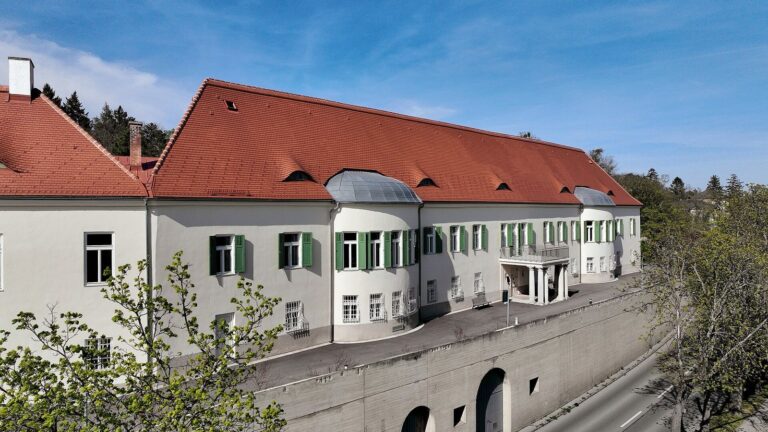
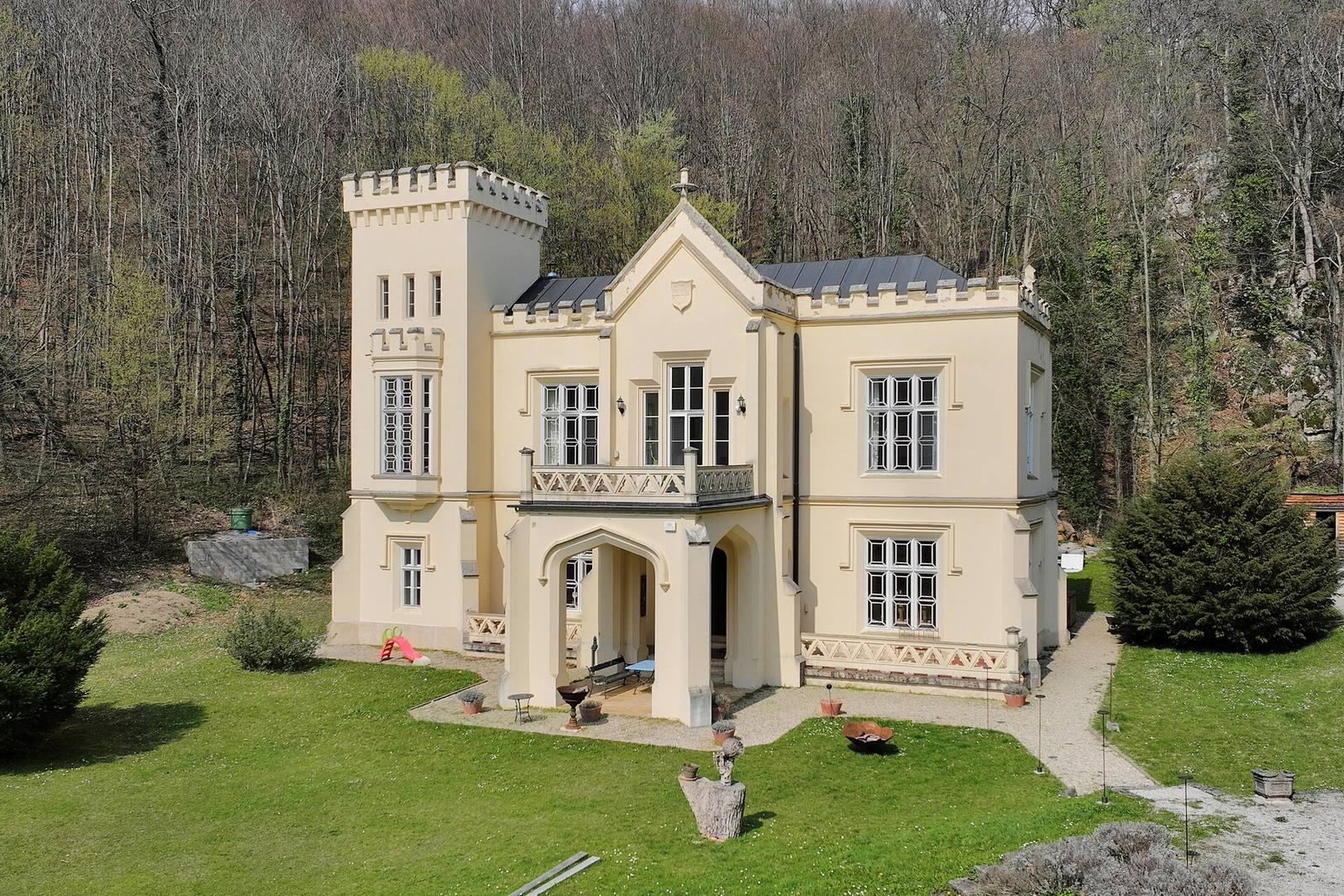
Merkenstein Castle is a nineteenth-century Tudor-style castle in Gainfarn, part of Bad Vöslau in Lower Austria, Austria. Commissioned in 1829 by Joachim Eduard von Münch-Bellinghausen, it is described as Austria’s first castle built in Tudor style, an architectural mode associated with England’s Tudor period.
The country house and garden
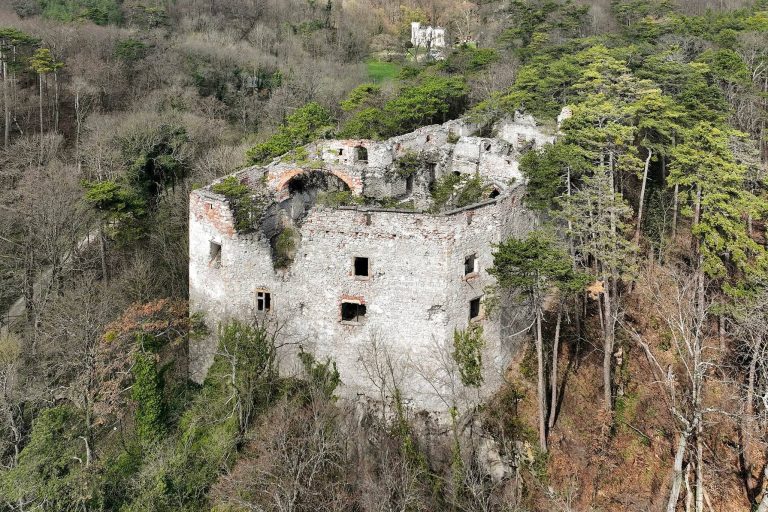
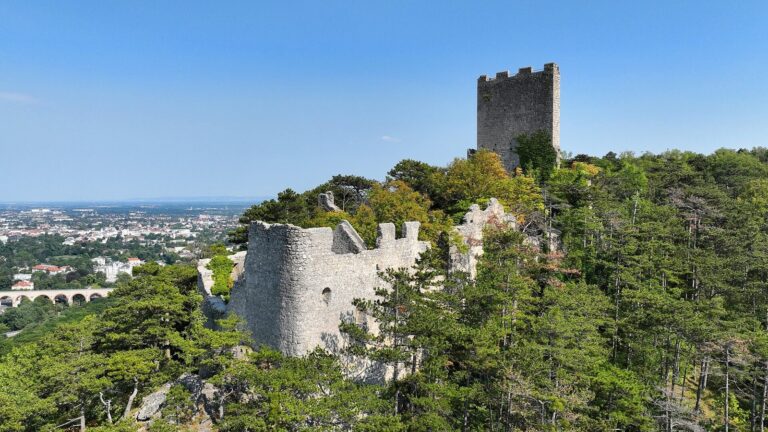
Count Joseph Carl Dietrichstein had a country house built below the ruin of Merkenstein Castle between 1801 and 1803. He was the first governor of the Imperial-Royal Privileged National Bank, the Austrian monarchy’s central banking institution. His wife, Elisabeth, née Countess Waldstein-Wartenberg, designed the estate’s garden, which was open to the public. The house was built in Swiss style, drawing on forms associated with Swiss vernacular architecture.
The castle and its owners
In 1829, Münch-Bellinghausen bought the estate, demolished the country house, and commissioned a castle in its place. He was later buried in a crypt beneath the garden chapel. During the Soviet occupation, the crypt was looted.
The estate passed by inheritance to Adolph Freiherr Brenner von Felsach and then to his son, Joachim Brenner von Felsach, who sold it in 1912. Later owners included Leopold Kern, a sawmill operator, and the industrialist Arthur Krupp of Berndorf.
War damage and restoration
The castle suffered severe damage in the final days of the Second World War. Soviet occupation forces confiscated it as German property and placed it under USIA, the Soviet administration of Soviet-controlled property in Austria. After the Austrian State Treaty, the Republic transferred the estate to the Austrian Federal Forests. Private buyers acquired the castle in 2000 and had it faithfully restored; it is now inhabited again.
Remains
The site centers on the Tudor-style castle, built on the place of the earlier country house. Its garden contained several distinct features, including a chapel and structures designed in historical styles.
Castle and garden features
The castle
The present castle replaced the Swiss-style country house demolished in 1829. Its Tudor style links the building to English architecture of the Tudor period. The castle was badly damaged during the Second World War and later faithfully restored.
Garden structures
The designed garden included a hermitage and an observation tower among its historical-style structures. Elisabeth, Countess Dietrichstein, designed the garden, which was open to the public.
Chapel and crypt
The chapel in the garden is substantially older than the country house and probably dates to the sixteenth century. It was renovated, and a crypt lies beneath it. Münch-Bellinghausen was buried in the crypt, which was looted during the Soviet occupation.
Turkish Well
The Turkish Well is a commemorative feature associated with the destruction of a nearby castle by Ottoman forces during the Second Siege of Vienna in 1683, the Ottoman campaign against Vienna.