Schloss Melschede: A Baroque Water Castle in Sundern, Germany
Site at a Glance
- Popularity
- Medium
- Country
- Germany
- Primary era
- Early Modern
- Eras represented
- Early Modern
- Civilizations
- Electorate of Cologne, Holy Roman Empire
- Site type
- Domestic
- Remains
- Castle
On this page4 sections
History
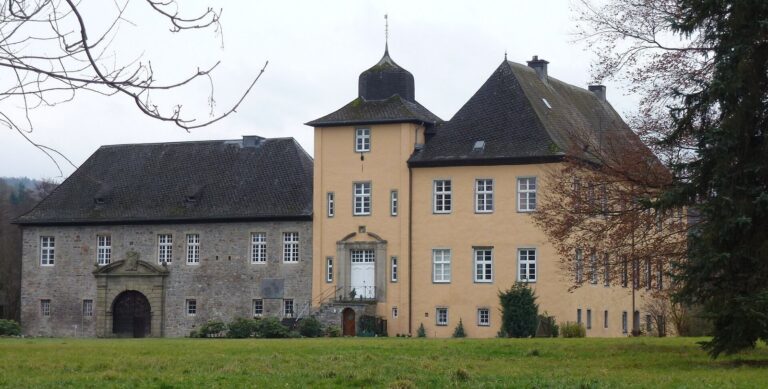
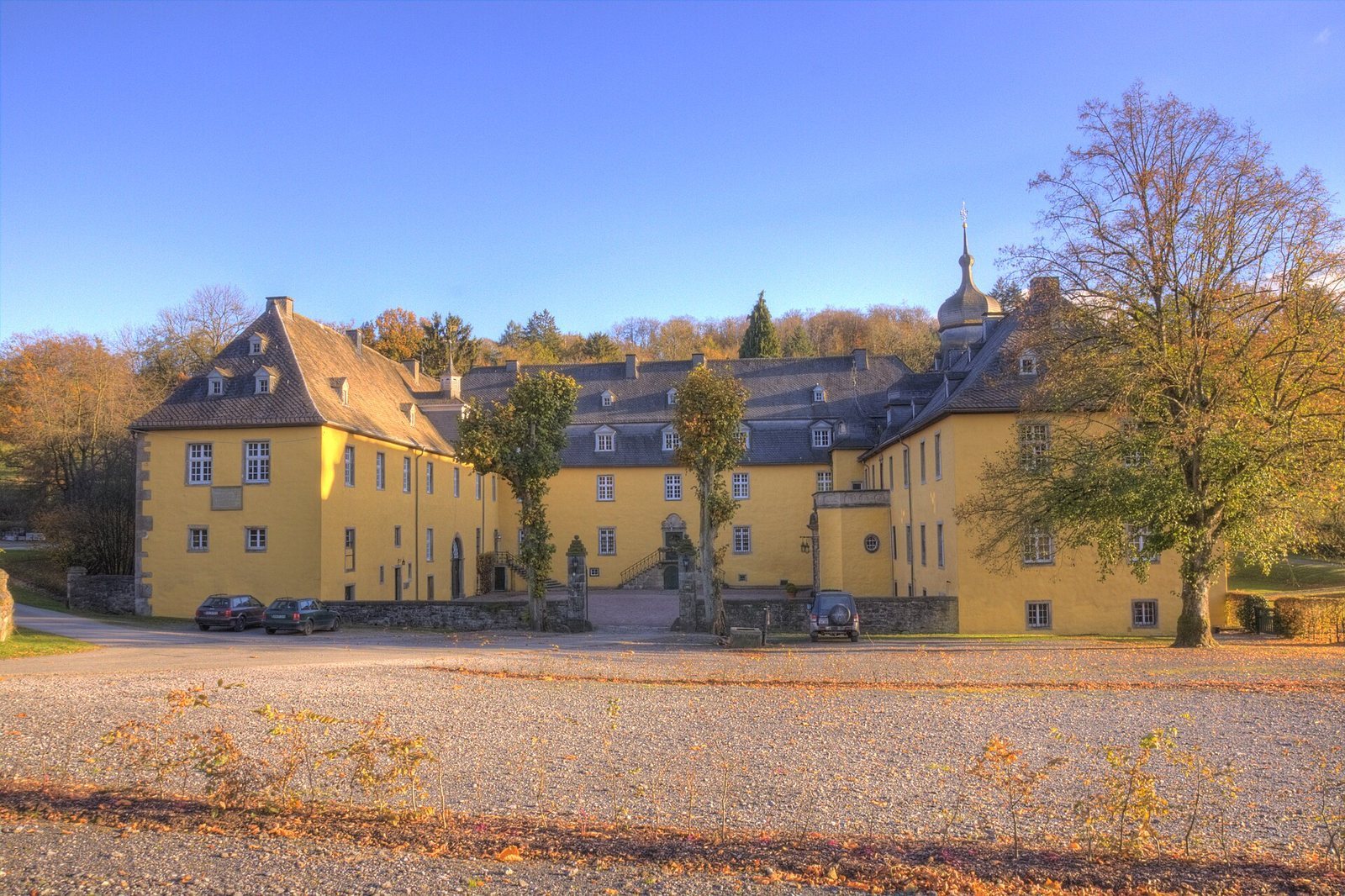
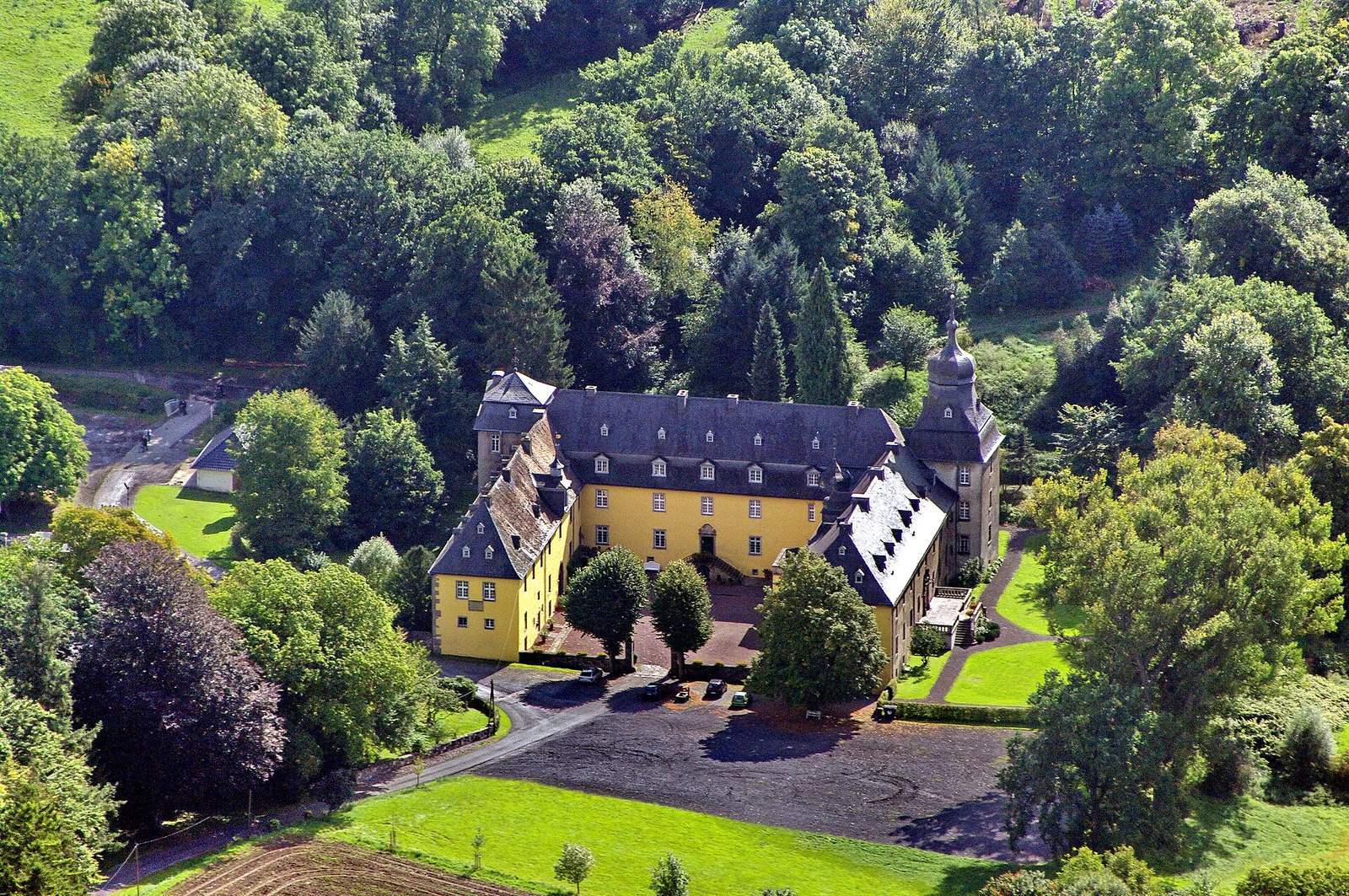
Schloss Melschede is a Baroque water castle in Hövel, a district of Sundern, Germany, built between 1659 and 1669 for Ferdinand Freiherr von Wrede zu Melschede, a baron. Baroque was an elaborate European style of art and architecture associated especially with the seventeenth and eighteenth centuries. The castle’s history grew from a medieval manor whose holdings were divided between different families.
The medieval manor and its holdings
Melschede is first recorded in 1281 as a bailiwick, a territorial jurisdiction, of the County of Arnsberg, a medieval county. In the Middle Ages, the manor comprised a lower house associated with the von Melschede family and an upper house linked to the von Wrede family.
Between 1280 and 1285, Hermann Vlecke, a retainer of the Counts of Arnsberg, received governing rights in the lower house. The Benkamp family followed around 1300 and, from the mid-fourteenth century, adopted the name von Melschede, derived from the place-name. In 1364, Wrede, a senior territorial official of Arnsberg, received the upper house from the Elector of Cologne. The elector was a prince entitled to take part in choosing the Holy Roman Emperor; the grant recognized Wrede’s service in the elector’s acquisition of the County of Arnsberg.
After the male line of the von Melschede family ended, the lower house passed through marriage to Wrede relatives from Amecke. They soon purchased the upper house from their relatives, bringing both holdings under the Wrede-Melschede barons. The family line continues to the present.
The Baroque castle and later changes
Ferdinand had the castle built as a four-wing complex. Bonifatius of Trier, its patron, died while construction was underway, and Nicolas Spantzl of Merano completed the work in 1669.
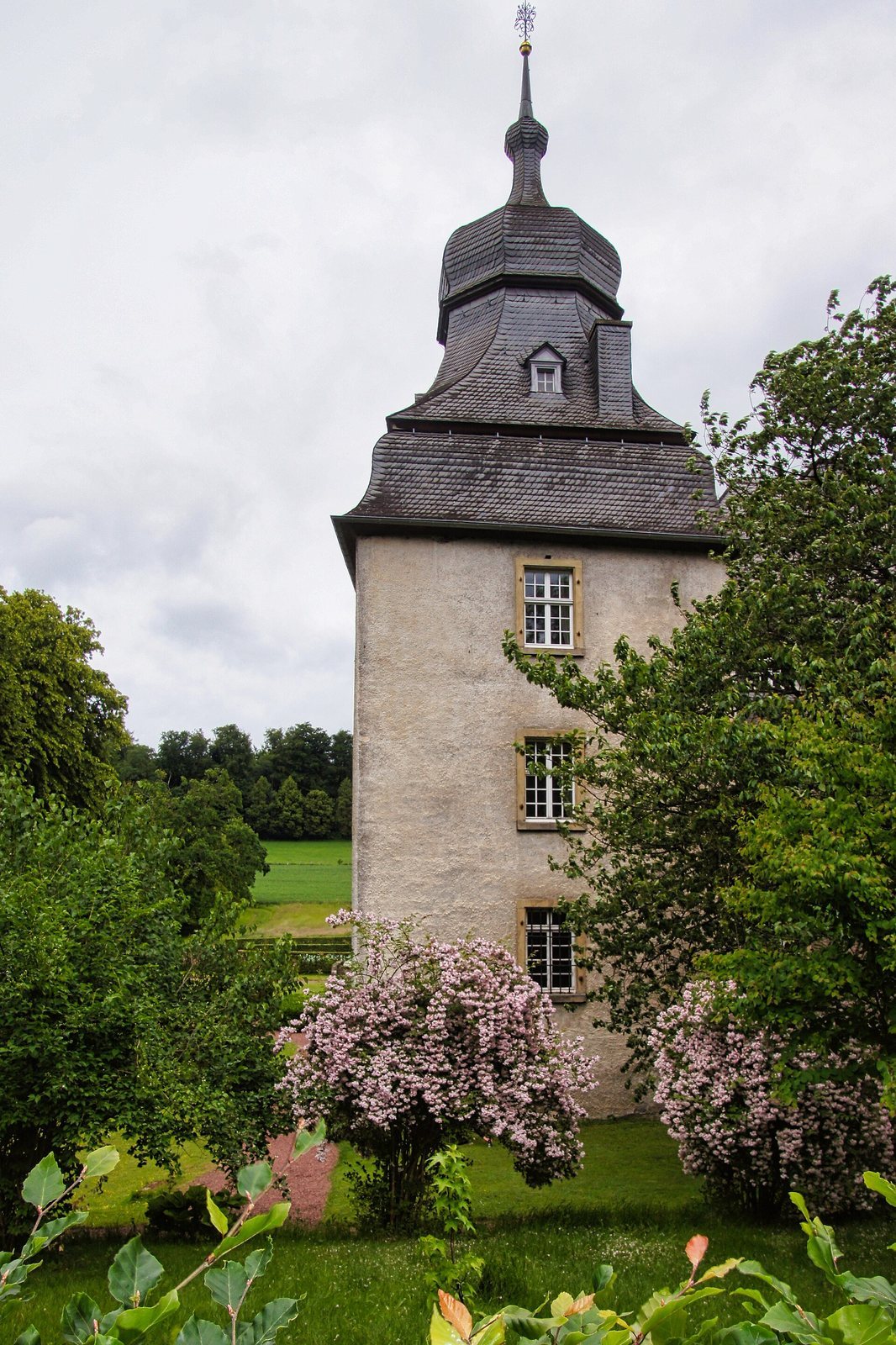
Between 1820 and 1822, the north wing and its two flanking towers were demolished, leaving an open three-wing arrangement. During the same period, the valley was reshaped as an English-style landscape park. Alterations in 1920–1922 partly restored the earlier interior appearance and established the castle’s present exterior form.
On 30 September 1928, the Melschede estate district, an administrative unit comparable to a municipality, was incorporated into the municipality of Hövel.
Remains
The castle retains an open, three-wing layout within its Baroque water-castle design. Its present exterior reflects the alterations of 1920–1922, which also partly restored the earlier interior appearance.