Schloss Losensteinleithen: A Castle and Estate in Wolfern, Austria
Site at a Glance
- Popularity
- Medium
- Country
- Austria
- Primary era
- Early Modern
- Eras represented
- Medieval, Early Modern
- Civilizations
- Habsburg, Habsburg Austria, Holy Roman Empire
- Site type
- Domestic
- Remains
- Castle
On this page9 sections
History
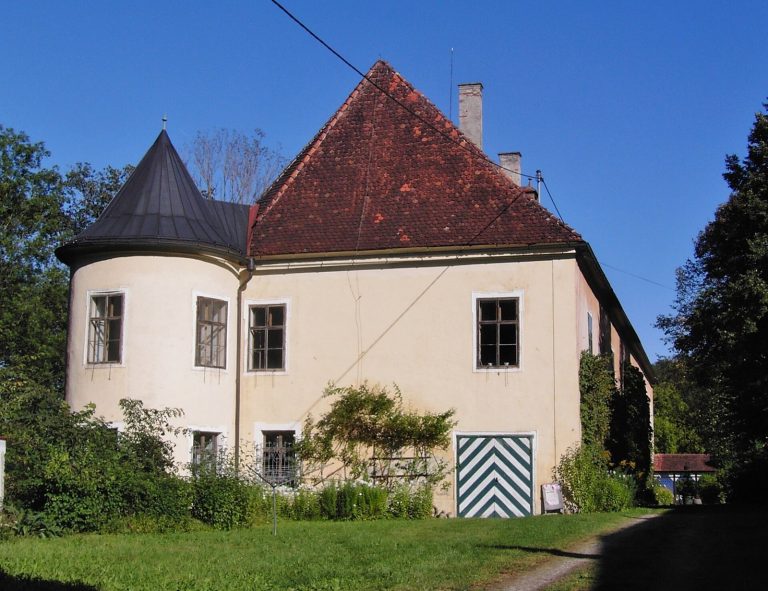
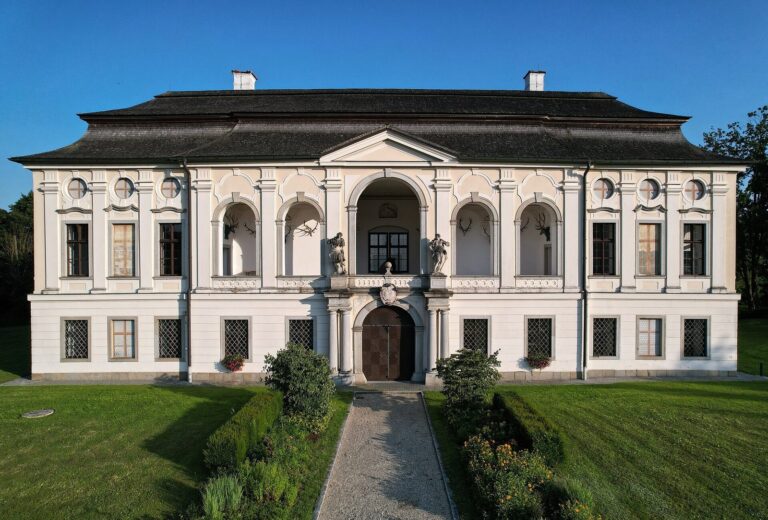
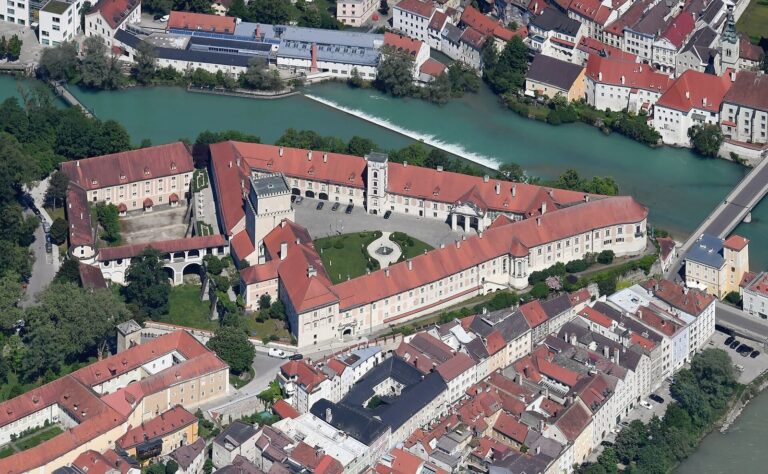
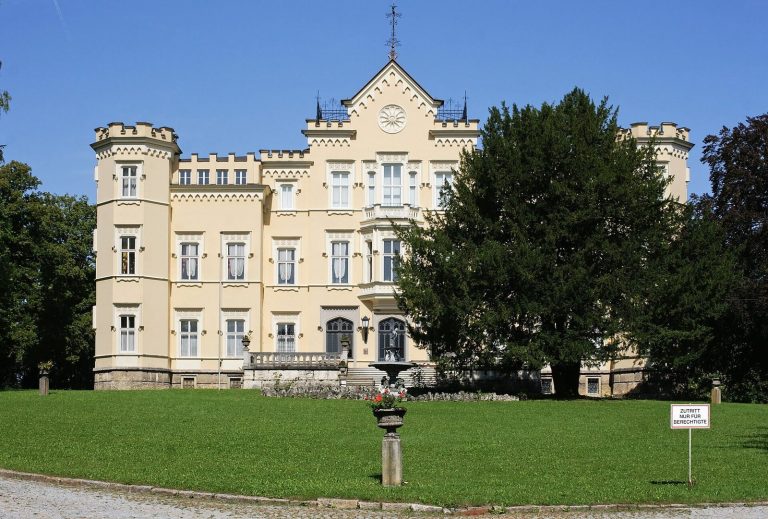
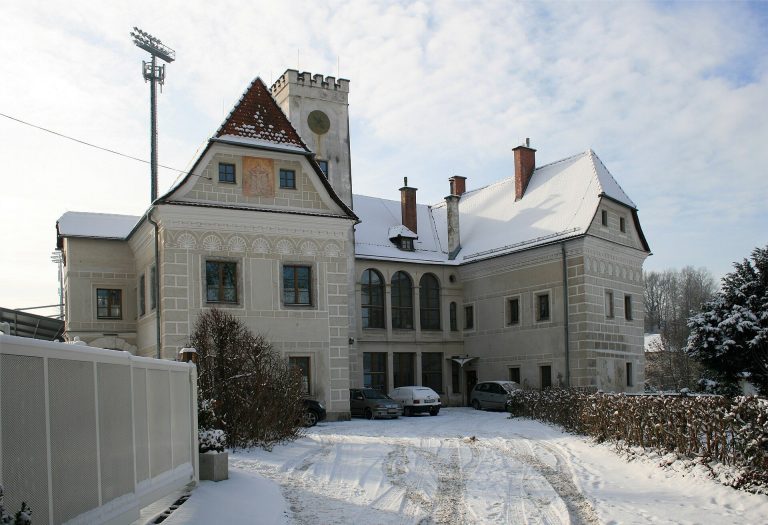
Schloss Losensteinleithen is a castle in Wolfern, in the Austrian state of Upper Austria. The estate first appears in records in 1323, and Bernhard I of Losenstein built a late-medieval moated castle here between 1409 and 1433. It later became the Losenstein family’s principal residence, before passing through other noble families and taking on new religious and educational uses.
Leiten and the medieval castle
In 1323, Chunrat der Mair auf der Leiten witnessed a charter issued by Abbot Englschalk of Gleink Abbey. The estate, then called Leiten, was sold by Niklas Flusshart to Dietrich I of Losenstein in 1362. Bernhard I built the castle between 1409 and 1433, and the local territorial court was later transferred there.
Bernhard also acquired the lordships of Schallaburg and Gschwendt through his wife. His holdings were divided among their three sons, with Florian receiving Losensteinleiten. As the family established itself there, its ancestral castle at Losenstein declined. The settlement of Leiten came to be called Losensteinleiten after its new lords.
Renaissance rebuilding and family succession
Florian’s son Wilhelm inherited the lordship after Florian’s death in 1462. Wilhelm’s son Achaz succeeded him, and when Achaz died in 1527, his son Christoph III took over. In 1532, a Turkish army led by Kassim Pasha, a high-ranking Ottoman official, made the area unsafe and heavily damaged the castle.
Christoph III’s son, Georg Achaz I of Losenstein, remodeled the moated castle in Renaissance style between 1560 and 1570 and added three wings around 1590. After Georg Achaz’s death, his widow, Christine von Perkheim, was left with their eight-year-old son, Georg Christoph II. Georg Christoph later brought the lordships of Schallaburg, Weidenholz, and Sichtenberg under his control.
The Losensteins were committed Lutherans, members of the Protestant tradition that emerged from the Reformation, and employed preachers at their court. The family returned to Catholicism from 1620. When Georg Christoph died in 1622, his son Georg Wolfgang was still a minor. In 1627, Georg Achaz II, acting as the boy’s guardian, bought the Mayr zu Laach estate, which comprised what remained of the former noble seat at Hauzenbach.
Georg Wolfgang died in 1635 as the last member of the Losensteinleiten line, and the castle passed to the Losensteins of Gschwendt. Their line ended with Franz Anton von Losenstein’s death in 1692, after which the Losenstein properties went to the Princes of Auersperg.
Auersperg ownership and later uses
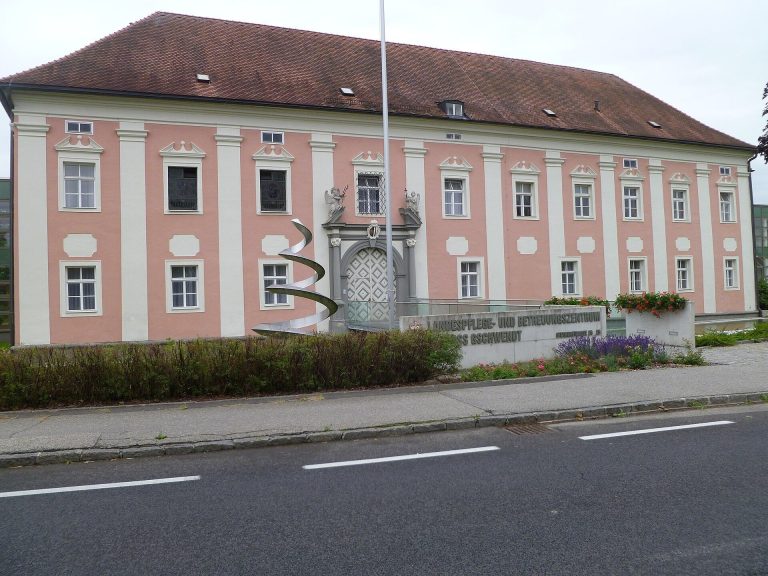
The Auerspergs remodeled the castle again in the eighteenth century and lived there until the 1950s. After it sustained war damage during the Second World War, the building fell into decay. It was sold in 1953 and became the property of the Austrian province of the Camillian Order on 1 June 1955. The Catholic order, associated with care for the sick, operated a small seminary and a private academic secondary school with public status at the castle for about twenty years. The school closed in 1976, followed by the boarding school in 1978.
In 1978, the order leased the castle to Upper Austria, whose provincial government ran a girls’ agricultural school there until 1983. The order’s Linz community returned in 1985 and established the St Camillus retreat and education house. Economic and staffing difficulties eventually led the order to sell the castle and its four-hectare estate. On 1 September 1997, REWO Residenzen und Wohnheime GmbH, owned by the Plocek family, acquired the property and operated a residential and nursing home in keeping with the Christian-social values of St Camillus de Lellis. Property developer Georg Spiegelfeld-Schneeburg acquired the castle in 2015 and subsequently offered it for sale.
Remains
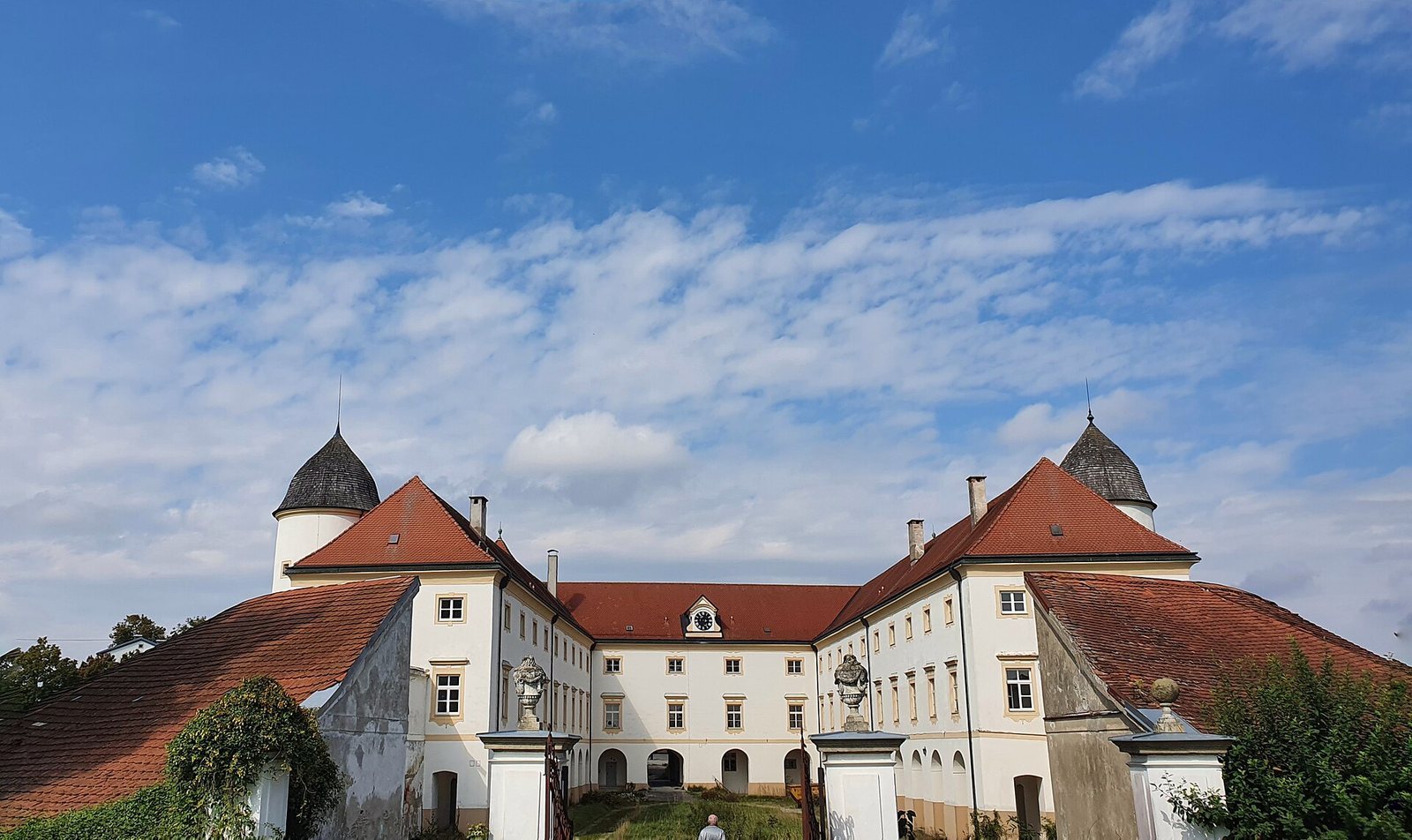
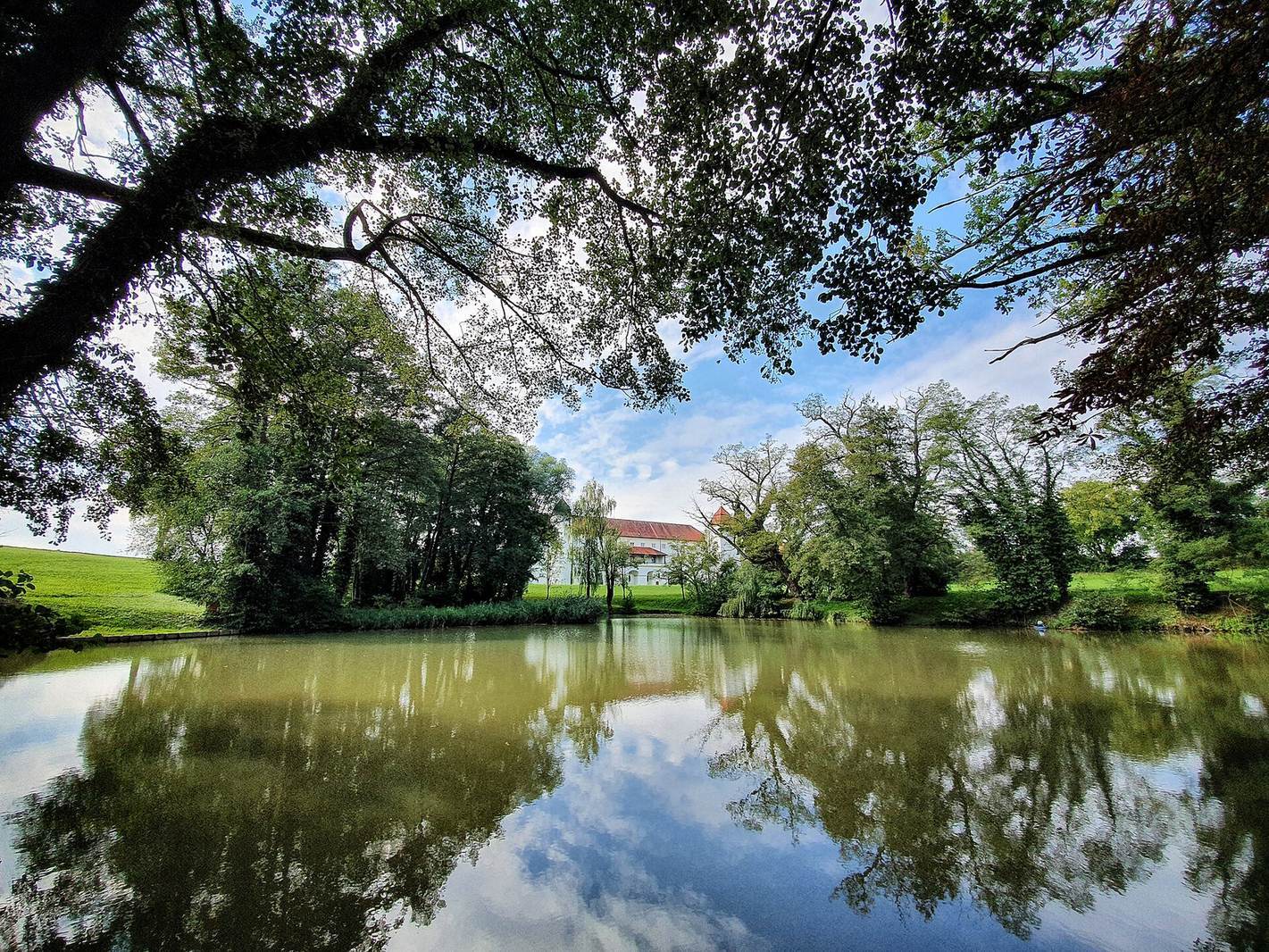
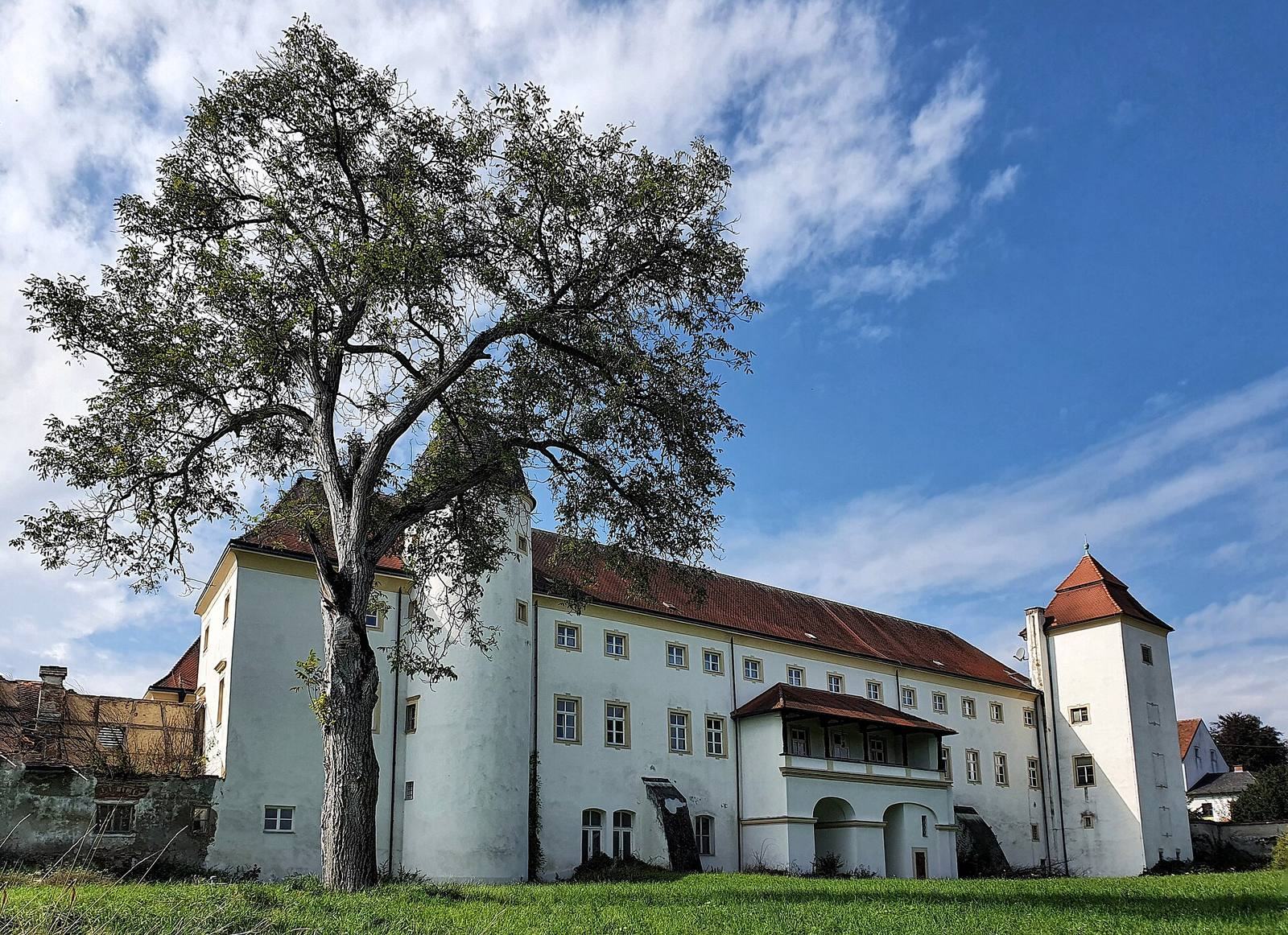
The castle has a horseshoe-shaped plan enclosing an arcade courtyard, an open court bordered by covered galleries of arches. The grounds include a large garden and a castle pond. A broad moat once surrounded the building; it has been filled in, though shallow depressions remain in the ground.
Castle and grounds
Castle
Schloss Losensteinleithen is the largest historic building in the market town. Its horseshoe-shaped arrangement surrounds the courtyard, while the former moat’s remaining depressions trace part of the castle’s defensive setting. The castle’s successive medieval and Renaissance phases are reflected in its history of rebuilding, including the addition of three wings around 1590.
Garden and pond
A large garden and a castle pond form part of the grounds. The broad moat around the castle has been filled, with slight dips in the ground remaining as evidence of its course.
Auersperg mausoleum
The family mausoleum stands 400 metres north of the castle, at the edge of a forest. Karl Wilhelm, the eighth Prince of Auersperg, had it built around 1880 as a burial place for his family. Before its construction, the Auerspergs had been buried in the crypt beneath the parish church of Maria Laah. Karl Wilhelm, who died in early January 1890, was buried in the mausoleum; in 1911, under Karl Maria, the ninth Prince, the building took its present form.
The mausoleum has a symmetrical plan and a restrained Historicist design, an approach drawing on earlier architectural styles. Its burial chamber lies in the basement, where stone sarcophagi hold the prince and his wife, while wooden coffins contain their descendants. A chapel directly above the prince’s sarcophagus can be seen from outside. Cloister-like galleries extend on either side, with memorial plaques for buried members of the Auersperg family. The family retained the mausoleum after selling the castle. The last descendant of the Austrian line died in November 1998 and was buried there.