Schloss Kleiningersheim: A Renaissance Residence in Germany


Site at a Glance
- Rating
- 4.6
- Popularity
- Very Low
- Country
- Germany
- Primary era
- Early Modern
- Eras represented
- Medieval, Early Modern, Modern
- Civilizations
- Duchy of Württemberg, Holy Roman Empire
- Site type
- Domestic
- Remains
- Elite Residence
On this page7 sections
History
Schloss Kleiningersheim is a Renaissance-style residence in Ingersheim, Germany, built by the imperial knight Kaspar Nothaft from 1565 beside the remains of Ingersheim Castle. The earlier castle probably originated in the twelfth century, but had fallen into decay by the sixteenth century. Its succession by the new Schloss reflects the long political and familial history of the site.
Ingersheim Castle and Its Lords
Ingersheim Castle appears in documents from the twelfth century. From approximately the time of Margrave Hermann V of Baden, medieval service nobles known as ministeriales held it as a Baden fief. These nobles performed administrative, military, or court duties for a territorial lord and could receive castles or estates in return.
After the ministerial family died out around 1320, the castle passed to Heinrich Sturmfeder and remained connected with another Baden service family. That family pledged it to the Counts of Hohenzollern. In 1341, Count Friedrich IX of Hohenzollern and his brothers transferred the castle to Friedrich’s wife, Countess Adelheid. By 1344, Friedrich of Sachsenheim and his sons had become its owners.
The property then changed hands repeatedly among the Dürrmenz, Sturmfeder, Bönnigheim, Urbach, and Stadion families. Baden’s overlordship of Ingersheim passed to Württemberg in 1484, and the castle came fully under Württemberg in 1504. The Nothaft family of Hohenberg subsequently received it as a Württemberg fief, meaning property granted by a superior lord in return for specified obligations.
Construction of the Schloss
During the wars of the mid-sixteenth century, Ingersheim Castle fell into decay. From 1565, Kaspar Nothaft, an imperial knight who owed direct allegiance to the Holy Roman Emperor rather than to a territorial prince, built Schloss Kleiningersheim beside the older remains. After Nothaft died without children in 1584, the property passed to his widow, Anna Maria, née von Neipperg, who lived there until her death.
In 1600, Württemberg granted the Schloss as a fief to Privy Government Councillor Melchior Jäger von Gärtringen. It then became known also as Jägersburg. Captain-Lieutenant Johann Adam Zinski acquired it in 1640, and his wife was née Jäger. The property later passed to Samuel Bintauf, a servant of Adam Zinski, then to Stuttgart chief forester Eberhard Schaffalitzki, David Roth, Roth’s wife, who was also née Jäger, and, in 1693, to Johann Georg Schmid, Roth’s son-in-law.
Later Owners and Uses
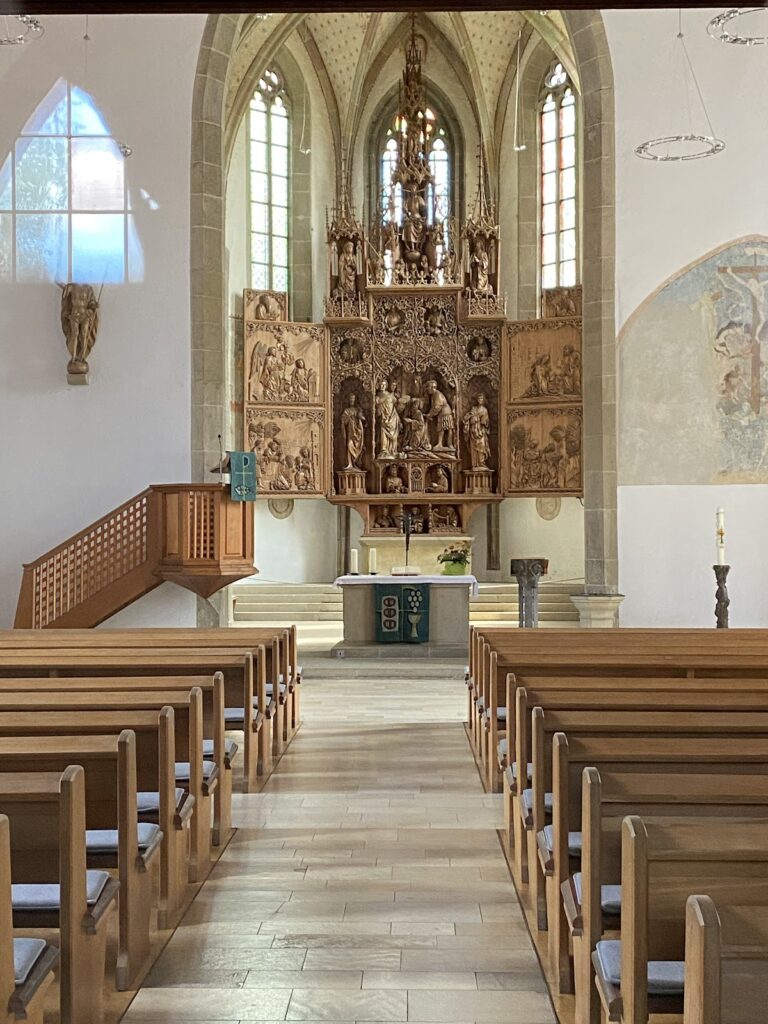
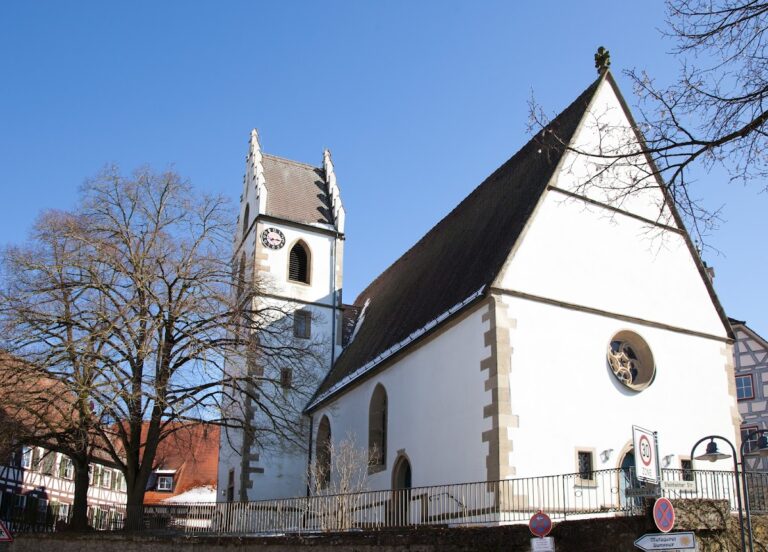
Chancery advocate Johann Dietrich Hörner purchased the Schloss in 1707. After his death, he was probably buried in the choir of St George’s Church. Major General Baron von Woellwarth bought the property in 1726, beginning almost two centuries of possession by his family.
Carl von Ostertag-Siegle, a Stuttgart entrepreneur who acquired the Schloss in 1908, commissioned the architect Simmel to remodel it in 1911 and 1912. In 1921, Baron Josef Maria von Radowitz purchased the property and arranged the vineyards as the terrace and garden complex that survives today.
From 1936 to 1944, the building housed the leadership school of the SA Group Southwest. The SA, or Sturmabteilung, was the Nazi Party’s paramilitary organization, and its leadership schools trained senior or prospective personnel. Walter Leibrecht bought the Schloss in 1963, after which it served as an administrative building for Schiller College. It is now used as a family residence.
Remains
Renaissance Schloss and Earlier Castle
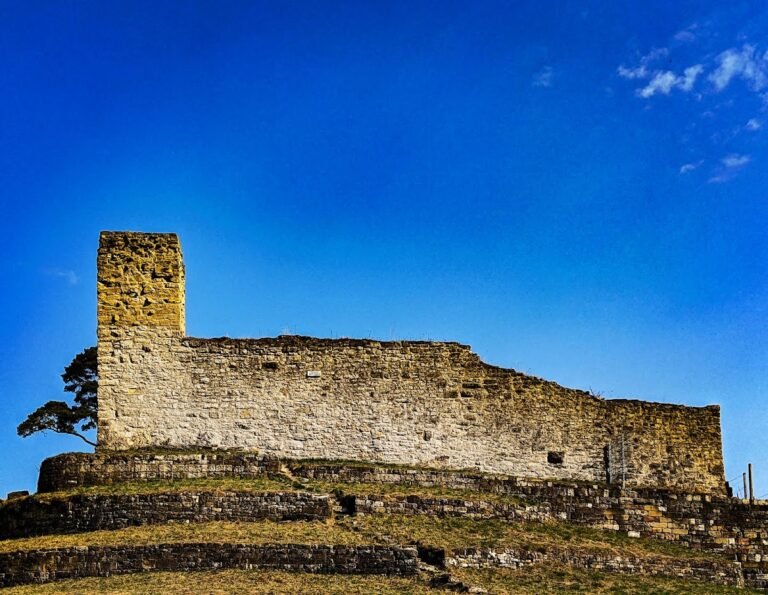
The surviving Schloss Kleiningersheim is a Renaissance building constructed from 1565 beside the remains of Ingersheim Castle. Renaissance architecture drew on classical forms, symmetry, and ordered design. The earlier castle walls survive in the vineyards near the viewing platform, preserving a physical connection between the medieval stronghold and the later residence.
Terraces and Gardens
The terrace and garden complex created under Josef Maria von Radowitz in 1921 remains part of the site. It was laid out in the vineyards and forms a later landscape setting for the Schloss and the surviving traces of the earlier castle.
Nearby sites