Kaltenberg Castle: A Bavarian Residence, Brewery, and Tournament Site
Site at a Glance
- Popularity
- High
- Country
- Germany
- Primary era
- Modern
- Eras represented
- Medieval, Early Modern, Modern
- Civilizations
- Duchy of Bavaria, German, Holy Roman Empire, Kingdom of Bavaria
- Site type
- Domestic
- Remains
- Castle
On this page11 sections
History
Foundation and rebuilding
Kaltenberg Castle stands in the village of Kaltenberg, within the municipality of Geltendorf in Upper Bavaria, Germany. Rudolf I, Duke of Upper Bavaria and Count Palatine of the Rhine, founded it in 1292 as a hilltop stronghold. A member of the Wittelsbach dynasty, which ruled Bavaria, Rudolf saw the castle destroyed in 1296 during a feud involving the Hegnenberg family. By about 1300, it belonged to the Rohrbachers of Hegnenberg.
Around 1425, Peter Rehlinger, a member of Augsburg’s influential civic elite, rebuilt the castle. The Hundt family of Lautterbach and Sulzemoos held it from 1469 to 1612. Wiguläus Hundt, a Bavarian historian and statesman, was born there in 1514.
Religious ownership and state property
The Jesuits, a Catholic religious order, took possession in 1612. Swedish forces destroyed the castle in 1633 during the Thirty Years’ War, a major European conflict shaped by religious and dynastic struggles from 1618 to 1648. After the Jesuit order was suppressed in 1773, the Order of Malta, a Catholic order with a historical military role, took possession in 1781.
The castle became state property in 1808. From 1822 to 1845, the Counts of Hegnenberg-Dux were its lords but did not live there, using only its brickworks.
Redesign and changing ownership
Royal engineer-geographer Johann Adolph Sommer directed a redesign in a Gothic style between 1841 and 1854. Ownership then passed among Nikolaus Hofmann, Paul Radlmayr, Anton Heilmair, and Georg Heilmair from 1854 to 1876. The von Willibald family acquired the castle in 1876 and owned it until the mid-1910s. That year, Sigmund von Willibald established the Kaltenberg castle brewery.
The Schülein family and Nazi dispossession
The Schülein family owned the castle from the mid-1910s until 1939. Joseph Schülein, later assisted by his son Fritz, successfully managed the brewery and estate, whose activities also included peat extraction and sheep breeding in Emminger Moos. Fritz was interned at Dachau, a Nazi concentration camp, on 10 November 1938. In February 1939, he was dispossessed under the Nazi policy of Aryanization, the seizure of Jewish-owned businesses and property. The government of Upper Bavaria then took the estate under its administration.
Postwar ownership and present use
After lengthy negotiations with the compensation authorities, Fritz Schülein regained the property in the late 1940s. The castle was sold to the House of Wittelsbach, Bavaria’s ruling house, in 1954. It is now the residence of Prince Luitpold of Bavaria and his family, and also houses two restaurants and hosts events.
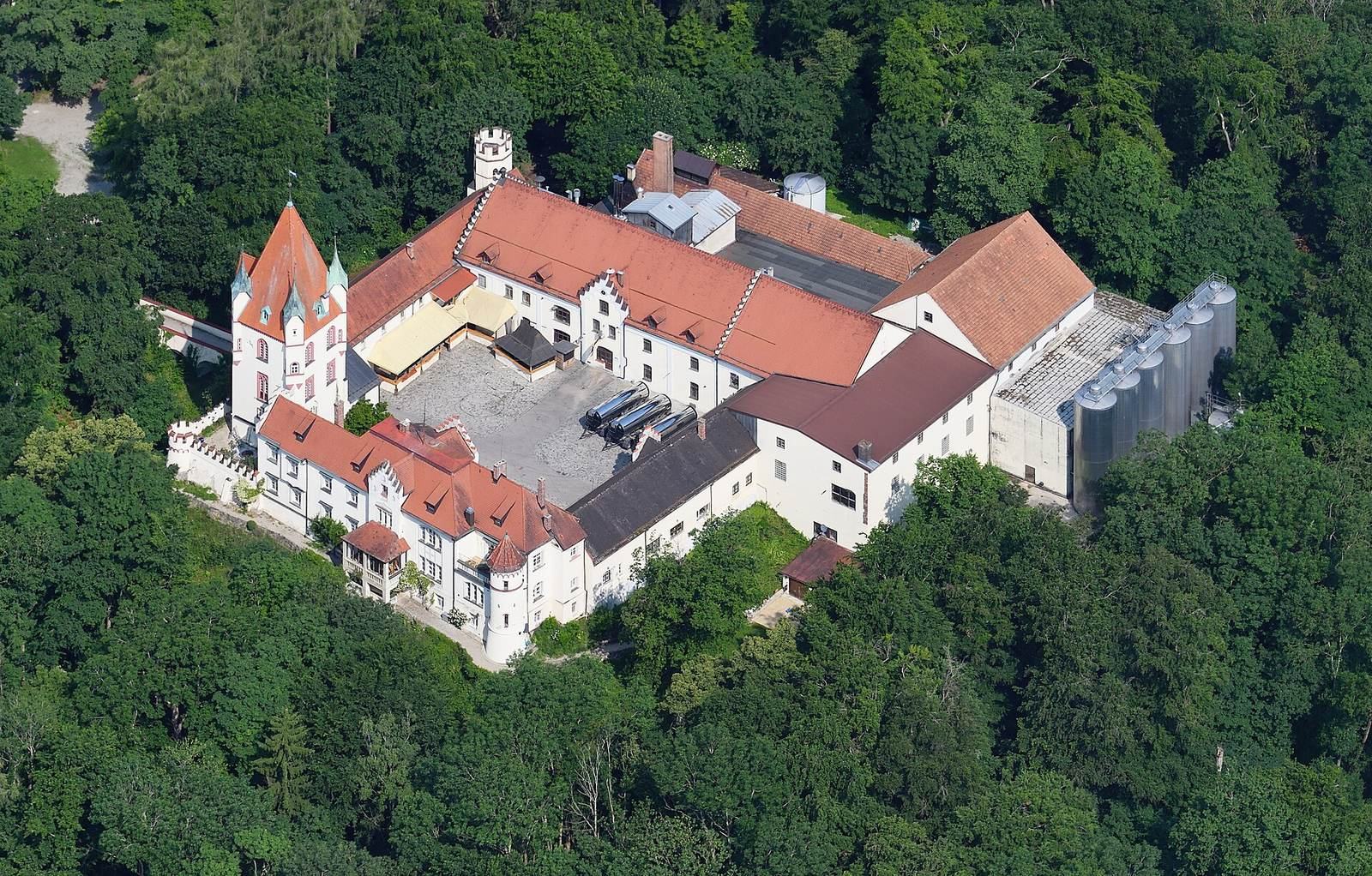
Part of the König Ludwig Schlossbrauerei’s brewing operation has been based at the castle since 1876. It produces about 100,000 hectolitres of beer there each year, while the brewery’s larger site is in Fürstenfeldbruck, about 20 kilometres away. In 1979, Luitpold of Bavaria organized the first Kaltenberg knights’ tournament; the event is now held annually on the grounds. The castle area is recognized as an archaeological monument because of late-medieval and early-modern remains associated with the castle and its predecessor buildings.
Remains
Main castle
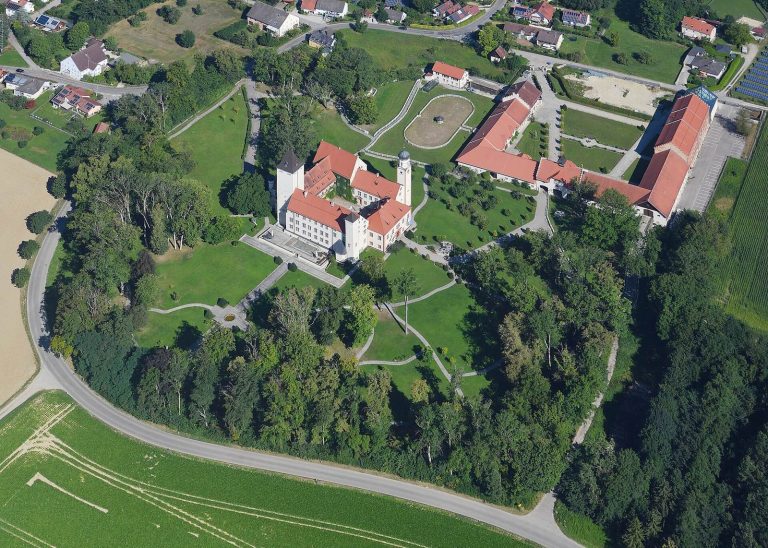
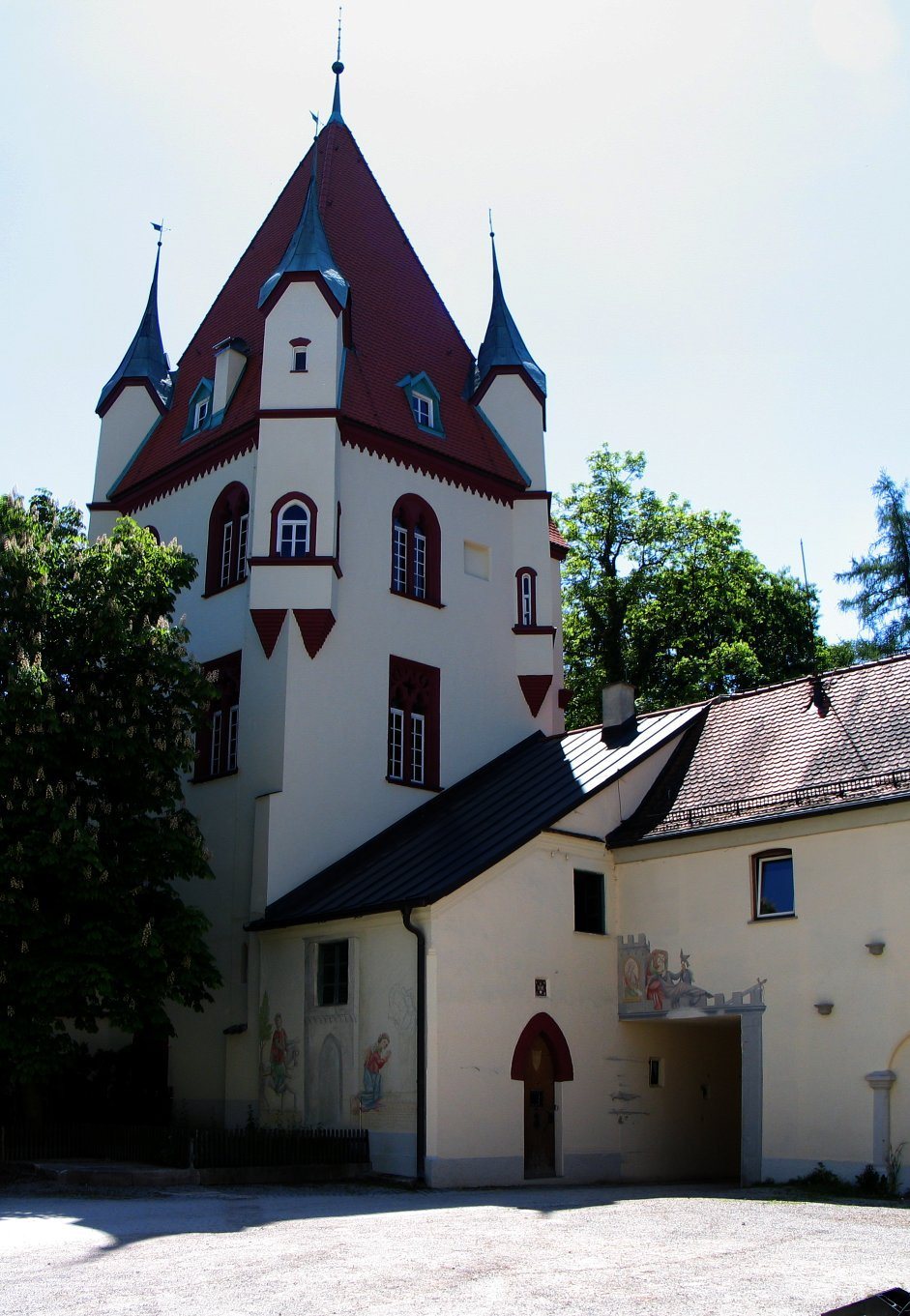
The castle is a four-wing complex whose present form largely reflects the redesign begun in 1841. The core of the west wing dates to the 17th-century Jesuit period. The main buildings stand amid densely wooded grounds near Lake Ammersee.
Moats and towers
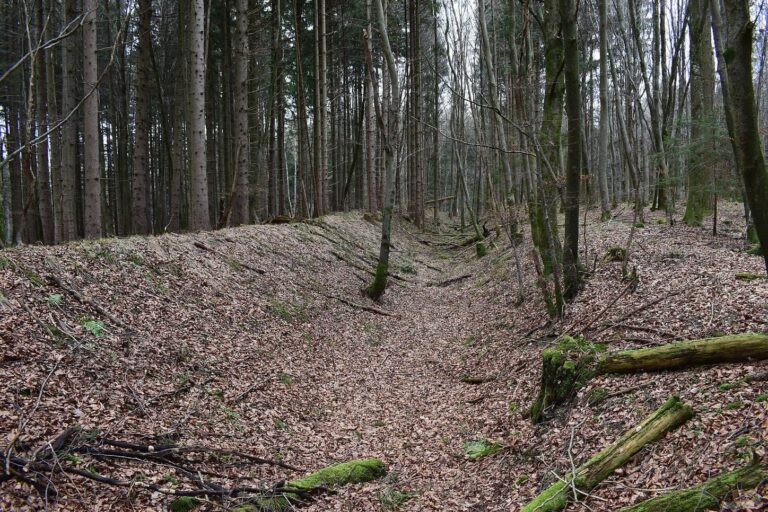
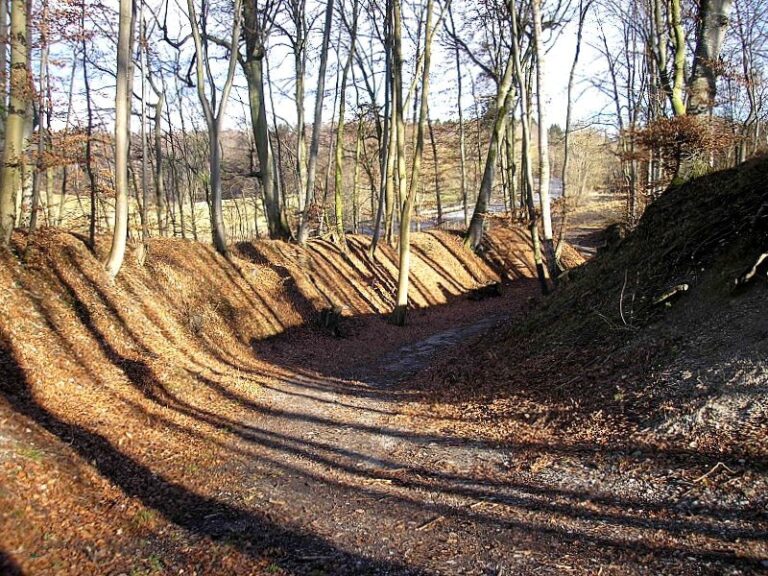
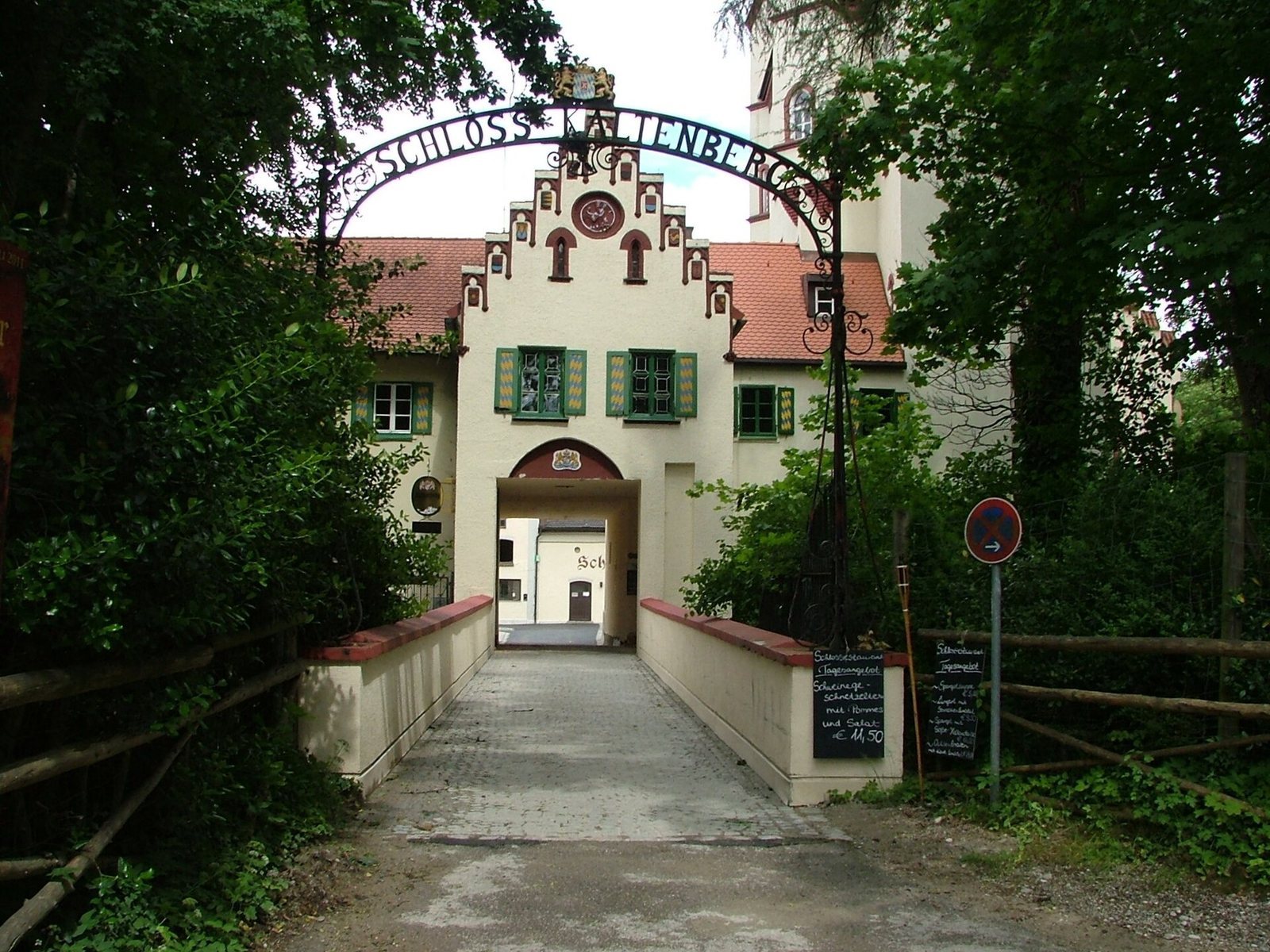
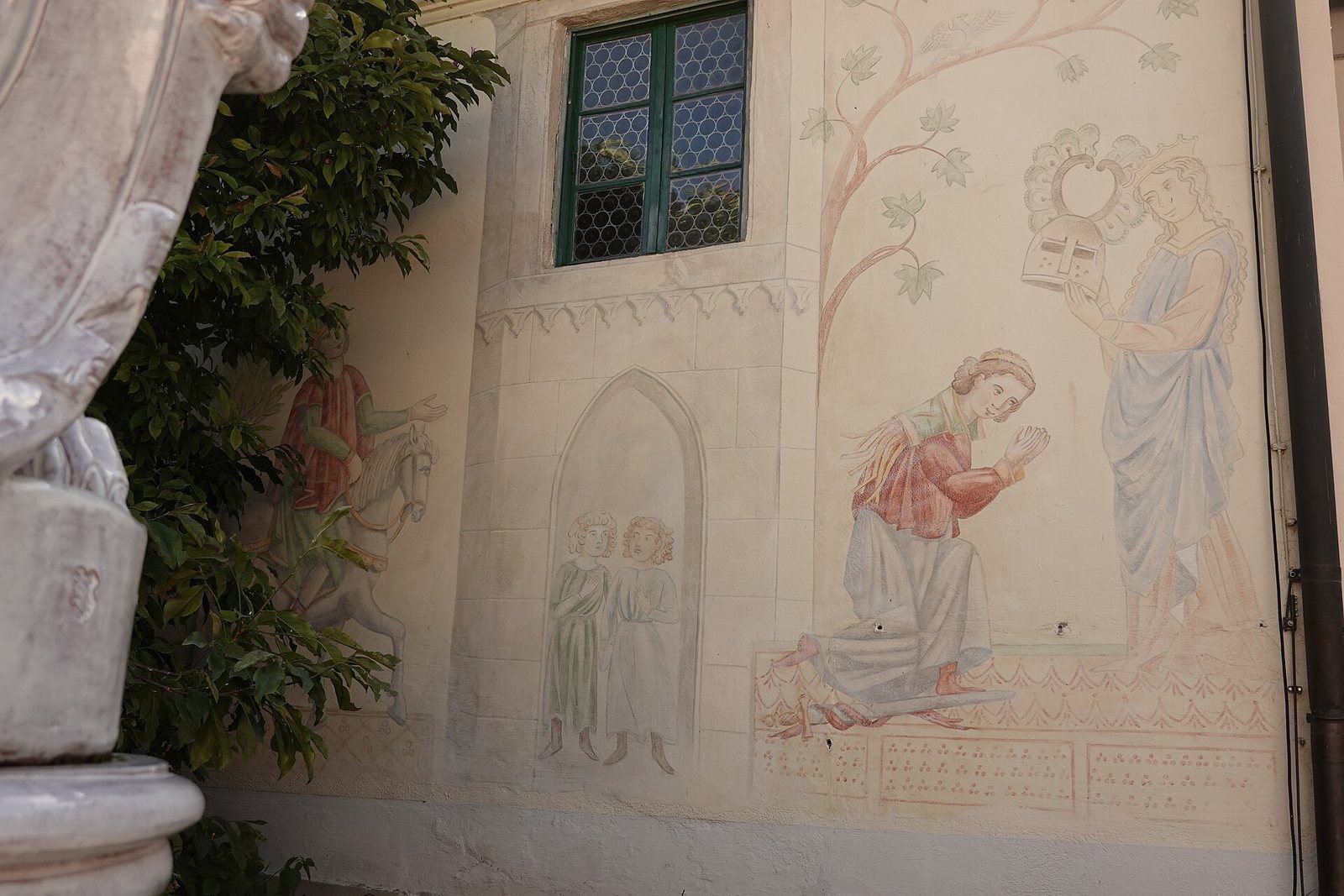
Moats from the medieval castle survive, and a modern bridge crosses the neck moat, a defensive ditch cut across a narrow strip of land. The gatehouse and prominent southwest tower took their present forms in the 19th-century redesign. A separate neo-Gothic Bergfried, or principal defensive tower, has small turrets at its corners. Its frescoes draw on motifs from the Codex Manesse, a medieval collection of German-language songs and poetry. The paintings were made in connection with the tournaments begun in 1979, and some remain unfinished.
Estate and tournament grounds
A large estate area lies in front of the main castle, with simple residential and working buildings, most dating to the 19th century. The main tournament arena is situated below the castle. It was enlarged in 2006 and partly roofed in 2015.
Brewing facilities
Part of the castle’s brewing facilities is housed within the site.