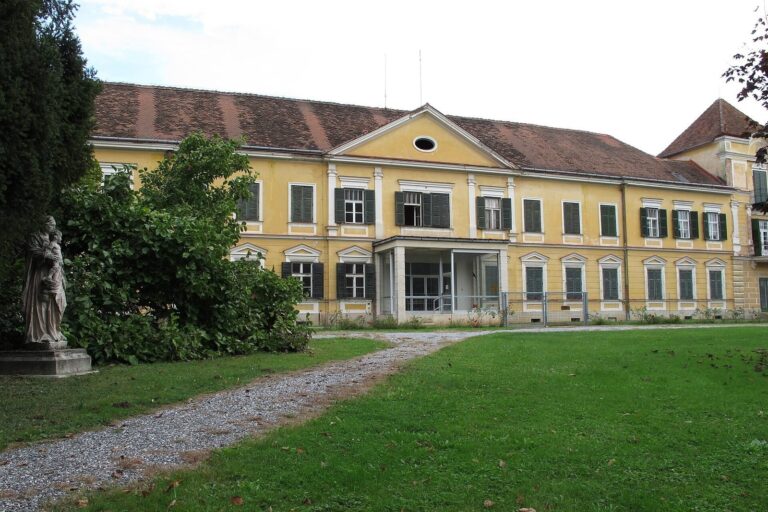
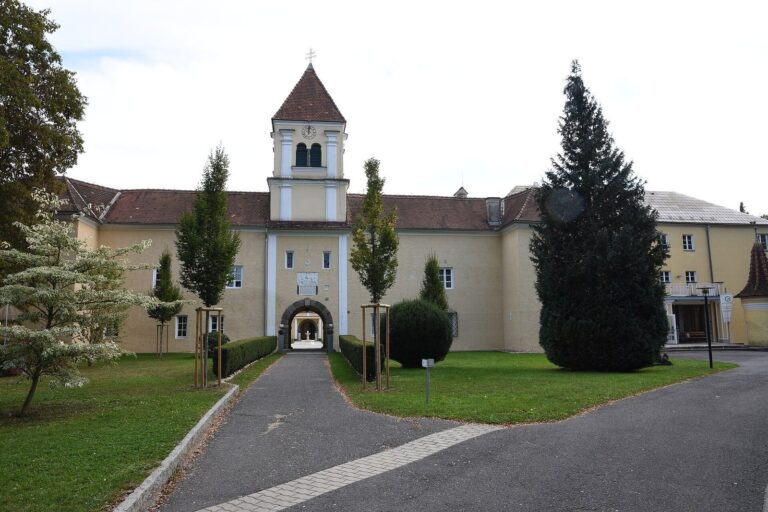
Kalsdorf Castle: A Former Noble Residence and Lordship in Styria
Site at a Glance
- Rating
- 4.5
- Popularity
- Low
- Country
- Austria
- Primary era
- Early Modern
- Eras represented
- Early Modern, Modern
- Civilizations
- Duchy of Styria, Habsburg, Habsburg Austria, Holy Roman Empire
- Site type
- Domestic
- Remains
- Castle
On this page10 sections
History
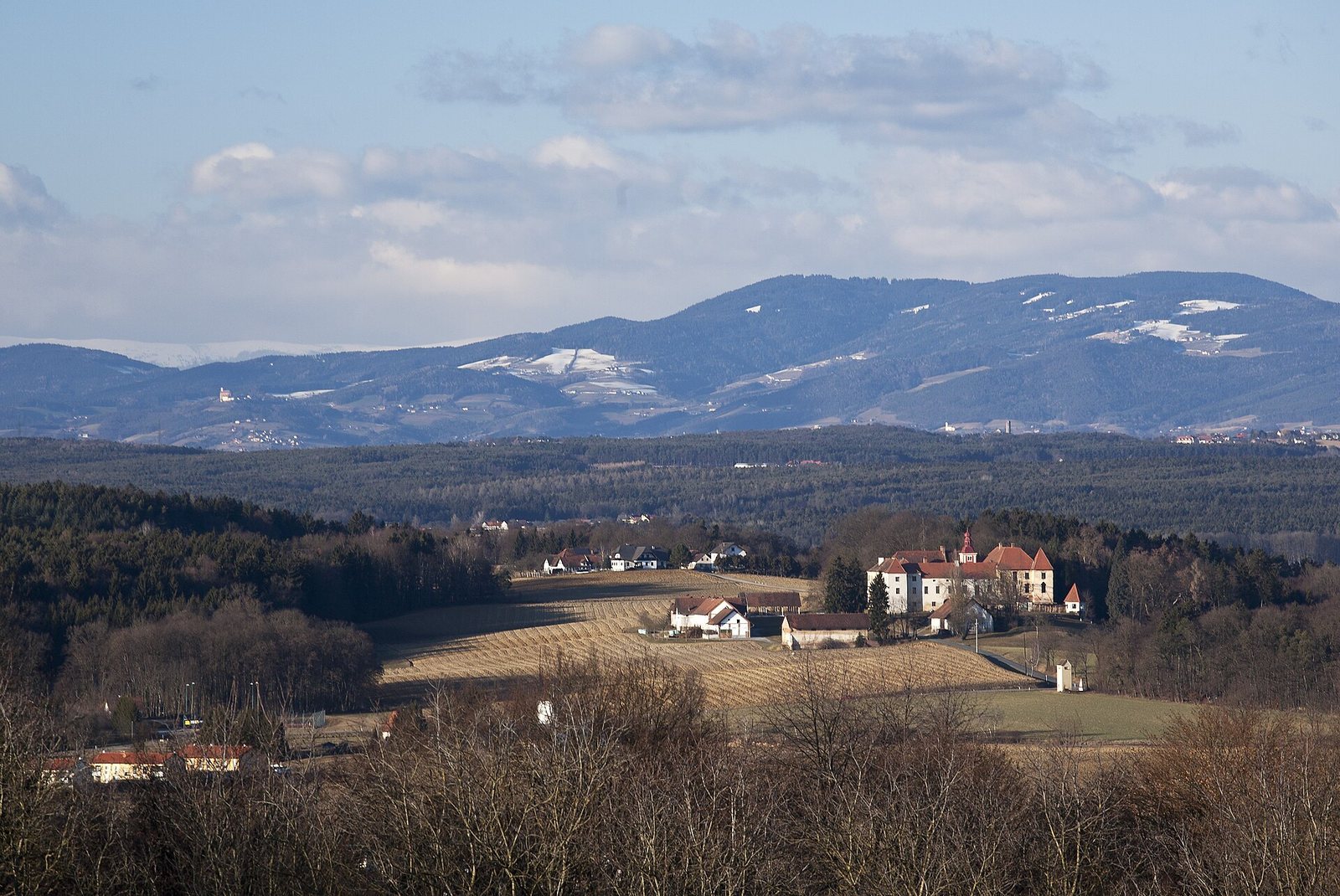
Kalsdorf Castle is a historic castle in Kalsdorf bei Ilz, in eastern Styria, Austria, whose early history reaches back to a defensive tower on the site around 1160. The residence later became an administrative center for the Herbersdorf family and a regional stronghold of Protestantism.
Medieval tower and noble estate
A defensive structure probably occupied the site by the mid-12th century. Around 1160, a tower stood on a small rise between the Ilz and Feistritz valleys. It belonged to Karl von Hohenberg, a ministerial, or member of the service nobility who served a lord in military or administrative roles. The tower may have helped watch the nearby fortress of Fürstenfeld and guard against Hungarian incursions.
In the 13th century, Kalsdorf became a fief of the Hager family, meaning they held the land under obligations to a superior. The Hagers oversaw settlement in the surrounding area and lived in a fortified manor; the earlier tower probably no longer stood. The estate appears under the name Challenstorf in 1366, when Hans Hager held it. It passed soon afterward to the related Pessnitzer family, and Ulrich Pessnitzer sold it to Niklas Herbersdorf in 1419.
The Herbersdorf residence and religious conflict
Niklas Herbersdorf transformed the manor into a residence suited to a noble family. He incorporated a second estate, described as princely, from directly opposite the manor. As the Herbersdorfs extended their regional lordship, Kalsdorf became a center of local administration and economic activity.
In 1548, Franz von Herbersdorf commissioned a new north wing and a well, strengthening the complex against possible Ottoman attacks. The Ottoman Empire was expanding into southeastern Europe and came into conflict with Central European powers. Franz’s son Otto inherited the castle. Under Otto, Kalsdorf became a regional center of Protestantism in eastern Styria. An evangelical, or Protestant, pastor had served at Ilz since 1553, while the territorial ruler pursued the Counter-Reformation, the Catholic Church’s effort to restore Catholic practice and authority.
In 1579, Otto’s Protestant pastor was expelled. That year, work at the castle added a west wing and began a south wing. A dispute over the Ilz parish followed in 1585, and a Catholic priest was forcibly installed there in 1589. After Protestant subjects were refused burial in the Catholic cemetery, Otto established a separate Protestant church and cemetery at Kalsdorf.
An initial effort by the territorial authorities to suppress the Protestant church failed. Under Archduke Ferdinand, however, the re-Catholicization of Inner Austria, the Habsburg territories that included Styria, intensified. On 9 and 10 June 1600, a Reformation Commission destroyed the church and blew up its tower. Several hundred soldiers secured the operation, which took place at the bishop’s request with support from the provosts of Pöllau and Vorau. Otto died in late 1601.
Wildenstein ownership and the lordship
During the Bocskai uprising of 1604-1606, a revolt in Habsburg lands led by Stephen Bocskai, peasants under the Kalsdorf lordship suffered heavily, but the castle was not captured. Otto’s son and heir, Franz von Herbersdorf, later had to leave Styria because he was Protestant and emigrated to Regensburg. In 1630 he sold Kalsdorf, the noble seat of Liboch, and estates near Luttenberg to Barbara Constancia, Baroness von Khuenburg. She was married in her second marriage to a Count of Wildenstein. The castle’s chapel, dedicated to Saint Barbara, may have originated during her ownership. When Barbara died in 1645, the Wildenstein family inherited the property.
From the second half of the 17th century, the Wildensteins enlarged the castle. A depiction from 1681 shows the complex complete, with extensive defenses on its southern side. The castle precinct included Kalsdorf, Ilz, and surrounding settlements, though its boundaries were not precisely fixed. Its owners exercised manorial jurisdiction, meaning authority over estate residents and local legal affairs. Subjects owed money, produce, and compulsory labor. People accused of crimes under the high court’s jurisdiction were handed over to the Fürstenfeld court at designated points near Pichlmüller’s Graben or in the Maierhofen area.
The lordship also managed extensive land and vineyard rights. Its vineyard offices administered wine-growing areas in eastern Styria and between the Mur and Drava rivers. Vineyard tenants cultivated vines at several locations, while the estate owned vineyards at Altenberg, Jerusalem, and Eisentür. Wine was stored in the castle cellars and regularly auctioned. The wider estate included farmland, agricultural buildings, three mills, and a brewery authorized in 1797. An inn opposite the brewery continued to operate into the first half of the 19th century. The Liboch estate near Großwilfersdorf was united with the Kalsdorf lordship and included the Hofmühle at Großwilfersdorf.
Decline of manorial authority and modern ownership
Toward the end of the 18th century, subjects rebelled against excessive dues and tithes, customary levies on produce. In 1839, under Johann von Wildenstein, the lordship became insolvent and was placed under sequestration, or official administration while financial matters were resolved. Leaseholders managed it afterward. Johann Michael Zach acquired the property in 1840, Ignaz Oblak in 1843, and Josef Ritter von Ulheim succeeded Oblak in 1846. That year, the Kalsdorf district comprised 29 settlements and more than 7,600 inhabitants. The end of manorial lordship in 1848 brought this system to a close.
Anton Czeicke acquired the castle in 1864, and his family retained it into the second half of the 20th century. After the former brewery burned in 1876, Cajetan Czeicke reportedly prompted the creation of a fire brigade. The Schloss Kalsdorf Volunteer Fire Brigade was founded the following year under commander Adolf Czeicke. Neudorf gained its own fire station in 1900; the two brigades separated in 1926 after a dispute over leadership.
During the Second World War, Soviet prisoners of war were housed at the castle. On 8 May 1945, the Red Army set it on fire. The east and south wings between the chapel and castle gate burned completely. Reconstruction began in 1947, but the east wing remained uninhabitable. After the last owner, Stephanie Czeicke, died in 1975, the castle passed by bequest to the state of Styria, which has owned it since then. A cattle-breeding experimental station opened in the adjacent manor farm in 1981. From 1994, gallery owner Helmut Reinisch leased the castle and revived it as a venue for contemporary art and authentic nomadic carpets. Artist Hartmut Skerbisch lived and worked there until his death in 2009.
Remains
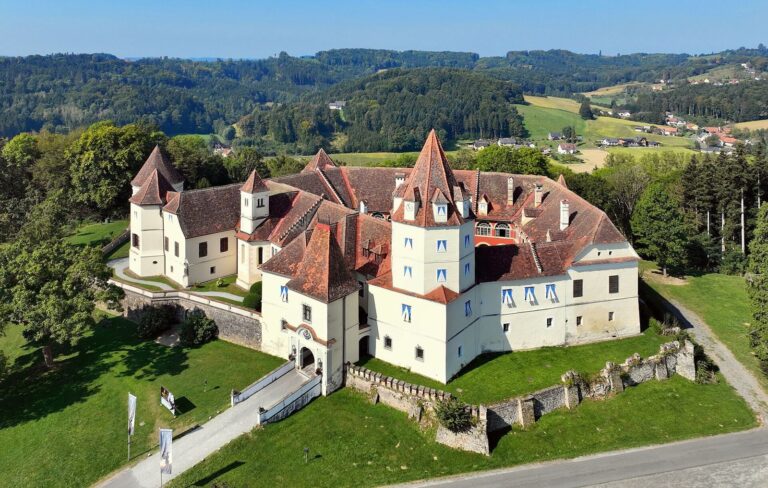
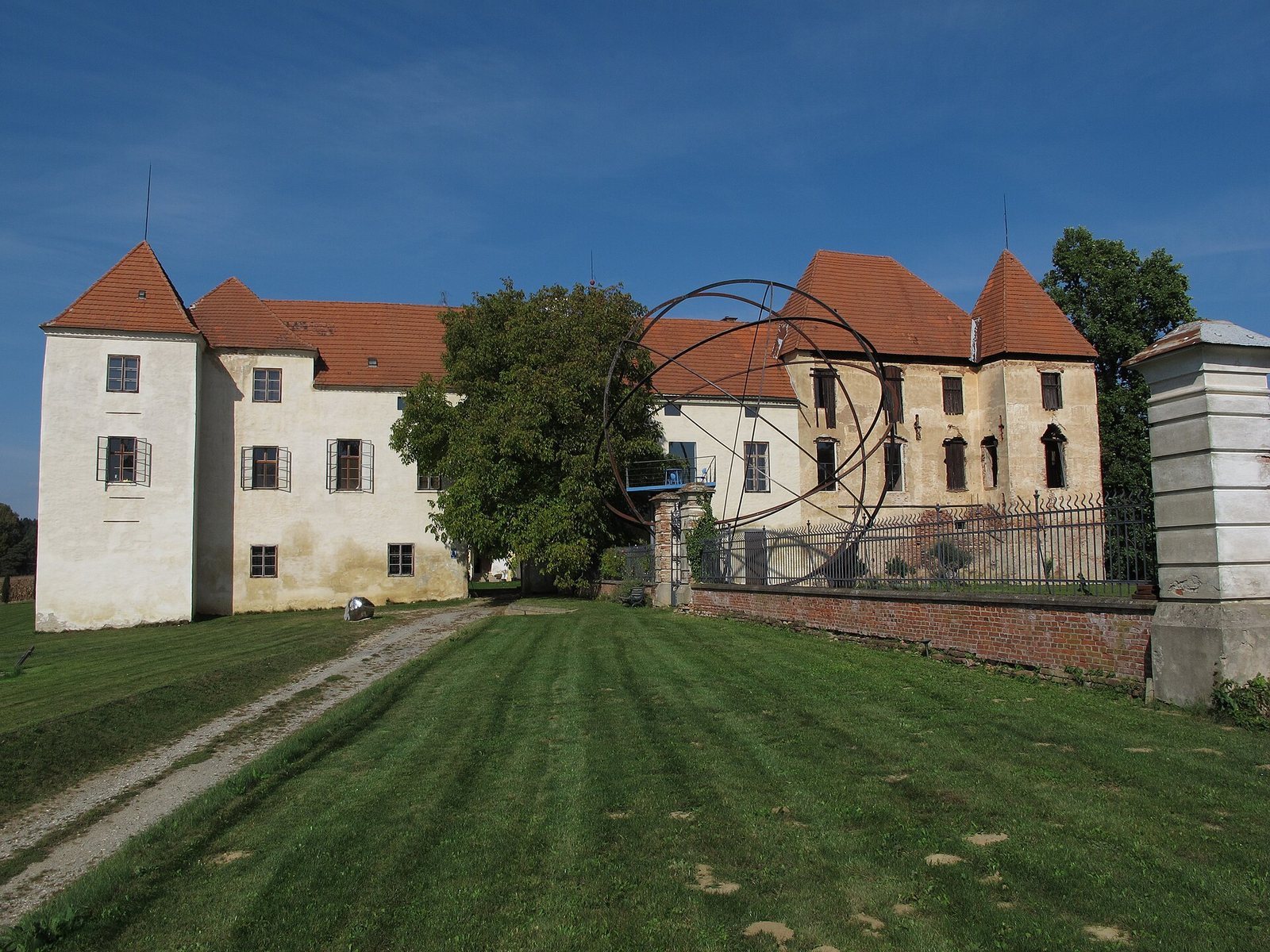
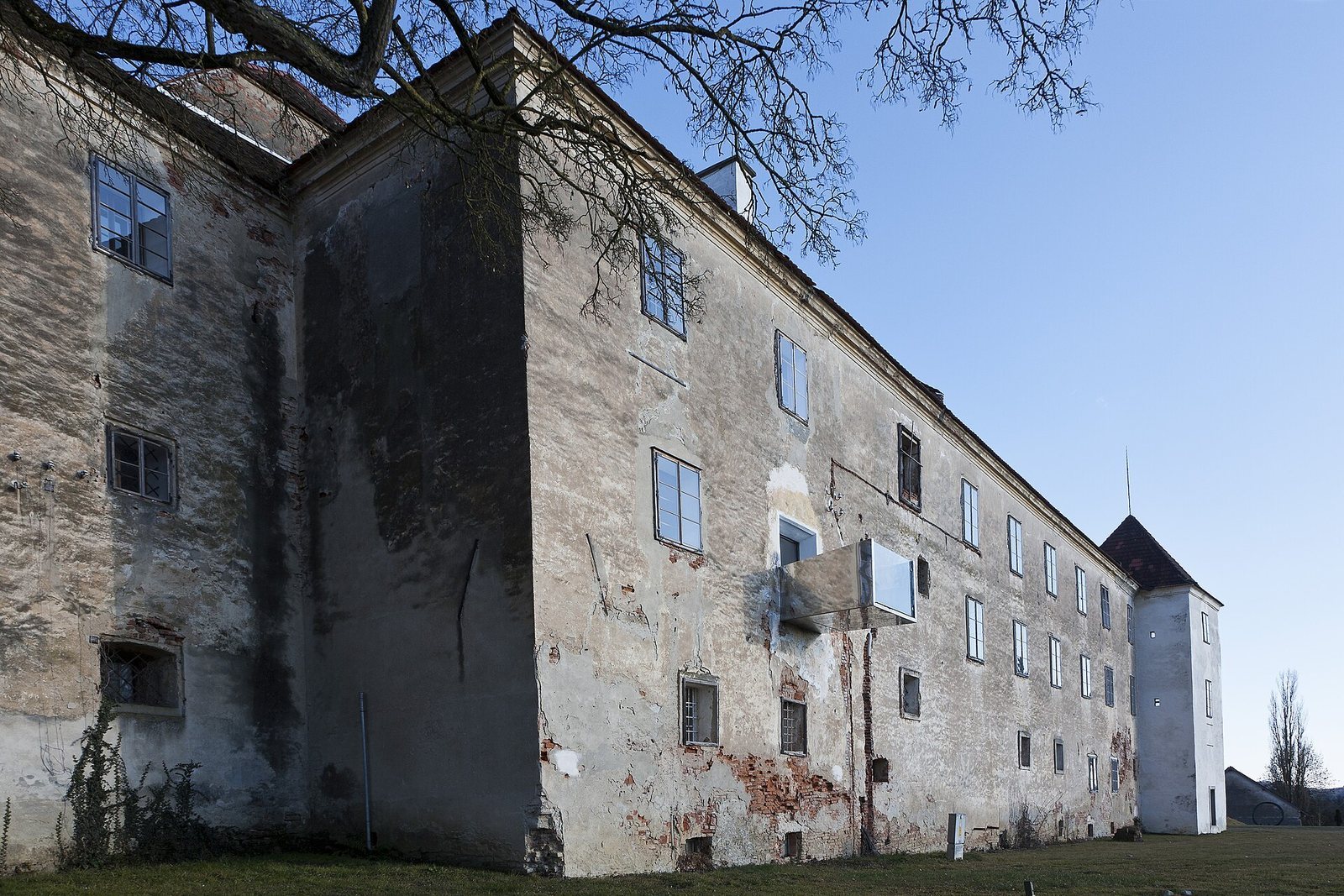
The present castle is a three-storey complex of four wings around a square courtyard. Its arrangement reflects successive phases of construction and defense, while the surviving buildings retain features of the residential complex formed over several centuries.
Courtyard and defensive works
Two-storey arcades, rows of arched openings supported by piers or columns, run around the courtyard. At ground level they rest on masonry piers, with slender stone columns above. The east wing has a three-storey arcade facing inward. Two corner towers with pyramidal roofs project from the south wing, whose main entrance bears the Herbersdorf-Lengheim coat of arms. The original defensive position was poorly protected by the terrain and had a surrounding wall and broad, water-filled moat. Bastions, projecting fortifications that strengthened the perimeter, were added around the renewed castle in the 16th and 17th centuries. The park now occupies their former ground.
Chapel and interior
The castle chapel of Saint Barbara occupies the northeastern corner. Its apse, the curved end of the sanctuary, projects outward, while its square tower extends into the courtyard. The chapel’s stucco ceiling and high altar date to the mid-17th century. A large hall in the west wing also retains an original stucco ceiling from the mid-17th century.
Building inscription
A stone above a doorway on the second floor of the oldest part of the castle bears the colored Herbersdorf coat of arms. Its inscription states that Franz Herbersdorf and his wife, Elisabeth Herberstein, had the house and well newly built, beginning in 1548.
Park sculpture and wayside shrine
Skerbisch’s park sculpture, Sphere, was created between 2006 and 2008. It consists of six rings arranged in the proportions of the golden ratio, with their scale corresponding to one four-millionth of Earth’s diameter. Near the castle approach stands an 18th-century brick wayside shrine with a triangular niche.