Hundshaupten Castle: A Franconian Noble Estate in Germany
Site at a Glance
- Popularity
- Medium
- Country
- Germany
- Primary era
- Early Modern
- Eras represented
- Medieval, Early Modern
- Civilizations
- Holy Roman Empire
- Site type
- Military
- Remains
- Castle
On this page8 sections
History
Wiesenthau lordship and medieval destruction
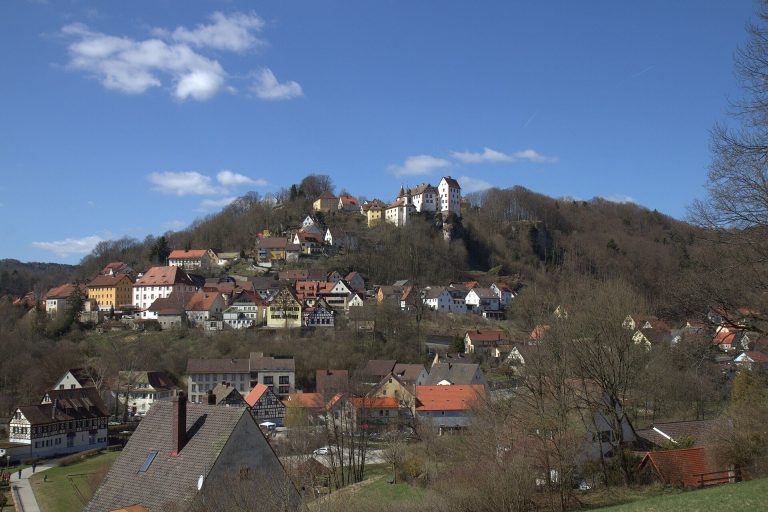
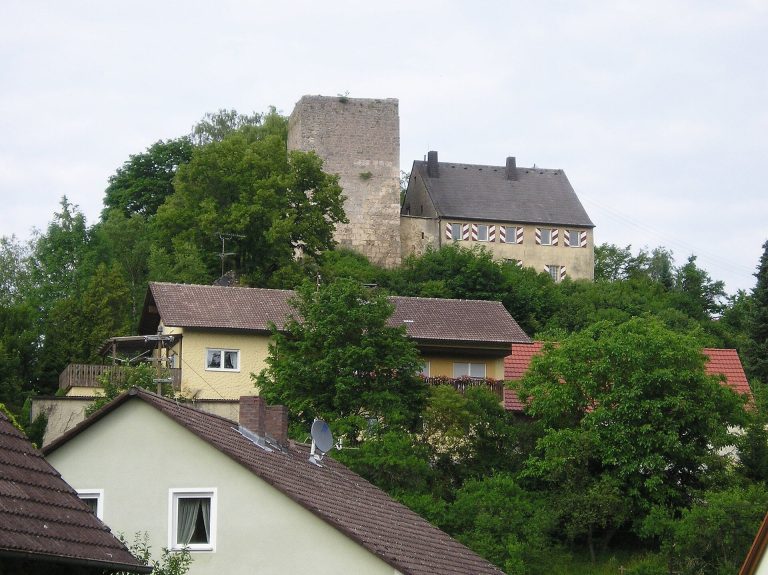
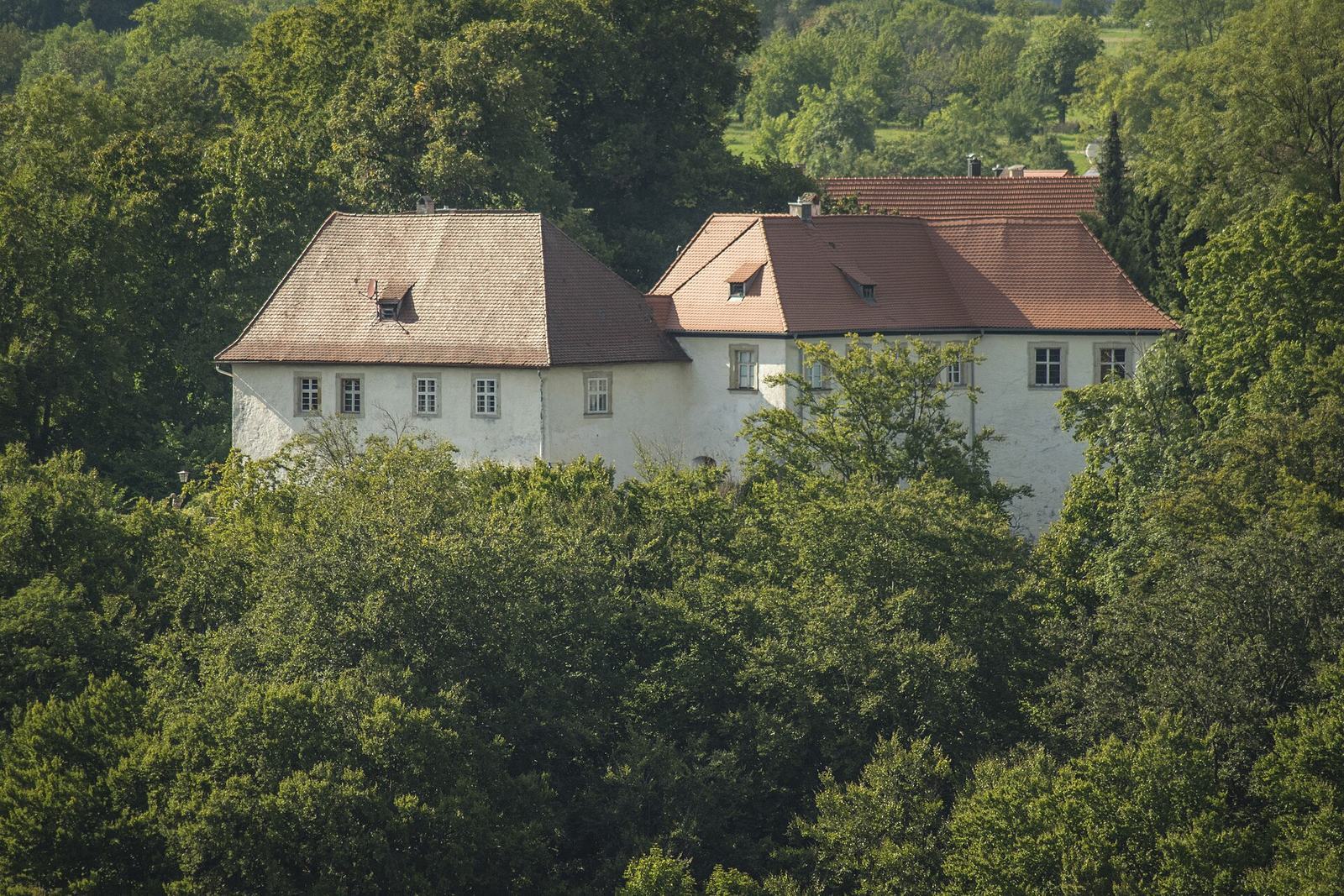
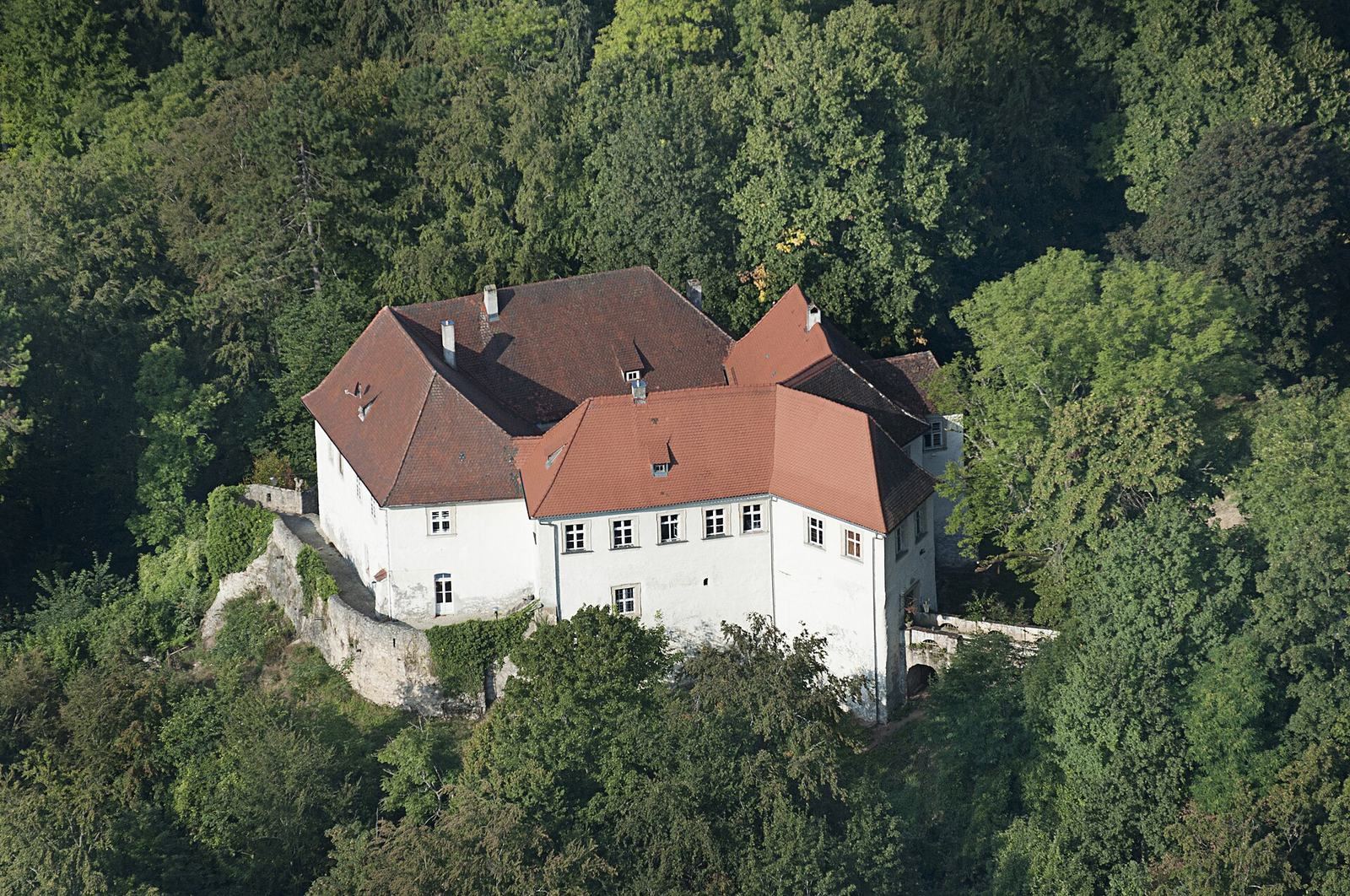
Hundshaupten Castle is a quadrangular, four-wing complex at Hundshaupten, within Egloffstein, Germany. An earlier phase belongs to the High Middle Ages, the period from the eleventh to the thirteenth centuries. The first written mention of the castle dates to 1369, when it belonged to the Lords of Wiesenthau, a local Franconian noble family.
The castle was destroyed three times. Nuremberg forces destroyed it in 1388 during the War of the Cities, a late-medieval conflict between towns and territorial powers. Frederick VI, the Hohenzollern ruler of Nuremberg, destroyed it again in 1412. In 1525, it was destroyed during the Peasants’ War, a series of uprisings in German-speaking lands in 1524–1525.
The origin of the name Hundshaupten is uncertain. It may be related to neighboring Hundsboden: the name ending in Hundshaupten probably refers to the hill spur, while the one in Hundsboden may refer to fertile, level fields on the plateau cleared during medieval cultivation. Hund may refer to the owner of the land and castle, who held the office of a Hunno, a leader of a community of free farmers.
Rebuilding and later ownership
The castle was rebuilt in 1561. When the Wiesenthau line at Hundshaupten ended in 1613, the estate returned to Michelsberg Abbey, a Benedictine monastery in Bamberg. In 1661, after the Thirty Years’ War, a major seventeenth-century European conflict, the abbey granted the castle and lands to Hieronymus Christoph von Pölnitz as a fief, property held under another authority’s lordship.
Although von Pölnitz lived at Aschbach, he served as privy councillor, held the historical German noble rank of banner lord, and was town commandant of Forchheim. Later changes to the buildings gave the upper storey a more palace-like appearance while retaining the complex’s castle character.
In 1991, Gudila von Pölnitz transferred part of the estate, including Hundshaupten Wildlife Park, to Forchheim district. Since 2005, the estate has been managed by Hieronymus Christoph Heinrich von Pölnitz, the great-nephew and adopted son of Götz and Gudila von Pölnitz.
Remains
The castle complex
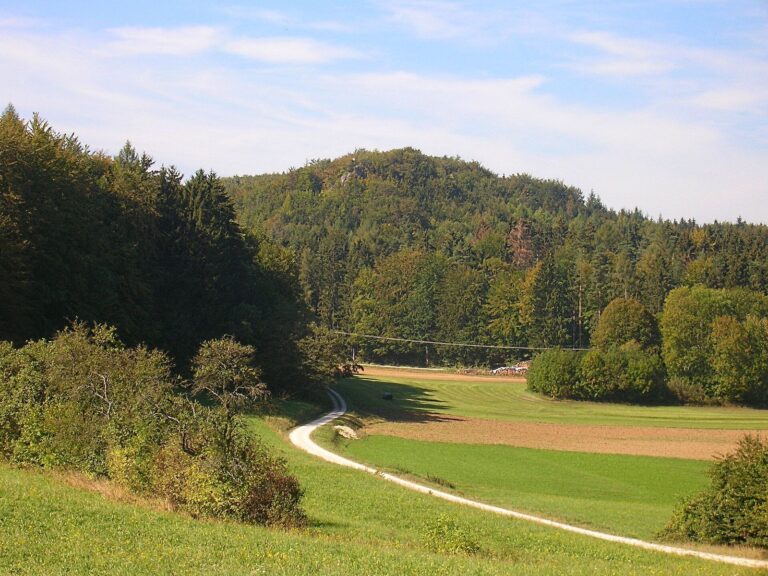
The castle stands on a spur of the Franconian Jura, a limestone upland, that projects into a valley. Its four wings form a quadrangular complex. Large windows with sandstone frames give the upper storey a more palatial character. They belong to the Baroque style, a European architectural style that flourished from the late sixteenth through the eighteenth centuries, while the complex retains its castle character.
The tithe barn
The estate also includes a tithe barn, a storehouse for payments to a church or other religious institution, often made in agricultural produce. The barn was renovated in 2011–2012. Preservation work on the castle took place from 2019 to 2025.
The family cemetery
Below the castle, a family cemetery lies among Jura rocks beneath old beech trees. Its first burial was the historian and archivist Paul Fridolin Kehr in 1944; family members who had died earlier were later transferred there. The graves include members of the Pölnitz family and related families. Memorial tablets commemorate Franz Karl Ludwig von Pölnitz (1827–1896), Adolphine Emilie Adele von Pölnitz (1834–1878), Else von Pölnitz (1870–1917), two members named Ludwig von Pölnitz (1863–1928 and 1899–1908), Walter von Pölnitz (1892–1914), Elisabeth von Thiereck (1850–1909), Albin von Thiereck (1841–1929), and Paul von Thiereck, born and deceased on 26 February 1872. Another tablet commemorates Ivo Kehr (1911–1943).
Friedleite burial woodland
Established by the market town of Egloffstein in 2020, the Friedleite natural burial woodland lies between the castle and Hundshaupten Wildlife Park. It covers about eight hectares of natural forest crossed by Jura rocks.