Hohendorf Castle: A Neo-Gothic Manor House in Germany
Site at a Glance
- Popularity
- Medium
- Country
- Germany
- Primary era
- Modern
- Eras represented
- Modern
- Civilizations
- Kingdom of Prussia
- Site type
- Domestic
- Remains
- Manor House
On this page7 sections
History
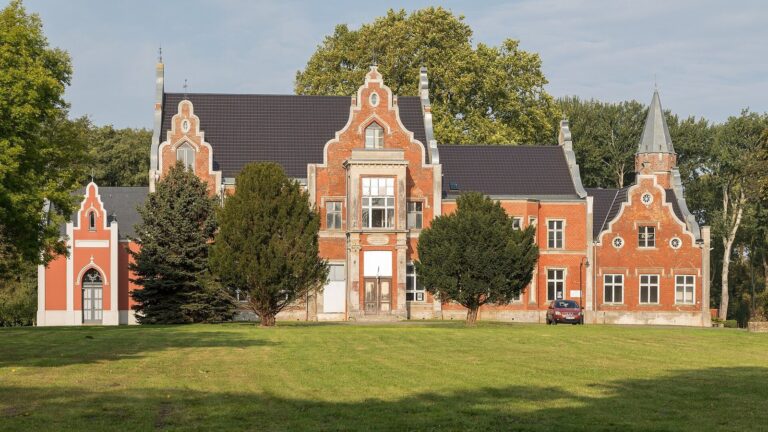
Hohendorf Castle is a manor house in Hohendorf near Groß Mohrdorf, Germany, built in 1854 in the neo-Gothic style, which revived medieval Gothic forms. Its history is closely tied to the estate that passed through several families before becoming part of the Klot-Trautvetter holdings.
Estate ownership before the house
In 1321, Vitslav III, the last Slavic prince of Rügen, granted land at Hohendorf to the Hup family. The von der Osten family acquired some properties there in the fifteenth century and held the entire estate by the seventeenth.
In 1733, Johan Reinhold von Trautvetter established a majorat, an inheritance arrangement directing an estate through a designated line of succession. After his death in 1741, his nephew Baron Wilhelm Reinhold von Klot inherited the estate. He added the Trautvetter name and arms to his title and took on the responsibilities of church patron for the community of Groß Mohrdorf.
Construction and family estate
Count Ernst Malte Friedrich I Klot-Trautvetter inherited Hohendorf in 1843. His count’s title was issued at Potsdam in 1846, and he was married to Countess Hedwig Bohlen-Preetz. Groß Mohrdorf, Hohendorf, and other properties were bound together as a fideicommissum, a legally restricted estate intended to remain in the family.
The manor house was designed by Karl Friedrich Schinkel, a prominent Prussian architect and designer, in a style combining classical references with Gothic elements. Friedrich Hitzig built the main structure in 1854, after Schinkel’s death. Around 1900, the house was remodeled in work attributed to Count Arthur von Klot-Trautvetter (1858–1906).
War and later conversion
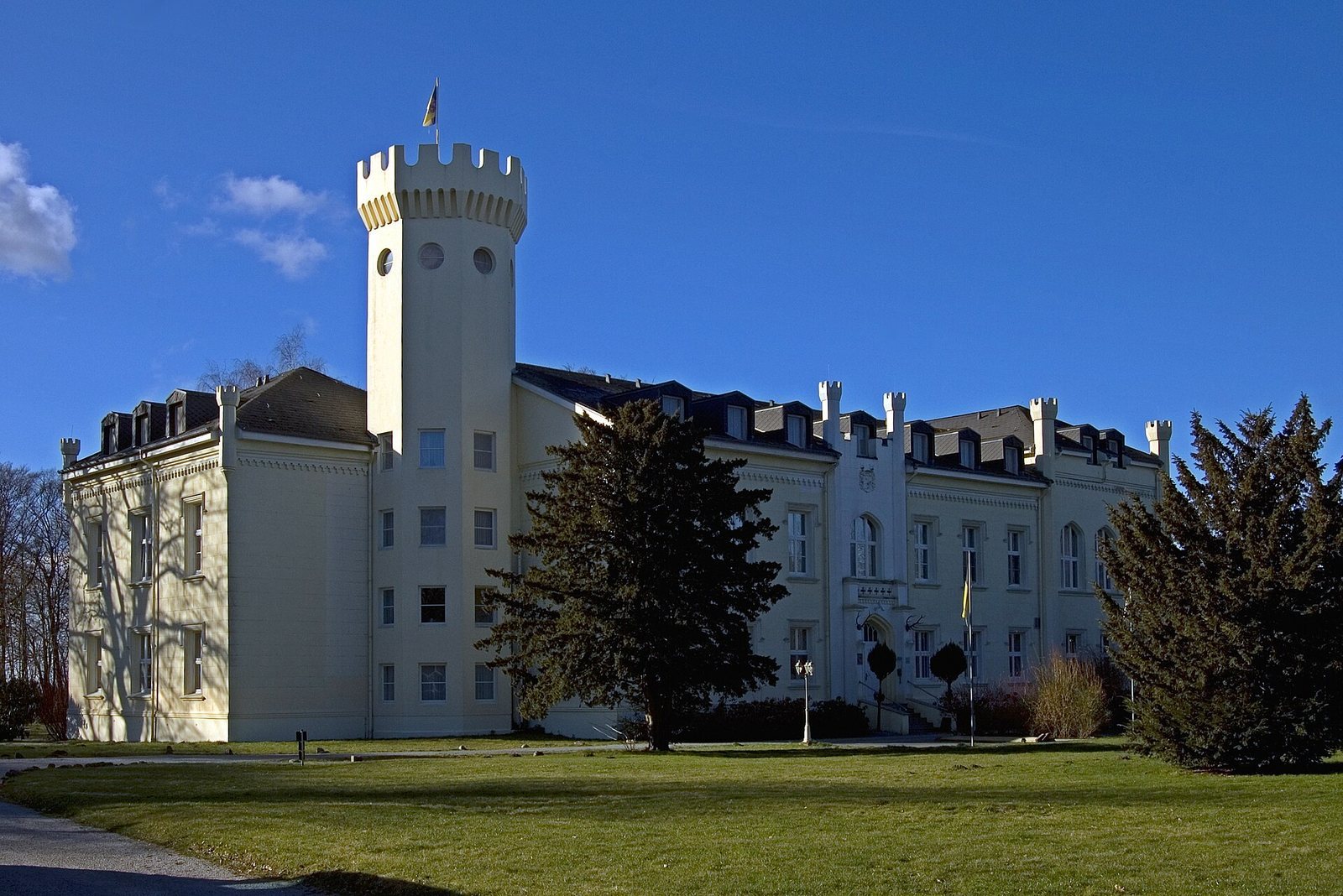
Count Herbert von Klot-Trautvetter, born in 1896, was the estate’s last lord. He inherited while still a minor after his father’s death, served as an active officer in 1915, and died in Soest in 1977. At the end of the Second World War, the castle was looted and its interior fittings destroyed. During the German Democratic Republic era, the tower was demolished and the rest of the building housed multiple families.
After German reunification, Count Hubertus von Klot-Trautvetter (1929–2015) returned to the castle, bought it from the municipal administration, and arranged its conversion into a hotel and restaurant. Renovation was completed in 1993. A buyer from Lübeck acquired the property at a foreclosure auction in 2010 or 2011, and a later renovation, dated 2017–19, adapted it for residential use.
Remains
The manor house
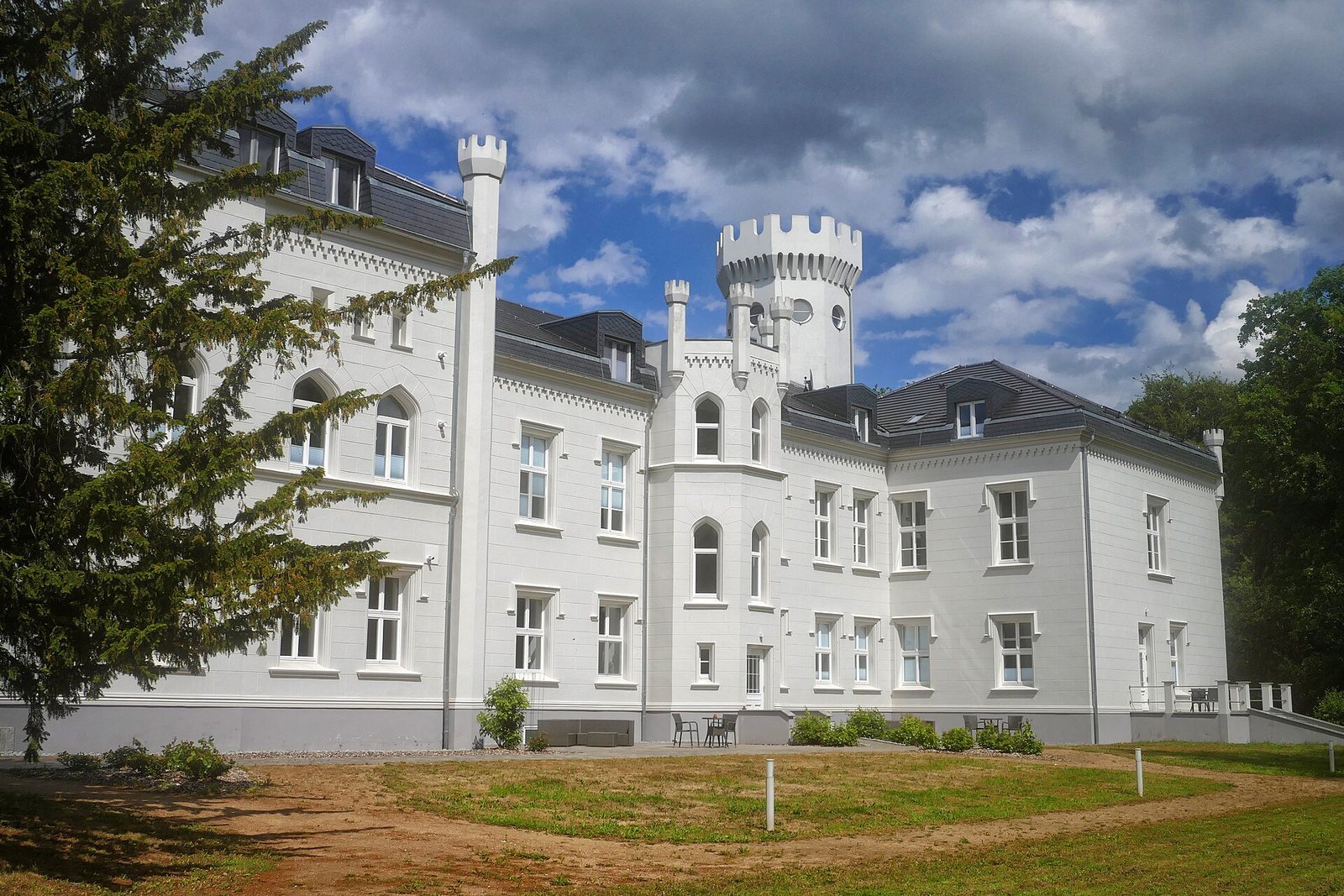
The white, two-storey building has a central section flanked by side wings that project slightly from the main wall. A projecting stair section stands in front of the centre and carries a small turret with battlements. The southeast part of the building formerly contained a five-storey, battlemented defensive tower.
Park and present layout
The grounds include a ten-hectare park with very old beeches and oaks. The residential building contains 30 apartments, each measuring between 22 and 74 square metres, and the complex also includes an event hall.