Hausen Castle: A Medieval Water Castle in Hesse
Site at a Glance
- Popularity
- Medium
- Country
- Germany
- Primary era
- Early Modern
- Eras represented
- Medieval, Early Modern
- Civilizations
- Holy Roman Empire
- Site type
- Domestic
- Remains
- Castle
On this page12 sections
History
Hausen Castle is a medieval water castle in Hausen, northern Hesse, Germany, associated with Fulda Abbey by the thirteenth century and later rebuilt as a Renaissance residence. Its ownership shifted among Fulda, Mainz, Ziegenhain and Hesse before the von Dörnberg family took possession in 1463.
Fulda and competing lordships
The village of Hausen is first mentioned in 1160. A water castle belonging to Fulda Abbey, a Benedictine monastery whose abbot also governed its church territory, stood there by the thirteenth century. In 1311, Abbot Henry IV granted Wernher von Lebenstein an inheritable feudal payment connected with the castle. The grant was intended to limit the influence of the Counts of Ziegenhain, Fulda’s lay advocates, who represented and protected the abbey. Hausen also received town rights that year.
In 1339, members of the Lords of Vinken joined the castle garrison. Werner von Falkenberg later received the castle and Hausen district as a fief, a grant of land or rights held under a feudal relationship. From 1374 to 1382, he served as Mainz’s chief official over its possessions in Hesse, Thuringia, Westphalia, Saxony and Eichsfeld. In 1356, during a feud between the Hessian landgrave and Abbot Henry VII of Fulda, Otto the Archer, son of Landgrave Henry II, devastated the village.
The Counts of Ziegenhain became co-owners of the castle in 1366. In 1400, Abbot John I of Merlau sold Fulda’s share to the Archbishopric of Mainz, whose archbishop held both religious and territorial authority. Mainz appointed Werner von Schlitz, known as Görtz, as its local official. In 1425, the archbishopric pledged the castle to Werner as security for an obligation; he later sold his rights to the Lords of Schengwalt.
Transfer to Hesse and the von Dörnbergs
When the last Count of Ziegenhain, Johann II, died in 1450, his family’s half of the castle passed to the Landgraviate of Hesse as a fief from Fulda. Hesse later gained political control over the portion held by Mainz as well. In 1461, Hans von Dörnberg, an Upper Hessian court official who had previously served the widow of the last count, received the castle and Mainz’s share of the Oberaula court as a pledge from Archbishop Adolf II. He took possession as a permanent fief on 30 October 1463. The castle has remained with the von Dörnberg family ever since.
Destruction and rebuilding
Around 1600, the castle was converted into a Renaissance residence, a European style that revived forms associated with classical antiquity. In 1642, Bavarian troops captured and destroyed it during the Thirty Years’ War, a major European conflict fought from 1618 to 1648, and plundered it completely. The von Dörnbergs began rebuilding on the earlier castle’s remains in 1674. Johann Kaspar von Dörnberg completed the work in 1687.
Later history
Wilhelm von Dörnberg was born at the castle in 1768. He later became a Hessian officer known for opposing Napoleonic rule. After the Second World War, the castle sheltered and housed numerous von Dörnberg relatives. It is now inhabited by members of the family.
Remains
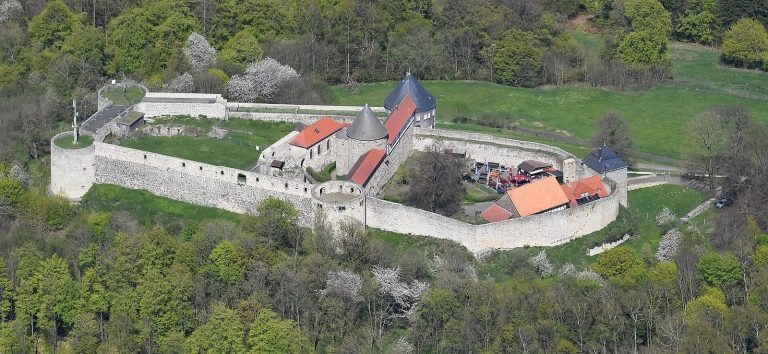
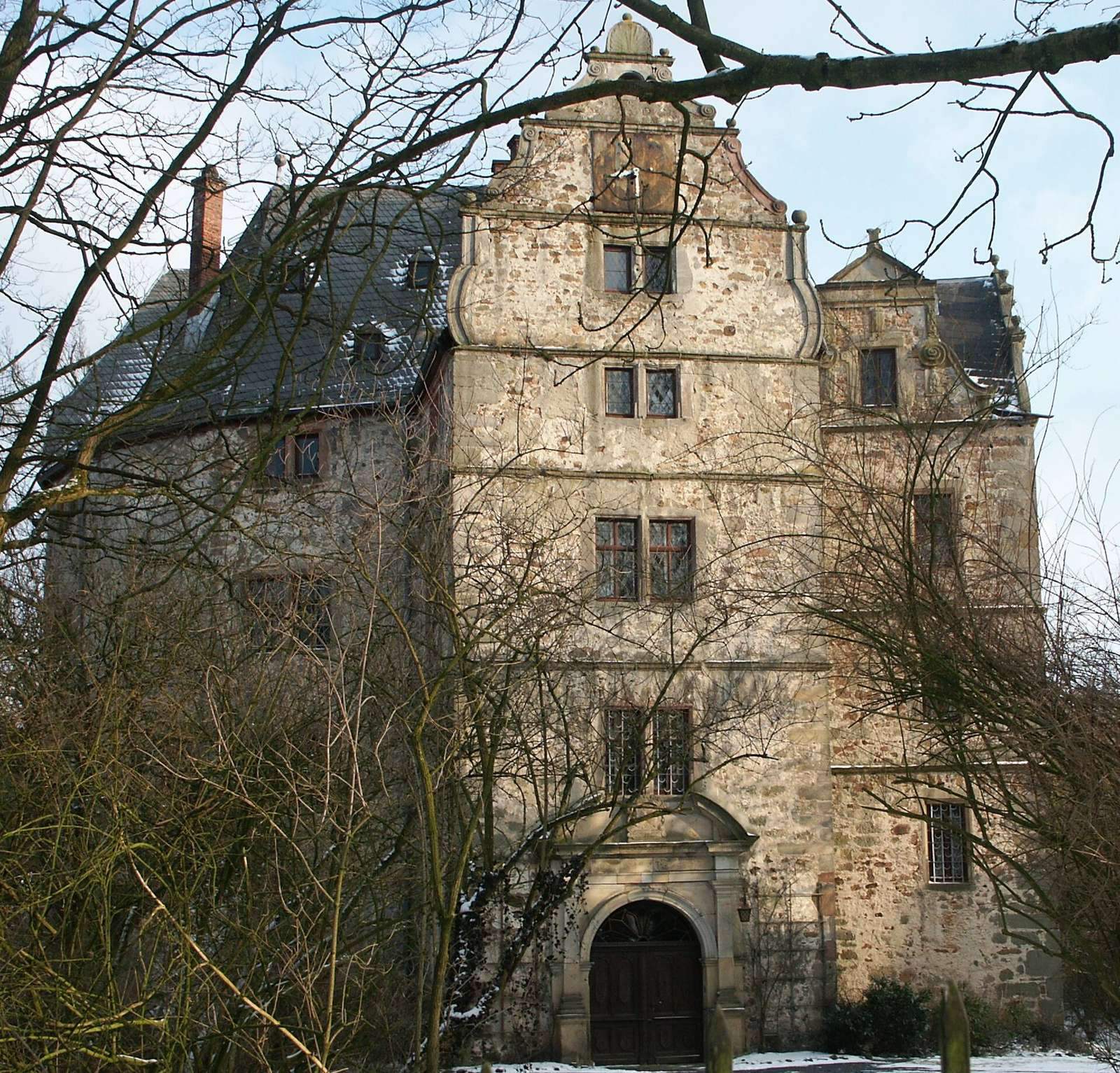
The complex brings together the older defensive castle, a more residential Renaissance building on its north side, and a stone structure in the forecourt. Its surviving water features and garden form part of the castle’s setting.
Castle buildings
Defensive core and north residence
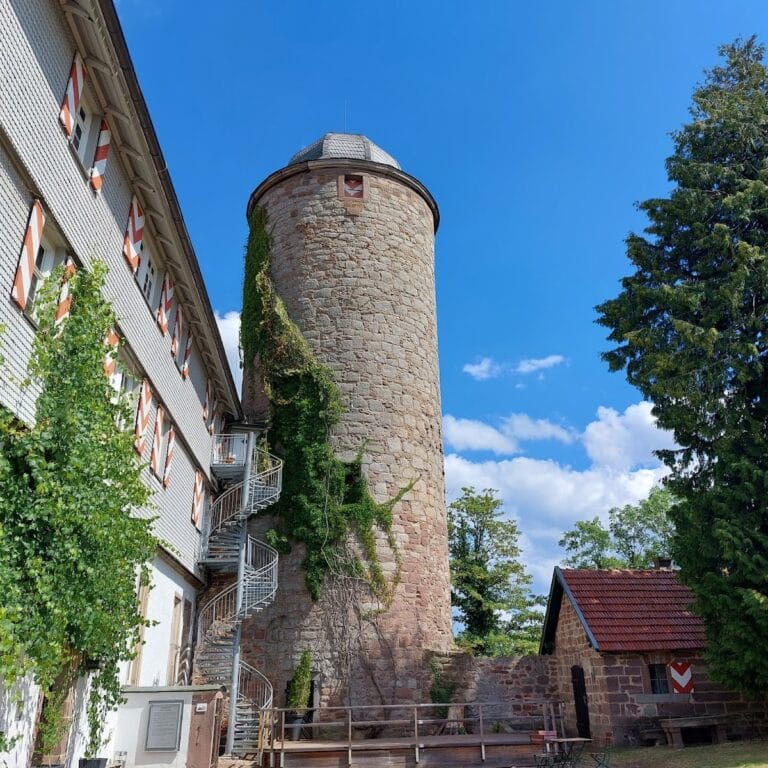
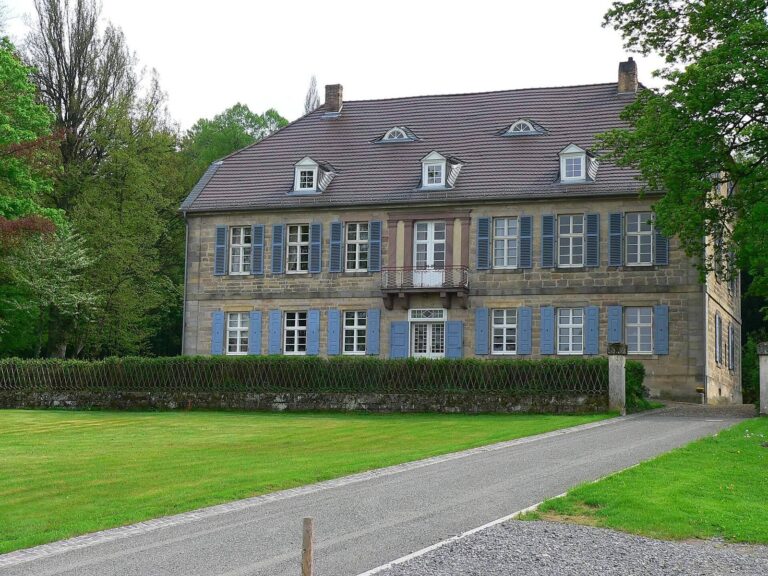
The rebuilt complex incorporated the earlier fortifications and attached a residential building to their north side. Large windows distinguish the more domestic character of this addition. At the junction of the masonry, the castle walls show traces of the 1642 destruction. The older foundations are about three metres thick, while the masonry above is considerably thinner. The main entrance portal bears the date 1687.
Forecourt building
A stone building in the forecourt served several purposes over time, including as a residence, granary, brewery and bakery.
Water defenses and grounds
Moat and drawbridges
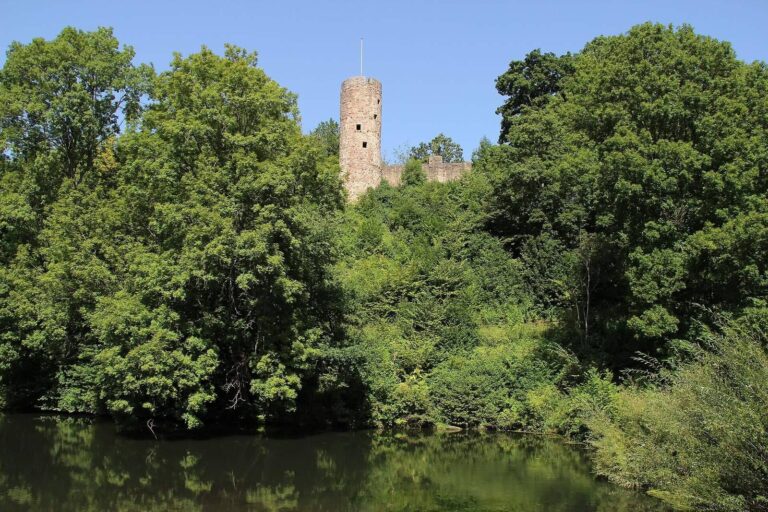
During the Reformation, a period of religious change in Western Christianity, and the German Peasants’ War, a major uprising in German-speaking lands in 1524-1526, the water castle had drawbridges on its north, south and west sides. These bridges and the water ditches were renewed during the later rebuilding. A castle pond and a stream represent the former moat today.
Garden and fountain
The castle garden contains ash trees about 30 metres tall, old chestnuts, spruces, elms, European beeches and willows, which create a dense screen around the buildings. A fountain in the park south of the castle bears the date 1748.