Hain Castle: A Baroque Manor in Küps, Germany
Site at a Glance
- Rating
- 4
- Popularity
- Very Low
- Country
- Germany
- Primary era
- Early Modern
- Eras represented
- Medieval, Early Modern
- Civilizations
- Holy Roman Empire
- Site type
- Domestic
- Remains
- Castle
On this page4 sections
History
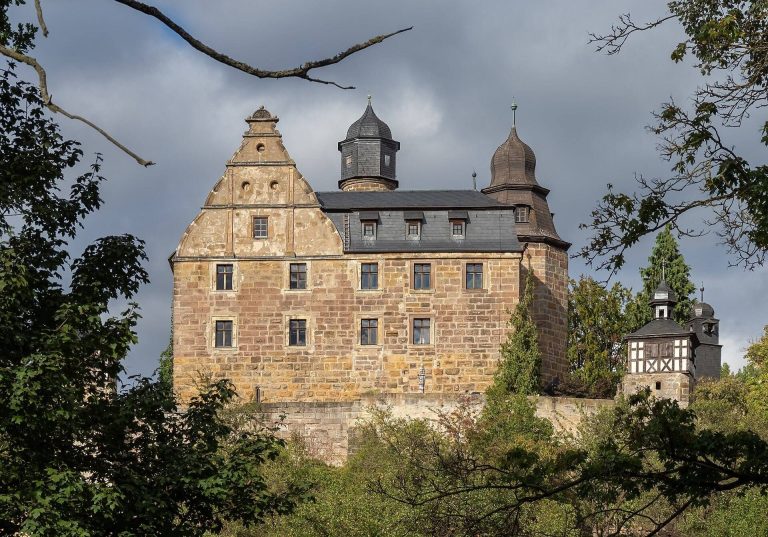
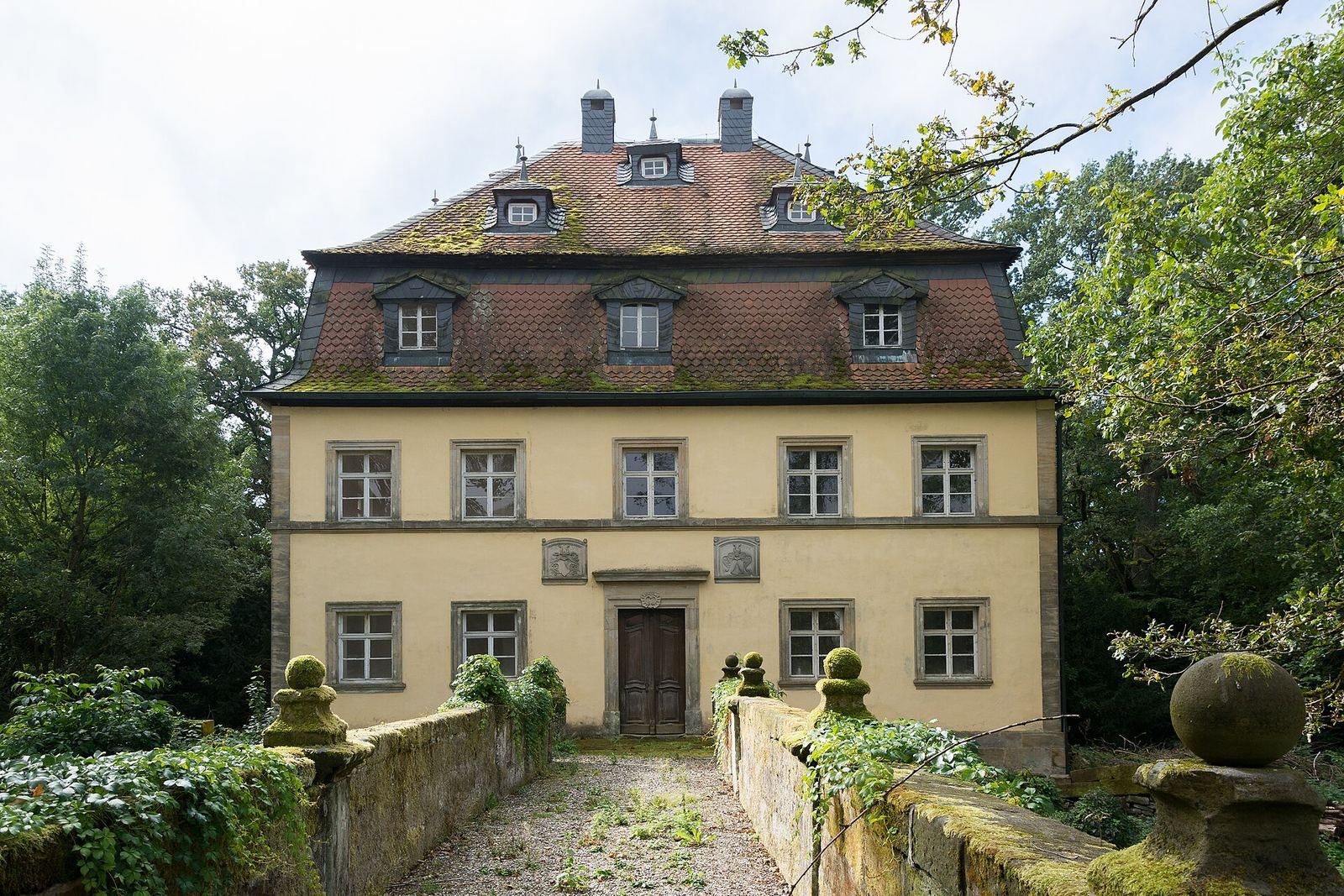
Hain Castle is a historic manor in Hain, within the municipality of Küps, Germany. Rebuilt from the ground up in 1774 in the Baroque style, a European artistic and architectural style that flourished in the seventeenth and eighteenth centuries, it developed from a medieval estate. The middle Rodach valley served as a transport route in the Middle Ages, helping support ten aristocratic residences in Küps territory, including Hain. Nine of the ten survive in altered form, as ruins, or as archaeological remains.
Medieval Ownership
The manor was first recorded in 1330 as the property of Baron Heinrich von Redwitz. In 1378, it briefly became a fief, land held under a superior lord’s authority, of Friedrich V, Burgrave of Nuremberg, a territorial ruler. Ulrich I von Künsberg acquired the manor in 1395, and it remained in the von Künsberg family until the nineteenth century.
Expansion and Rebuilding
During the fifteenth and sixteenth centuries, the manor grew to include an estate farm. August Adolf von Künsberg had a chapel built on the grounds in 1668, and was buried there after his death in 1681. His son Georg Adam inherited the estate and expanded it into a small castle in 1711. After Georg Adam died in 1713, his brother Johann Christoph held the castle and estate until his death in 1732.
Six years later, Georg Willhelm von Künsberg received Hain through a division of the inheritance. He died in 1765. One of his sons then became the owner and ordered the castle’s ground-up rebuilding. The son already held the hereditary marshal’s office in the Burgraviate of Nuremberg, the territory governed by the burgrave. A hereditary marshal held an office passed down within a family, generally associated with a ruler’s court.
Remains
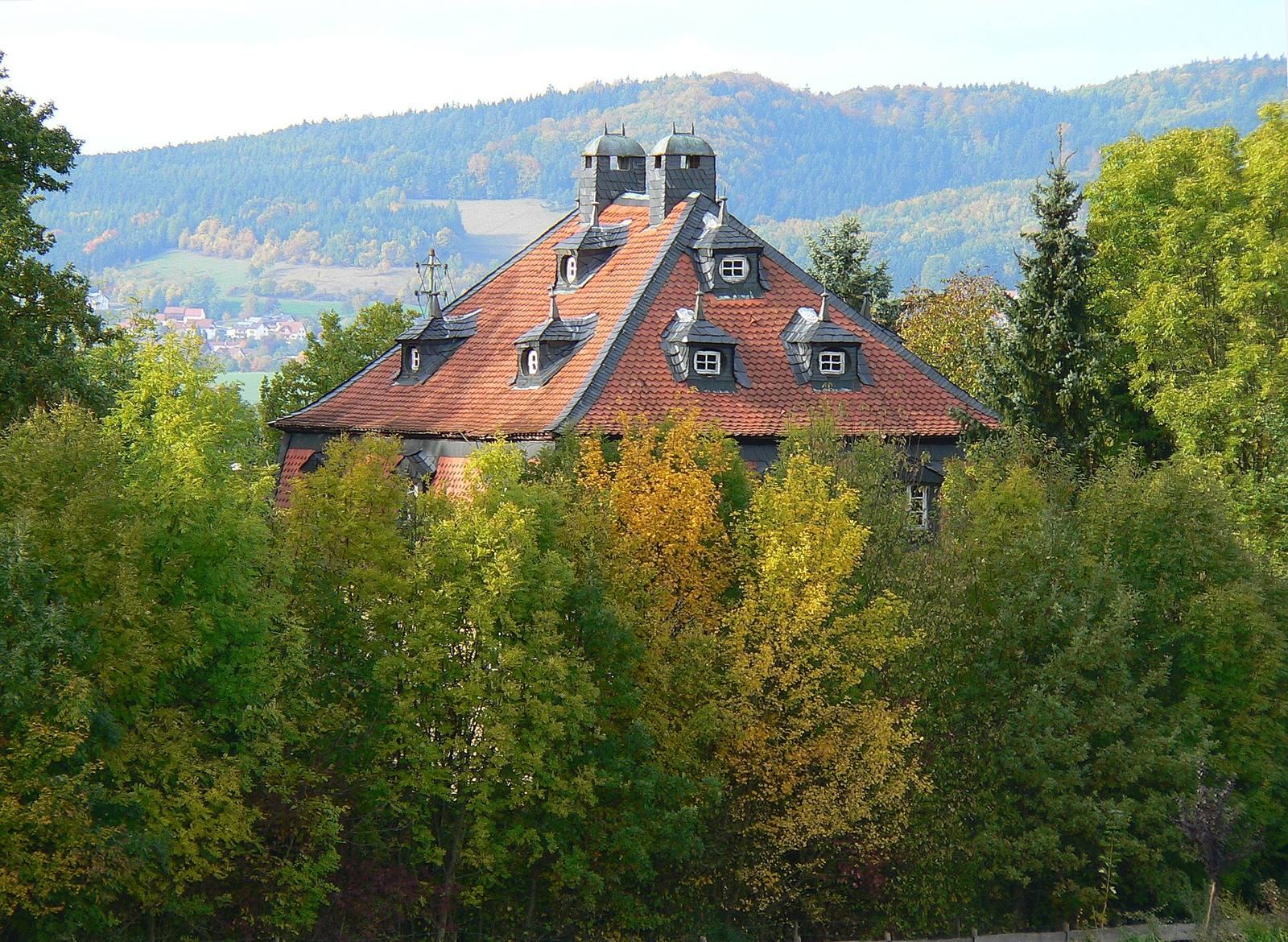
The Baroque estate lies in a small park in eastern Hain. The castle stands beside an adjoining estate farm, and a chapel formed part of the grounds.