Eppishausen Castle: A Historic Residence and Religious House in Switzerland
Site at a Glance
- Popularity
- Medium
- Country
- Switzerland
- Primary era
- Medieval
- Eras represented
- Medieval, Early Modern, Modern
- Civilizations
- Habsburg, Holy Roman Empire, Swiss
- Site type
- Domestic
- Remains
- Castle
On this page10 sections
History
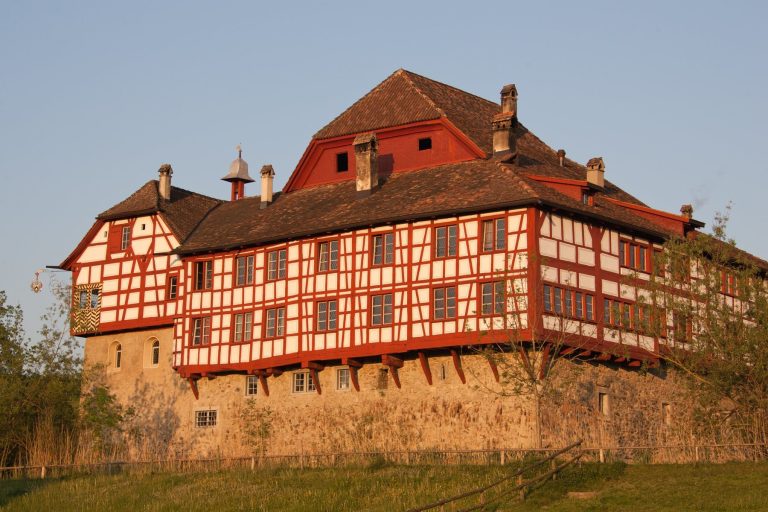
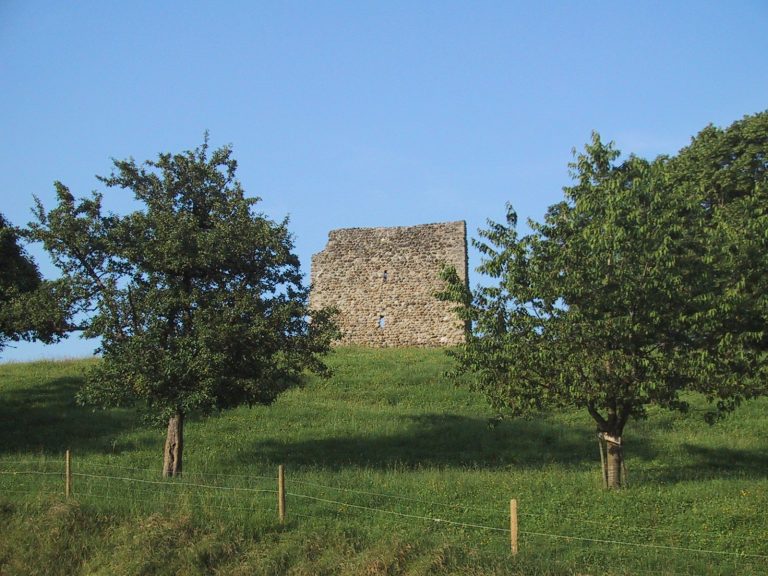
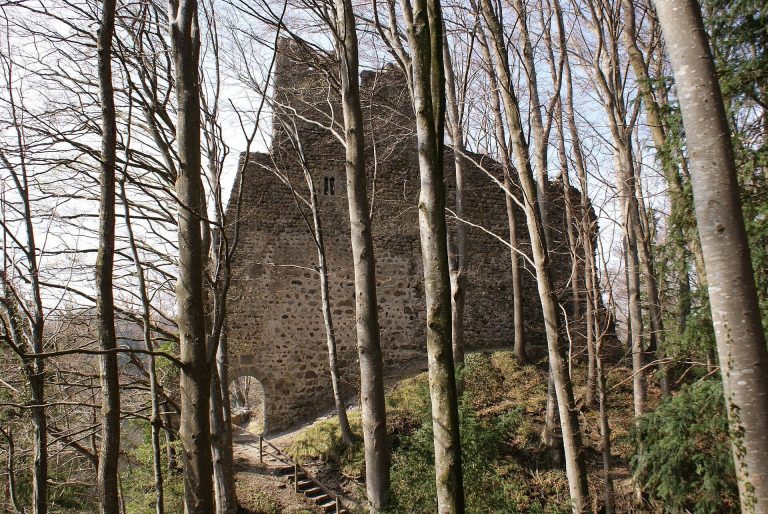
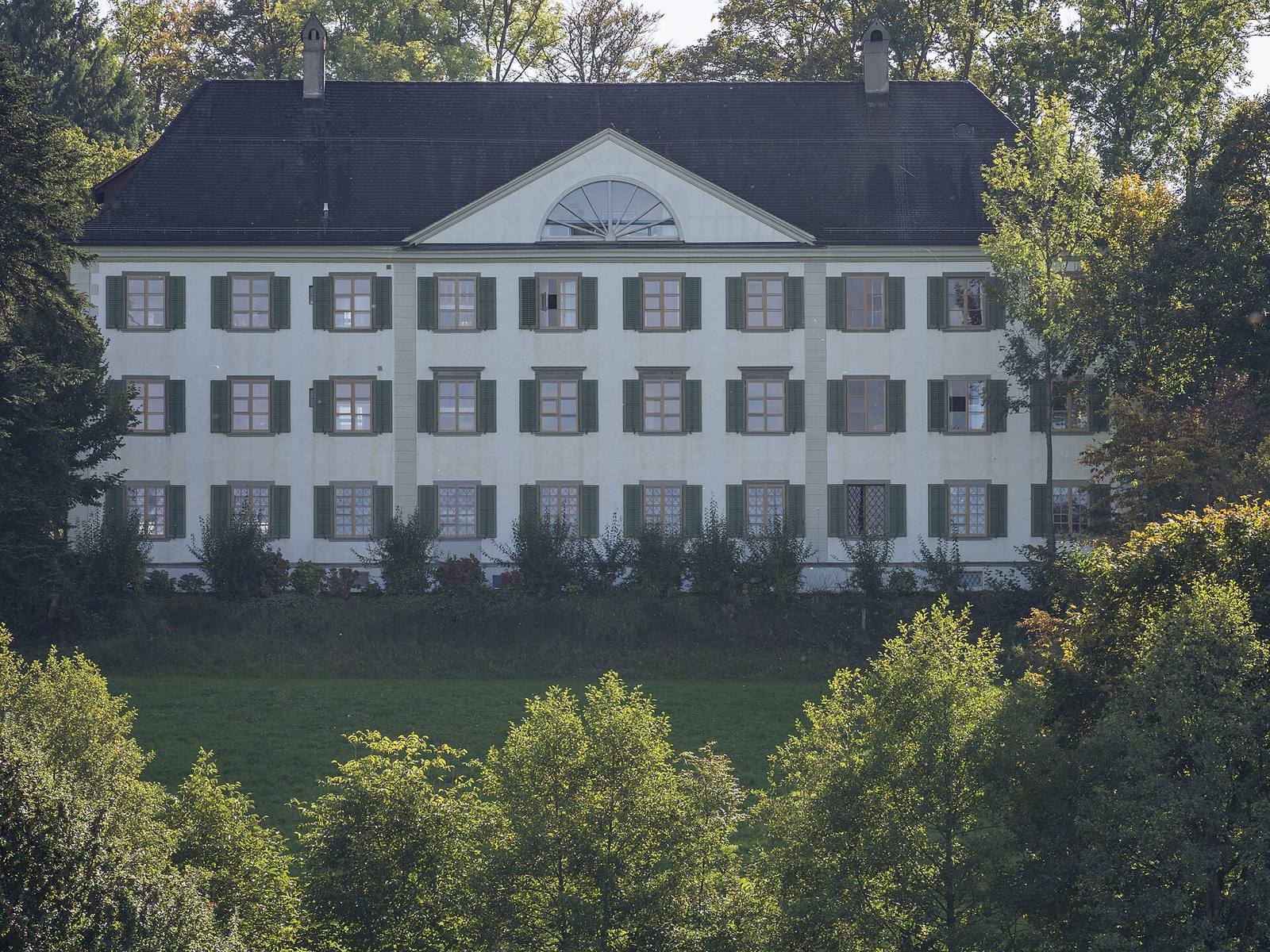
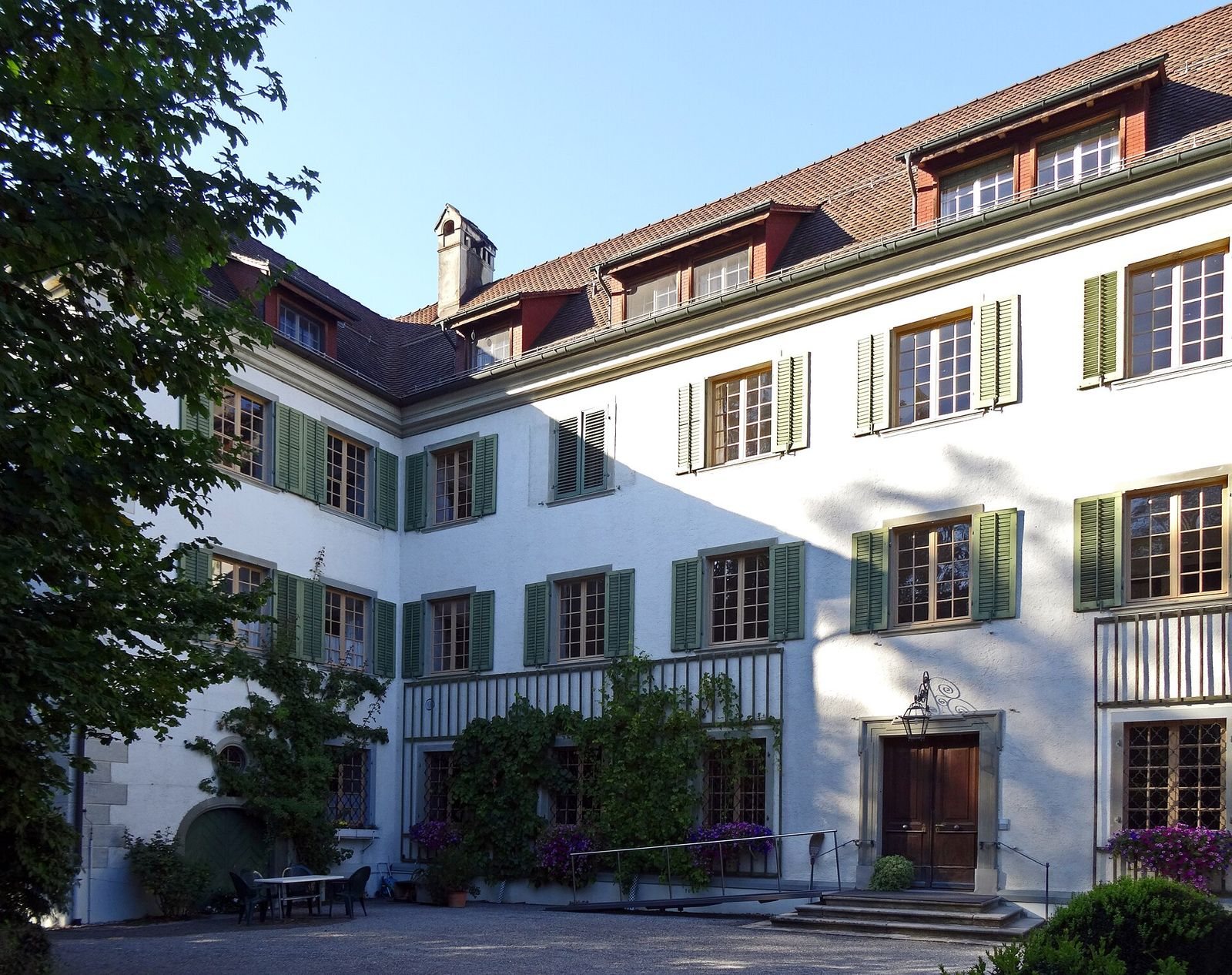
Eppishausen Castle, in Eppishausen in the municipality of Erlen, Switzerland, was first recorded in 1190 and rebuilt in the early 15th century. Remodelled in Baroque style between 1760 and 1763, it later became a residence associated with German-language scholarship and poetry.
Medieval origins and the Muri Abbey
In 1405, forces from Appenzell destroyed the castle, which then belonged to the Lords of Helmsdorf and Bernhausen. A new castle was built on the earlier foundations in the early 15th century. The Benedictine Abbey of Muri, a monastery whose community followed the Rule of Saint Benedict, acquired the property in 1698. The castle was remodelled between 1760 and 1763.
Joseph von Lassberg and literary life
Scholar and writer Joseph von Lassberg owned the estate from 1813 to 1837. Elisabeth zu Fürstenberg helped him obtain it and lived there with him for a time. During his residence, he called himself “Meister Sepp von Eppishusen.” His library welcomed poets, scholars and historians, including Ludwig Uhland, Jacob Grimm, Karl Lachmann, Johann Pupikofer and Johann Caspar Zellweger.
In 1835 and 1836, the poet Annette von Droste-Hülshoff stayed at the castle during what was known as her “Swiss year.” In the castle park she wrote the poem cycle The Säntis and a letter describing the Alpine landscape. Other letters recounted excursions nearby and visits to Count Thurn-Valsassina at Berg Castle. During a visit, Werner von Haxthausen arranged Lassberg’s marriage to Jenny, née Freiin Droste zu Hülshoff. Their twin daughters, Hildegunde and Hildgarde, were born at Eppishausen in 1836.
Lassberg sold the castle in 1837 amid political changes in Thurgau and moved to Meersburg Castle. Colonel Salomon Hegner resided at Eppishausen from 1853.
Religious communities and protection
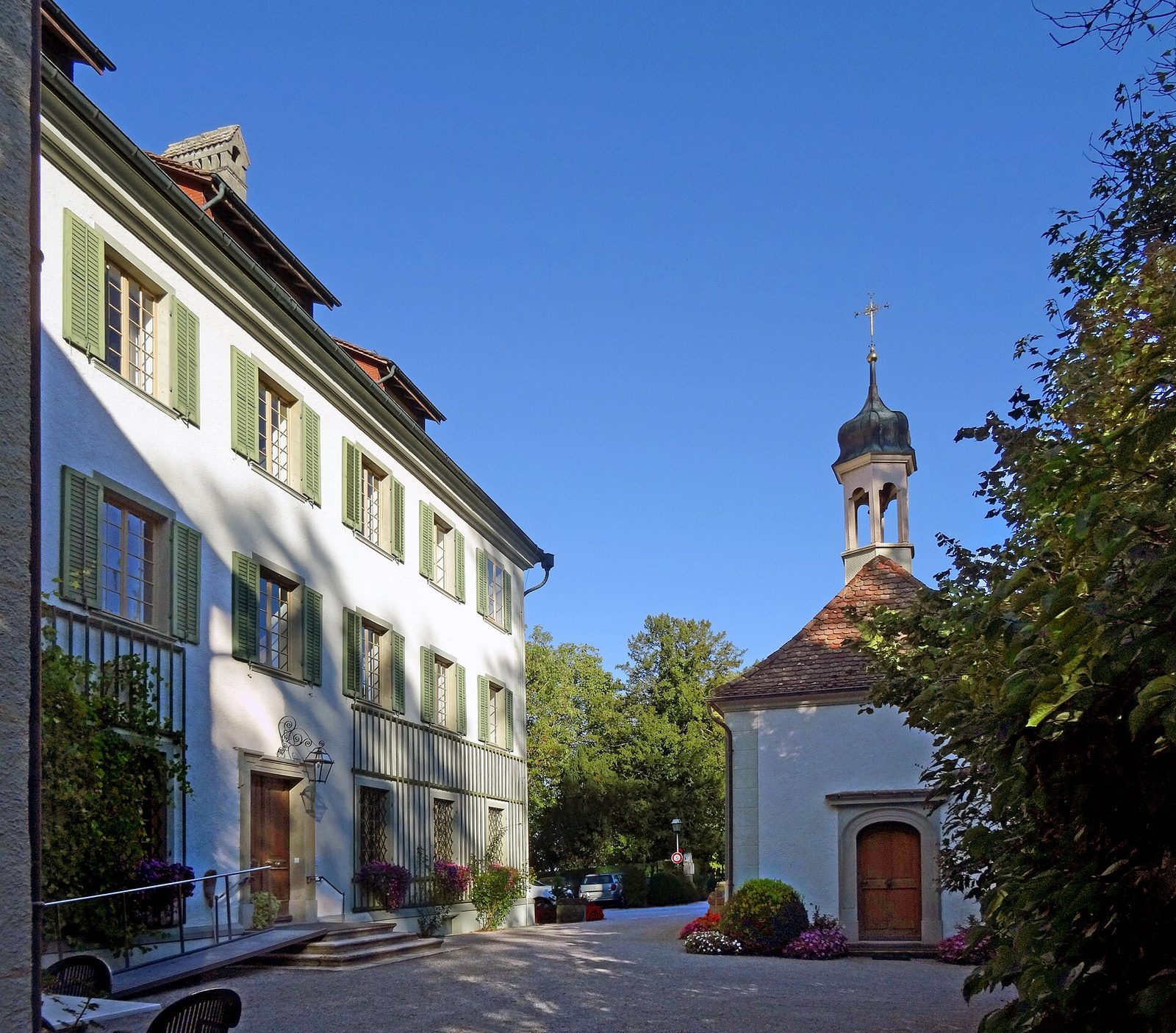
The Order of the Bonitas-Dei Sisters acquired the castle in 1961 as its motherhouse, the order’s principal residence and administrative centre. Founded in 1960 by Sister Maria Paula Johanna Baur, the order cared for older people and those needing nursing care. The Eppishausen Castle Foundation has owned the property since 1972. The castle is inhabited by the Catholic Bonitas-Dei Sisters and, since 2009, members of the Missionary Community of the Family of Mary.
The castle is listed as a class B protected monument of regional significance in Switzerland and is classified as particularly valuable in Thurgau. It is also included in Erlen’s cultural-property inventory.
Remains
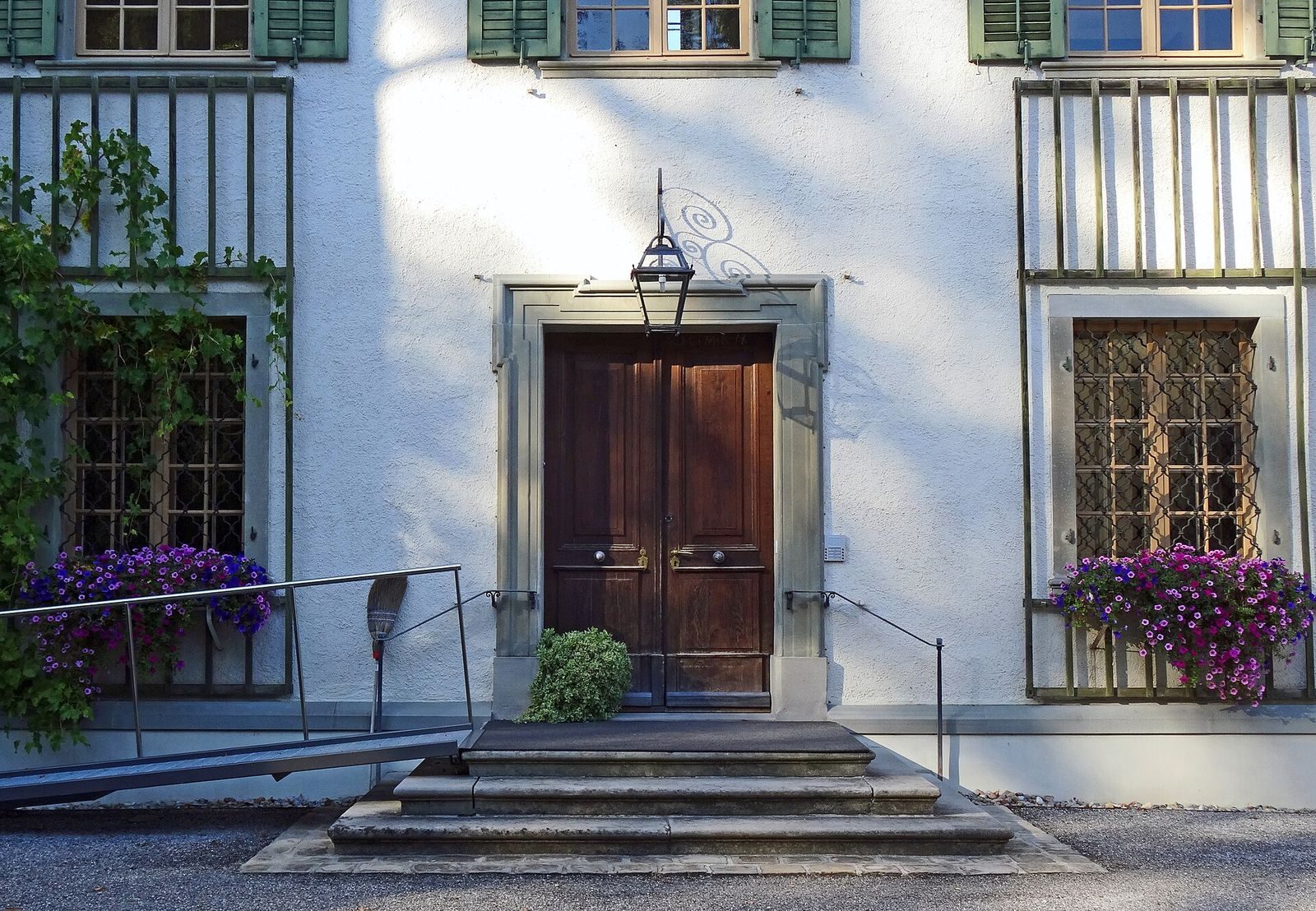
The castle complex brings together the castle, an associated park and chapels. The building’s form reflects its early-15th-century rebuilding and later alterations, including its Baroque remodelling and a Biedermeier-style renewal of the façade during Lassberg’s ownership.
Castle and grounds
The castle stands on foundations belonging to the structure destroyed in 1405. Its library was used by Lassberg to receive guests, and the associated park was where Annette von Droste-Hülshoff wrote during her stay. Together, these features connect the building’s physical history with its 19th-century literary associations.
Associated chapels and care building
St. Alban’s Chapel
St. Alban’s Chapel was rebuilt in 1698. Saint Alban was an early Christian martyr venerated as a saint.
St. Anna Chapel
St. Anna Chapel is also associated with the castle. Saint Anne is traditionally identified in Christian belief as the mother of Mary.
Old-Age and Nursing Home Schloss Eppishausen
Beside the castle, the Bonitas-Dei Sisters built the Old-Age and Nursing Home Schloss Eppishausen in 1977. It continues to operate as a nonprofit institution under the management of the Family of Mary and on Christian principles.