Schloss Beck: A Late-Baroque Castle in Bottrop, Germany
Site at a Glance
- Popularity
- High
- Country
- Germany
- Primary era
- Early Modern
- Eras represented
- Early Modern
- Civilizations
- Electorate of Cologne, Holy Roman Empire
- Site type
- Domestic
- Remains
- Castle
On this page8 sections
History
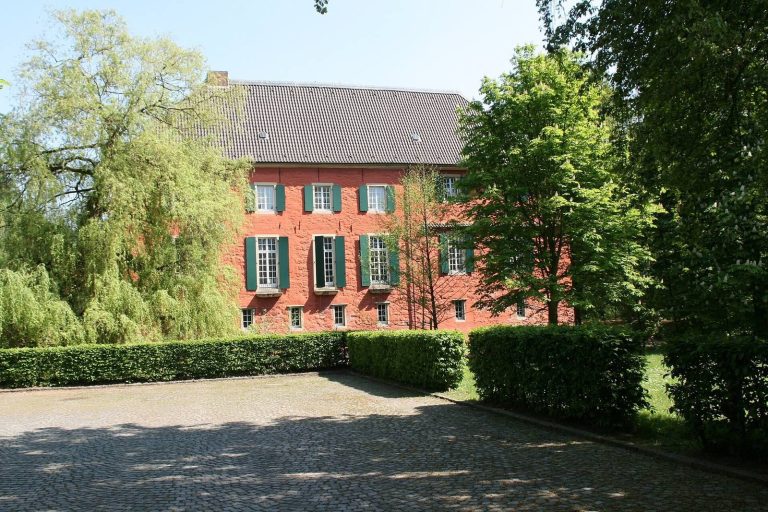
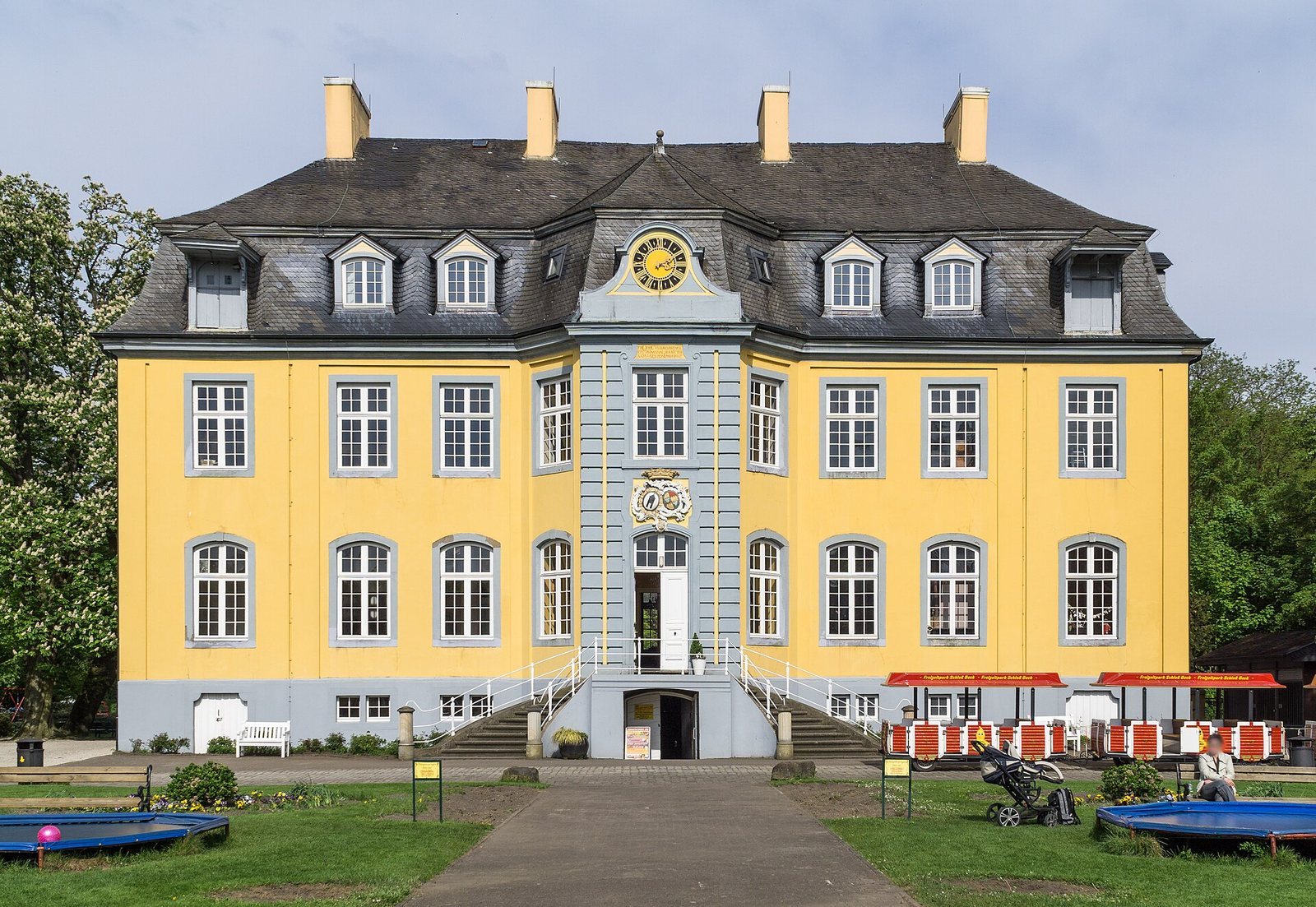
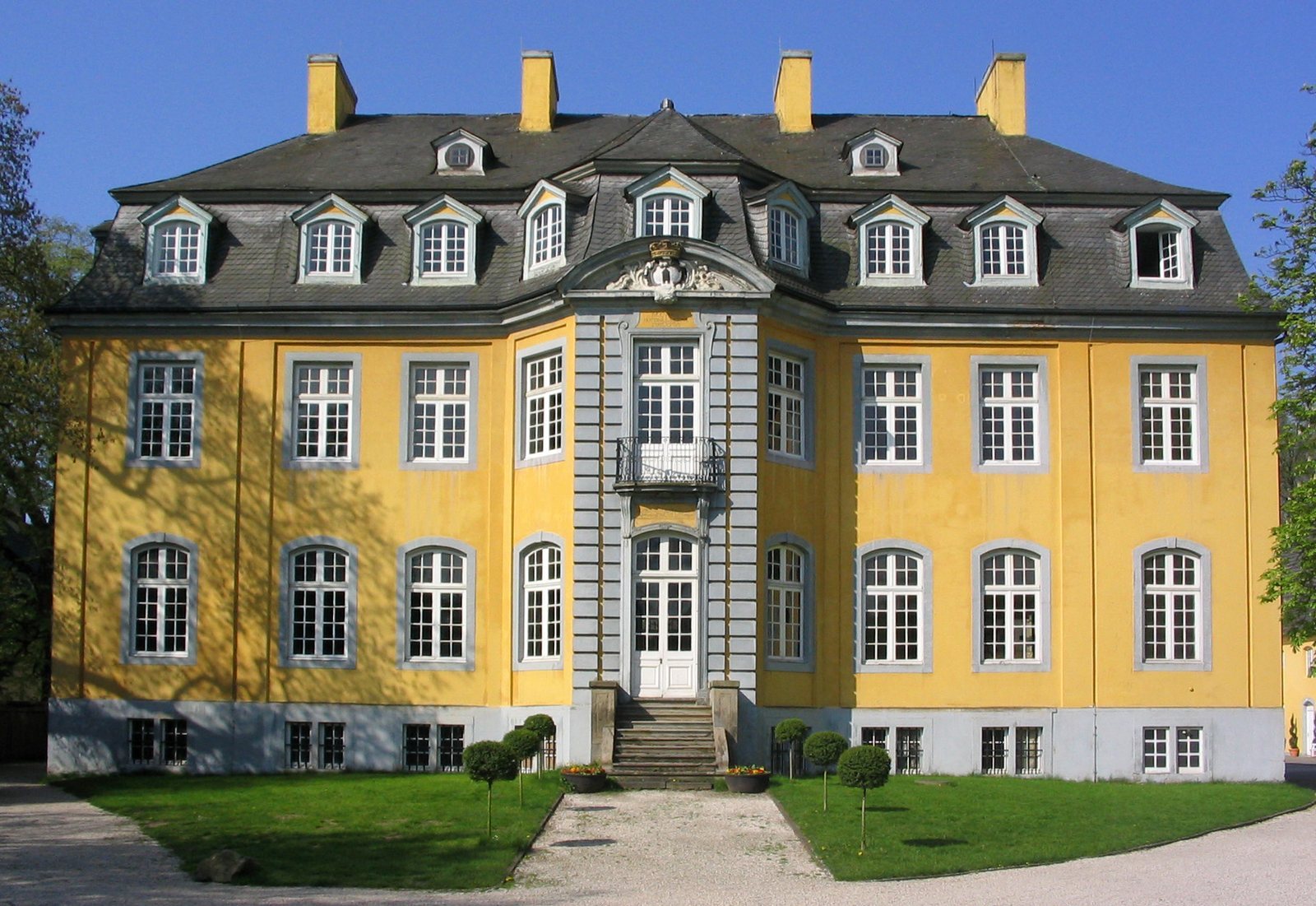
Schloss Beck is a castle in Kirchhellen-Feldhausen, Bottrop, Germany, built in the late Baroque, a later phase of the European Baroque style. Construction began in 1766 and finished in 1771. The castle was designed by Johann Conrad Schlaun, a leading architect of the Westphalian Baroque, as a leisure residence for Friedrich Florenz Raban von der Wenge.
From Haus Beck to a pleasure residence
A moated castle known as Haus Beck stood at the site by the 15th century. The present Schloss Beck is a later building.
Schlaun’s late-Baroque residence was built for leisure rather than as a continuation of the earlier castle. By the end of the 18th century, the estate also had a schnapps distillery, run by Baron Clemens August von der Wenge, the original patron’s son.
Estate and family ownership
After Friedrich Florens Raban von der Wenge, the grandson of the original patron, died in 1850, the estate passed to descendants of his sister Maria Franziska and her husband, Maximilian Werner von Wolff-Metternich. The transfer brought Schloss Beck into the Metternich family.
War and modern restoration
The castle survived the Second World War intact. The mining company Hibernia acquired the property in 1958 and offered the castle building to interested parties without charge. No one took it on before 1966, deterred by the expense and responsibilities of upkeep.
Karl Kuchenbäcker acquired the neglected castle in 1966 and began restoring it. He opened part of the building to the public to help cover the restoration costs, while the surrounding grounds were converted into an amusement park from the 1960s. After his death on 28 December 2004, his family put the estate up for sale. His wife Renate and daughters Karla and Katharina Graveland-Kuchenbäcker managed the castle and park through Freizeitpark Schloss Beck GmbH. The castle is protected as a historic monument.
Remains
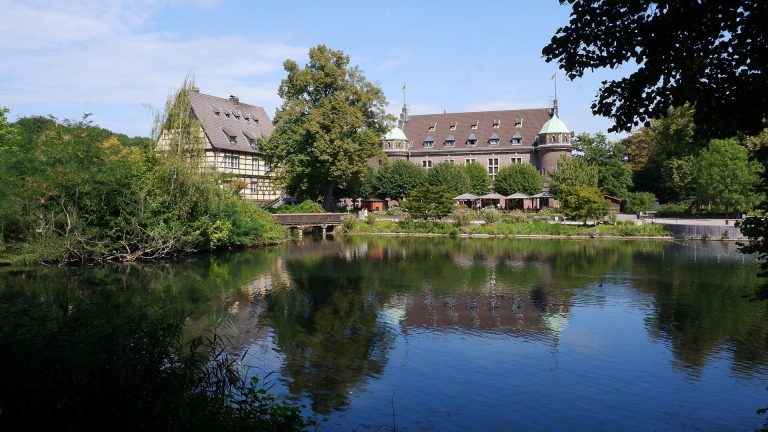
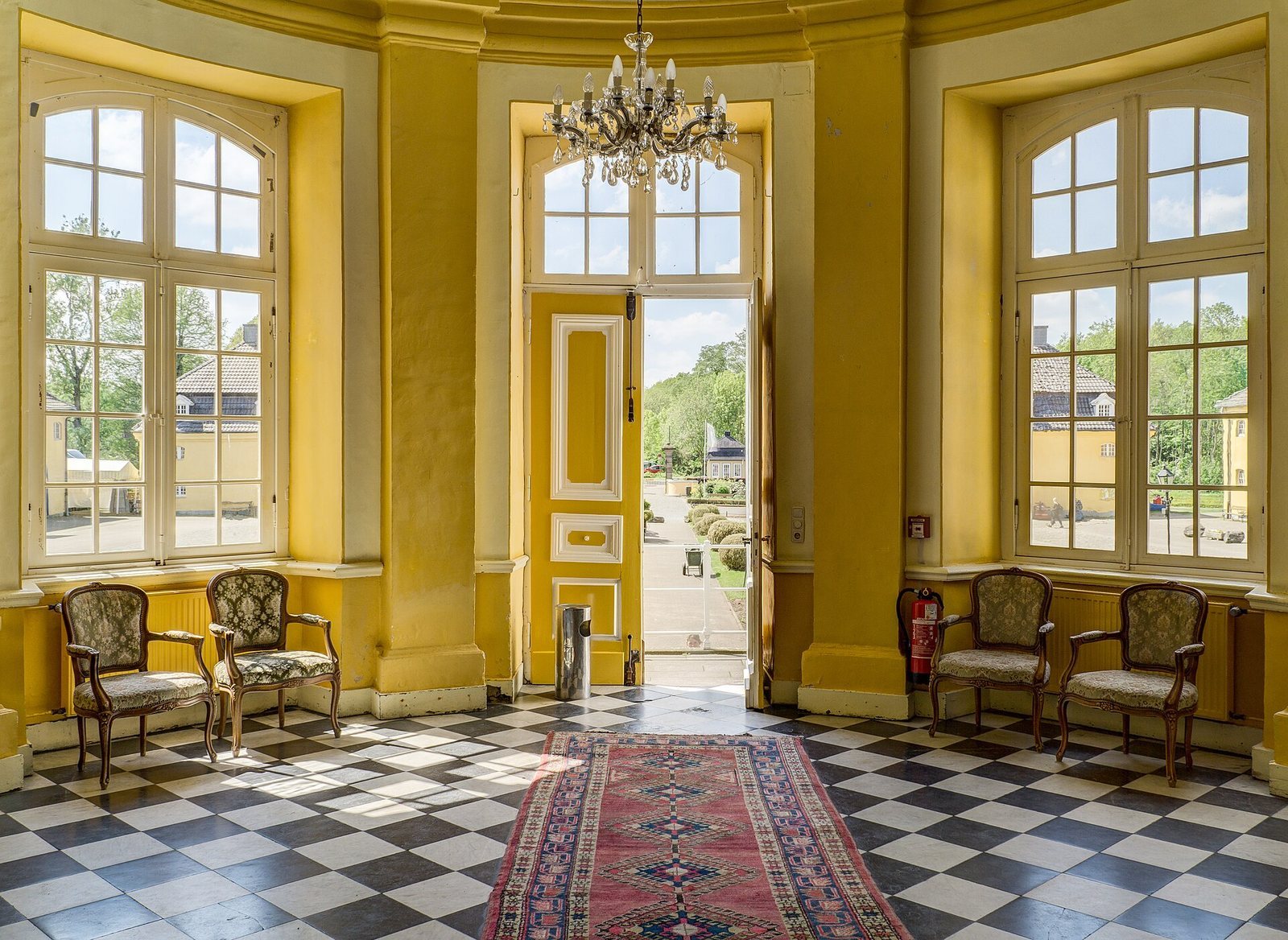
The late-Baroque castle stands within grounds that now form an amusement park. The surviving site includes the castle building and entrance portal, interior displays, and park features including a lake and a treetop path.
Castle and entrance portal
Restoration guided by old plans returned the castle buildings and entrance portal to their original condition.
Interior displays
Most of the castle’s rooms contain dioramas, staged scenes with mechanically animated stuffed animals. The cellar has been arranged as a haunted attraction with figures that move mechanically.
Park grounds
The grounds include a lake used for pedal boating and rowing. An educational treetop path was added in 2012.