Schloss Dornach: A Historicist Castle in Austria
Site at a Glance
- Rating
- 4.5
- Popularity
- Low
- Country
- Austria
- Primary era
- Modern
- Eras represented
- Modern
- Civilizations
- Austria-Hungary, Habsburg
- Site type
- Domestic
- Remains
- Castle
On this page6 sections
History
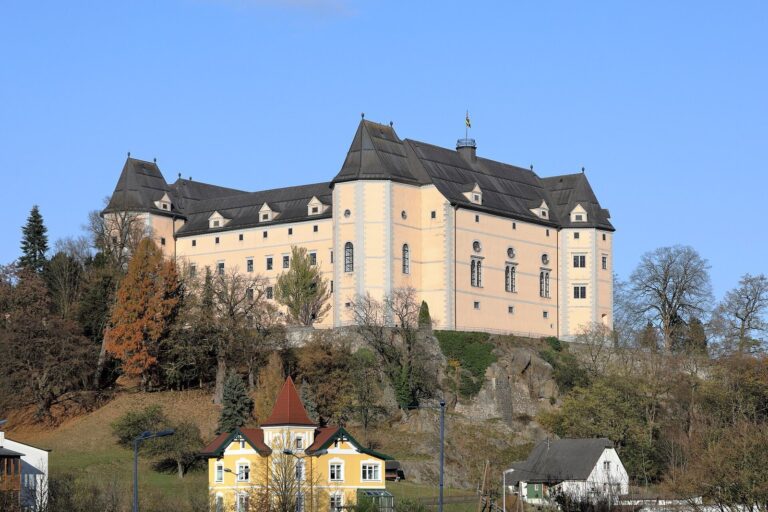
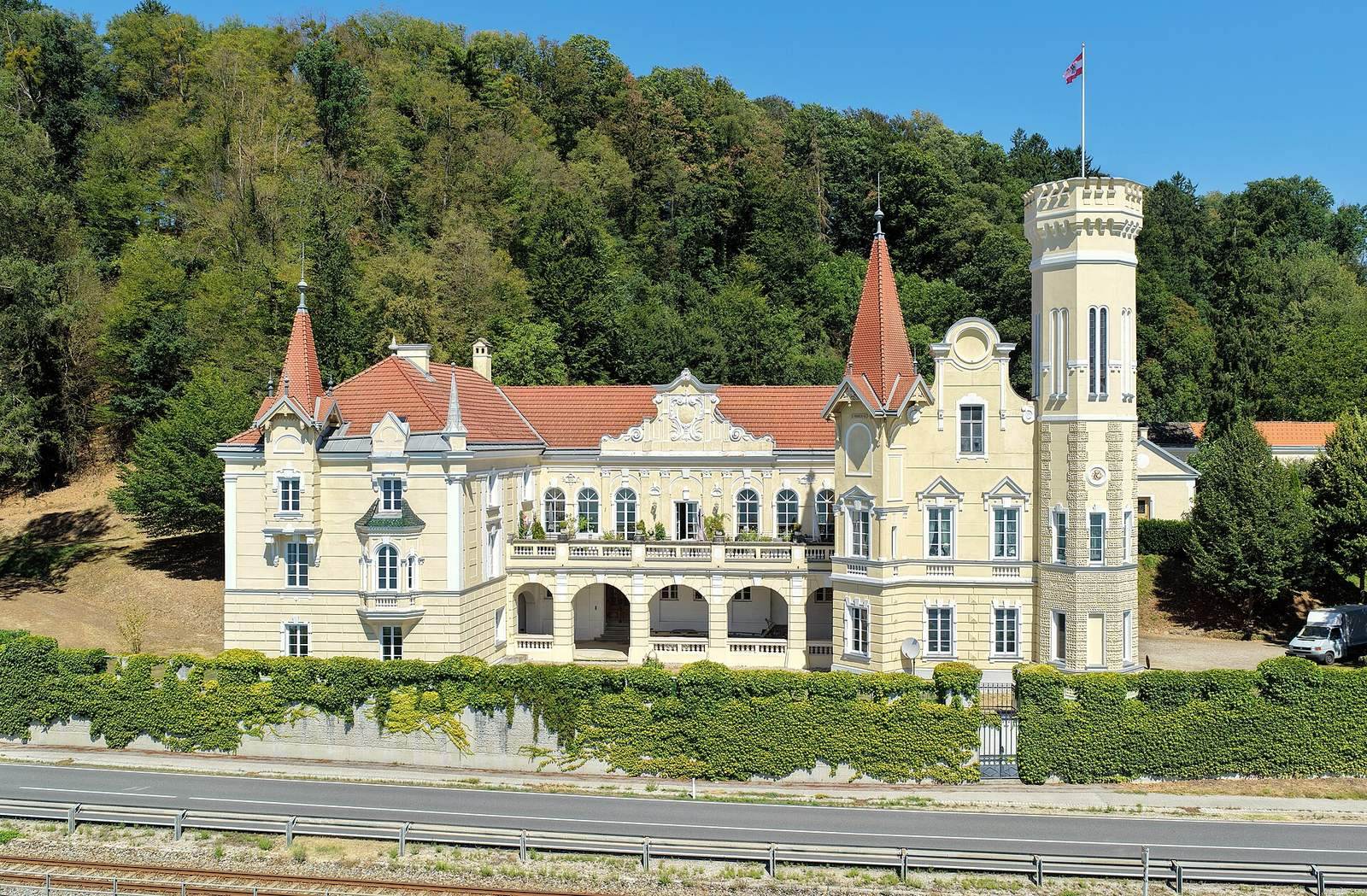
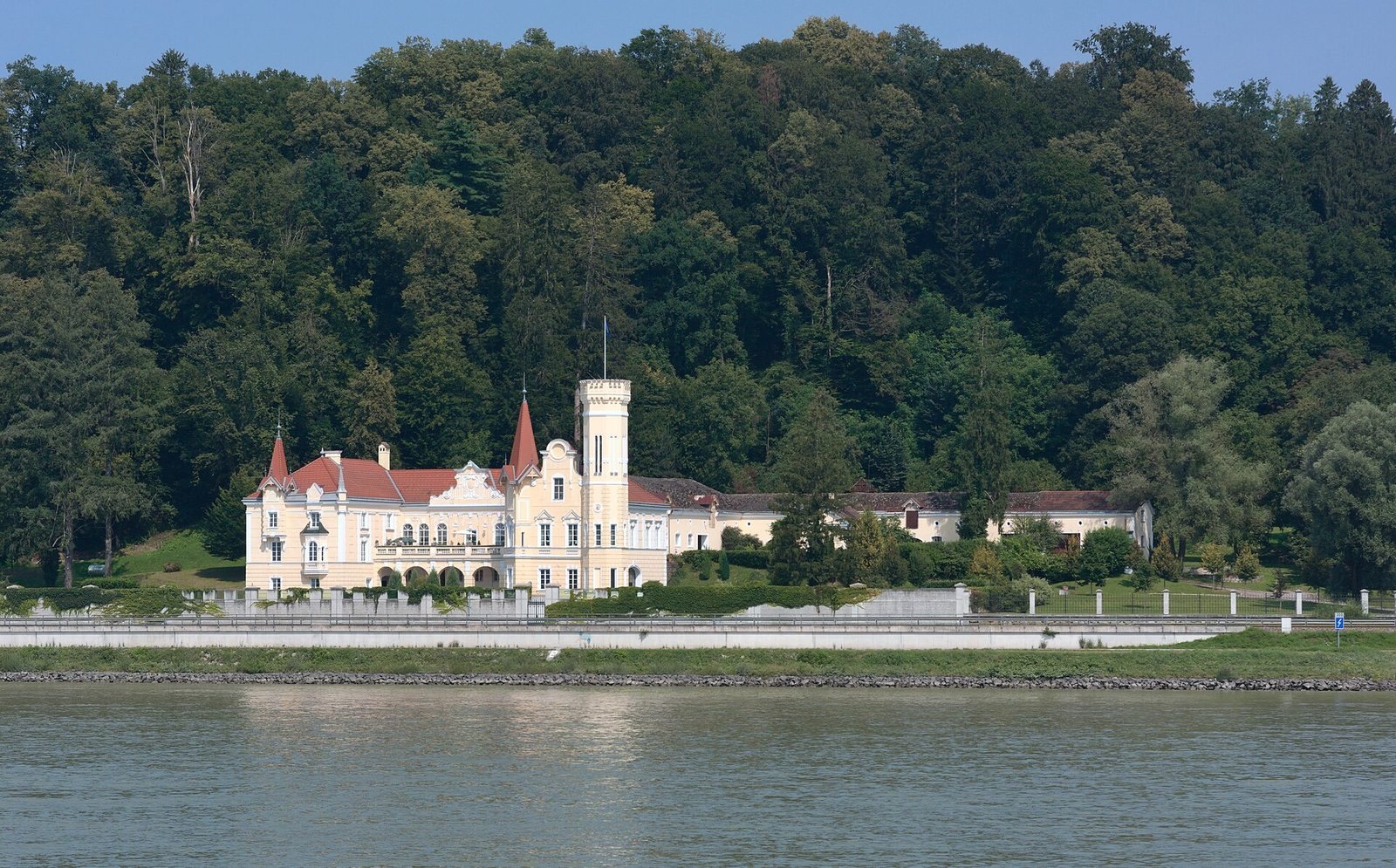
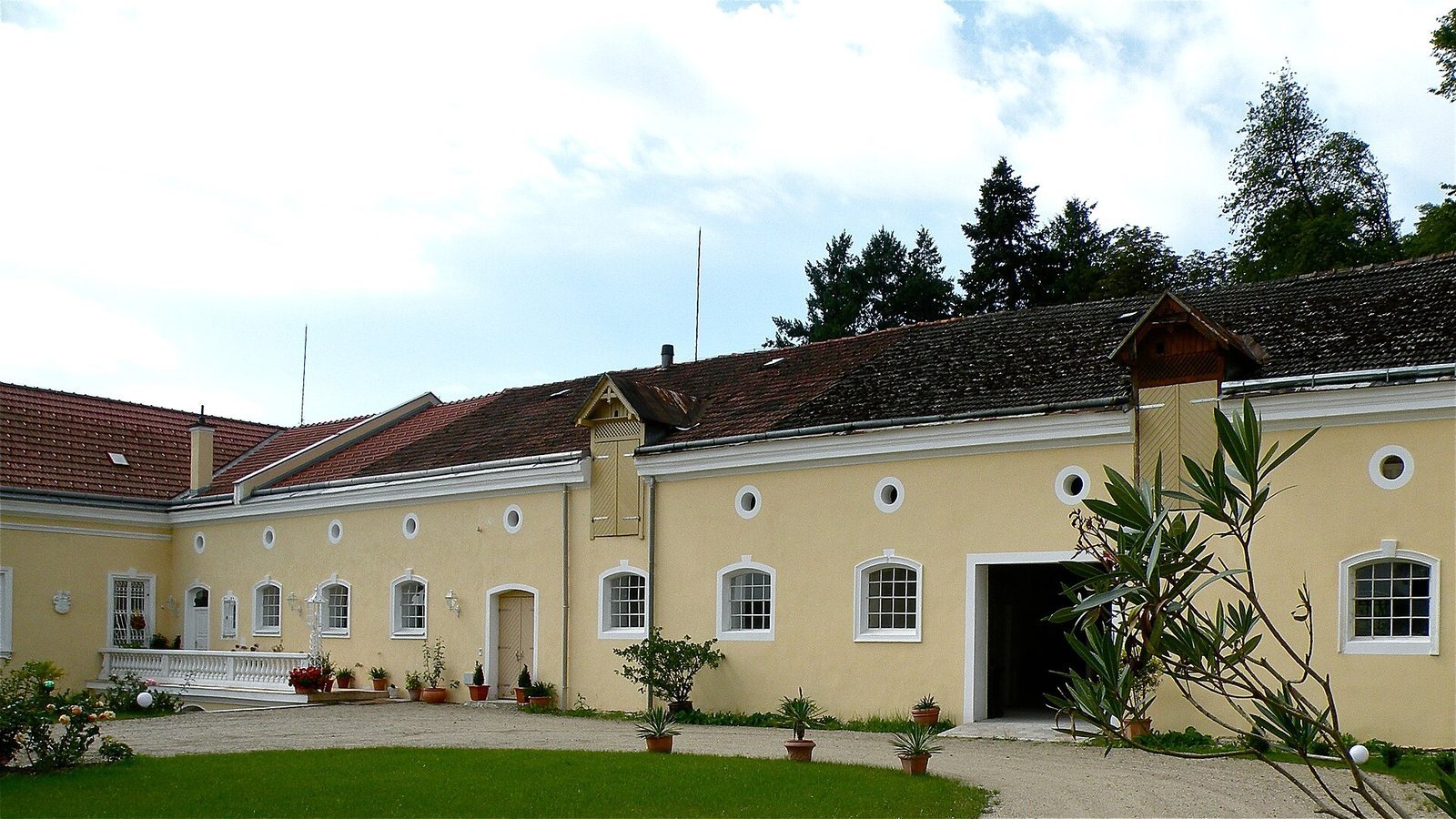
Schloss Dornach is a historicist Neo-Baroque castle on the Danube in Saxen, in the Austrian state of Upper Austria. Historicist architecture draws on earlier styles, and Neo-Baroque is a later revival of Baroque design. By 1455, an estate farm stood on the site. It belonged to Cornelius Reischl, Frida Uhl’s maternal grandfather. In 1890, Reischl sold the property to Princess Maria Theresia of Thurn and Taxis, who converted it into a castle.
Later owners and literary residents
Later owners included a branch of Portugal’s royal House of Bragança, Baron Viktor von Offermann, Robert Koller, and the Taubländer family. In 1893, Swedish writer August Strindberg and his then-wife, Austrian writer and journalist Frida Uhl, lived at the castle temporarily. Strindberg wrote and painted there with his family.
Uhl’s son with German playwright Frank Wedekind, writer Friedrich Strindberg-Wedekind (1897–1978), was raised at the castle. In 2003, an architect and the Ebenbichler family acquired the property and began extensive renovation.
Remains
Architecture
The castle combines features from several architectural periods, including medieval and Renaissance elements. Its design brings these influences together in a historicist building.
Exterior
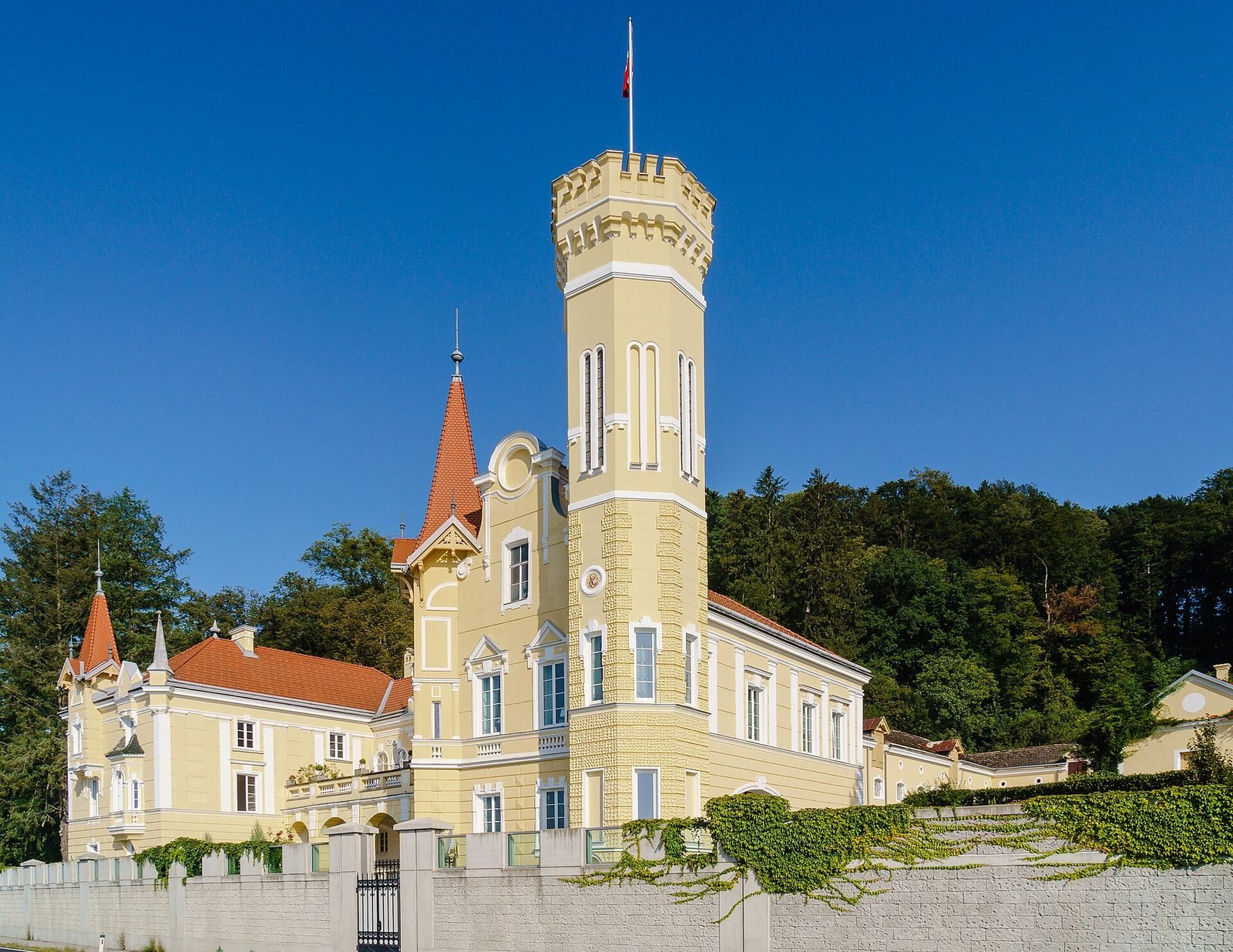
An octagonal tower stands at the eastern corner, with crenellations, alternating raised sections and gaps, at its top. A terrace projects across the façade between two sections of the building. A row of piers supports it in the form of a Florentine-style loggia, an open-sided, roofed gallery.
Upper floor
The upper floor has stucco ceilings in Neo-Renaissance and Neo-Baroque styles, later revivals of Renaissance and Baroque design.