Saint-Martin Abbey, Tournai: A Benedictine Monastery and Former Abbot’s Palace
Site at a Glance
- Popularity
- Medium
- Country
- Belgium
- Primary era
- Early Modern
- Eras represented
- Medieval, Early Modern
- Civilizations
- French, Habsburg, Habsburg Austria, Habsburg Spain, Spanish
- Site type
- Religious
- Remains
- Palace
On this page9 sections
History
Saint-Martin Abbey was a Catholic monastery in Tournai, Belgium, traditionally founded in the seventh century. Tradition credits Saint Éloi, bishop of Noyon and Tournai, with establishing it to help spread Christianity; the monastery was dedicated to Saint Martin of Tours, a late Roman bishop venerated as a saint. Christian presence in Tournai dates back at least to the fourth century, and tradition places Saint Piatus’s preaching there before Emperor Constantine’s 313 edict granting Christians religious toleration.
Foundation and refoundation
Norman raids temporarily ended monastic life at the site. Odo of Tournai, appointed to teach at the cathedral school in 1087, received the ruins from Bishop Radbod II and local authorities on 2 May 1092. With several pupils, he first formed a community of canons, clergy living together in service to a church, and then a monastic community. Odo was elected abbot and ordained bishop on 4 March 1095.
The community initially followed the Rule of Saint Augustine, a code for communal religious conduct. In 1095, on the advice of the abbot of Anchin, Odo adopted the Rule of Saint Benedict, which prescribed discipline and conduct for monks. The abbey then belonged to the Benedictine Order. It was under the Diocese of Tournai, a church district governed by a bishop, within the ecclesiastical province of Mechelen-Brussels, a grouping of dioceses.
Cultural growth and prosperity
Under Odo, the abbey developed into a religious and cultural center, with book copying among its important activities. By 1105 it housed about seventy monks. Rodulphus led twelve copyists who reproduced ancient works, while religious writing and spirituality also shaped the community’s intellectual life.
By the end of the thirteenth century, the abbey had around a hundred monks and extensive resources. Its estate and jurisdiction included about forty priories, subordinate religious houses, woodland, roughly twenty mills, and legal rights in many places. The community also operated a brewery.
Crisis and destruction
In the early fourteenth century, poor management and lavish spending combined with regional economic decline and continuing conflict to leave the abbey in financial ruin. A papal investigation in 1332 was followed by the excommunication of the abbot and several monks, formally excluding them from the Church’s communion. Gilles Le Muisit, the seventeenth abbot, partly repaired the abbey’s finances, but its earlier spiritual standing did not return.
In 1340, during the Siege of Tournai in the Hundred Years’ War, a long conflict between England and France, fire devastated the abbey and the monks’ harvest. The disaster severely disrupted the community.
Rebuilding, suppression, and civic use
Under Robert Delezenne, the last abbot, major rebuilding took place in the eighteenth century. A new abbey church and an abbot’s palace were constructed. During the French Revolution, the religious community was expelled on 18 November 1796, and the abbey was suppressed in 1797. Most of its buildings were demolished. The church was briefly used as a Temple of Reason, a revolutionary-era institution of worship, then stripped and pillaged before it too was demolished.
Tournai’s municipal administration moved into the former abbey grounds provisionally in 1809 and established itself there permanently in 1830, the year Belgium became independent. German bombardment and fire in May 1940 severely damaged the palace and nearby buildings. The palace was later restored.
Remains
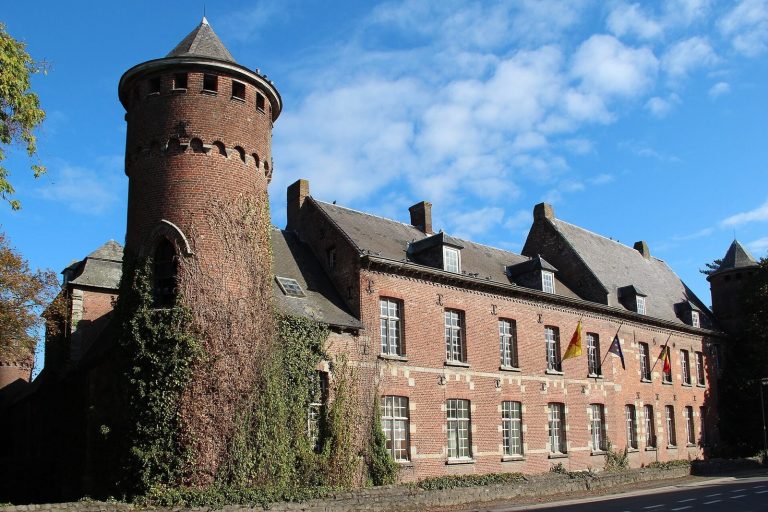
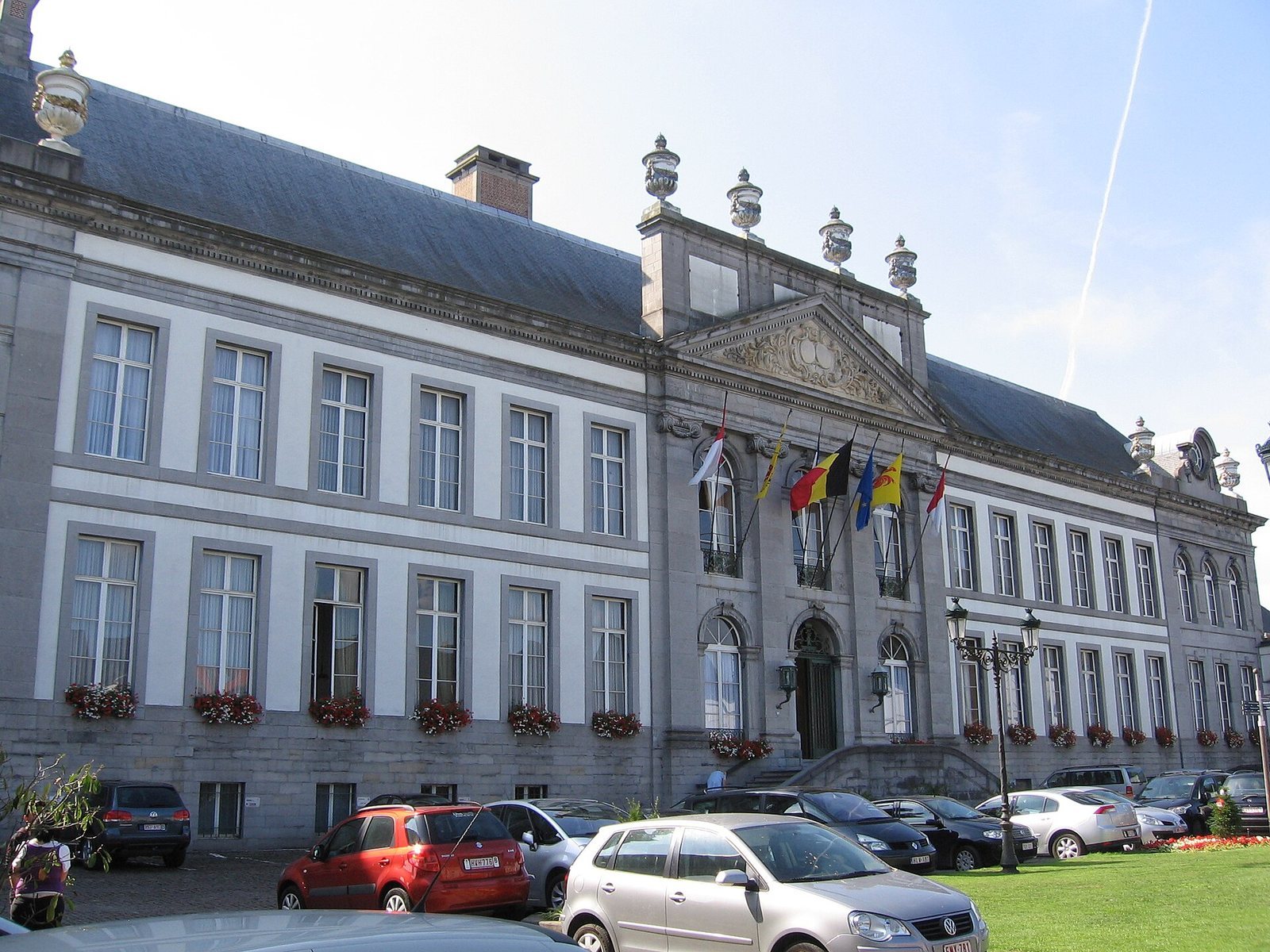
The surviving abbey precinct includes the former abbot’s palace, the principal standing building, along with sections of the medieval cloister, a crypt, and other former abbey structures. The palace now serves as Tournai’s town hall.
Palace and courtyard
Built from 1763 to 1767, the palace is an example of Renaissance classicism, a style drawing on classical architectural forms. Its façade extends for 130 metres. A triangular pediment of white stone bears the arms of Robert Delezenne. A monumental gateway dated 1722 leads into the palace’s main courtyard. The restored interiors have eighteenth-century furnishings and decoration.
Cloister and crypt
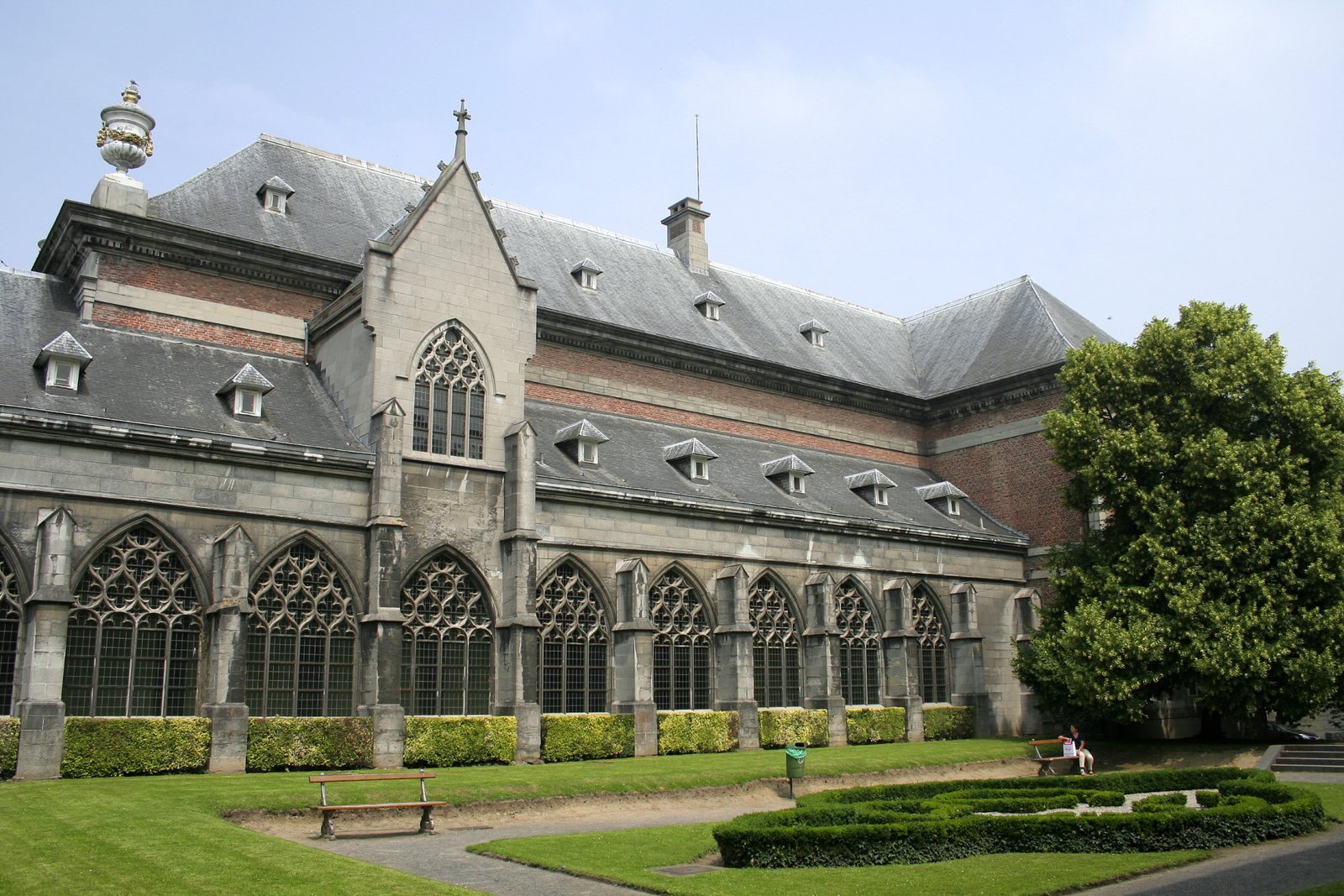
One side of the Gothic cloister, a medieval style associated with pointed forms and vertical emphasis, survives from its construction around 1500. Beneath the palace is a rectangular Romanesque crypt, built in a style characterized by rounded arches and heavy masonry. It has two naves, or long interior divisions, while the cellars retain sturdy curved masonry vaults.
Other structures and surviving objects
The former tithe barn, a storehouse for agricultural produce given to the church, was built in 1663 and later converted into a cinema. The abbey church’s altar is now in Tournai Cathedral. Manuscripts and illuminated books from the abbey library are held at Tournai’s Museum of History and Archaeology. Jacques Jordaens’s painting Saint Martin Healing a Possessed Man, once part of the church’s high altar, is now in the Museum of Fine Arts in Brussels.