Shahin al-Khalwati Mosque: A Rock-Cut Mosque Complex in Egypt
Site at a Glance
- Popularity
- Medium
- Country
- Egypt
- Primary era
- Early Modern
- Eras represented
- Early Modern
- Civilizations
- Ottoman
- Site type
- Religious
- Remains
- Tomb
On this page6 sections
History
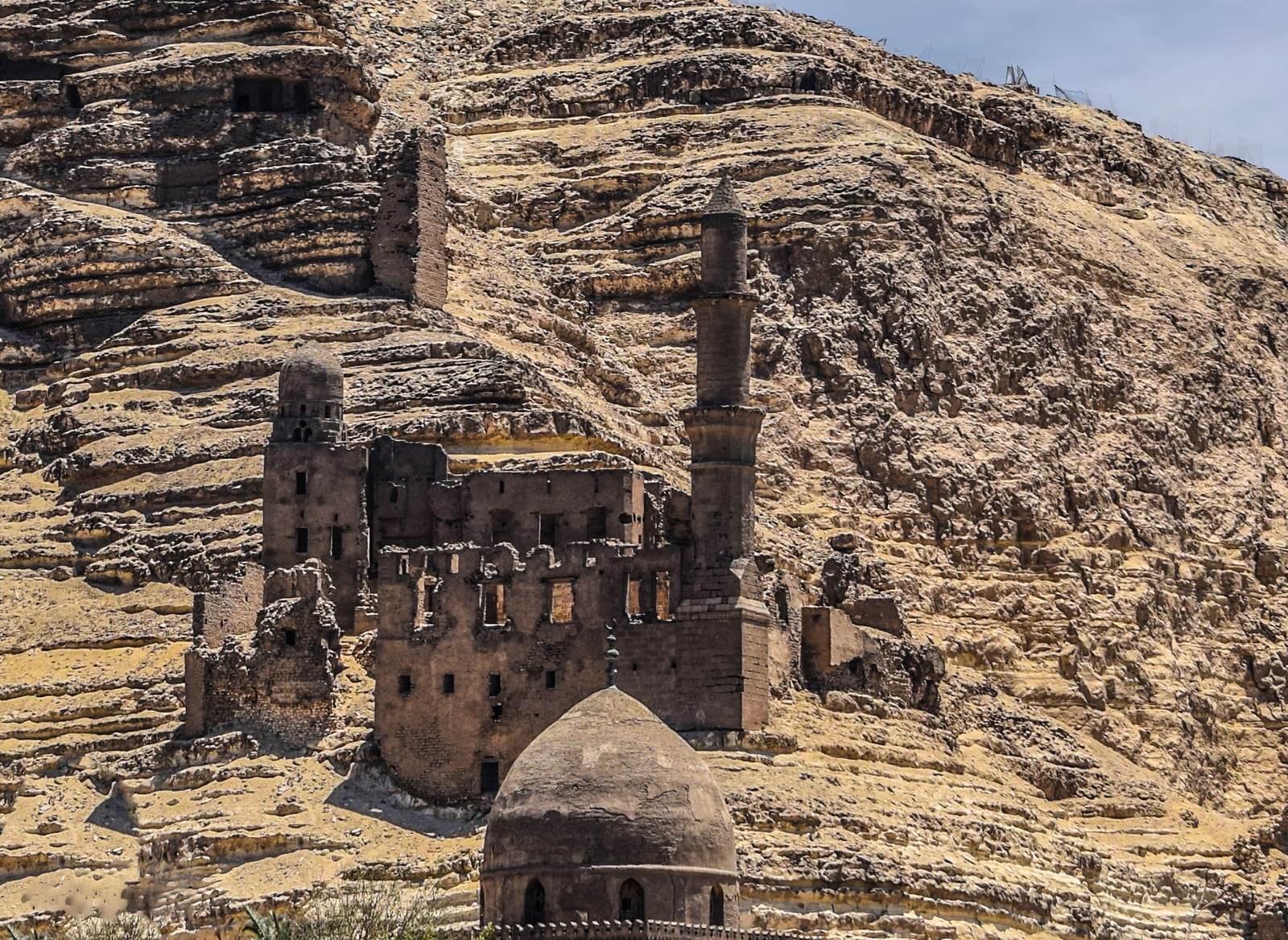
The Shahin al-Khalwati Mosque is a mosque complex cut into the foothills of Mount Muqattam in Egypt’s Abagiyya district. Sheikh Shahin al-Khalwati’s son built and endowed it in 1538 for his father. Egypt was then an Ottoman province governed by Dawud Pasha, a high-ranking Ottoman official.
Sheikh Shahin’s life
Sheikh Shahin was born in Tabriz, Iran, sometime in the ninth Islamic century. During the rule of Sultan al-Ashraf Qaitbay, he came to Egypt and joined the sultan’s Mamluk troops. The Mamluks were a military ruling class whose members had originally been enslaved. Shahin later asked to leave military life and was freed.
He studied with a Sufi master in Persia. Sufism is a tradition within Islam centered on spiritual discipline and devotion. After returning to Egypt, Shahin associated with a religious leader in Abbasiyya. Following that leader’s death, Shahin withdrew to Mount Muqattam, where he lived in seclusion for about thirty years, established a place of worship, and dug his grave. Emirs and ministers visited him seeking his blessing. His own death date is uncertain, and cannot be placed reliably before or after the mosque’s construction.
Later condition
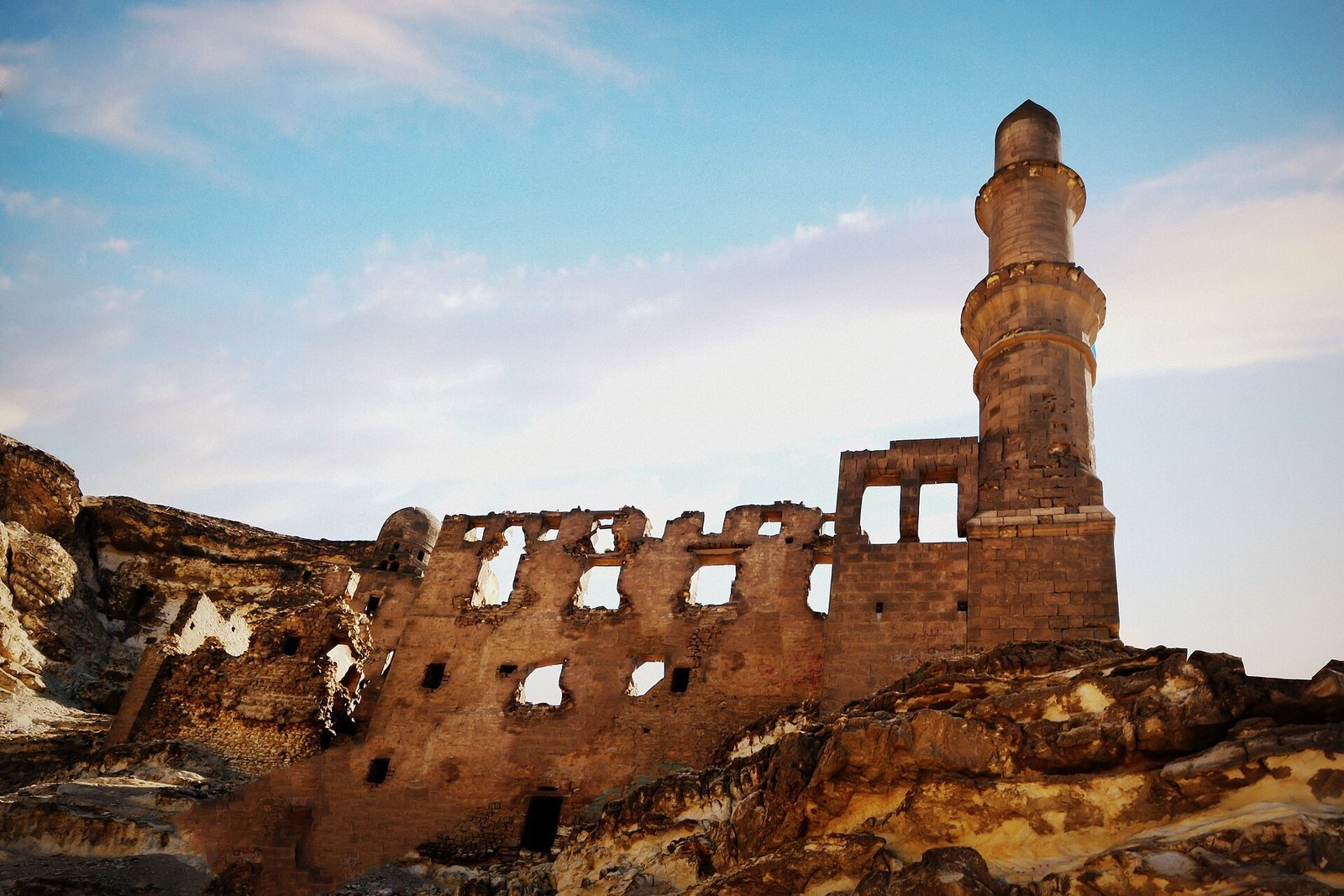
The mosque is now under the Ministry of Awqaf. Neglect has left the complex in ruins and at risk of collapse.
Remains
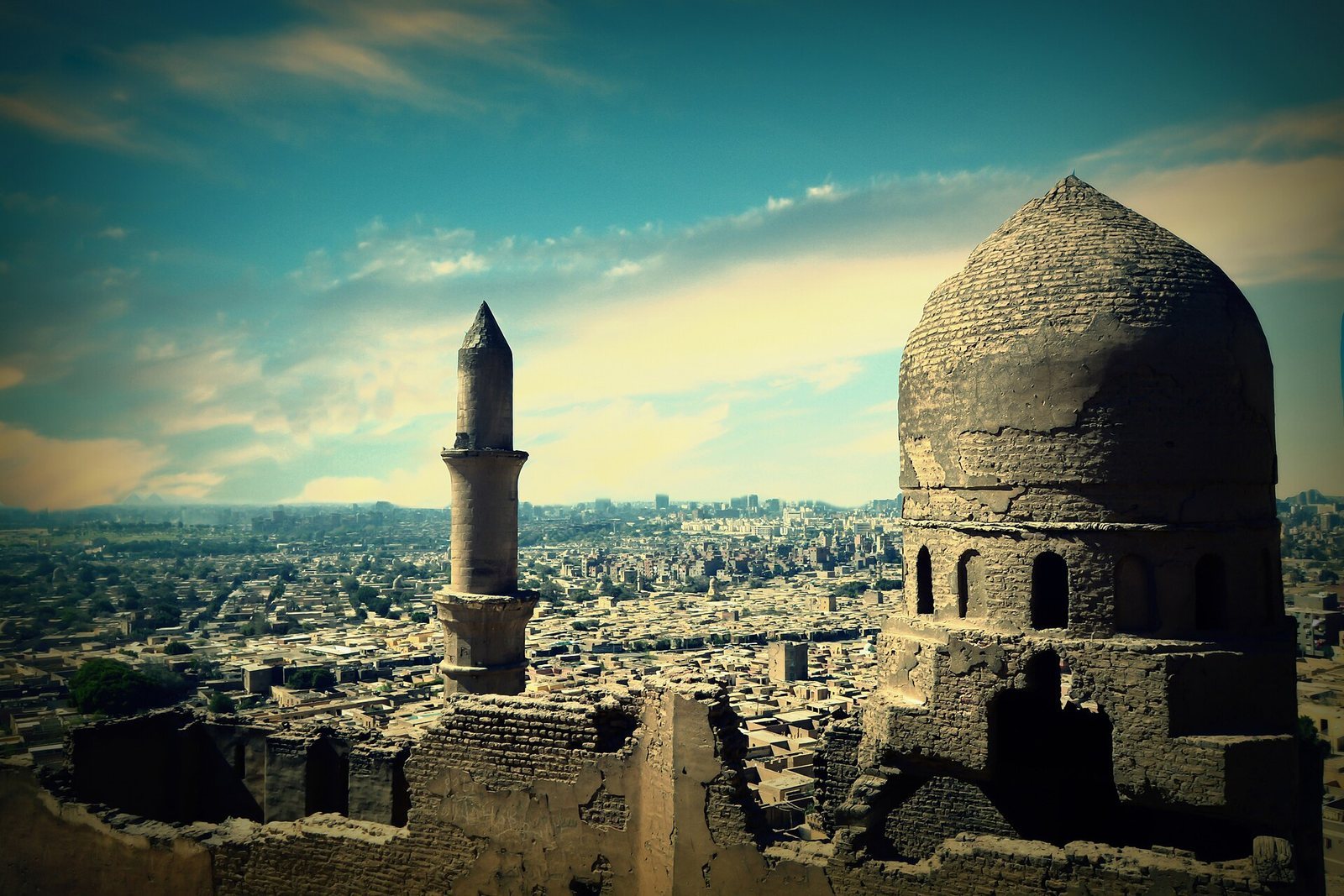
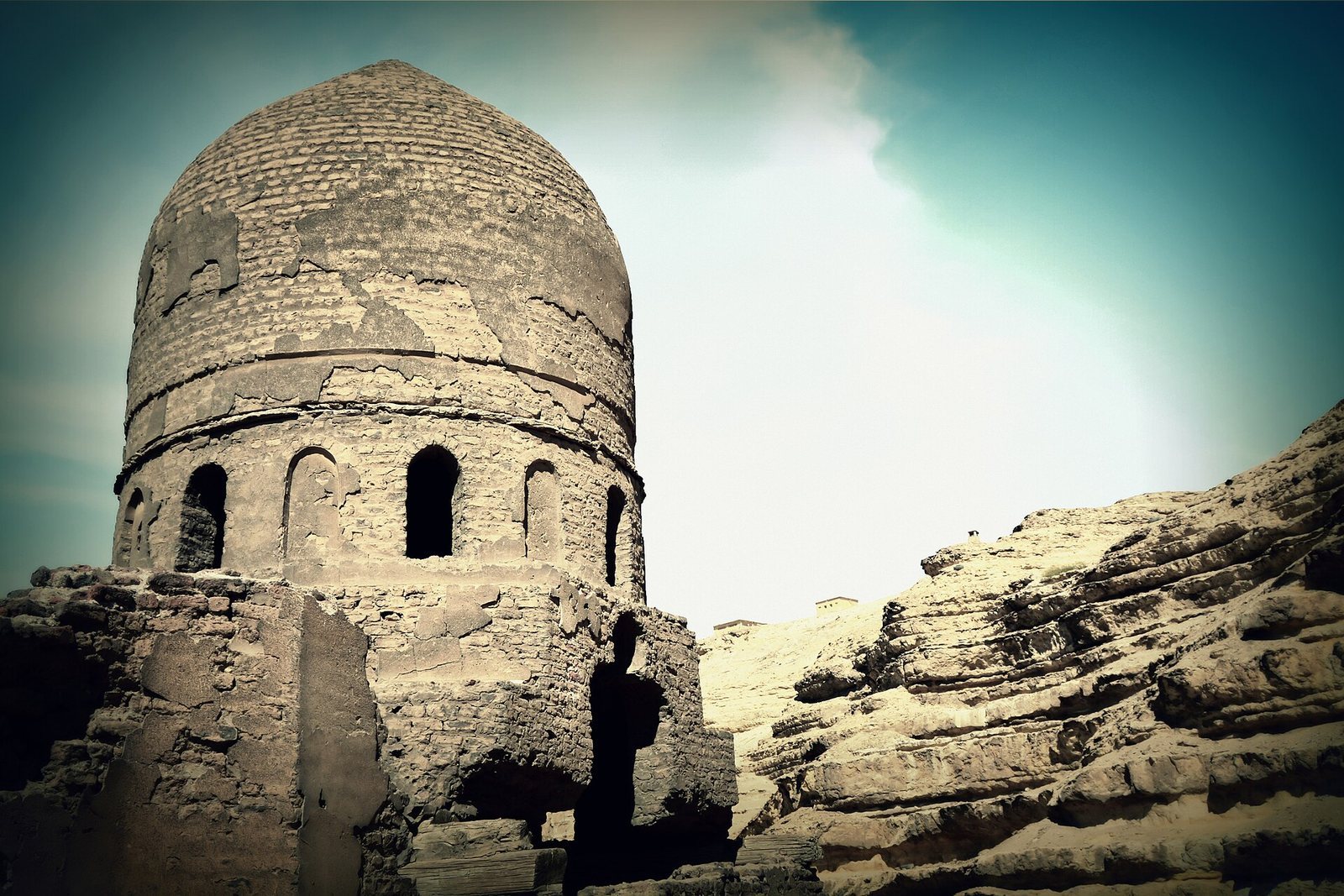
The complex is cut into Mount Muqattam’s foothills behind the cemeteries of Abagiyya, an area formerly known as the Valley of the Oppressed. It comprises a mosque, a domed mausoleum, and three graves, with a ramp forming part of the approach. Carving a complex directly into rock is exceptionally rare in Egypt; in this respect, the site has been compared with the Temple of Hatshepsut and the Valley of the Kings.
Mausoleum and burial area
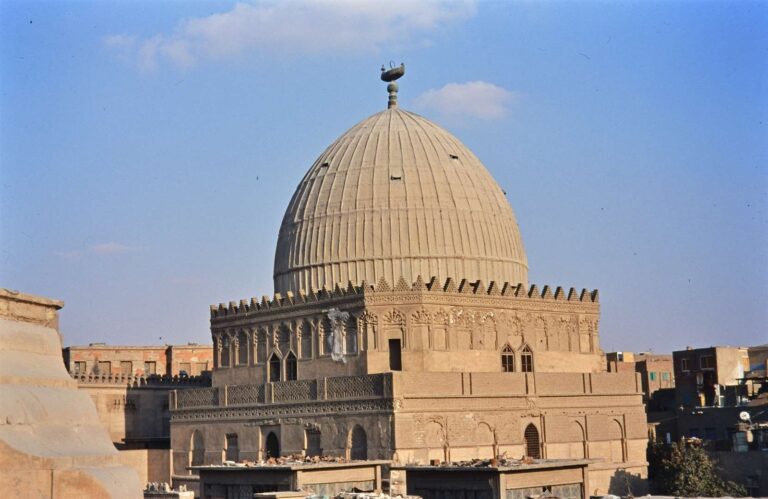
The largest of the three graves is identified as Sheikh Shahin’s. The other two are associated with the mosque’s builder and that builder’s son. Above the mausoleum entrance, a marble slab bears an inscription recording the mosque’s foundation, endowment, and opening. Another inscription inside the dome refers to a later renewal.
Mosque and surviving structures
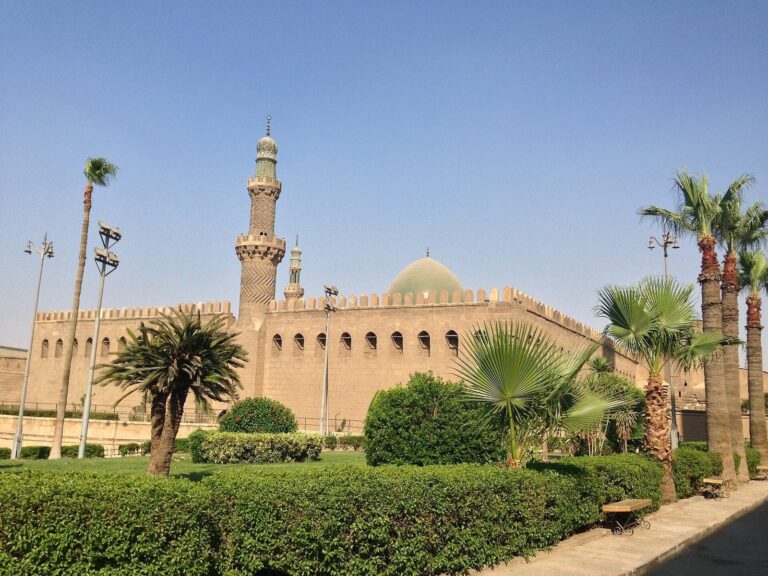
The mosque had four stone columns. Its prayer area at the qibla, the direction toward the Kaaba in Mecca, was ornamented with colored marble and mother-of-pearl. A water cistern or well is also said to have been part of the complex. The minaret and mausoleum dome are its principal surviving structures.