Sauherad Church: A Romanesque Parish Church in Norway
Site at a Glance
- Popularity
- Low
- Country
- Norway
- Primary era
- Medieval
- Eras represented
- Medieval, Early Modern, Modern
- Civilizations
- Denmark–Norway, Norwegian
- Site type
- Religious
- Remains
- Church
On this page7 sections
History
Medieval origins and parish role
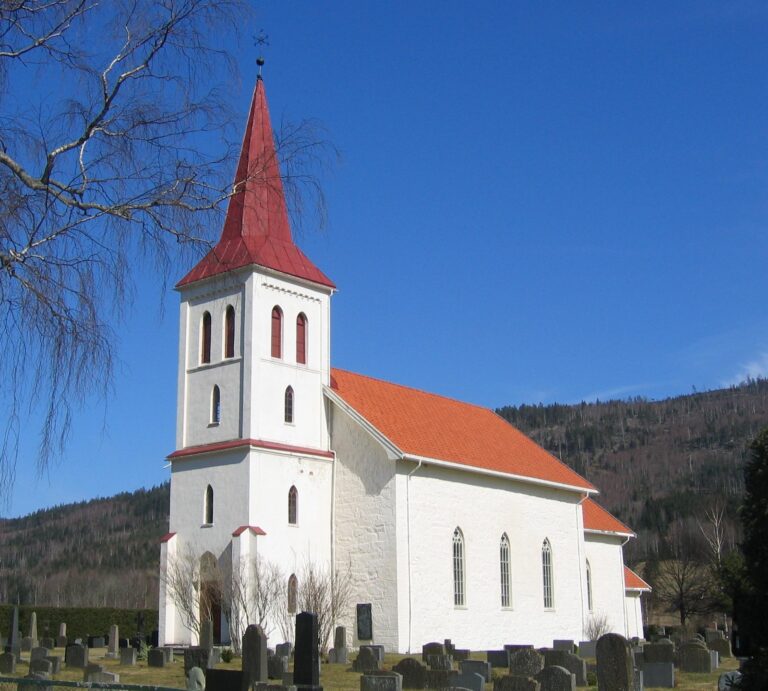
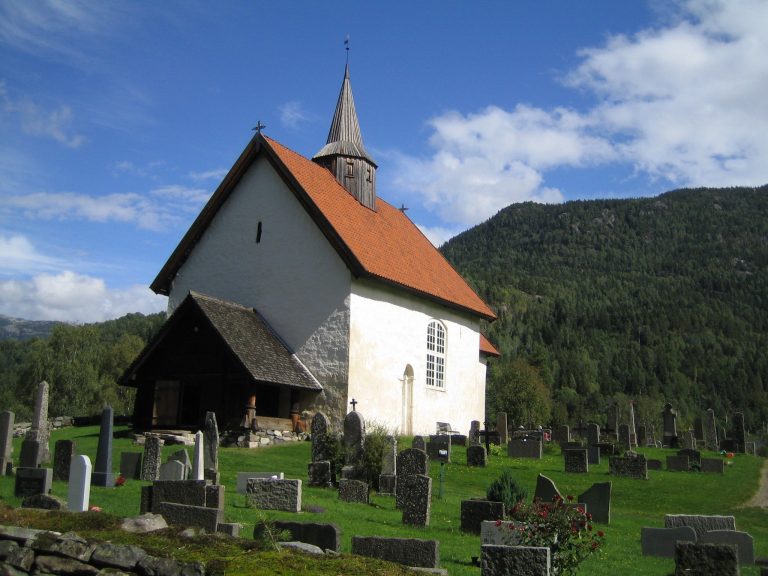
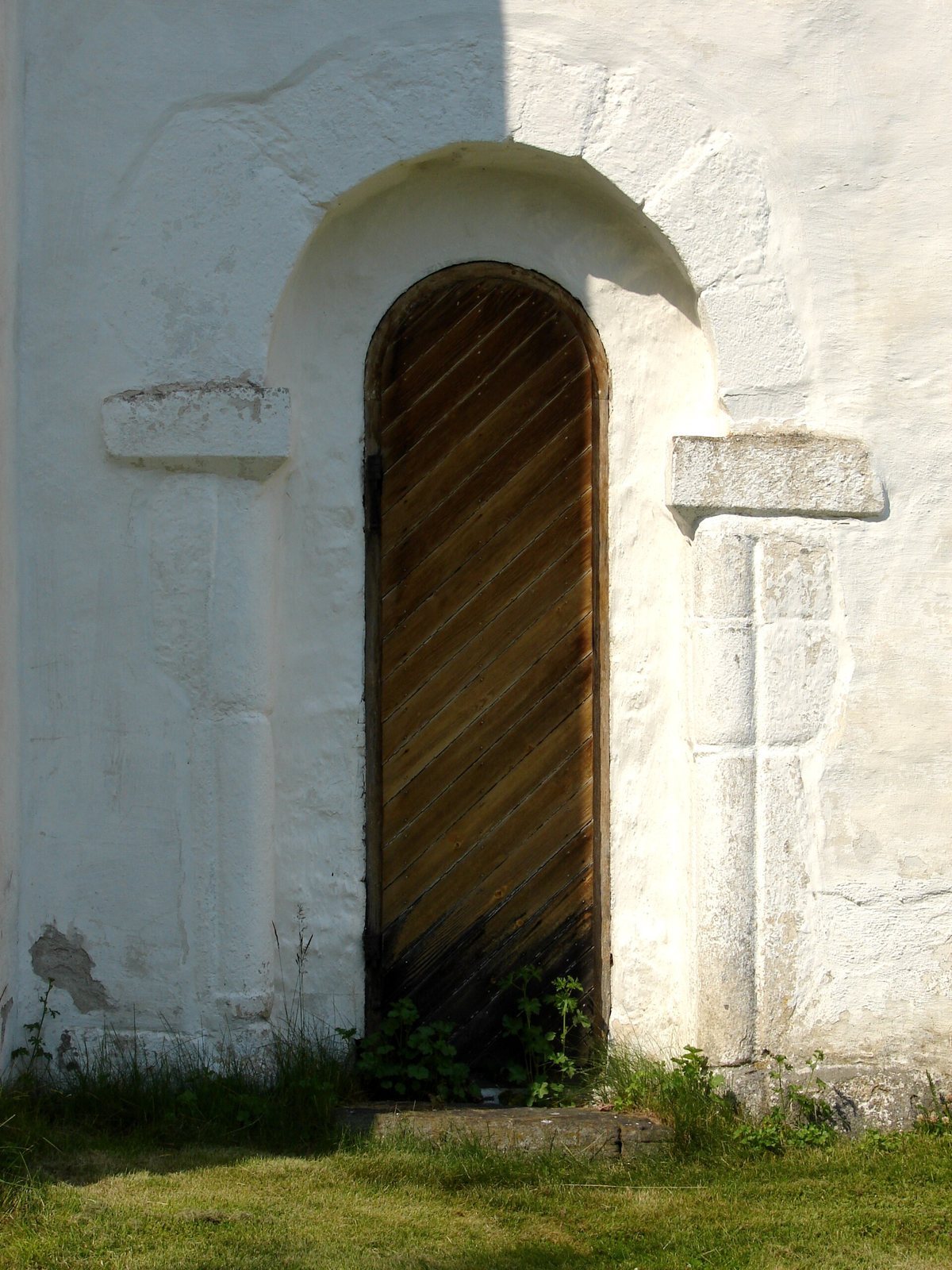
Sauherad Church in Akkerhaugen, Norway, is a stone church built around 1150 in the Romanesque style, a medieval European architectural tradition. It is among the oldest surviving churches in Telemark. Its earliest known written record dates to 1398, more than two centuries after its construction.
Formerly Catholic, the church is now an active Evangelical Lutheran parish church of the Church of Norway. It is dedicated to Saint Laurentius, or Lawrence of Rome, an early Christian martyr traditionally identified as an archdeacon, a senior cleric with administrative responsibilities. The church serves the joint Sauherad and Nes parish within the Øvre Telemark deanery, an administrative subdivision of the Diocese of Agder og Telemark.
Changes and civic use
The vicarage burned down in 1657. In 1711, workers replaced the roof, using stone roofing in place of the earlier tiles. Cracking led to further repairs in 1739, when new roof trusses were installed and iron girders added to the walls. In 1781, the nave’s west wall was taken down and the building extended westward.
In 1814, the church served as a polling place during Norway’s first national elections. Parishioners elected “electors,” who then chose representatives to the Norwegian Constituent Assembly, the body that drafted the country’s constitution at Eidsvoll Manor. An interior renovation planned by Hans Linstow in 1830 changed much of the church’s furniture. A wooden sacristy was added at the east end of the choir in 1849.
Modern interpretation and protection
The choir’s demon decorations were long believed to date from around 1600. In 2021, their maker was identified as conservator Gerhard Gotaas, who created them in 1940–41. The imagery has a medieval spirit, and its combination with life-size apostle statues is regarded as a major work of post-Reformation church folk art. The term refers to the period after the Protestant Reformation, which reshaped Christian institutions and worship in Europe. Sauherad Church is automatically protected as a Norwegian cultural heritage site.
Remains
Church building and grounds
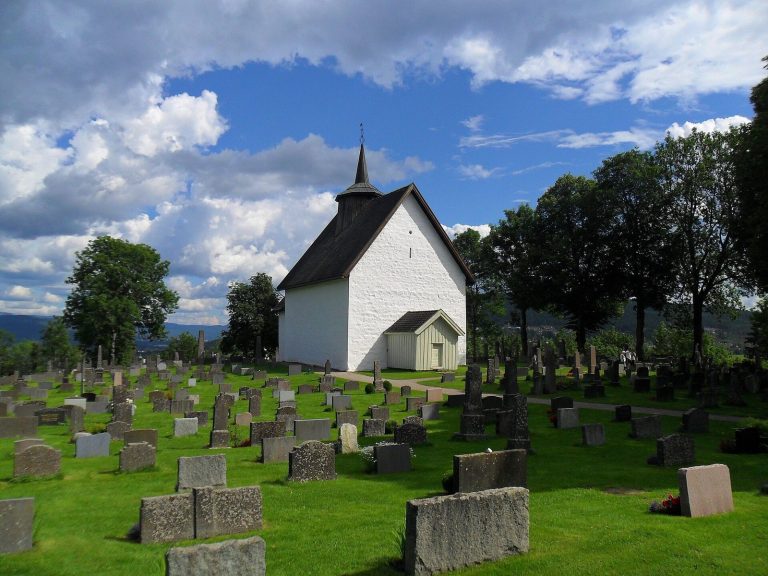
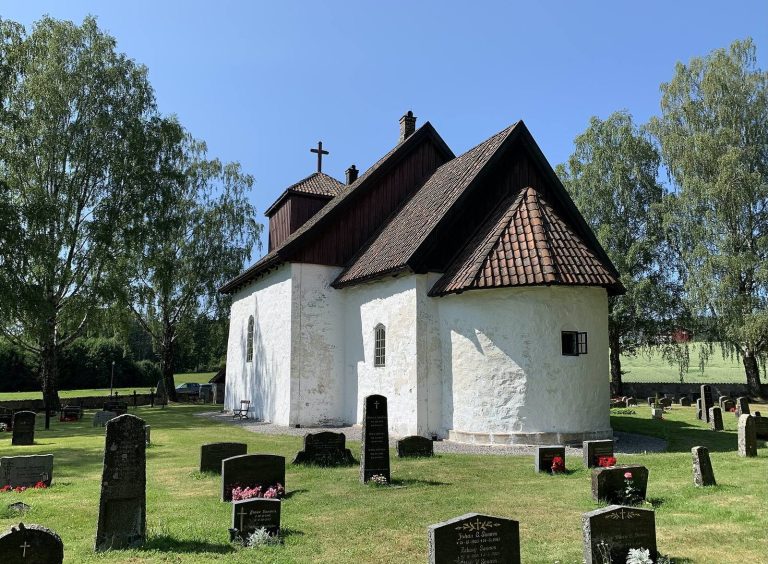
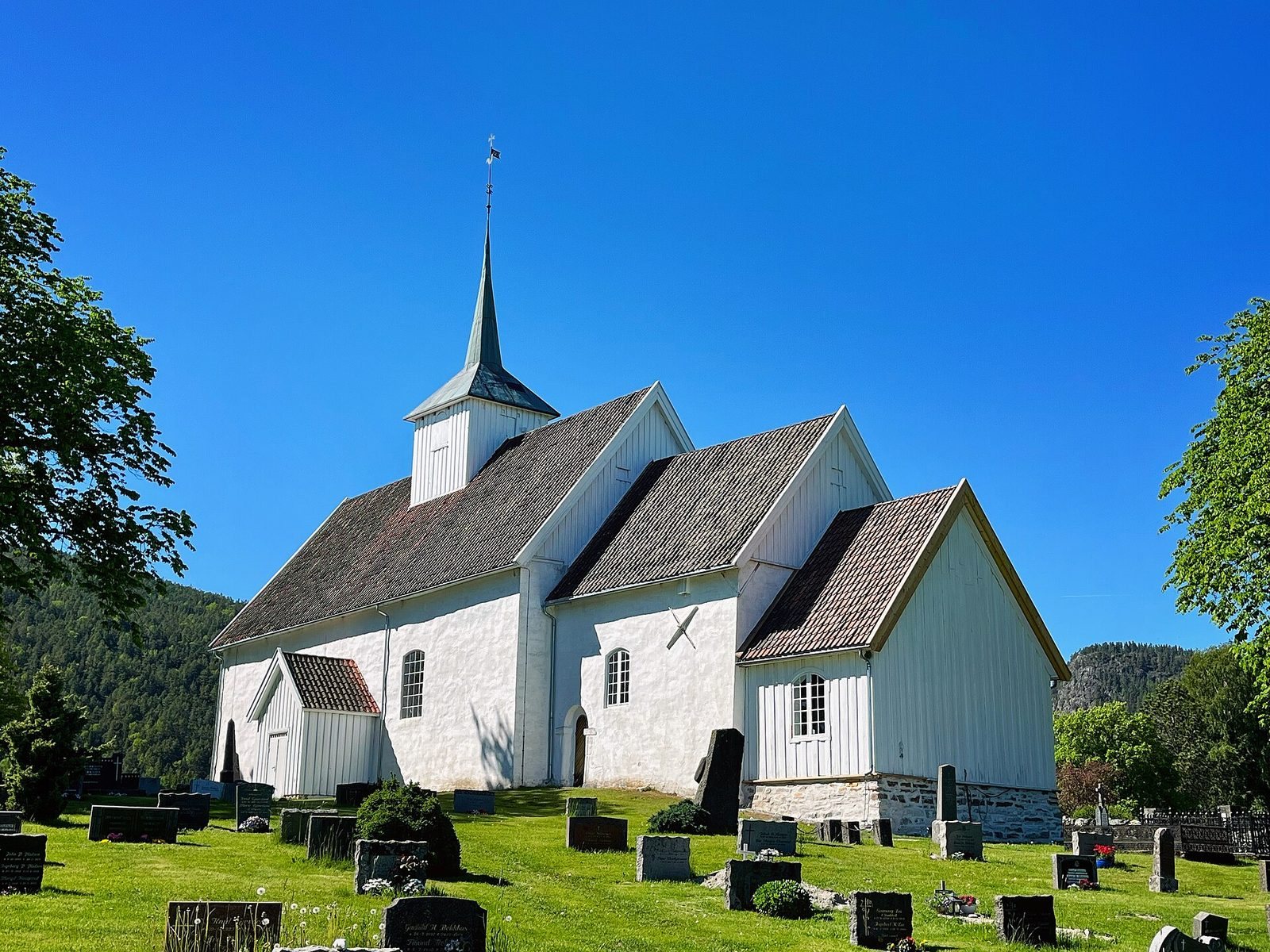
The white, stone-built church follows a long-church plan, with its main congregational space, the nave, arranged lengthwise before the narrower choir, traditionally used by clergy and singers. Both are rectangular, and the choir has a lower roofline than the nave. The church accommodates about 260 people.
A bell tower stands above the middle of the nave roof. The church originally had no tower, while its bells date to 1441, a date that may indicate when the tower was built. A wooden sacristy, a room for preparing worship and keeping church objects, stands at the east end of the choir. A cemetery lies beside the church.
Choir paintings and statues
The choir’s west wall bears painted demon faces with a range of expressions. The decoration comprises about 2,800 faces and is also known as “The Thousand Demons.” Life-size statues of the apostles are also located in the choir.