Santuario della Madonna del Bosco, Imbersago: A Marian Shrine in Italy
Site at a Glance
- Popularity
- High
- Country
- Italy
- Primary era
- Early Modern
- Eras represented
- Early Modern, Modern
- Civilizations
- Austrian Empire, Duchy of Milan, Habsburg, Italian, Spanish
- Site type
- Religious
- Remains
- Sanctuary
On this page16 sections
History
Santuario della Madonna del Bosco is a Roman Catholic Marian shrine in Imbersago, Italy, built chiefly between 1641 and 1646. It belongs to the Archdiocese of Milan, is affiliated with the Oblates of Saints Ambrose and Charles, and follows the Ambrosian rite. Traditions of Marian appearances helped establish it as a destination for worshippers from the Milanese and Bergamasque areas.
Apparition traditions and early devotion
Reports of appearances in the woods above Imbersago began circulating in 1615. The figure was described as a grand lady accompanied by lights and harmonious music. The visions were associated with Wolf Spring, named for the wolves common in the area, and a group of three large chestnut trees.
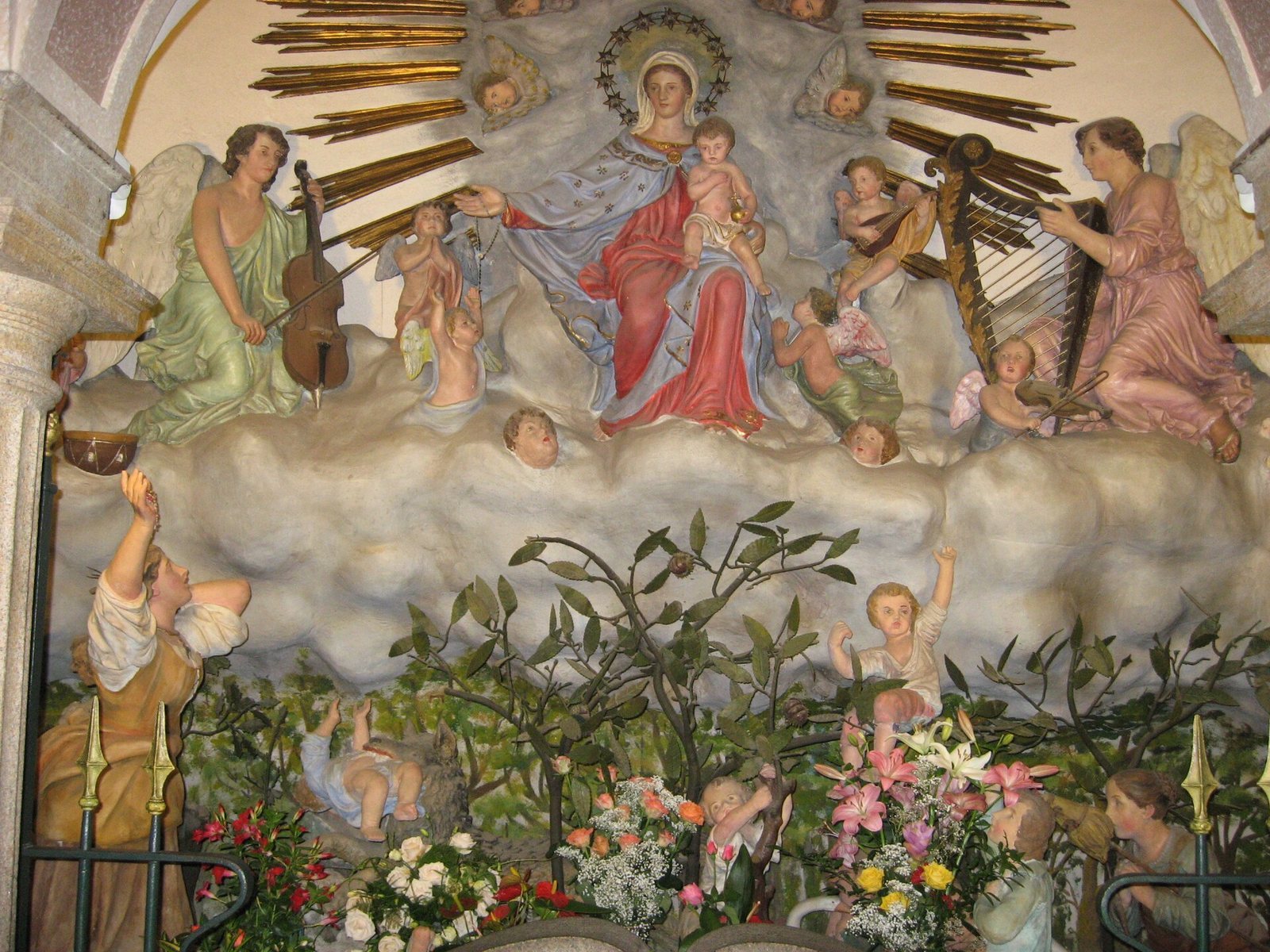
Tradition places the so-called chestnut miracle on 9 May 1617. Three young shepherds were tending their flock when they saw an apparition. One of them, Pietro, found a ripe chestnut among the branches despite the season. Devotion to the Virgin grew, and early worshippers prayed before a small image placed on the tree associated with the vision. The shrine acquired the names Our Lady of the Chestnut Burr and Our Lady of the Chestnuts.
A second story tells that a wolf carried off a baby from a family grazing near the spring. After the mother prayed, the Virgin appeared above a chestnut tree, and the wolf returned the child. This account was linked to the building of the first chapel, whose fresco included a wolf. Giovanni Dozio later rejected the wolf story as unfounded. He regarded the chestnut find as a real event, but an accidental one rather than a miracle.
Construction and development
In 1632, Gaspare Brambilla of Imbersago began building a small chapel at the site associated with the apparitions. Natale Perego connected the timing to the end of a plague epidemic, which allowed people to fulfil vows made during the crisis, and to the renewal of Catholic devotion during the Counter-Reformation, the Church’s period of reform in response to the Protestant Reformation. The project also began amid military contests between French, Dutch, and Swedish forces and those defending Spanish control of the territory. Drought and fears that plague might return to Milan added to local anxiety.
The sanctuary was built to a design by Carlo Buzzi, whose established reputation made him an expensive choice. Work on the first octagon ran from 1641 to 1644. Fabricio Landriani donated the land and contributed money. Giovan Battista Fontana supplied five marble columns, while Silvestro Fossati received the commission for the choir. The building was solemnly blessed on 9 May 1646, the twenty-ninth anniversary of the chestnut miracle. Monsignor Giacinto Faggio, provost of Brivio, celebrated its first Mass.
Further work and fittings followed. Giuseppe Villa received a commission for an altarpiece in 1654, Domenico Riva made a bell in 1656, and Giovanni Vannoto repaired cornices in 1662. From 1668, an appointed chaplain served the sanctuary, including by hearing confessions. Limited funds had constrained the original project, but a second building phase began in 1677. Probably designed by Francesco Castelli, it added the octagonal presbytery and stucco decoration.
Patronage and nineteenth-century changes
During periods of Austrian and French rule, religious buildings faced forced closure on the grounds that they were useless and economically unviable. The counts Castelbarco, lords of Imbersago, took the sanctuary under their patronage and prevented its closure. Cardinal Giuseppe Pozzobonelli visited in 1754, when the building already resembled its later form. A statue of the Virgin was placed in the forecourt the following year. On 12 October 1795, Filippo Maria Visconti, then archbishop of Milan, visited after hearing enthusiastic reports about the shrine.
The Holy Staircase was completed in 1824 and rebuilt in 1981 after a landslide. In 1888, engineer Giacomo Santamaria directed an enlargement that reorganized the presbytery and expanded the area around the main altar. The work also included confessionals and devotional artworks.
According to tradition, the Virgin appeared to Teresa Secomundi on 8 December 1896. Secomundi was said to be unable to pray or enter places of worship because of demonic manifestations. In the account, the Virgin gave her a rosary and accompanied her to the sanctuary entrance; Secomundi was said to have experienced further appearances elsewhere. In 1898, the Oblate Fathers of the Istituto Sant’Ambrogio in Milan took over management from the chaplains. Luigi Maria Marelli, a spiritual assistant who later became bishop of Bergamo, was credited with encouraging the devotion to the shrine that Angelo Giuseppe Roncalli showed in later life. Cardinal Alfredo Ildefonso Schuster also visited Imbersago four times.
Roncalli and the minor basilica
Roncalli visited the sanctuary from childhood. During two years at the seminary in Bergamo, he made the pilgrimage on foot. As a cardinal, he presided over the solemn crowning of the Virgin’s statue on 29 August 1954 and continued to return on anniversaries. His final visit was on 24 August 1958, shortly before the conclave that elected him pope.
After becoming Pope John XXIII, Roncalli raised the sanctuary to the rank of minor basilica in 1958. This is an honorary title granted by the pope, distinct from that of a cathedral. He assigned the shrine a blessed candle and dedicated another to Saint Joseph; his visits often included the celebration of Mass. In 1960, he asked Cardinal Giovanni Battista Montini to place a gold-and-gem necklace on the Virgin’s statue. As his illness worsened near the end of his life, he arranged for fifty religious services to be celebrated at the sanctuary.
Local residents commissioned a monument to John XXIII. Montini inaugurated it on 28 October 1962 in a ceremony attended by eight bishops and more than 30,000 pilgrims.
Remains
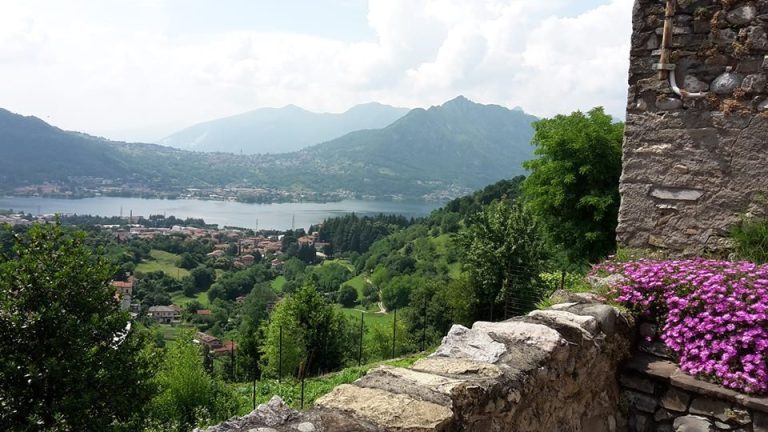
The sanctuary stands above the Adda River. Its central church grew around a sequence of octagonal spaces, while the wider complex includes an upper forecourt, a lower devotional chapel, the Holy Staircase, and a bell tower. Together, these features reflect the site’s successive building campaigns and devotional use.
The church and its interior
Octagonal structure
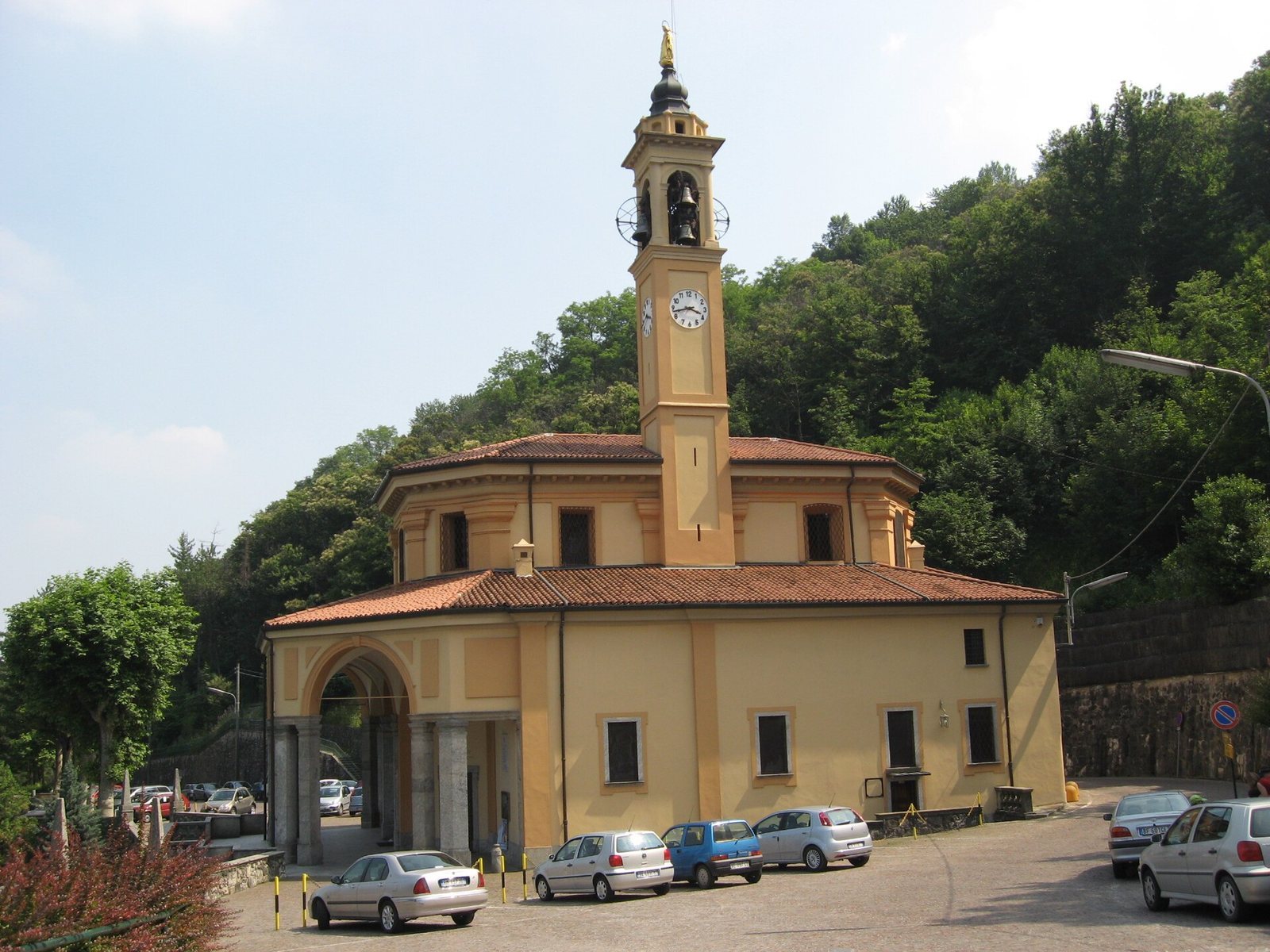
Buzzi’s original design used a double-octagonal plan, a form associated with Marian buildings in Lombardy from the fifteenth century onward. The first octagon was followed by an octagonal presbytery during the 1677 expansion, and the 1888 enlargement added a third octagonal space for the main altar. A high choir adjoins the former central building, with the bell tower beside it.
Altar spaces and artworks
In the building’s form described in 1754, three doors opened onto the façade and a single nave led to the main altar, set behind a marble balustrade. A fresco of the Madonna and Child stood behind it, while side altars were dedicated to the Annunciation and Saint Mary Magdalene. The presbytery contains a seventeenth-century painting of the Massacre of the Innocents, the biblical story of infants killed on King Herod’s orders. A Pietà, depicting Mary mourning Christ’s dead body, occupies an altarpiece in the left nave and is attributed to the workshop of the Campi family.
The main altar is surmounted by a Madonna and Child representation dated 1888 and associated with chestnut-tree imagery. The enlargement also included a wooden statue of the Virgin carved by the Nardini firm of Milan. These works are distinct from the separate statue of the Virgin installed in the forecourt in 1755.
Approaches and devotional spaces
Holy Staircase
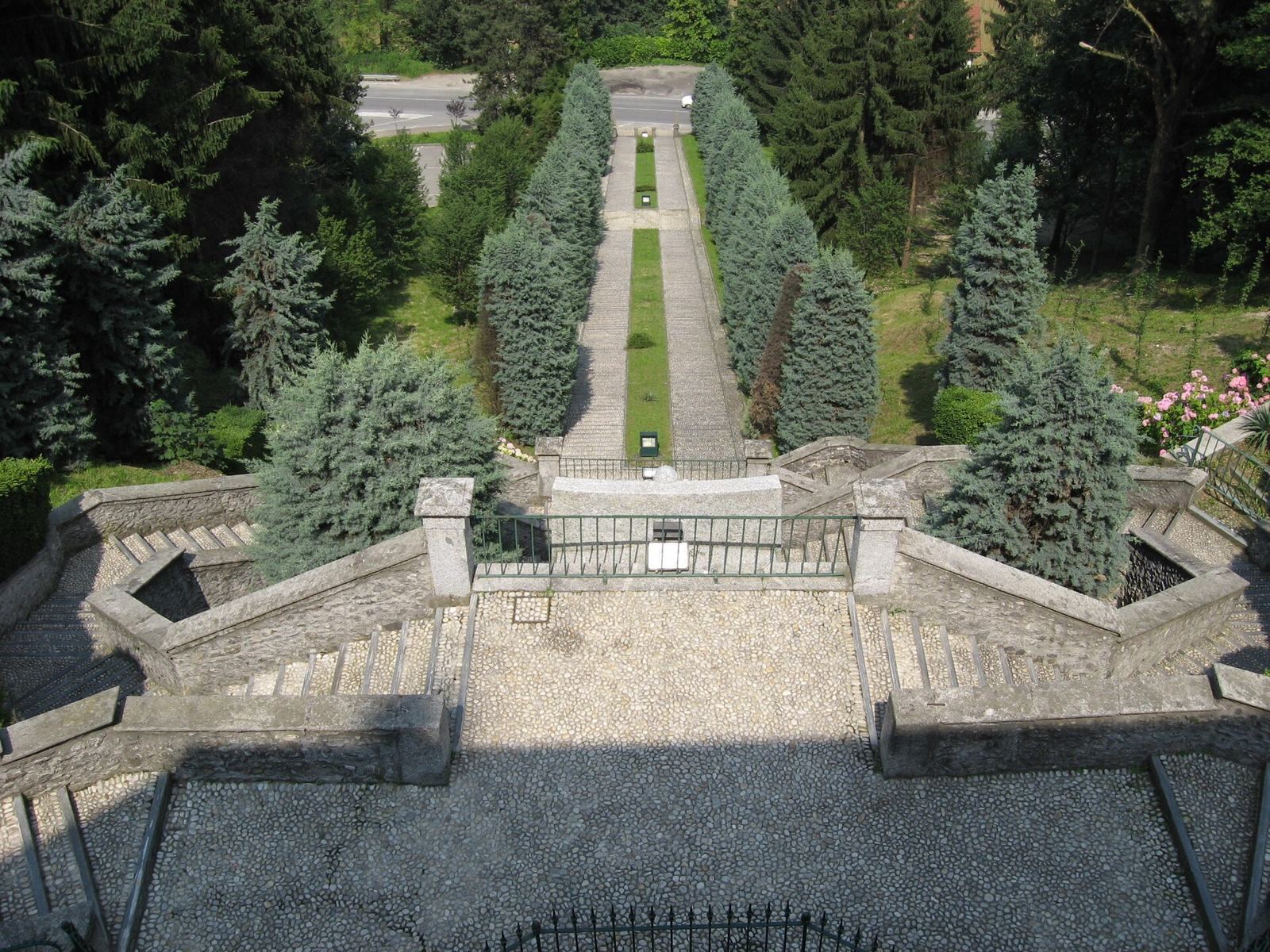
The Holy Staircase has several hundred steps. For much of its length the route runs straight, then divides into two arms near the top and makes a broad sweep. The four-metre bronze statue of John XXIII stands between those arms.
Lower chapel and spring
The first chapel, built in 1632 as a small devotional space, lies below an elevated terrace and before the final ramps to the upper forecourt. Wolf Spring is beside it. A plaster model at the site depicts the chestnut and wolf miracles associated with the sanctuary’s traditions.
Forecourt and bell tower
A portico supported by four stone columns marks the forecourt. The Virgin statue placed there in 1755 is separate from the later works associated with the main altar. The sanctuary complex also includes a nineteenth-century entrance staircase and bell tower, topped by a gilded bronze statue of the Madonna.
Memorial and votive offerings
John XXIII monument
Made by Enrico Manfrini, the bronze monument to John XXIII is four metres high, weighs thirty metric quintals, or 3,000 kilograms, and rests on a Candoglia marble pedestal. Six bas-reliefs show Roncalli as a child climbing the staircase with his family; as a seminarian praying with his mother before the Madonna; crowning the Virgin as a cardinal; being crowned pope; praying before a cross; and promulgating the Second Vatican Council. In his left hand he holds a volume representing the Council.
Ex-voto tablets
The sanctuary holds 112 ex-voto tablets, offerings given in gratitude for favors believed to have been received. Natale Perego’s study of the collection established that one artist devoted himself exclusively to painting the tablets from 1862 to 1878.