Santo Spirito dei Napoletani: A Baroque Church in Rome
Site at a Glance
- Popularity
- Medium
- Country
- Italy
- Primary era
- Early Modern
- Eras represented
- Early Modern, Modern
- Civilizations
- Italian, Papal States
- Site type
- Religious
- Remains
- Church
On this page13 sections
History
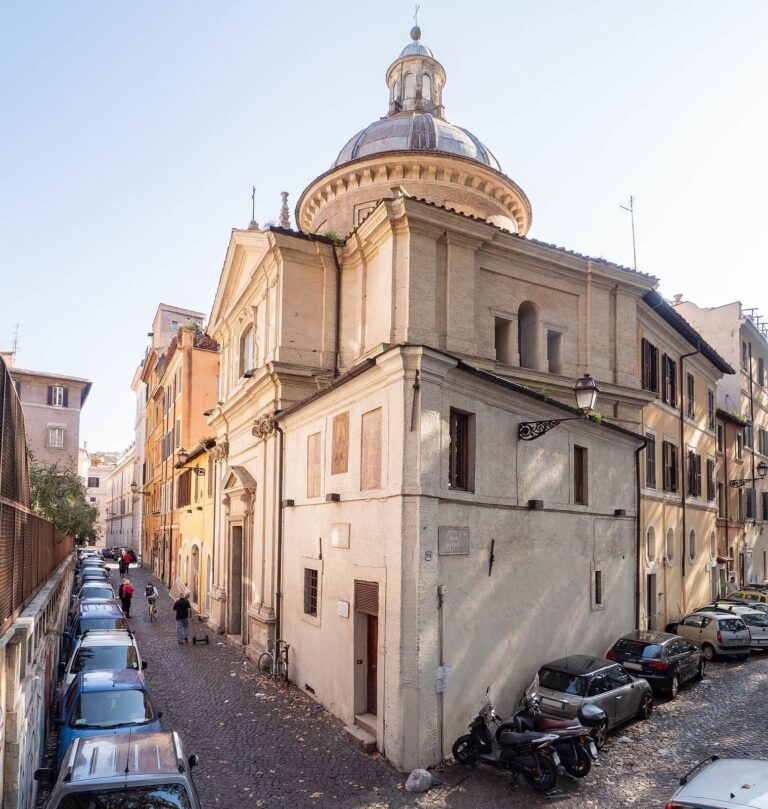
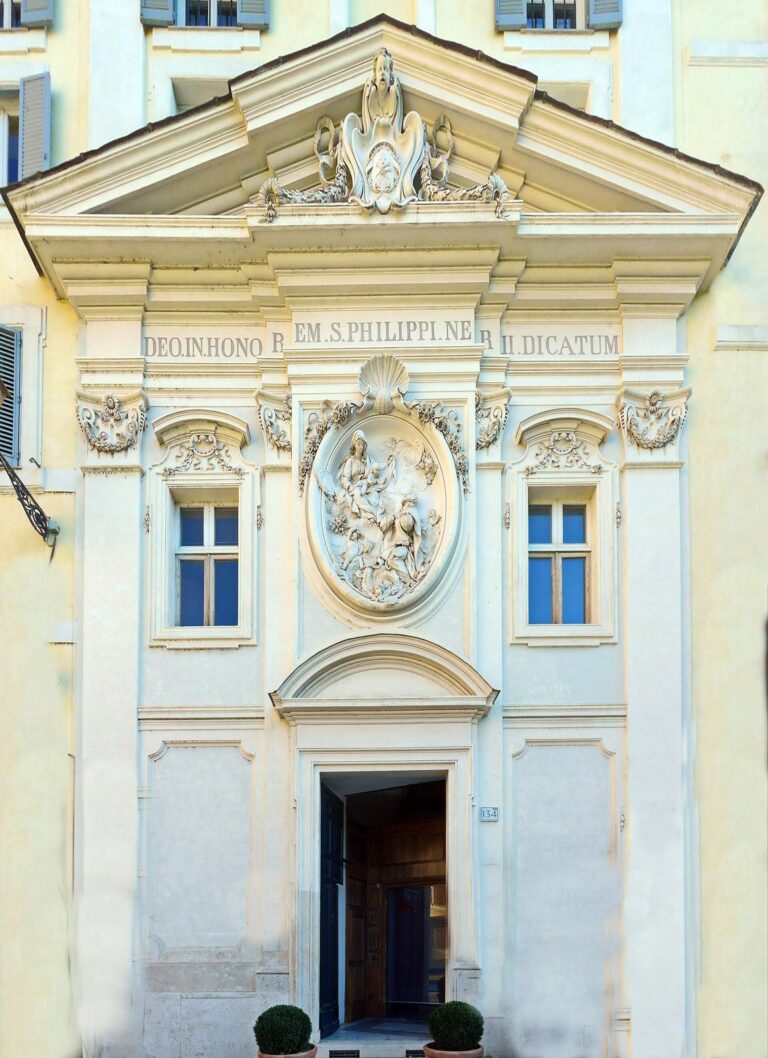
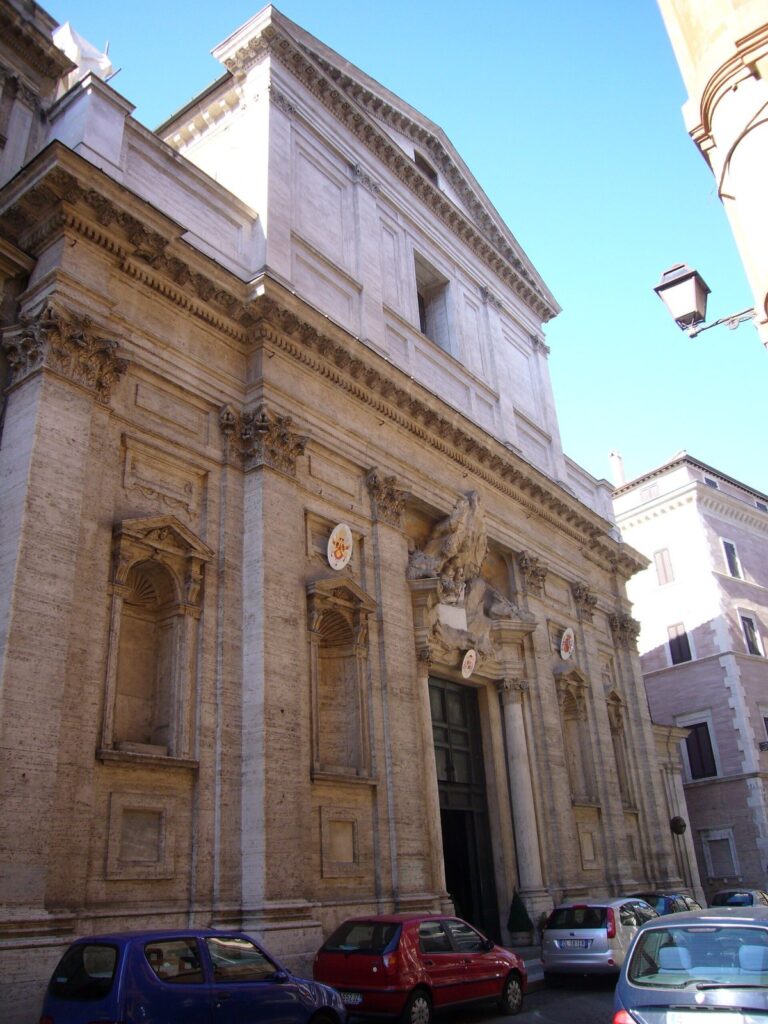
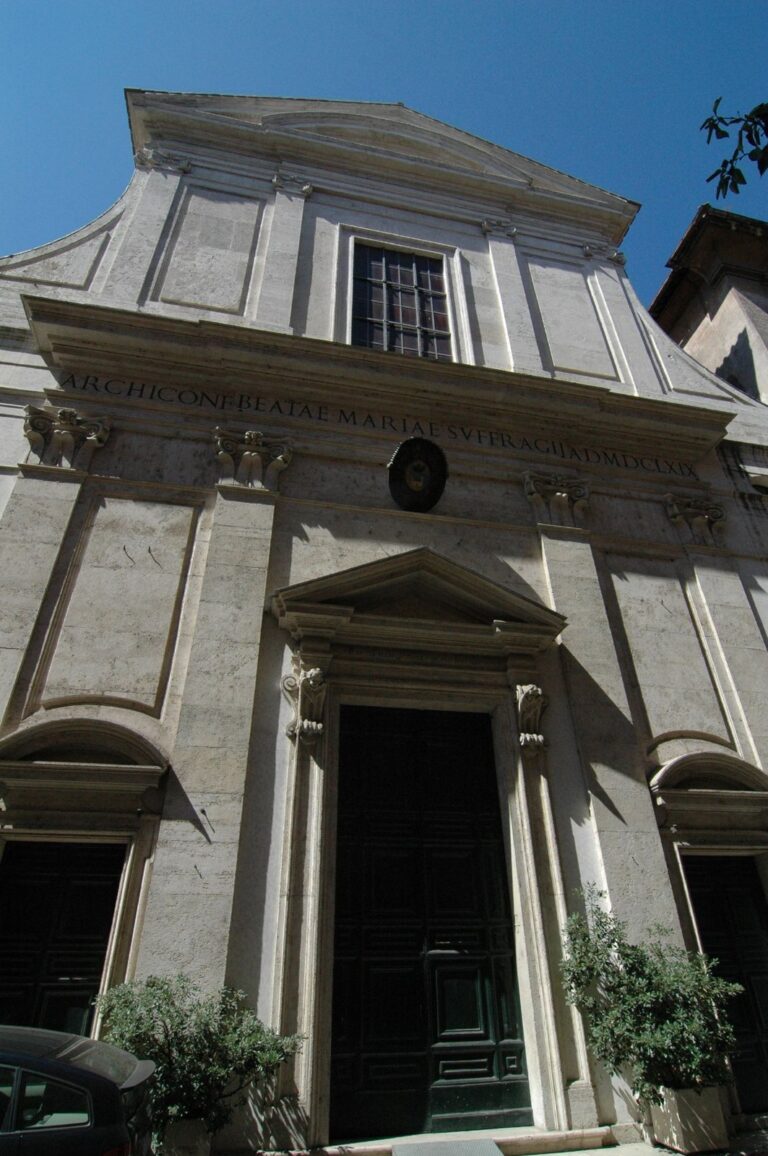
Santo Spirito dei Napoletani is a Roman Catholic church on Via Giulia in Rome, Italy. Rebuilt for the Neapolitan community in 1574, it has a Baroque character, an elaborate European style of art and architecture. Dedicated to the Holy Spirit, the third person of the Christian Trinity, it serves today as the regional church for Campania.
Early church and changing dedications
A papal decree of 1186 names an early church on the site in connection with Saint Austerius and the Sienese Field. Tradition tells that Austerius, a priest, took care of Pope Callixtus’s body after it had been thrown into a well and buried him at night. Discovered and put to death, Austerius was said to have been cast into the Tiber, with his body later washed ashore at Ostia.
The church was known as Saint Eusterius’s in the fourteenth century. By 1425, its name had shifted to one associated with Saint Aurea. A catalogue from the papacy of Pius V, who ruled from 1566 to 1572, lists it as Saint Aurea on Via Giulia and notes an attached monastery. Tradition describes Aurea as a Christian girl martyred for refusing to sacrifice to Roman gods; she was later honored as the patron saint of Ostia.
The Neapolitan church and later rebuilding
In 1572, Pope Pius V entrusted the church and monastery, then in poor condition, to the Neapolitan Confraternity of the Holy Spirit. The old church was demolished and replaced with a church dedicated to the Holy Spirit. The Neapolitan community also intended to provide lodging for pilgrims from Naples.
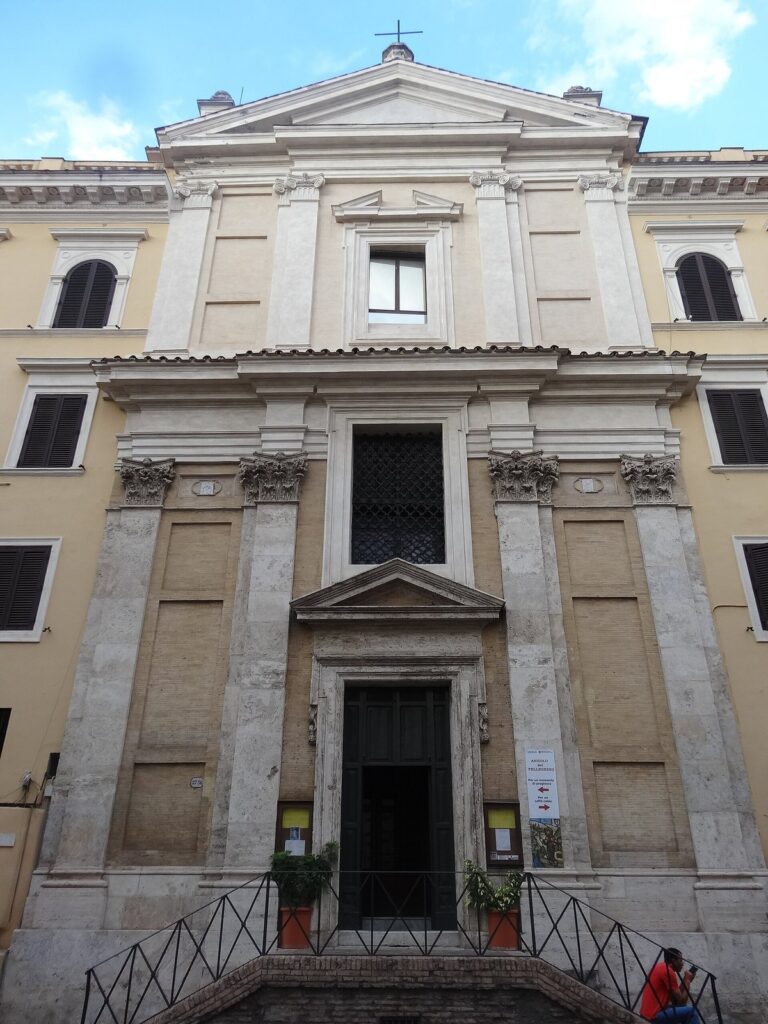
Plans for another rebuilding, prepared at the end of the sixteenth century, are attributed either to Domenico Fontana or, possibly, Ottaviano Mascherino; work took place during the seventeenth century. Cosimo Fanzago designed a façade in 1649 with an upper pediment interrupted at its center. A watercolour made by Achille Pinelli in 1834 depicts that design. Carlo Fontana carried out a major transformation in the early eighteenth century. In 1853, Antonio Cipolla rebuilt the façade and changed parts of the interior, including the apse and choir loft.
Royal burials and restoration
The church became a burial place for Francis II, the last king of the Kingdom of the Two Sicilies, his wife Maria Sophie, and their only daughter, Princess Maria Cristina Pia. The kingdom was a monarchy in southern Italy and Sicily. Maria Cristina was buried at the church in 1870; the royal remains were transferred to Santa Chiara in Naples in 1984. From 1934 to 1984, the church served as the kingdom’s national church.
Severe water infiltration led to a closure lasting about thirty years. Restoration efforts began in 1980, followed by structural consolidation and architectural work; worship resumed at Christmas 1986. The church belongs to the parish of Santa Maria in Vallicella in the Diocese of Rome. It is entrusted to the Rome section of the Equestrian Order of the Holy Sepulchre of Jerusalem, a Catholic order associated with the Church of the Holy Sepulchre in Jerusalem.
Remains
Layout and façade
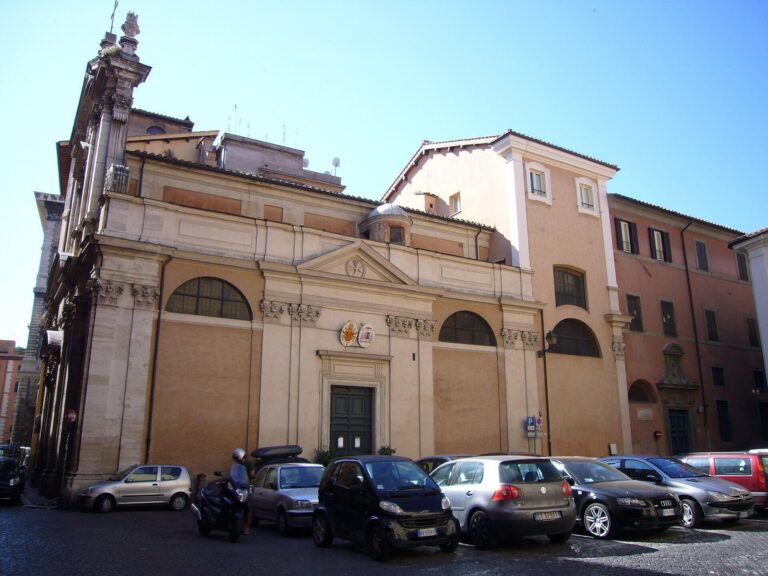
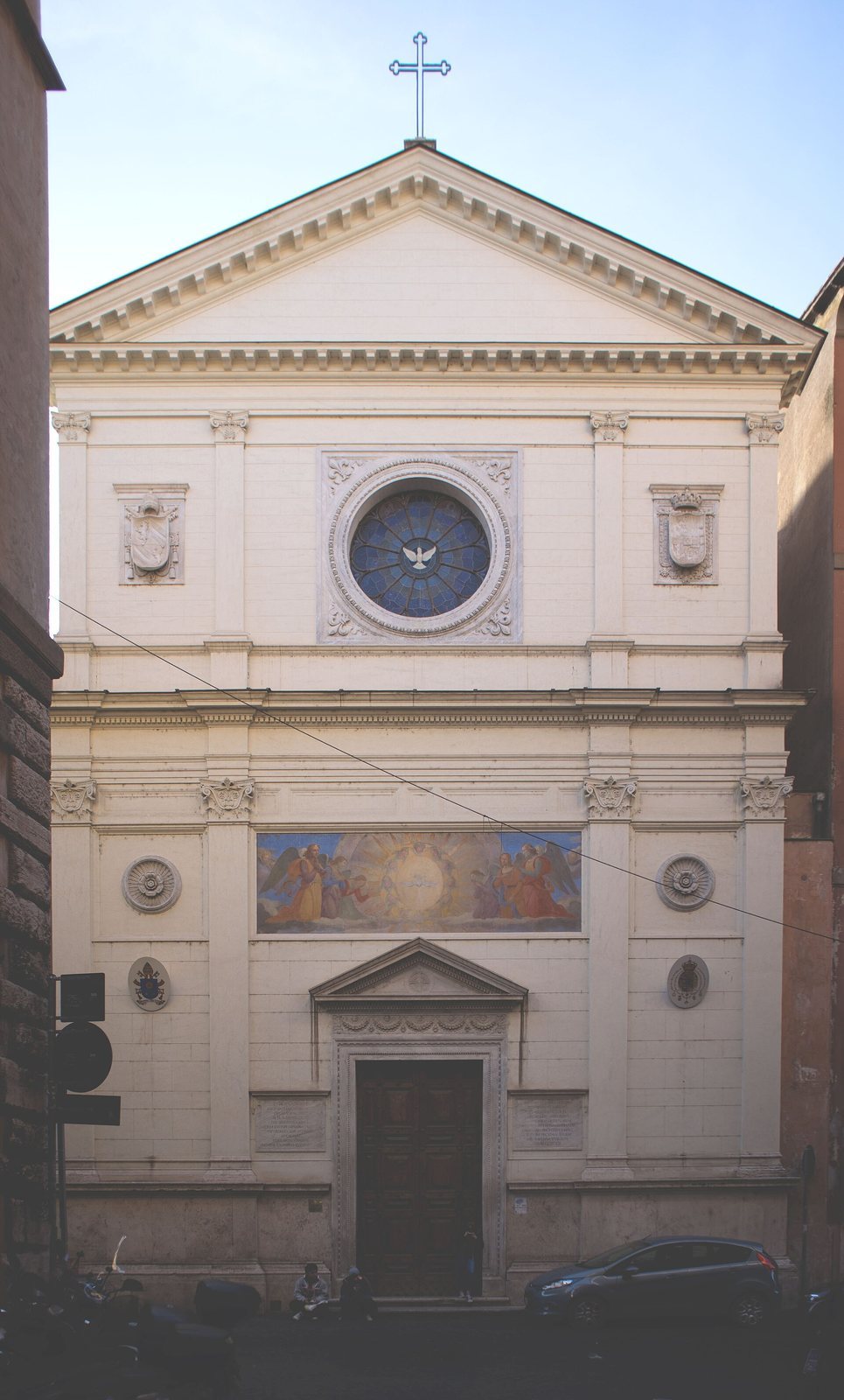
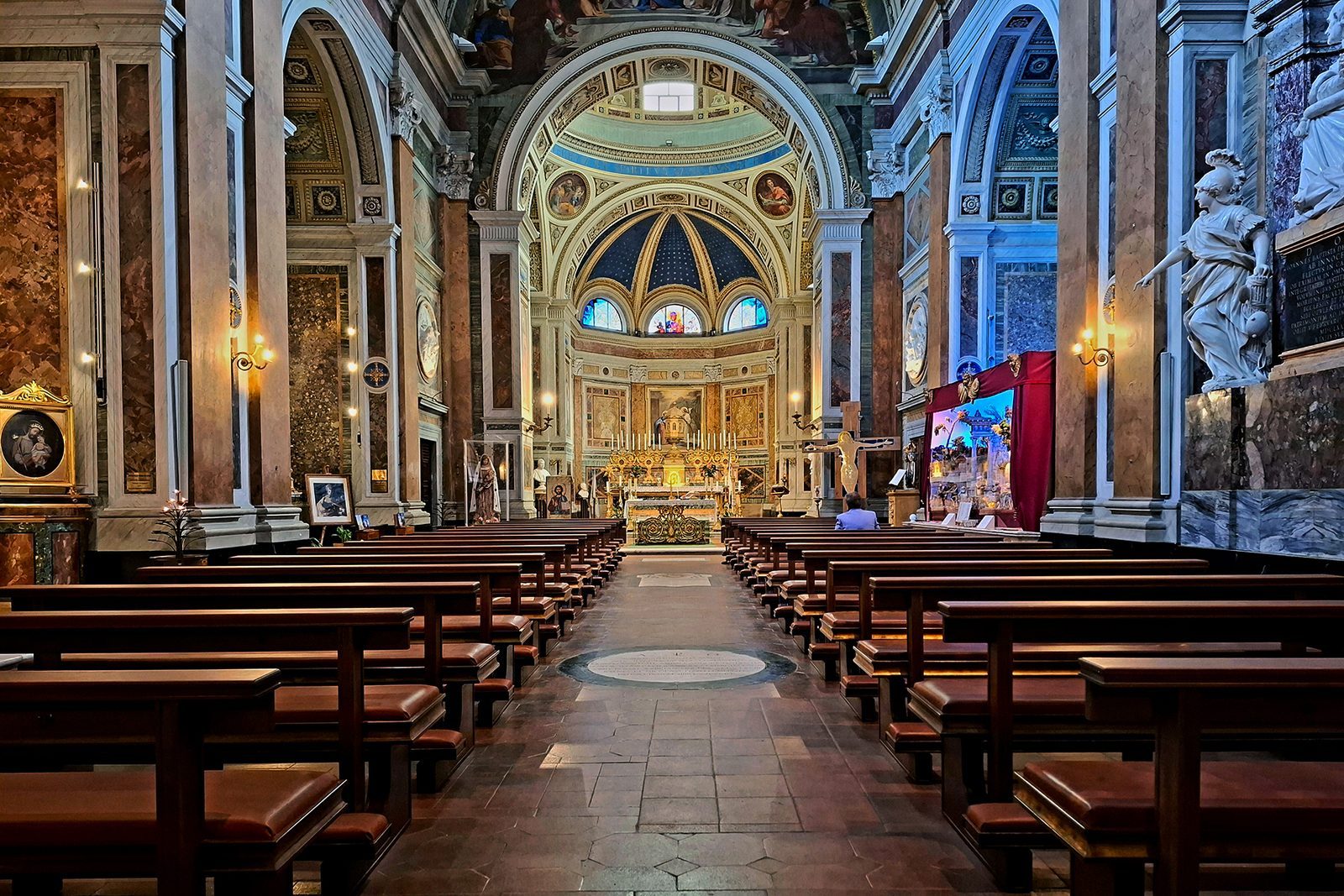
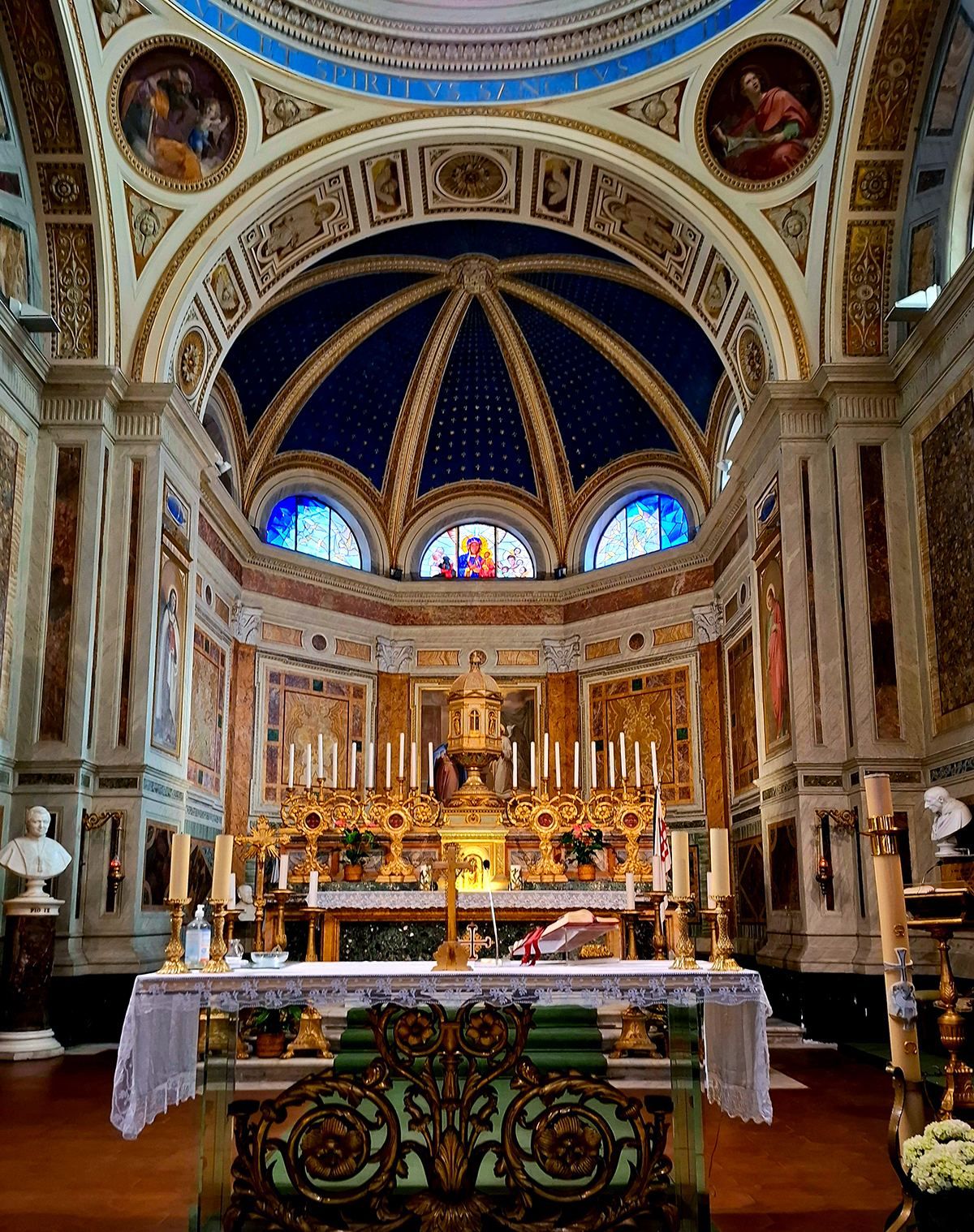
The church has a single nave, the main space for the congregation, with six side chapels, three on each side. Its façade is Neo-Renaissance, a later revival of Renaissance design, and features a sculpted entrance portal and a rose window, a large circular window. Above the portal is Pietro Gagliardi’s wall painting of the Glory of the Holy Spirit. Stained-glass windows by Oscar Guarnieri, donated by benefactors, are set in the façade’s rose window and in the apse, the recess at the altar end.
Interior paintings and chapels
Apse and main altar
Gagliardi’s wall painting of the Annunciation is in the apse. Above the main altar, Giuseppe Passeri’s 1707 painting depicts the Holy Trinity with angels and saints.
Right-hand chapels
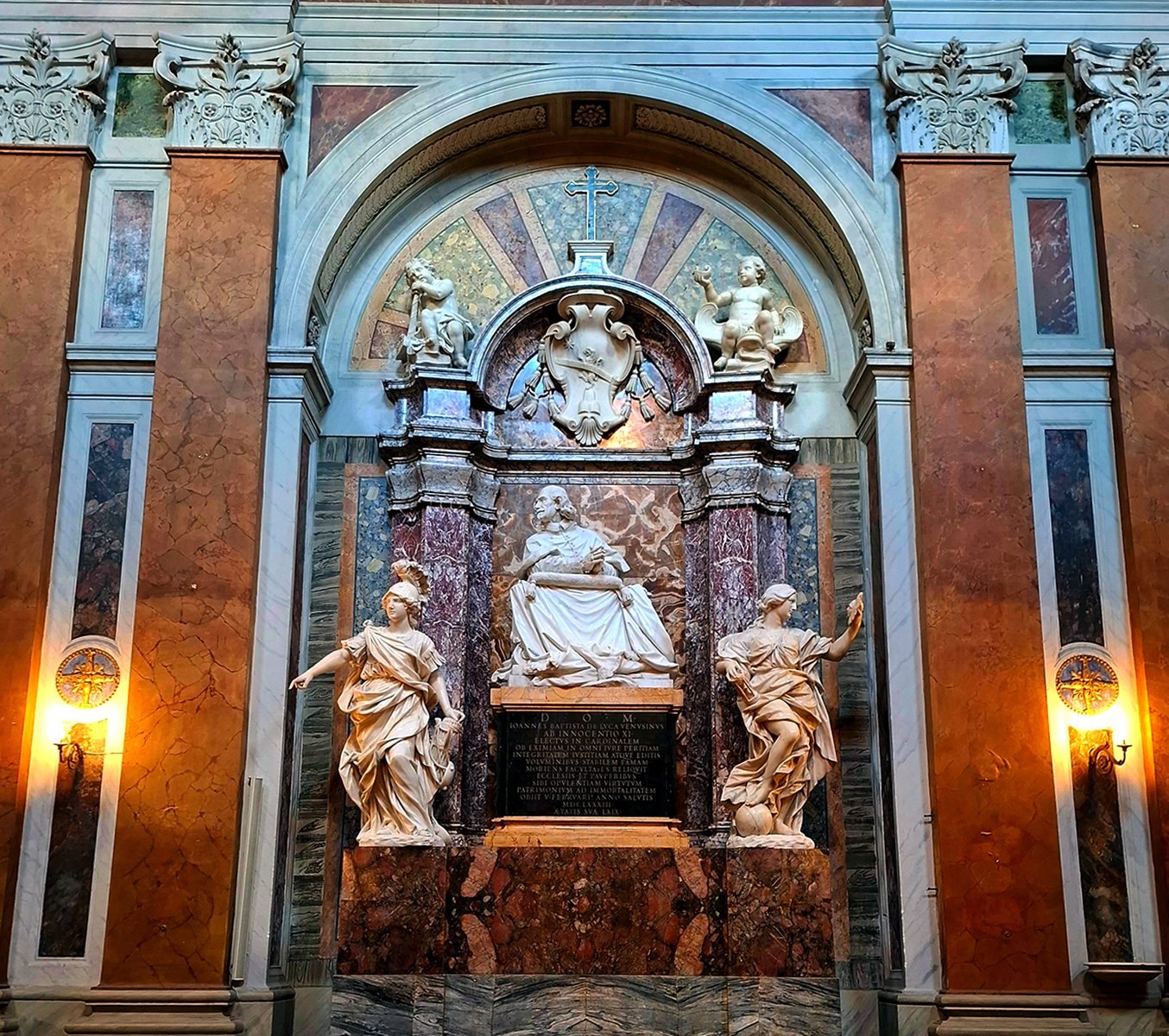
The first chapel on the right is dedicated to Saint Francis of Paola. Its altar painting, made by Bonaventura Lamberti in 1720, shows the saint healing a child. The second chapel contains a tomb monument of colored marble for Cardinal Giovanni Battista de Luca, a senior Catholic cleric. Domenico Guidi made the monument in the late seventeenth century. The third chapel is dedicated to Christ crucified and has Gagliardi’s painting of Jesus dying on the cross.
Left-hand chapels
The first chapel on the left is dedicated to Saint Thomas Aquinas and contains an image of the saint by Domenico Maria Muratori. It also houses a miraculous image of the Virgin and Child known as Our Lady of Lightning, or Madonna del Fulmine, attributed to the workshop of Antoniazzo Romano. The third chapel is dedicated to Saint Januarius and contains Luca Giordano’s 1705 painting of the saint’s martyrdom, described as the painter’s final work.
Organ and later artwork
Organ
Built by Pietro Pantanella in 1881, the organ stands in the choir loft above the entrance. It retains its original sound characteristics and has 25 stops, which select sets of pipes to produce different tones, as well as one keyboard and a pedalboard. Its 847 pipes are operated by entirely mechanical action, in which physical linkages connect the keys and pedals to the pipe valves.
Crucifix
Since 2005, the church has housed Christus Patiens (Suffering Christ), a large crucifix by the contemporary artist Antonio Nocera.