Yuryevets Kremlin: A Russian Fortress Complex
Site at a Glance
- Popularity
- Low
- Country
- Russia
- Primary era
- Early Modern
- Eras represented
- Early Modern
- Civilizations
- Russian
- Site type
- Military
- Remains
- Fort
On this page10 sections
History
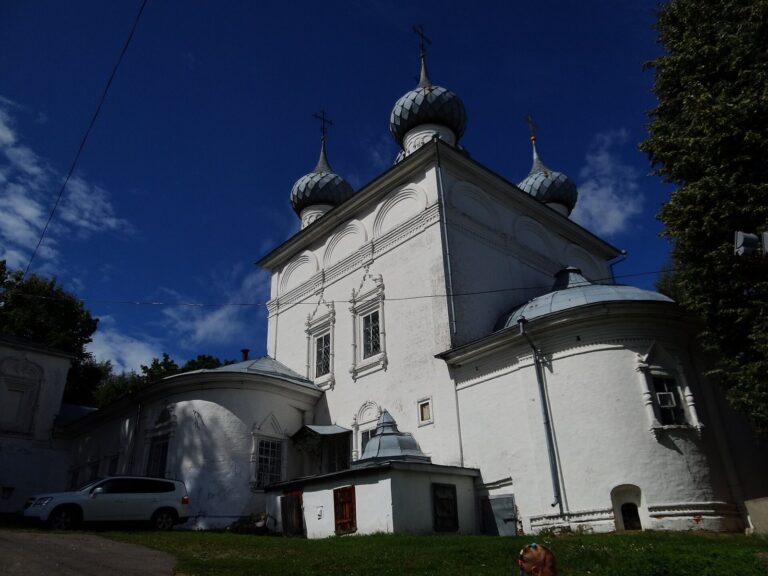
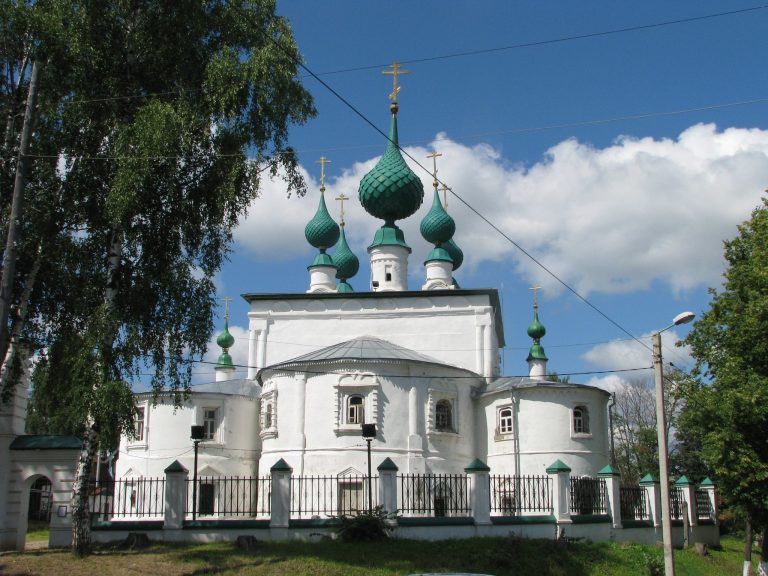
The Yuryevets Kremlin was a succession of fortifications in Russia, first founded in 1225 by Prince Yuri Vsevolodovich, founder of the city. Its defenses changed from wooden forts to a larger stone-and-earth fortress, the White City, which was never completed.
Wooden defenses
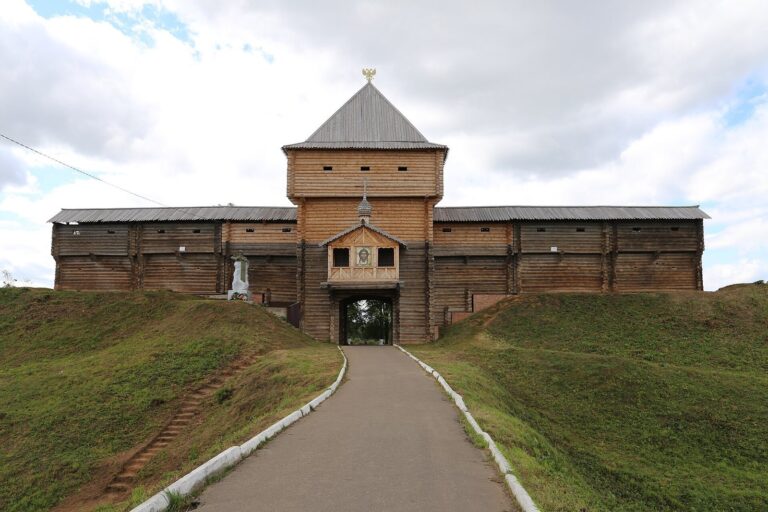
The earliest wooden fortifications were repeatedly destroyed by fire and rebuilt on the same site. In 1609, during the Time of Troubles, a period of political crisis and conflict in Russia in the late sixteenth and early seventeenth centuries, troops associated with Polish commander Alexander Lisowski captured Yuryevets and burned the fortress. It was not rebuilt at that location. A new wooden fort was constructed in 1620 and dismantled in 1780.
The White City
Construction of a larger fortress began in 1661 by decree of Tsar Alexei Mikhailovich, under regional governor and military official Semyon Nikitich Bolkhovsky. The new defenses supplemented the wooden fort. People commonly called the fortress the White City, while official land registers referred to it as Stone. Two brickworks were established to supply the building work and continued operating until the mid-nineteenth century. Dutch specialists may also have participated.
Work advanced during Alexei Mikhailovich’s reign, then slowed as conditions within Russia stabilized. Peter I, also known as Peter the Great, redirected laborers and funds to other projects, and the fortress remained unfinished.
Dismantling and later record
During the eighteenth century, the White City’s deteriorating walls and towers were taken apart until two towers remained. The city sold these at auction in 1823, and most of their brickwork was dismantled for reuse. Historian and archaeologist A. A. Spitsyn described the White City in 1897, while archaeological reconnaissance identified a ditch in the western part of the wooden fort. The Yuryevets Kremlin is designated a cultural heritage site of federal significance in Russia.
Remains
The wooden fort
The earliest wooden stronghold stood on St George’s Hill, while the later fort occupied Resurrection Hill. The latter had an uneven four-sided plan enclosed by a 728-metre wall. Two gates, the Town Gate and the Field Gate, served the enclosure; projecting stretches of wall took the place of towers. A nearby settlement housed the streltsy, Russian firearm-armed troops. Inside were a wooden Church of the Resurrection, barns, weapons storehouses, a prison, and areas used during a siege. A silted ditch, up to 1.5 metres deep, lies in the fort’s western part.
The White City
Enclosure and gates
Built of brick on Ascension Hill, south of the wooden fort, the White City covered 30 hectares. Its uneven trapezoidal enclosure had a perimeter of 2,236 metres, more than 400 metres longer than that of the Moscow Kremlin. Its defenses included seven stone towers, nine earthen towers, and stone walls with battlements along part of the perimeter. Two stone gates provided access. The tall Ascension Gate, topped by a gate tower, led toward the Volga; the Field Gate stood on the western side.
Underground features and surviving earthworks
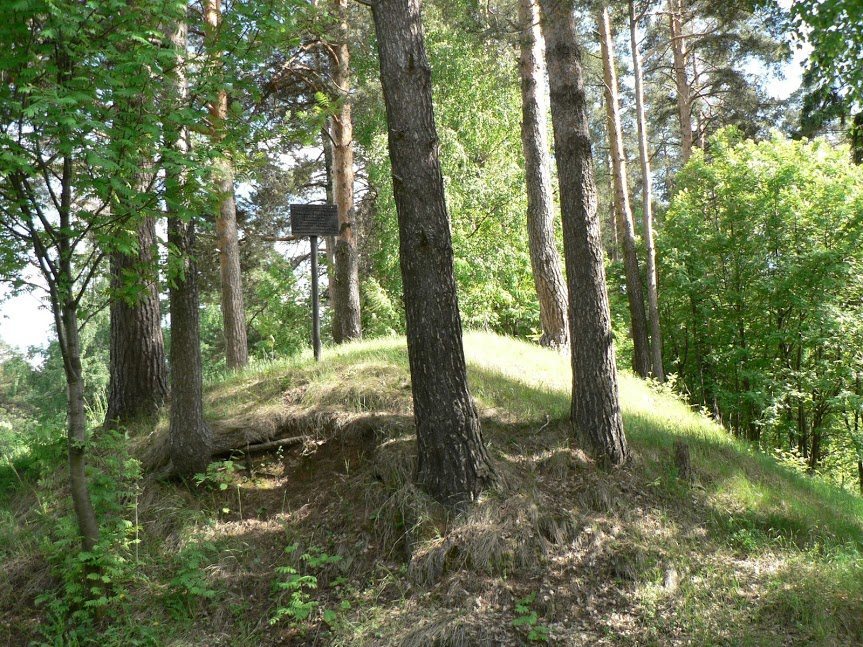
Secret passages beneath the walls led toward the river. Below the fortress was a network of labyrinths and casemates, enclosed fortified chambers. The White City’s earthen defensive banks survive. A painting from the 1830s by Russian artist Nikanor Chernetsov depicts remnants of its towers.
Other earthworks and landscape changes
By the late nineteenth century, an earthwork topped by a wooden wall stood near Kuznetsky Ravine. It was called the old town rampart, and its date is undetermined. St George’s Hill was later leveled, and its soil was used to build a dam to protect the town from flooding by the Gorky Reservoir.