Sant’Irene: A Baroque Church in Lecce, Italy
Site at a Glance
- Popularity
- Medium
- Country
- Italy
- Primary era
- Early Modern
- Eras represented
- Early Modern
- Civilizations
- Habsburg, Kingdom of Naples, Spanish
- Site type
- Religious
- Remains
- Church
On this page11 sections
History
Foundation and dedication
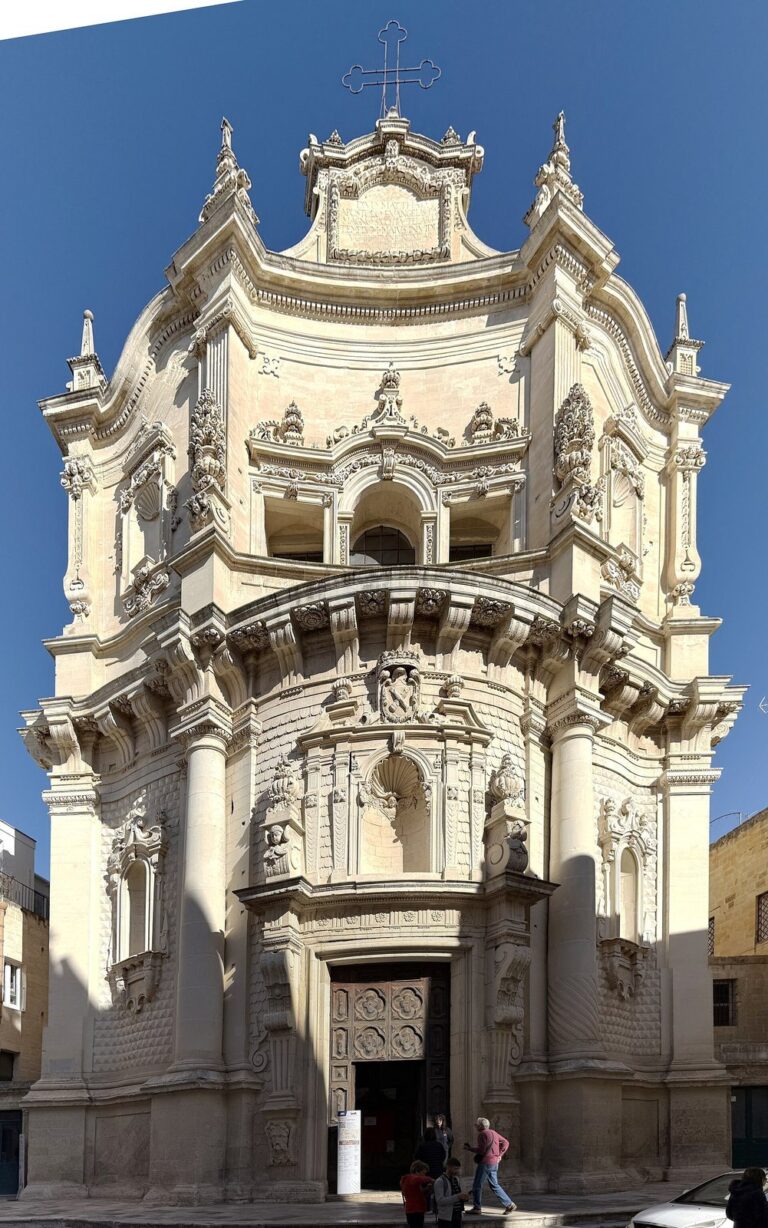
Sant’Irene is a Roman Catholic church in the historic centre of Lecce, Italy, affiliated with the Theatines, a Catholic clerical order. Designed by Theatine architect Francesco Grimaldi, its Baroque construction began in 1591. The church was completed and consecrated in 1639 by the bishop of Brindisi.
The church is dedicated to Saint Irene, regarded as Lecce’s patroness until 1656. In that year, Pope Alexander VII proclaimed Saints Oronzo, Giusto and Fortunato as the city’s patrons.
Civic and religious life
King Ferdinand IV of Naples visited Sant’Irene in 1797. In October 1860, the church hosted the proceedings of the plebiscite, a public vote on Lecce’s decision to join the Kingdom of Italy. The adjoining Theatine convent was closed in 1866, while the church continued to serve for worship. The parish community commemorates Saint Irene each year on May 5.
Remains
The façade
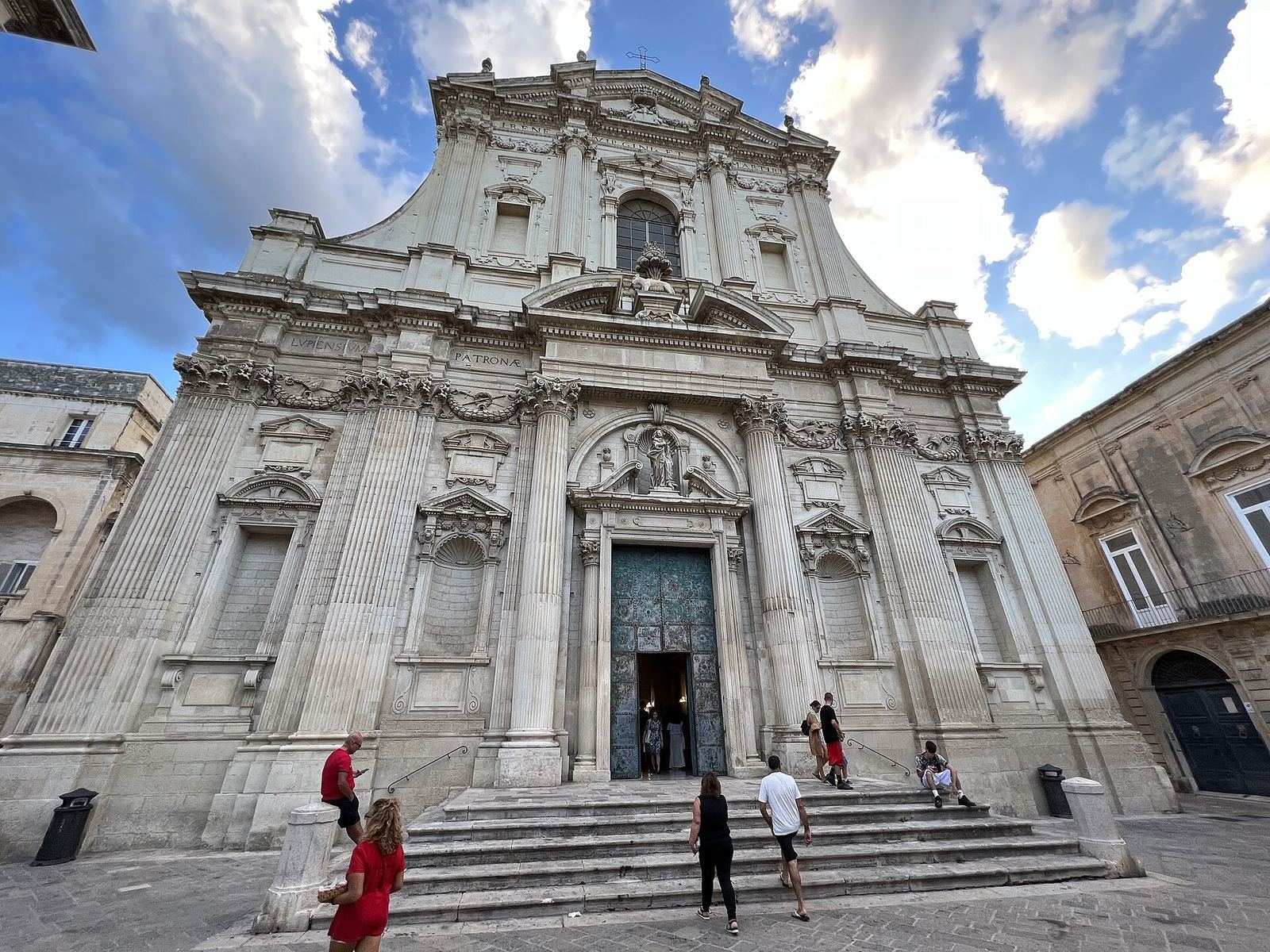
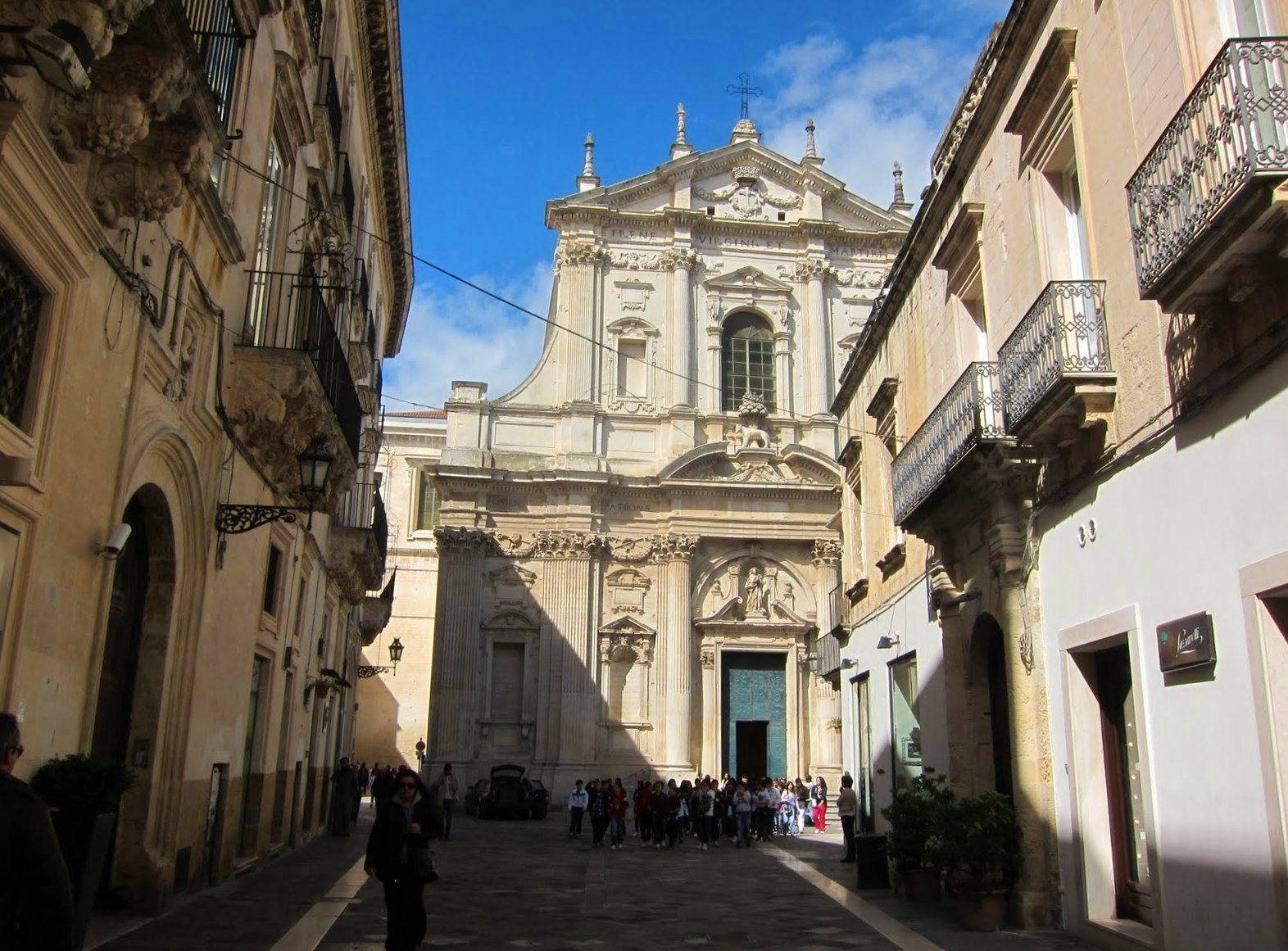
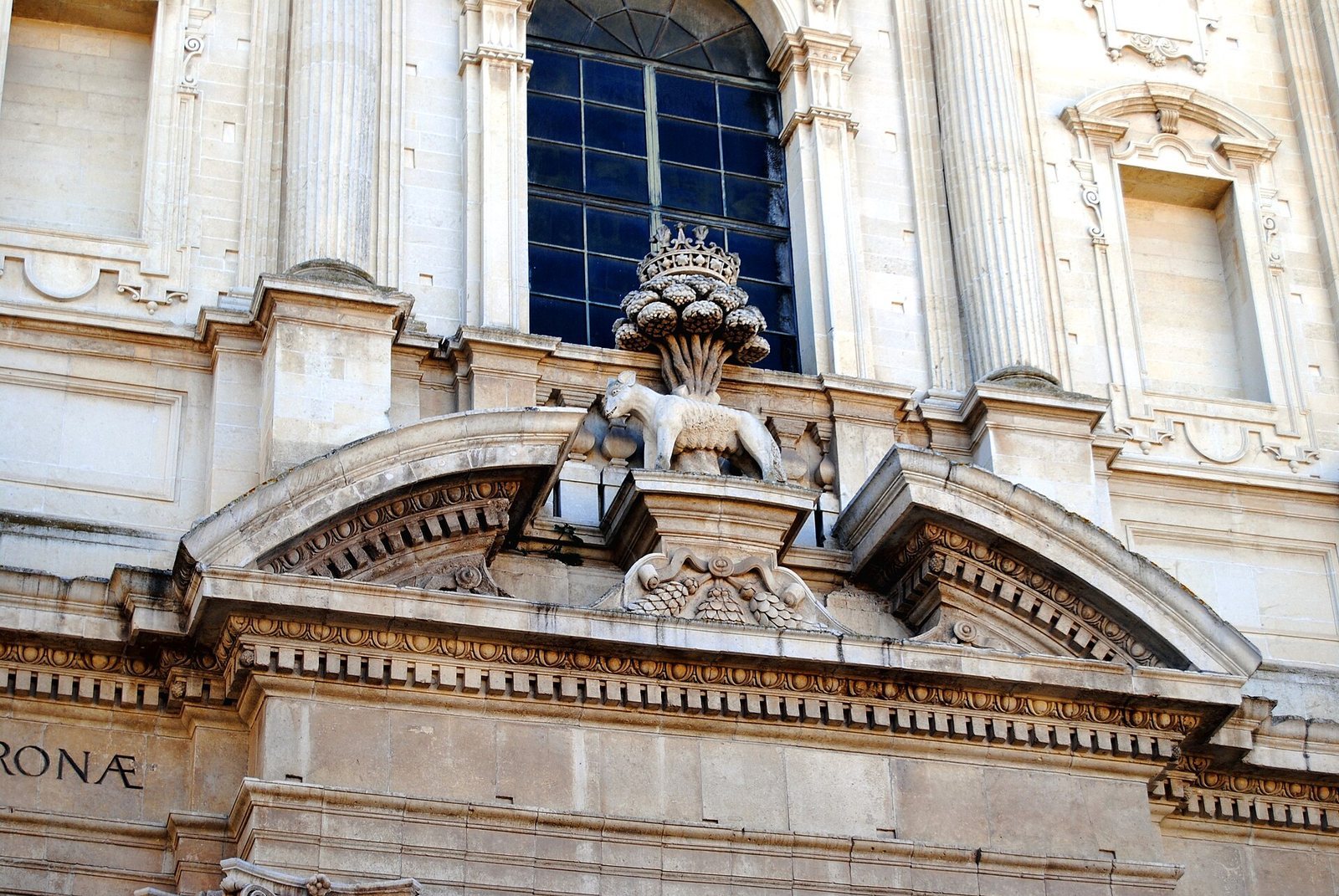
The Baroque design draws on Rome’s Basilica of Sant’Andrea della Valle, where Grimaldi had worked. The façade is arranged in two levels, with shallow, wall-attached supports linked by ornamental garlands. In the lower level, columns alternate with empty niches and framed decorative panels; a large window occupies the upper level. A stone statue of Saint Irene, sculpted by Mauro Manieri in 1717, stands above the central portal. Lecce’s civic arms appear above the horizontal cornice, while the triangular pediment carries the Theatine insignia. The entablature bears a dedication to Irene as a virgin and martyr.
Interior
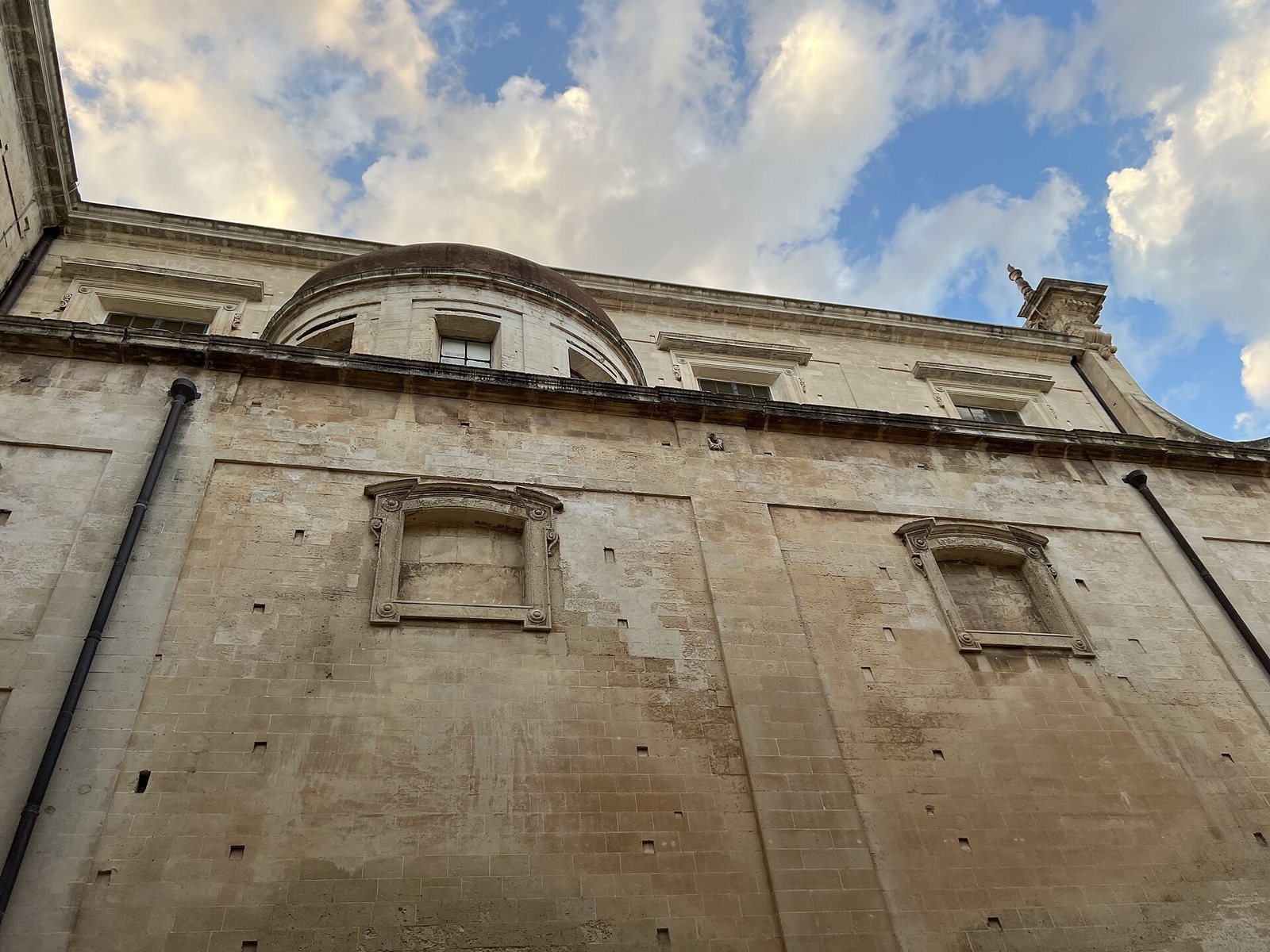
The church has a cross-shaped plan, with a single nave, or main body, and a crosswise section called the transept. Three deep, interconnected side chapels flank the nave and are topped by elliptical domes.
Side chapels
On the left side, an altar dedicated to Saint Stephen holds Antonio Verrio’s painting of the saint’s stoning. Other altars there are dedicated to the Crucifix and to Mary under the title of Our Lady of Good Counsel. The right-side chapels contain altars to Saint Charles Borromeo, a sixteenth-century cardinal and archbishop of Milan, and to the Archangel Michael. Cesare Penna built the altar of Michael in 1642. Another chapel altar is dedicated to the Souls in Purgatory and has a later painting by Luigi Scorrano.
Left arm of the transept
Three altars stand in the left arm of the transept. Francesco Antonio Zimbalo made the altar of Saint Oronzo, a bishop and saint, around the middle of the seventeenth century. The altar of Saint Irene dates to 1639 and includes nine busts containing relics associated with the figures they portray. A statue of Irene rises above the busts, beneath Lecce’s civic arms. The third altar, dedicated to the Holy Family of Jesus, Mary and Joseph, was made in 1672.
Right arm of the transept
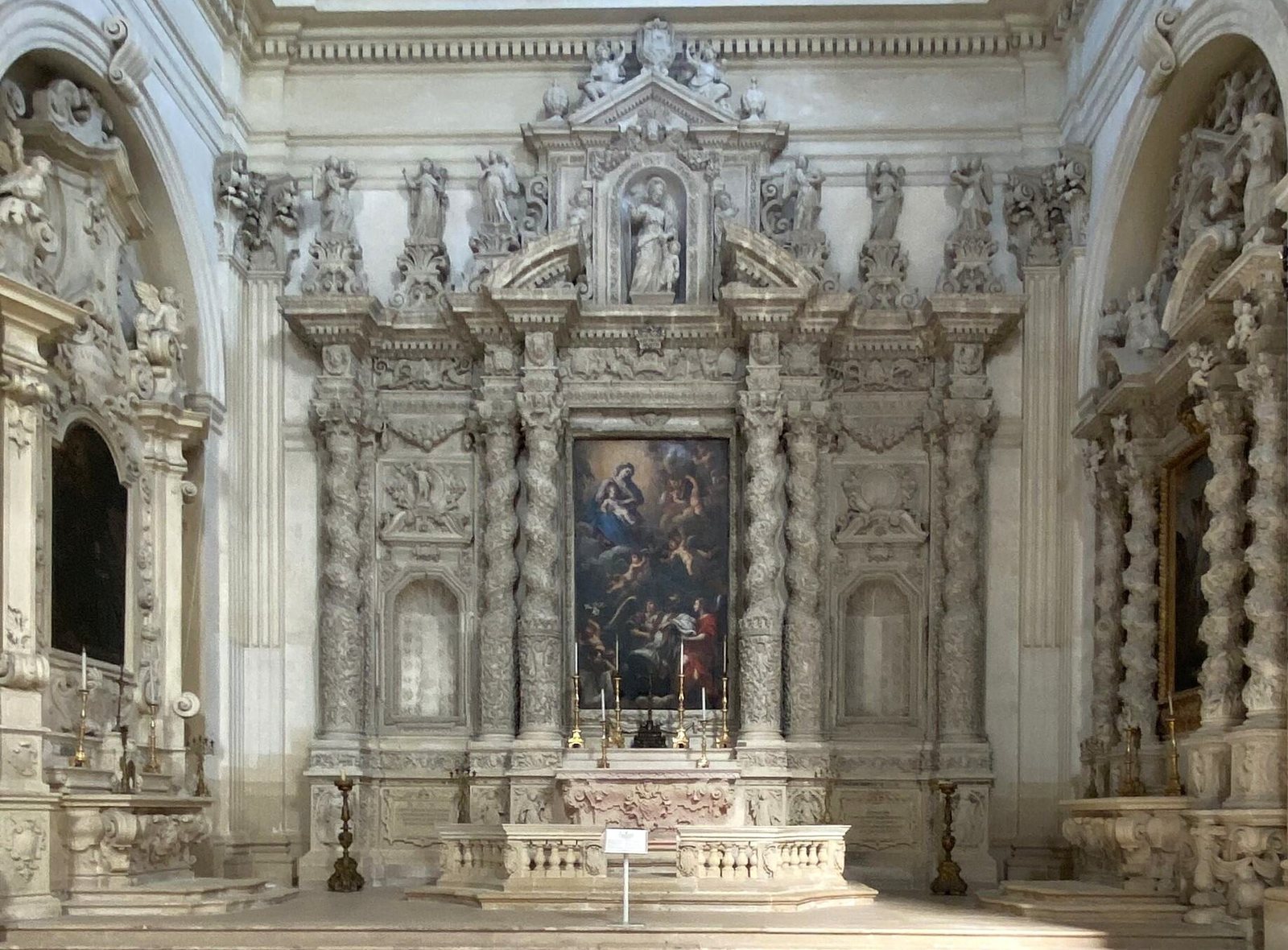
The right arm contains an altar to the Guardian Angel dated 1700 and an altar to Saint Cajetan of Thiene, dedicated in 1651 by Gaetano Cassa, archbishop of Otranto. Cajetan was one of the founders of the Theatines. His altar holds an oil painting of him by Filippo Maria Galletti. A Rococo altar dedicated to Saint Andrew Avellino, an Italian Theatine priest and saint, completes the group.
Apse
The apse, the sanctuary end of the church, contains the high altar, which was altered in 1753. Oronzo Tiso’s painting The Transport of the Holy Ark hangs on the apse wall.
Sacristy
The sacristy contains additional paintings, including an image of Mary under the devotional title Madonna della Libera.