Santa Vittoria: Parish Church of Tornareccio, Italy
Site at a Glance
- Rating
- 4.7
- Popularity
- Very Low
- Country
- Italy
- Primary era
- Early Modern
- Eras represented
- Early Modern
- Civilizations
- Kingdom of Naples, Spanish
- Site type
- Religious
- Remains
- Church
On this page17 sections
History
Santa Vittoria is a Catholic parish church in Tornareccio, Italy, built through the development of a Benedictine religious tradition and now expressed in a Baroque building largely associated with the sixteenth century. It serves as the parish church of Tornareccio and belongs to the Atessa pastoral zone, an administrative grouping of parishes within the Archdiocese of Chieti-Vasto. Its history combines devotion to Saint Victoria with the veneration of Saint Annicola, a third-century virgin martyr.
Benedictine origins and medieval devotion
The cult of Saint Victoria reached Tornareccio in 829 through Benedictine monks from the Monastery of Santo Stefano in Lucania. Benedictines, members of the Order of Saint Benedict, operated monasteries that held important religious and administrative responsibilities in medieval Italy. The territory later became a fief of Farfa Abbey, a historic Benedictine abbey in central Italy with extensive lands and dependent churches and monasteries. The relics of the church’s titular saint were buried there for about thirty years, after which devotion to Saint Victoria spread through the monasteries, churches, parish churches, chapels, and feudal centers connected with the abbey near Passo Corese.
The first church at Tornareccio is attributed to the second half of the eleventh century. It was reportedly a single-nave building, established when the Benedictines of Santo Stefano in Lucania required a more secure church. The new foundation also provided a place to which the relics of Saint Annicola could be transferred. Her skull remains in Santa Vittoria and continues to be venerated on June 9.
The sixteenth-century church
The present church dates from the sixteenth century, and its construction was probably not much earlier than a pastoral visitation recorded in 1568. A pastoral visitation was an inspection of a parish and its religious life by church authorities. The building retained links with the earlier church through several works, including the Madonna of the Rosary, the Madonna of Purgatory, and the Immaculate Conception.
Baroque transformation and modern conservation
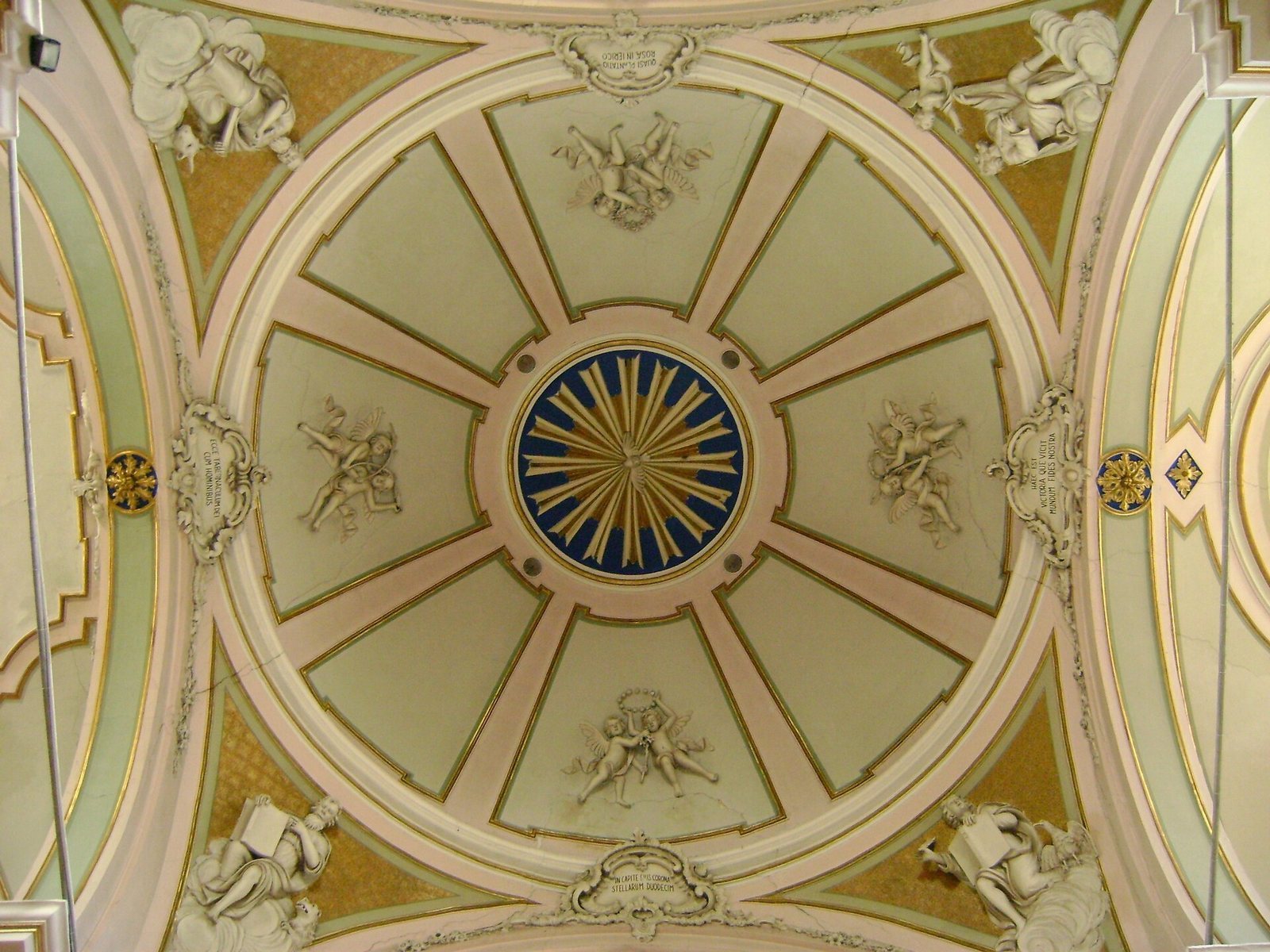
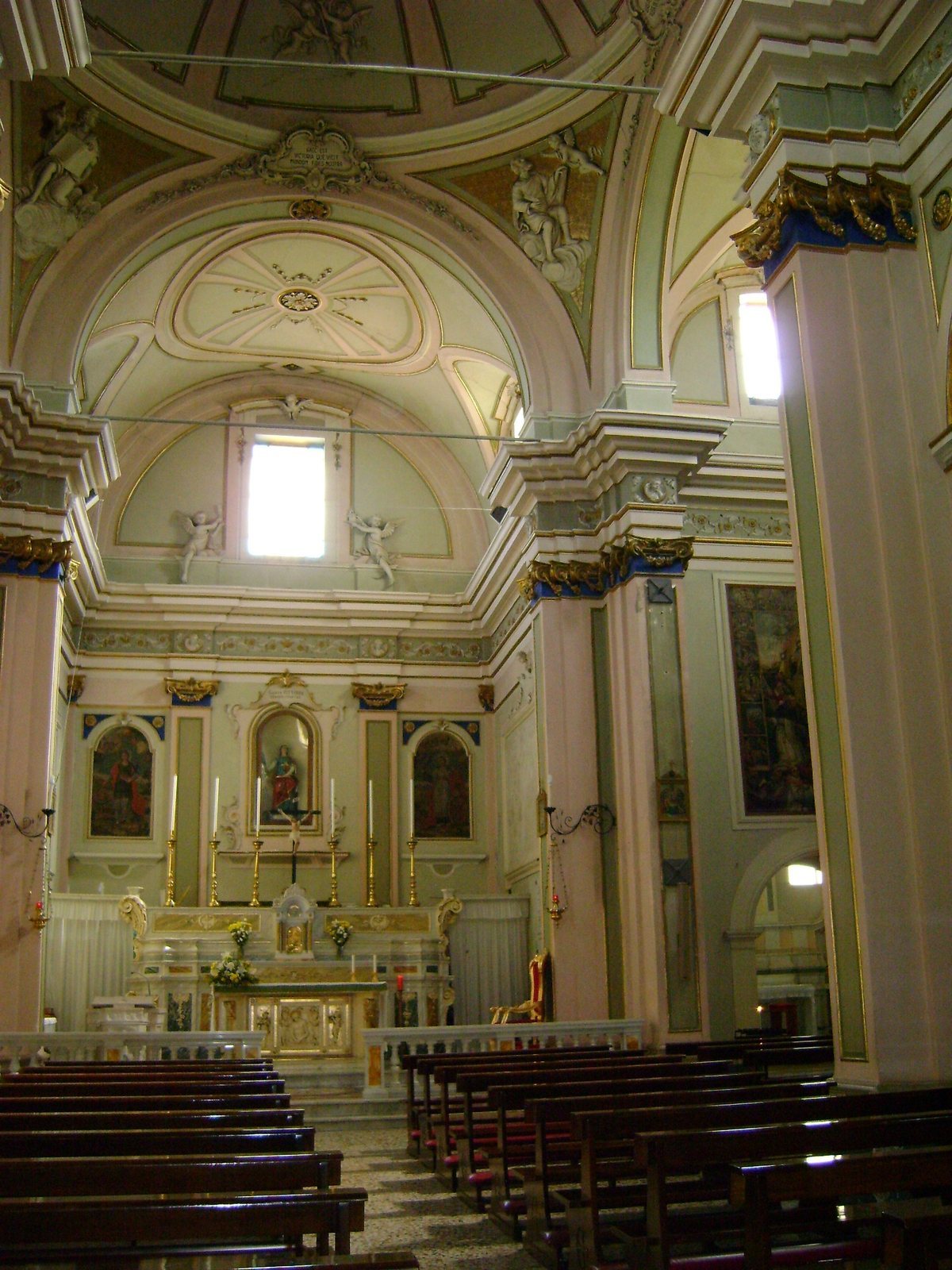
Santa Vittoria underwent substantial alterations, most importantly during a campaign conducted between 1787 and 1814. These changes contributed to the Baroque character of the church, a style associated with elaborate ornament, dramatic forms, and richly decorated interiors. The building was recognized as a national monument by the fine-arts supervisory authority because of its interior decoration, including Corinthian capitals, Baroque-style domes in the side aisles, and gilded stucco, or molded plasterwork finished in a gold-colored coating.
The interior was restored during the 1960s on the initiative of the parish priest, Monsignor Dario Provolo. In 2017, further consolidation and restoration addressed the exterior roof covering, load-bearing walls, vaults, and ceiling. The Chapel of the Sacred Heart and the Chapel of Saint Mary Magdalene were restored in 2018. Santa Vittoria’s devotional calendar also includes the procession of its nineteenth-century statue of Saint Victoria on December 23, while Tornareccio celebrates Saint Nicholas and Saint Emidius on May 3 and 4.
Remains
Santa Vittoria has a Latin-cross plan with a projecting transept, meaning that the shorter transverse arm extends visibly beyond the sides of the main body. The church has three aisles, side chapels, and a rear section resting on a change in level that corresponds to the original floor. Its exterior is comparatively restrained, while the interior contains richly ornamented altars, paintings, sculptures, and furnishings assembled across several centuries.
Exterior and bell tower
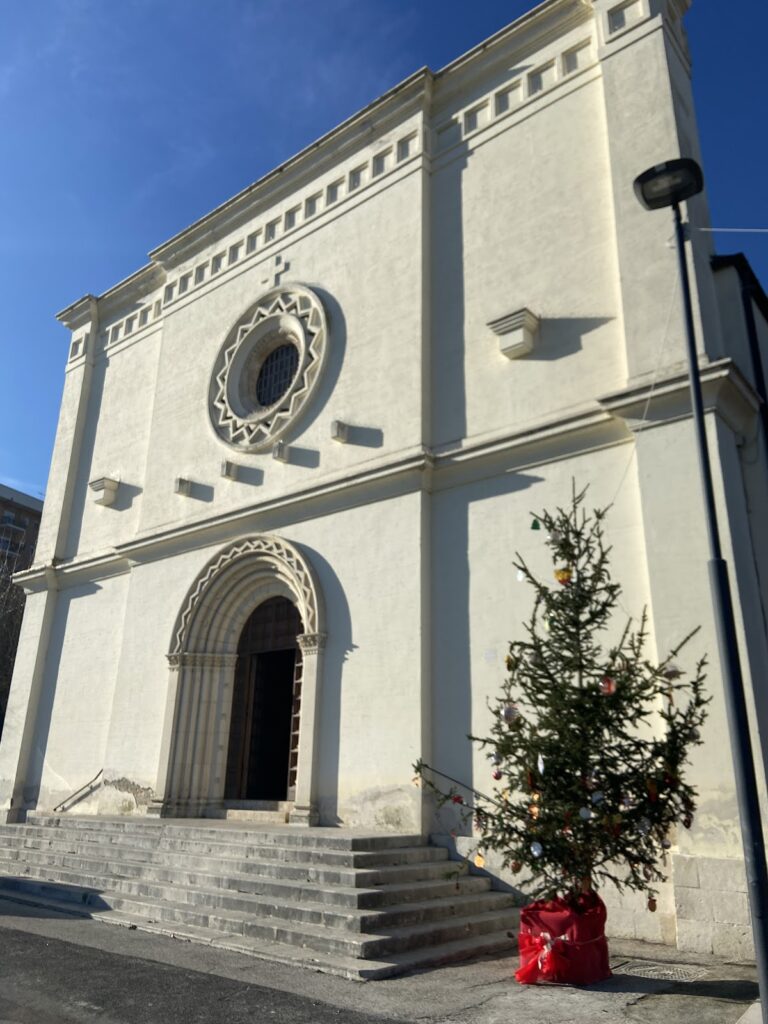
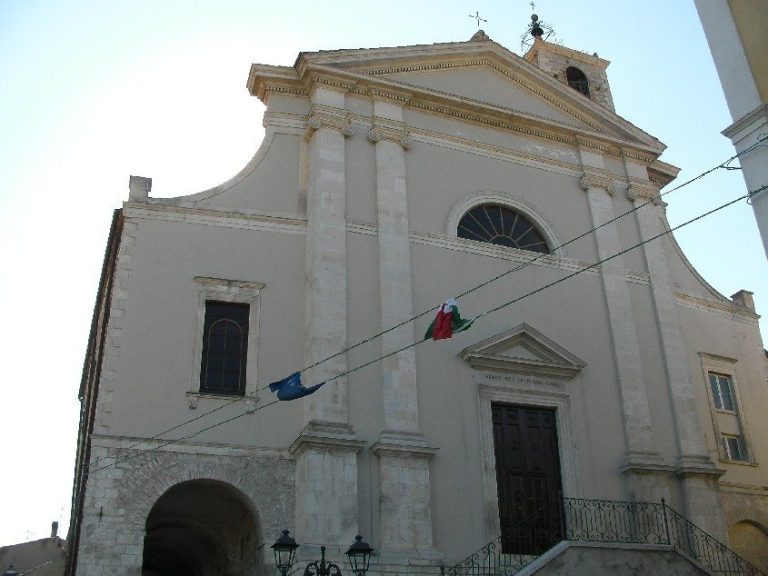
The facade has a central window and an eighteenth-century portal framed in stone and crowned by a semicircular architrave. A lateral bell tower rises from a stone base and has a parallelepiped form. It contains an old disused clock and a low-relief war memorial commissioned by Pasquale Borrelli. Together, the facade and tower form the principal external elements of the church’s surviving fabric.
Main altar and side chapels
Main altar
The main altar is dedicated to Saint Victoria and enclosed by a marble balustrade. Her nineteenth-century statue occupies the altar and is carried in procession on December 23. It replaced an earlier painted wooden image, which remains visible at the rear of the church. Saint Annicola is represented to the right of Saint Victoria, while Saint Catherine of Siena appears to the left. Both works were made by Nicola Ranieri of Guardiagrele.
Chapel of the Sacred Heart
The Chapel of the Sacred Heart stands to the left of the main altar. Its furnishings include a restored bust, a painting of the Sacred Heart on the altar, and a painting of the Immaculate Conception. The chapel was among the areas restored in 2018.
Chapel of Saint Mary Magdalene
The Chapel of Saint Mary Magdalene lies to the right of the main altar. It contains a painting honoring the saint and statues of Saint Nicholas and Saint Emidius by Gabriele Falcucci of Atessa. Falcucci, who lived during the eighteenth and nineteenth centuries, produced many of the church’s sculptures.
Paintings and devotional artworks
Madonna of the Rosary
The sixteenth-century Madonna of the Rosary shows the Madonna and Child surrounded by angels holding the Holy Rosary. Below them are Saint Catherine of Siena, Saint Dominic, and preaching saints. The painting also includes popes associated with the Christian victory at Lepanto in 1570 and fifteen small panels representing the Mysteries of the Rosary, traditional episodes from the lives of Jesus and Mary used in Catholic prayer. The work resembles another painting of the Aquilan school in the parish church of nearby Archi.
Madonna of Purgatory and related canvases
The Madonna of Purgatory stands on a side altar in the left aisle. It belonged to the earlier church, together with the Madonna of the Rosary and the Immaculate Conception, and is almost certainly by Felice Ciccarelli of Atessa, a painter active during the sixteenth and seventeenth centuries. It has also been possibly attributed to G. Lamberti. Four further paintings by Nicola Ranieri depict Saint Dominic of Cocullo, Saint Maurus the Abbot, Saint Dominic the Patriarch, and Saint Peter Martyr.
Altars, statues, and furnishings
Right aisle
The right aisle contains a wooden tabernacle, a cabinet-like altar structure with statues, bearing three works signed by Gabriele Falcucci. They represent Saint Vitus the Martyr with dogs, the Sorrowful Madonna, and Saint Blaise. Farther along stands the altar of Saint Anthony of Padua, whose statue occupies a niche. A further tabernacle altar contains Falcucci’s statue of the Madonna of the Rosary. Beneath it is a case containing the dead Christ, restored in 2016.
Left aisle and transept
The left aisle contains a scagliola baptismal font. Scagliola is a composite decorative material made to imitate stone or marble. Beside the first pillar stands a sixteenth-century wooden statue of the crucified Christ, restored in 2022. The side altars include a seventeenth-century canvas of Saint Victoria, a niche with a statue of Saint Annicola bearing the inscription “restored by Pasquale Bravo, 1940,” and the altar of the Madonna of Purgatory. In the transept, the Immaculate Conception altar has a niche containing Falcucci’s statue of the Madonna.
Choir loft and organ
Above the main entrance, the choir loft contains a large pipe organ built in the late 1940s. It forms part of the church’s later furnishings alongside the older paintings, sculptures, altars, and devotional objects preserved throughout the interior.