Church of Saint James the Elder in Bořejov: A Baroque Parish Church
Site at a Glance
- Rating
- 4.6
- Popularity
- Very Low
- Country
- Czechia
- Primary era
- Early Modern
- External website
- Open
- Eras represented
- Early Modern, Modern
- Civilizations
- Habsburg, Holy Roman Empire, Kingdom of Bohemia
- Site type
- Religious
- Remains
- Church
On this page7 sections
History
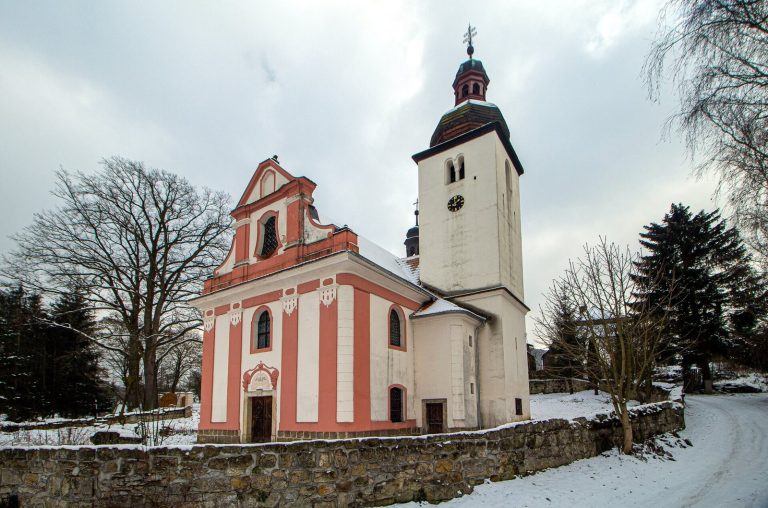
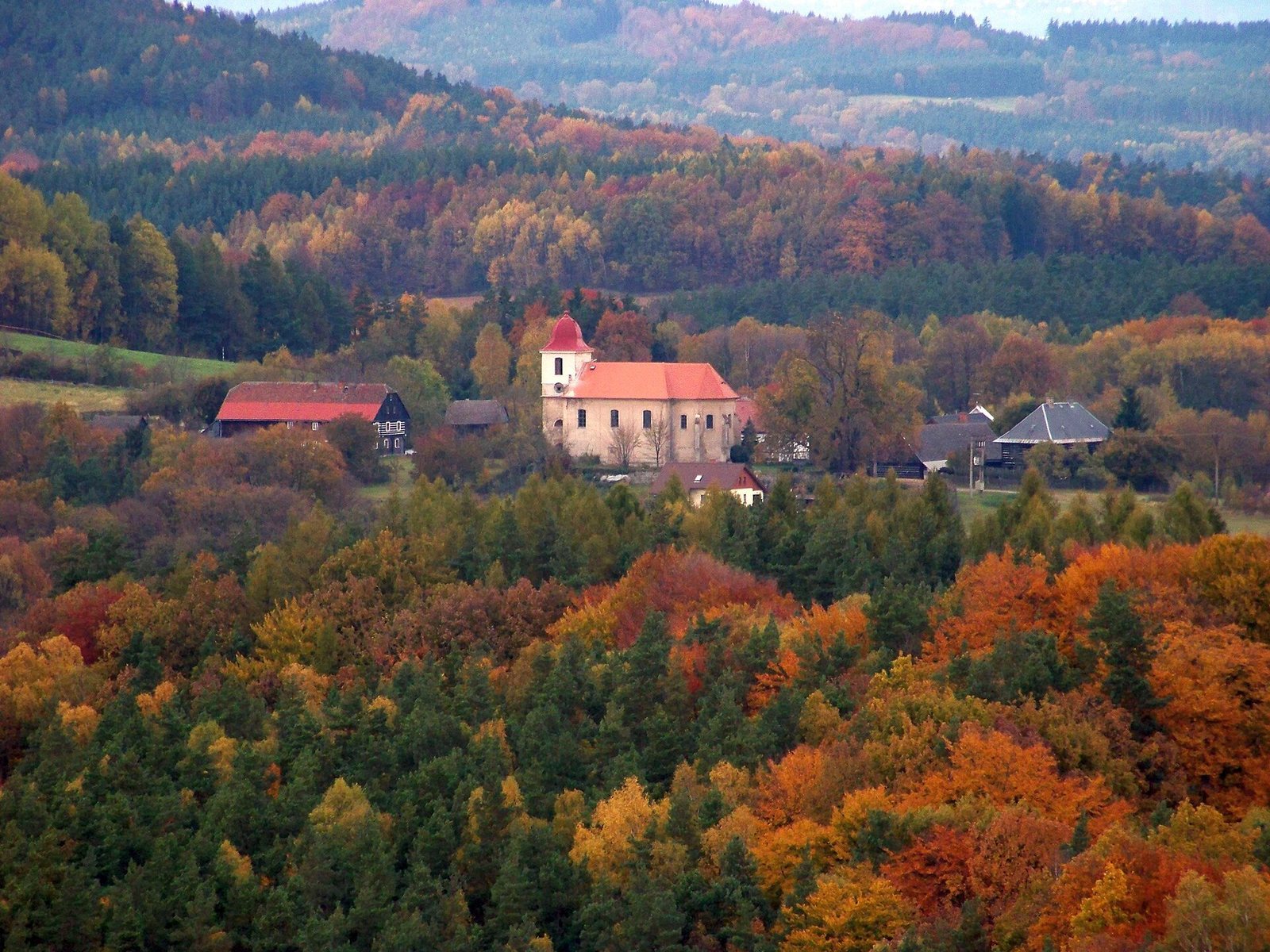
The Church of Saint James the Elder in Bořejov, Czechia, is a Roman Catholic parish church rebuilt in stone in 1703 in the Baroque period, a European era known for dynamic forms and strong religious expression. The parish is first recorded in the Register of Papal Tithes in 1352, an ecclesiastical record of payments owed to the papacy by churches and benefices.
Medieval parish and the Hussite Wars
Between 1358 and 1363, local lesser nobles probably connected with nearby Houska Castle held the church’s patronage. This gave them rights associated with supporting the church and appointing its priest. The rights later passed directly to the owners of Houska Castle, a historic castle in northern Bohemia near Bořejov.
The original church was built of wood. Its parish ceased to exist in 1427, probably as a consequence of the Hussite Wars, fifteenth-century religious and political conflicts in Bohemia associated with the reform movement founded by Jan Hus. Bořejov was then affiliated with the parish at Bezděz and, from 1679 to 1724, with the parish at Kruh.
Rebuilding and parish administration
Independent parish registers began to be kept at Bořejov in 1699. The wooden church was rebuilt in stone in 1703, establishing the present building’s principal historical phase. A new wooden rectory was completed in 1727, and an independent parish priest was installed. The historical parish served Bořejov, Ždírec, Ždírecký důl, Tubož, Blatce, Blatečky, Korce, Vlkov, Plešivec, Houska, Kbelsko, and several isolated settlements.
A prismatic tower was added in front of the western entrance facade in 1825. A clock was installed in the tower in 1868. Three bells from the eighteenth century formerly hung there, but they were confiscated and removed during the First and Second World Wars.
Recent care and religious use
From the second half of the twentieth century, priests from neighboring parishes administered Bořejov, which has had no resident priest since that period. The church deteriorated severely during the 1990s and was burgled several times. Since 2003, the association Drobné památky severních Čech has cared for the building. Occasional services have resumed, and repairs and revitalization have proceeded gradually with local support. The church is now pastorally administered by the parish priest of Bělá pod Bezdězem.
The annual pilgrimage celebration takes place in July on the Saturday closest to the feast of Saint James the Apostle, observed on July 25. Saint James the Elder is traditionally identified as James, son of Zebedee, distinct from James, son of Alphaeus. The church and its enclosing wall have been listed as immovable cultural monuments of the Czech Republic since January 20, 1965. It remains the parish church of the Bořejov parish in the Diocese of Litoměřice and the Czech ecclesiastical province.
Remains
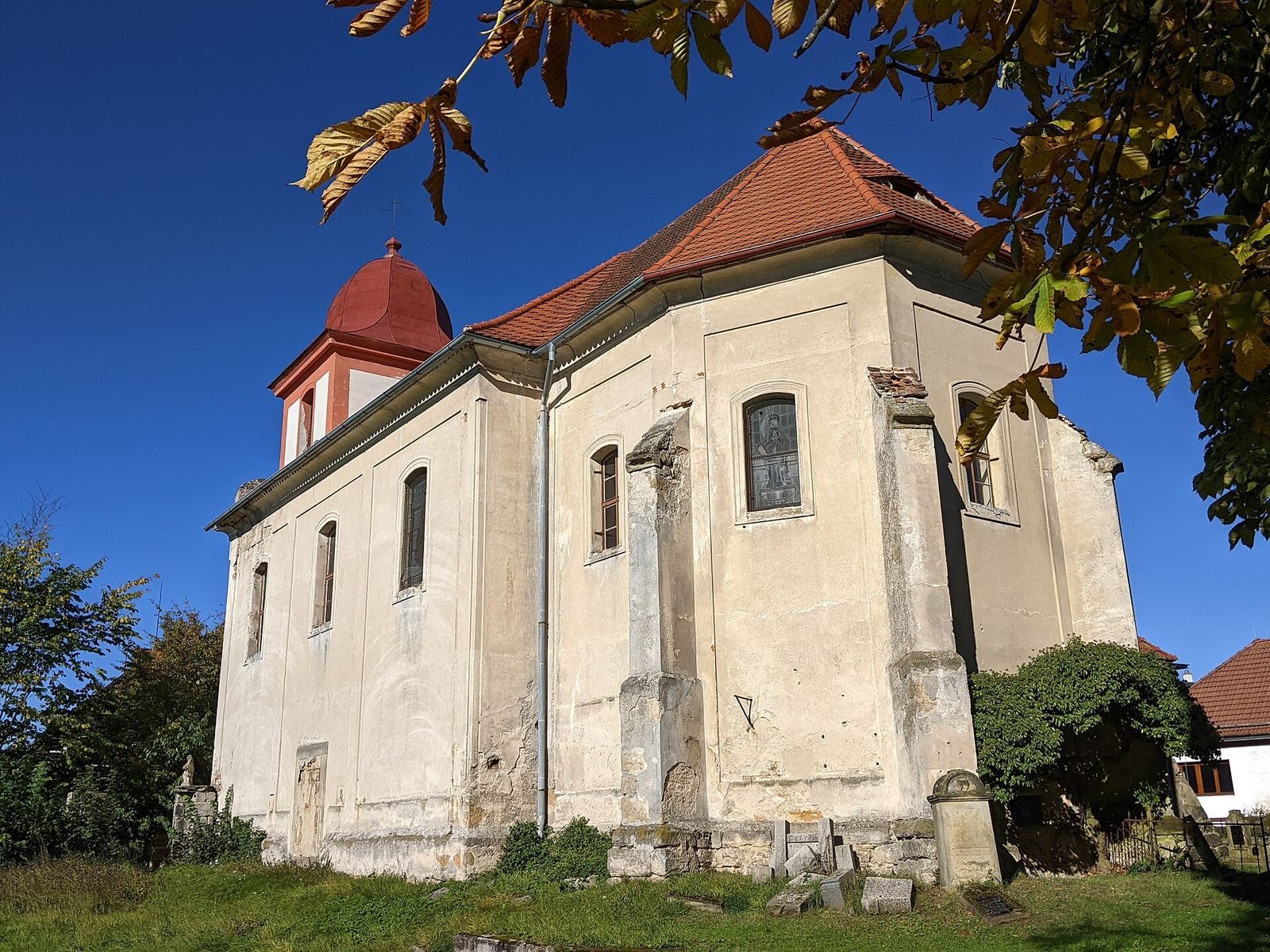
The church is a single-nave stone and masonry building in the Baroque style. Its entrance facade is centered on the later tower, while the presbytery, the part containing the high altar and reserved for the clergy, ends in a polygonal form. The enclosing wall forms part of the protected monument setting.
Church interior
A three-sided wooden choir gallery extends through the interior. It was intended for singers or musicians and remains an important surviving element of the church’s internal arrangement. The original Baroque organ has largely disappeared, although part of its organ case, the enclosure for the pipes and mechanism, survives. The organ was repaired in 1884.
The interior plaster is extensively damaged. Church furnishings were devastated and survive only in part. Local residents and associations are gradually restoring and supplementing the furnishings, while the wider repair programme addresses the building’s deteriorated condition.
Former rectory
The former rectory is preserved as a protected homestead designated as house no. 4. Built as the residence associated with the parish priest, it belongs to the historical group of buildings connected with Bořejov’s parish administration.