Castello di Roccascalegna: A Medieval Hilltop Fortress in Italy
Site at a Glance
- Rating
- 4.6
- Popularity
- Medium
- Country
- Italy
- Primary era
- Early Modern
- External website
- Open
- Eras represented
- Medieval, Early Modern
- Civilizations
- Crown of Aragon, Kingdom of Naples, Lombard, Spanish
- Site type
- Military
- Remains
- Castle
On this page8 sections
History
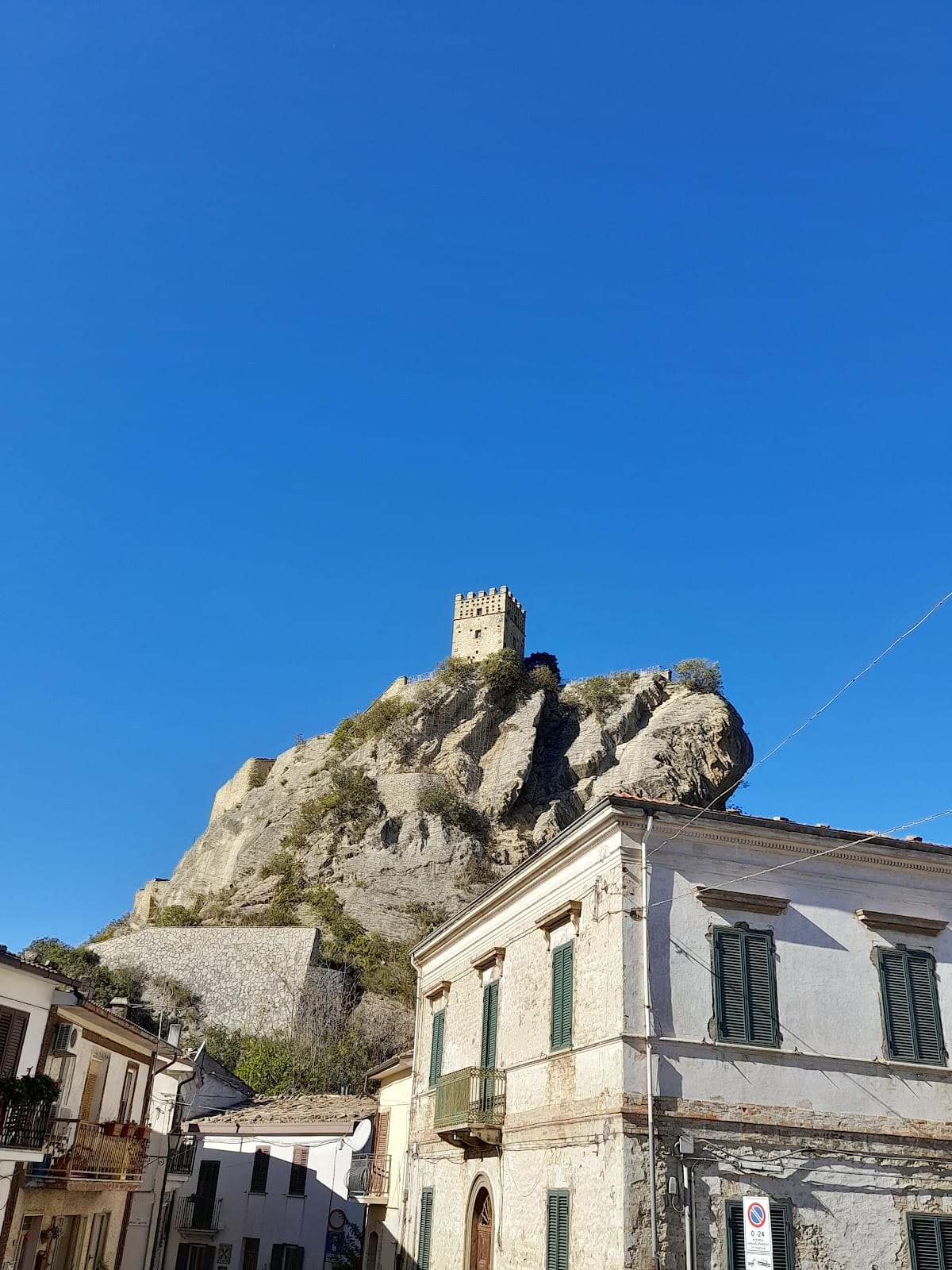
Castello di Roccascalegna is a medieval defensive castle in Italy that began in the eleventh or twelfth century as the expansion of a simple Lombard watchtower. The Lombards, a Germanic people who ruled much of Italy between the sixth and eighth centuries, established early defensive installations that shaped the site’s origins. Built above the settlement on a rocky spur, the castle later became part of the military rivalry between Angevin and Aragonese forces, two competing ruling houses whose conflict affected southern Italy.
Medieval Origins and Early Expansion
The fortress developed from its early watchtower into a larger defensive complex. Its principal construction took place during the fifteenth and sixteenth centuries, when military pressures encouraged the enlargement and strengthening of the site. The castle was first mentioned in 1525 in connection with restoration work. During the sixteenth century, its walls were rebuilt to a greater height than the earlier defenses and were constructed without crenellations.
Baronial Building Phases
Under the Annecchino family, a local noble ruling house, the existing towers were reinforced and a circular tower was added. The Carafa barony, which governed Roccascalegna from 1531 to 1600, brought further major changes. These included the construction of the Santissimo Rosario Chapel in 1577 and improvements to the system that collected and stored rainwater.
The Corvi family ruled from 1600 to 1717 and continued to alter the fortress. In or after 1705, the drawbridge was destroyed, an entrance sentry box was built, and a protective wall was added beside the access ramp. A notarial document records this work, linking the surviving defenses to a specific phase of the castle’s later history.
Decline and Restoration
The castle’s strategic military role ended in the late eighteenth century. Neglect then led to the collapse of many parts of the complex, including the Torre del Cuore in 1940. The tower’s name came from the coat of arms above the main entrance.
In 1985, the Croce Nanni family, the castle’s last owners, donated it to the municipality. Restoration began in the 1990s and was completed in 1996, allowing the preserved structure to be visited again. Local tradition also connects the fortress with a story set in 1646, when Baron Corvo de Corvis supposedly tried to enforce the ius primae noctis, a legendary and disputed feudal custom said to give a lord the right to spend the first night with a subordinate’s newly married bride. According to the tale, the last bride, or her husband disguised in her clothing, climbed to the castle and stabbed the baron. The story says that he left a bloody handprint on a rock as he died. The mark’s repeated reappearance after washing is likewise part of the legend, not a confirmed historical event.
Remains
Fortress and Approach
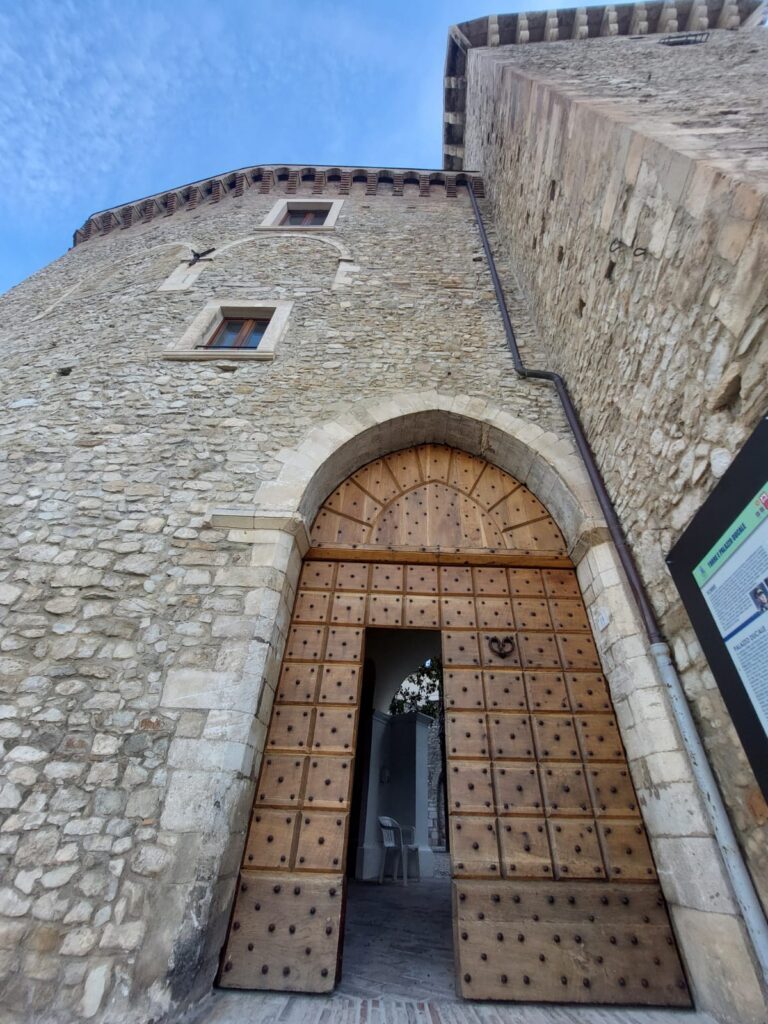
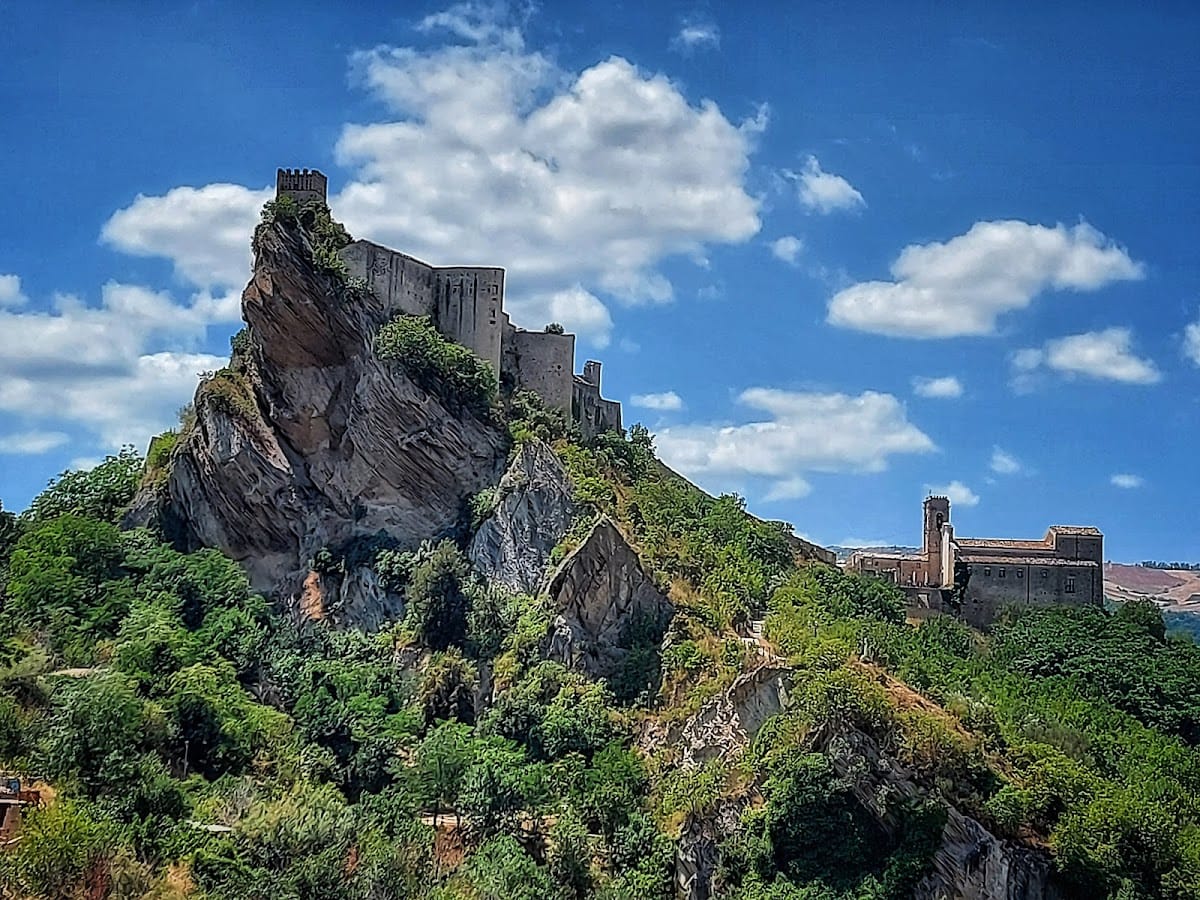
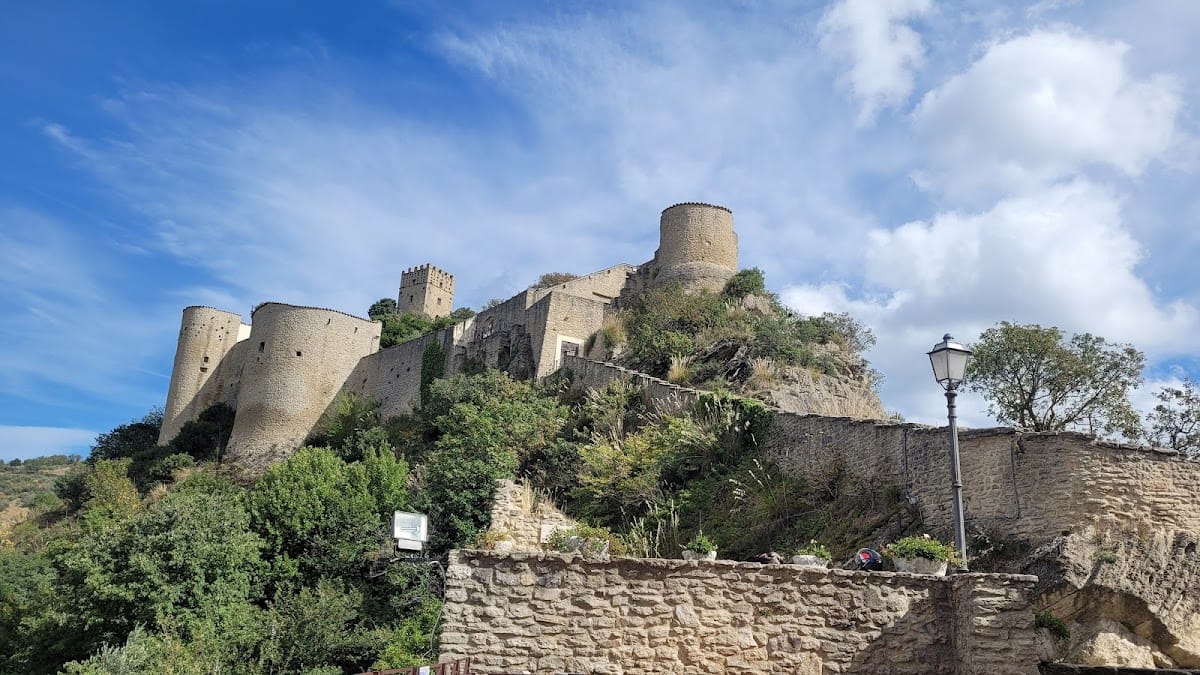
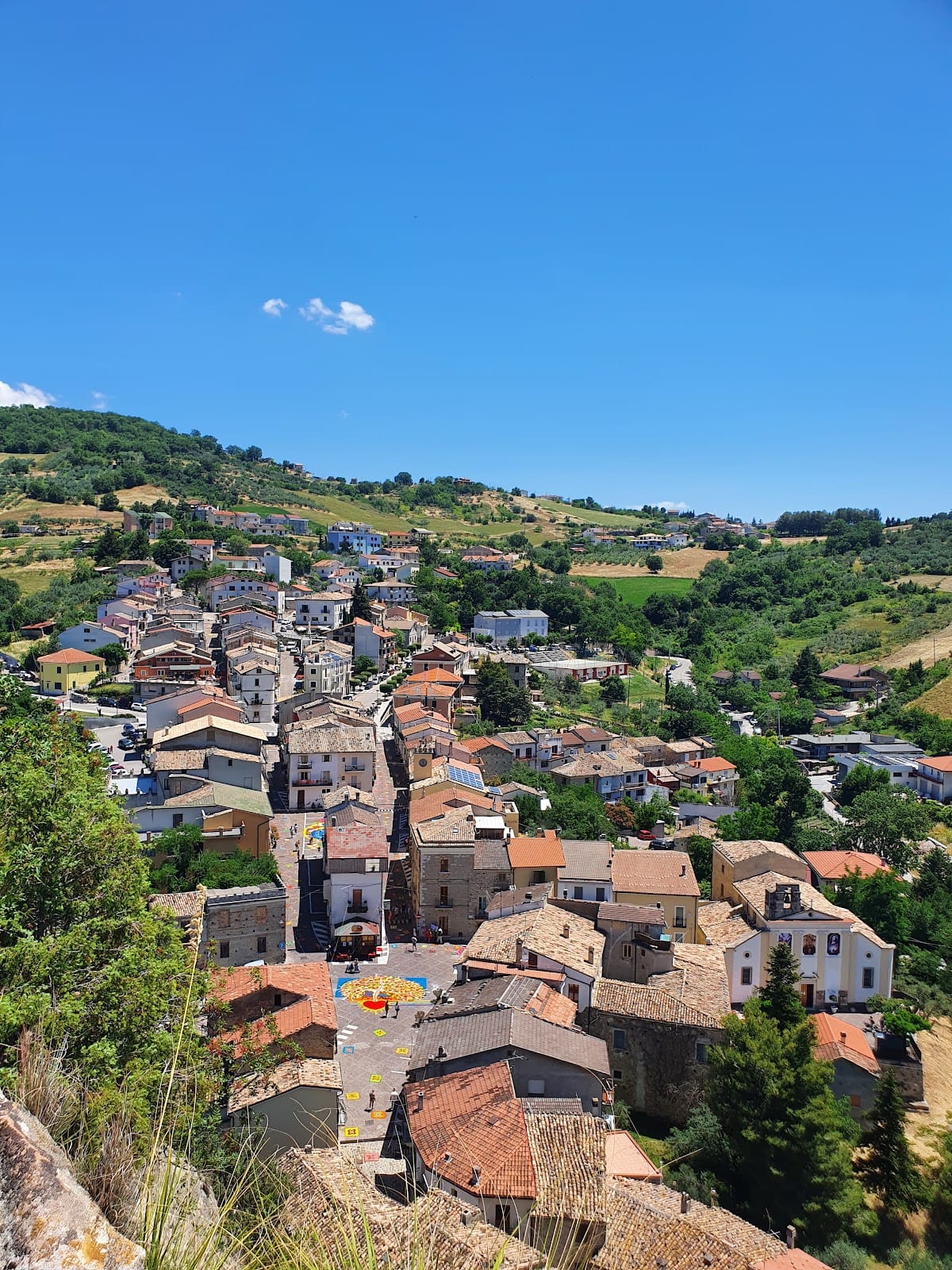
The castle occupies an overhanging rocky spur above the settlement, with walls encircling the steep outcrop. From the San Pietro plain, a steep flight of steps rises toward the entrance, followed by inclined terraces formed on the rock. Remains of the drawbridge survive at the gateway, with the Torre di Sentinella standing to its right.
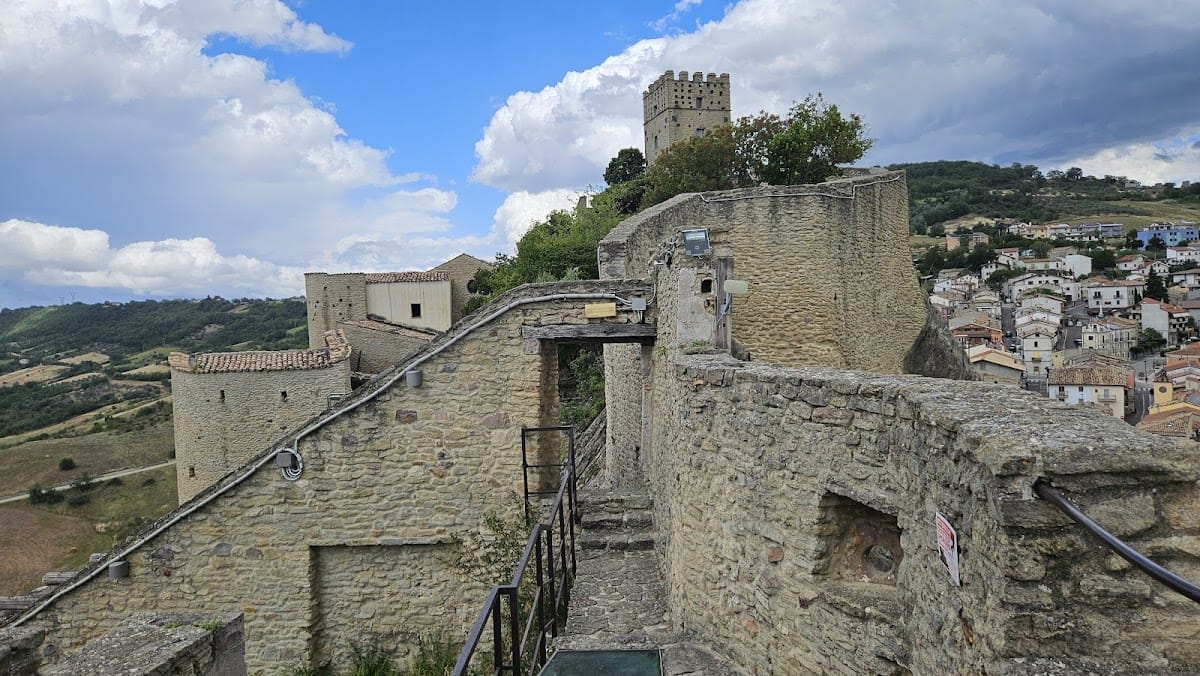
Inside, the courtyard gives access to the prison tower, the Angevin tower, and the chapel. Another ramp climbs toward the watchtower. Built of rough-cut stone masonry and brick, the watchtower has openings on all four sides. The surrounding walls reach the height of the towers and combine lightly dressed stone, pebbles, and fragments of brick.
Chapel and Water System
The Santissimo Rosario Chapel has a single nave and no ornamentation. A gutter gathers rainwater from its roof and directs it into a cistern made from construction rubble. This arrangement reflects the improvements to the fortress’s water supply made during the Carafa barony and explains how a religious building also formed part of the castle’s practical infrastructure.
Church of San Pietro
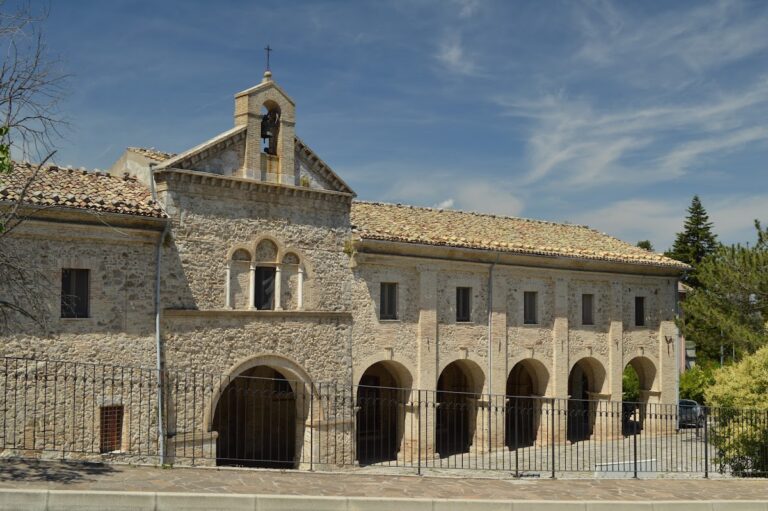
The nearby medieval Church of San Pietro is explicitly associated with the castle. It was the first church of Roccascalegna and served as the baron’s chapel. Early documents place its completion around 1568, while its origins are considered to reach back to the thirteenth century or earlier. The entrance portal bears the date 1461, and the side altars dedicated to Saint Anthony and Saint Louis date from the mid-eighteenth century.
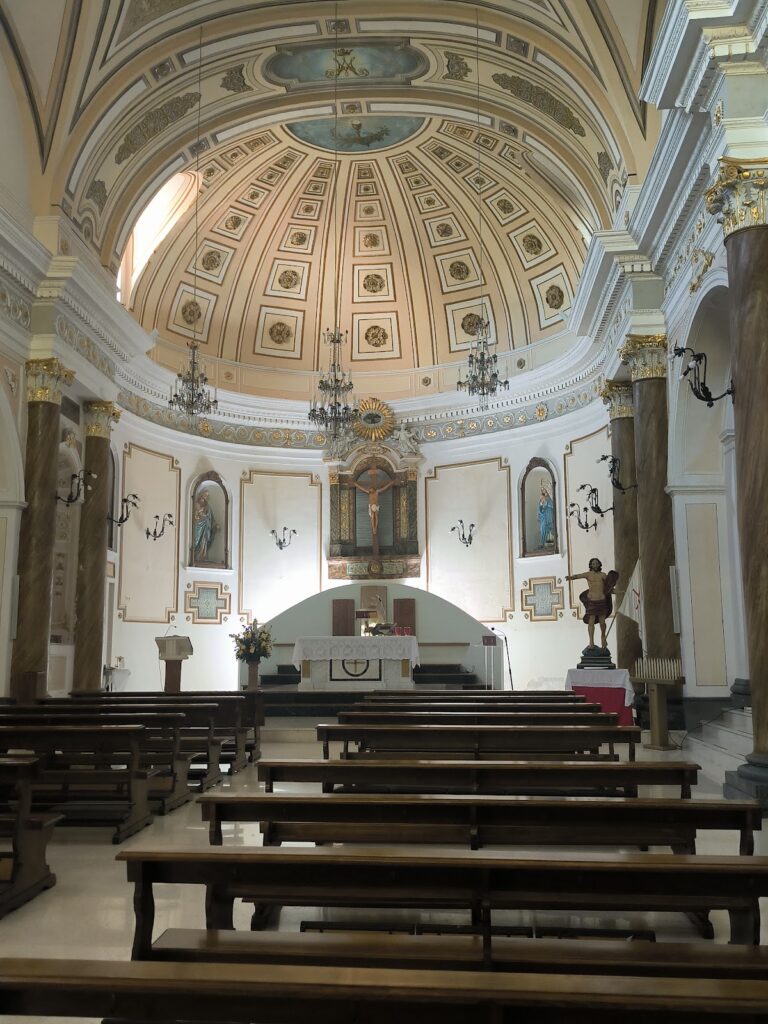
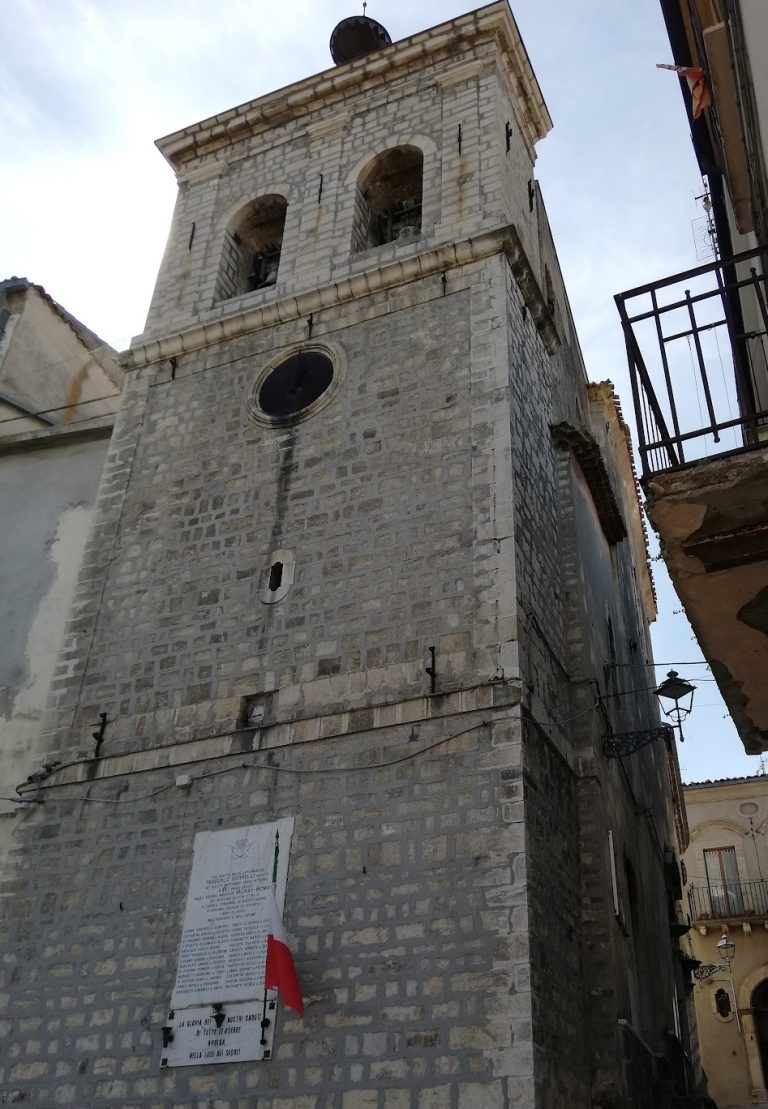
The church interior contains three Baroque naves, while the semicircular apse is slightly rotated in relation to the building’s axis. Its bell tower bears the date 1805, probably marking the restoration of an earlier medieval tower, and several crenellations remain visible at its top. The simple Baroque façade is decorated by a Romanesque round-arched portal and a Baroque fresco in the lunette.