Santa Maria di Nazareth Basilica: A Historic Church in Sestri Levante
Site at a Glance
- Rating
- 4.6
- Popularity
- Low
- Country
- Italy
- Primary era
- Early Modern
- Eras represented
- Early Modern, Modern
- Civilizations
- Genoese, Italian, Kingdom of Sardinia
- Site type
- Religious
- Remains
- Basilica
On this page12 sections
History
Origins and construction
Santa Maria di Nazareth Basilica is a Roman Catholic church in Sestri Levante, Italy, begun in 1604 as an early seventeenth-century church after the town expanded around the consolidated isthmus linking the headland known as the Island to the mainland. A small chapel dedicated to Mary of Nazareth had stood on the site since at least 1368. The older parish church of San Nicolò, located at the summit of the Island, had become inadequate for the growing population.
Bernardo Bolasco, a local nobleman, transferred land for the new building. The architect Giovanni Battista Carbone directed the work, which was completed in 1616. The church inherited San Nicolò’s title as co-cathedral of the Diocese of Brugnato. A co-cathedral shares the cathedral seat or status of a diocese with another church.
Diocesan and parish roles
From 1675 to 1725, the church served as the seat of diocesan synods, formal assemblies of the diocese’s clergy. The diocesan bishops also resided there from the sixteenth to the eighteenth century. In 1755, the church became a collegiate church, a church served by a chapter of clergy.
In 1959, Santa Maria di Nazareth passed to the Diocese of Chiavari. Pope John XXIII elevated it to the rank of minor basilica on 22 June 1962. This is an honorific title granted by the pope to churches of particular religious or historical importance. The church remains a Roman Catholic parish church of the Diocese of Chiavari and belongs to the Sestri Levante vicariate.
The Santo Cristo devotion
The church also became associated with the wooden crucifix known as the Santo Cristo, which came from the former parish church of San Nicolò dell’Isola. Local tradition says that the crucifix arrived at Sestri Levante by sea before being taken to the church on the Island. It was installed in Santa Maria di Nazareth’s choir in 1616.
Between 1690 and 1700, the crucifix was moved to the sacristy. According to popular legend, its face opened its eyes like that of a living person during an event regarded as miraculous, and the crucifix was consequently spared from an impending fire. Belief in its alleged miracles and its perceived protection during droughts, cholera, storms, and other misfortunes established the Santo Cristo as an object of local devotion.
The crucifix was solemnly displayed for public veneration in 1725 and placed at its dedicated altar in 1785. Pope Leo XIII approved its coronation on 2 October 1902, and the ceremony took place on 13 September 1903 in the presence of Domenico Ferrata, later a cardinal secretary of state. A procession dedicated to the Santo Cristo takes place every twenty-five years.
Remains
Exterior and structural layout
Facade and bell towers
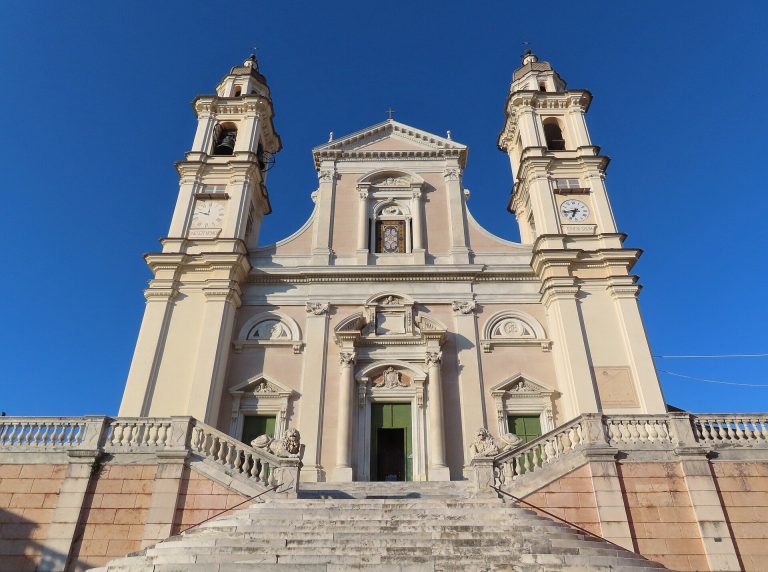
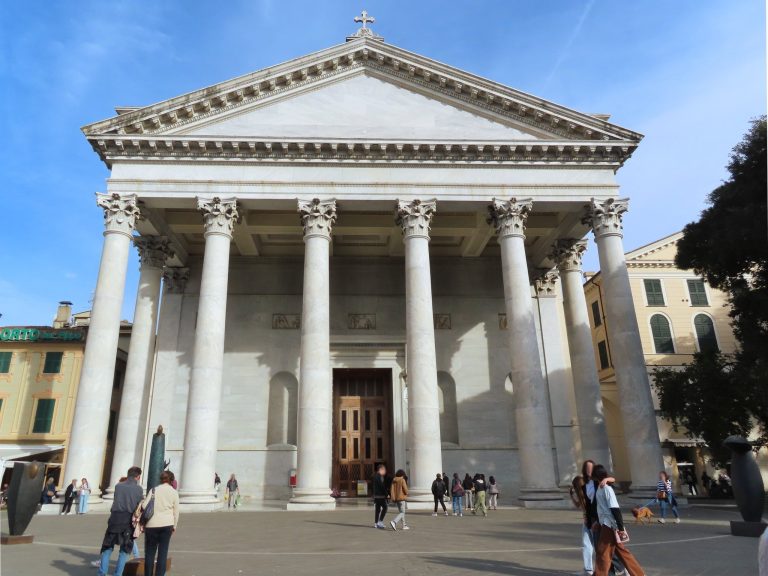
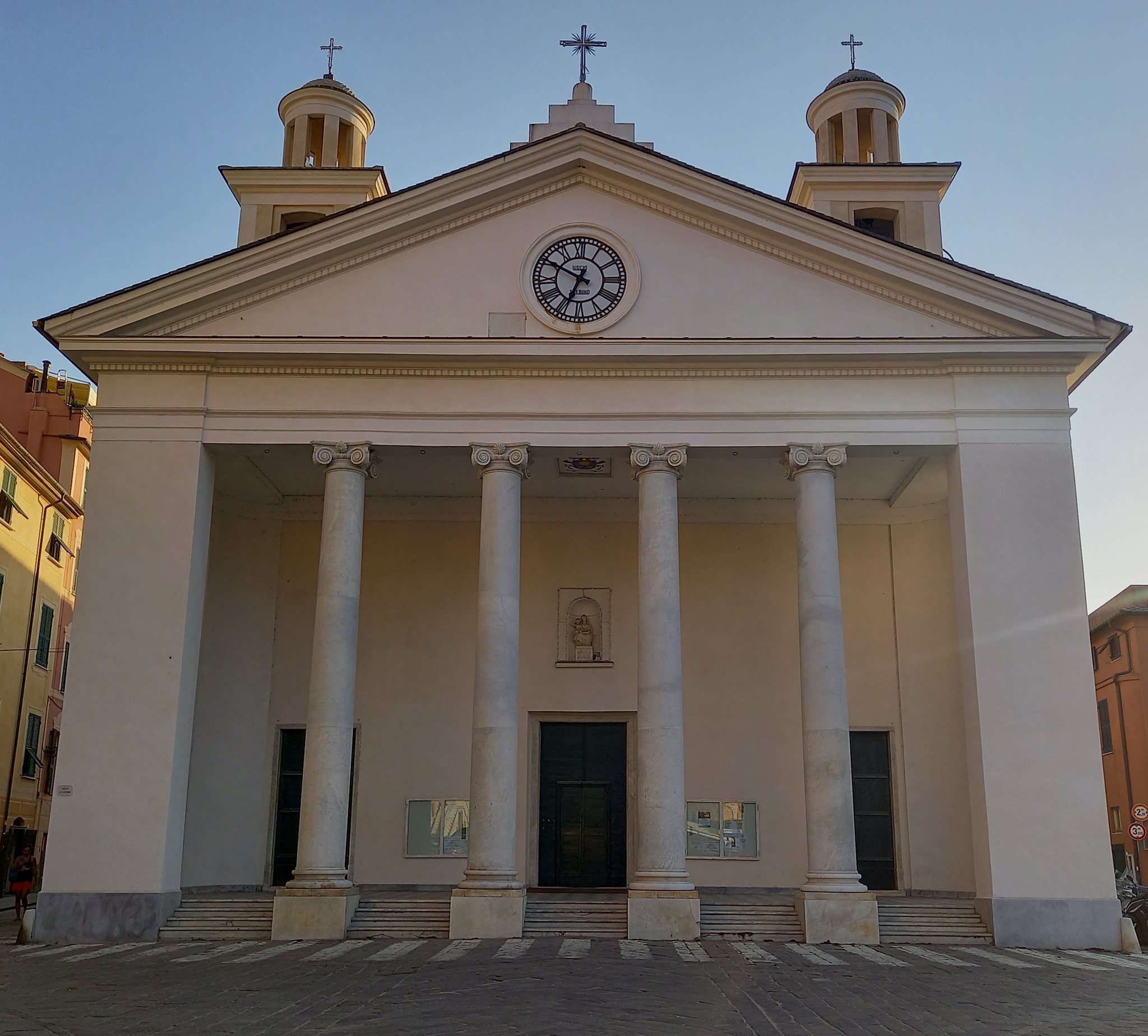
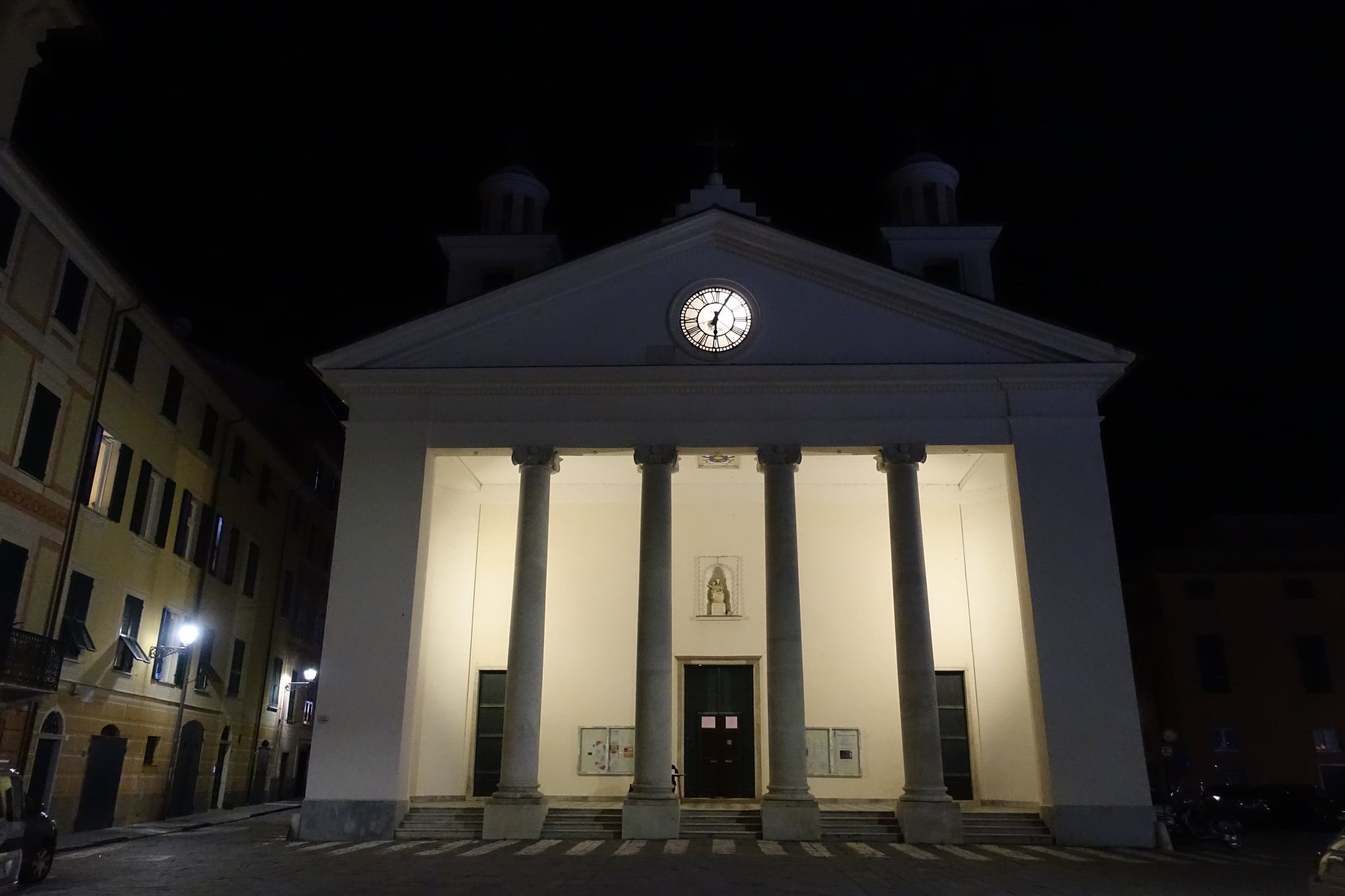
The basilica stands in the historic center of Sestri Levante, beside the town hall. Its early seventeenth-century structure has a later neoclassical facade, rebuilt completely between 1837 and 1840 to designs by Giambattista Prato. The reconstruction added two side doors and a portico supported by Ionic columns and topped by a triangular pediment. A marble statue of the Madonna and Child stands above the portal.
The two bell towers at the sides survive from the original seventeenth-century facade. They also received nineteenth-century decoration, linking the surviving earlier elements with the later appearance of the front.
Interior arrangement
The interior is divided into three aisles by square pillars with pilasters and semicircular arches. The central nave is covered by a barrel vault, a continuous semicircular vault, with lunettes, which are semicircular surfaces intersecting the vault. The deep presbytery, the part of the church reserved for the clergy and altar, rises above the nave and ends in a semicircular apse. Several chapels occupy the side aisles, each covered by a small groin vault formed by the intersection of two barrel vaults.
Altars and artworks
High altar and presbytery
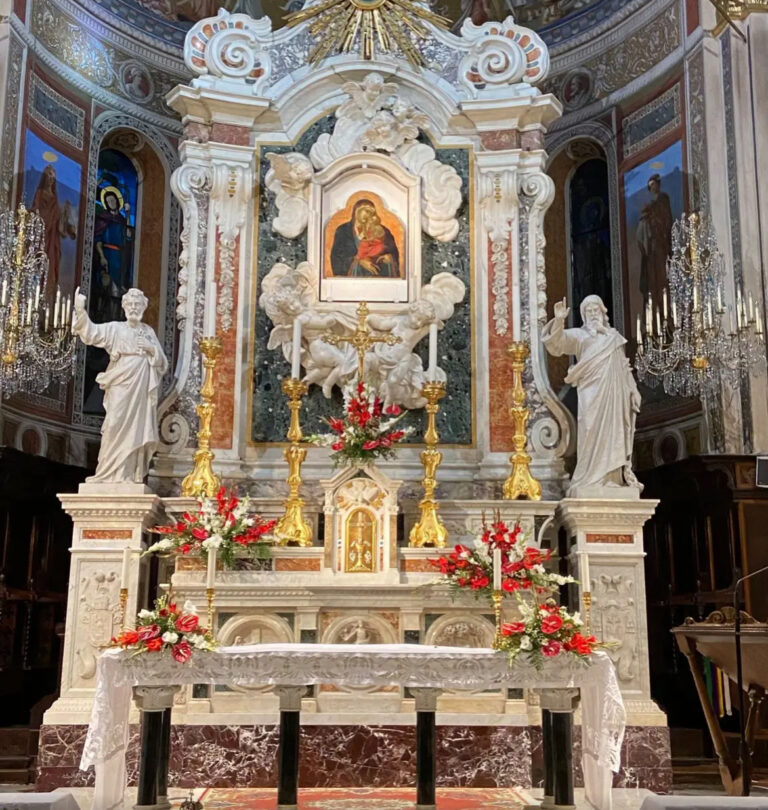
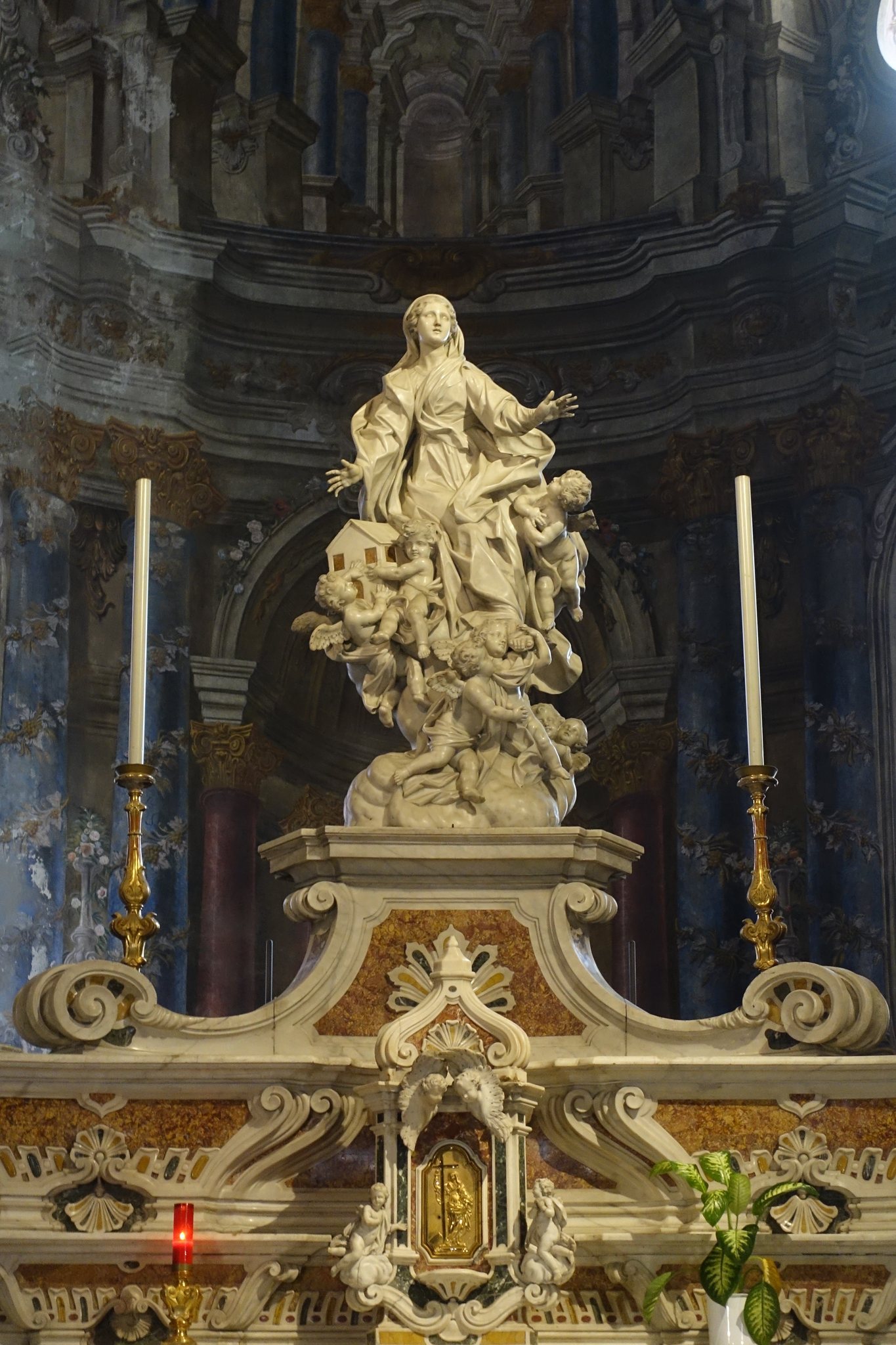
The high altar dates from 1762 and is made of polychrome marble. Its sculptural group shows the Virgin with cherubs supporting the Holy House of Nazareth, the house traditionally associated with the family of Jesus in Catholic tradition. Both the altar and the marble sculpture were made by Francesco Maria Schiaffino. Works by Rocco Costa and Giuseppe Galeotti are located in the presbytery and apse.
Santo Cristo chapel
The chapel to the left of the central nave contains the twelfth-century wooden Santo Cristo crucifix. After its installation in the choir in 1616 and its later move to the sacristy, it was brought into public devotion in 1725 and given its dedicated altar in 1785. The chapel preserves the crucifix as the principal physical focus of the basilica’s long-standing local devotion.
Nave paintings and sculpture
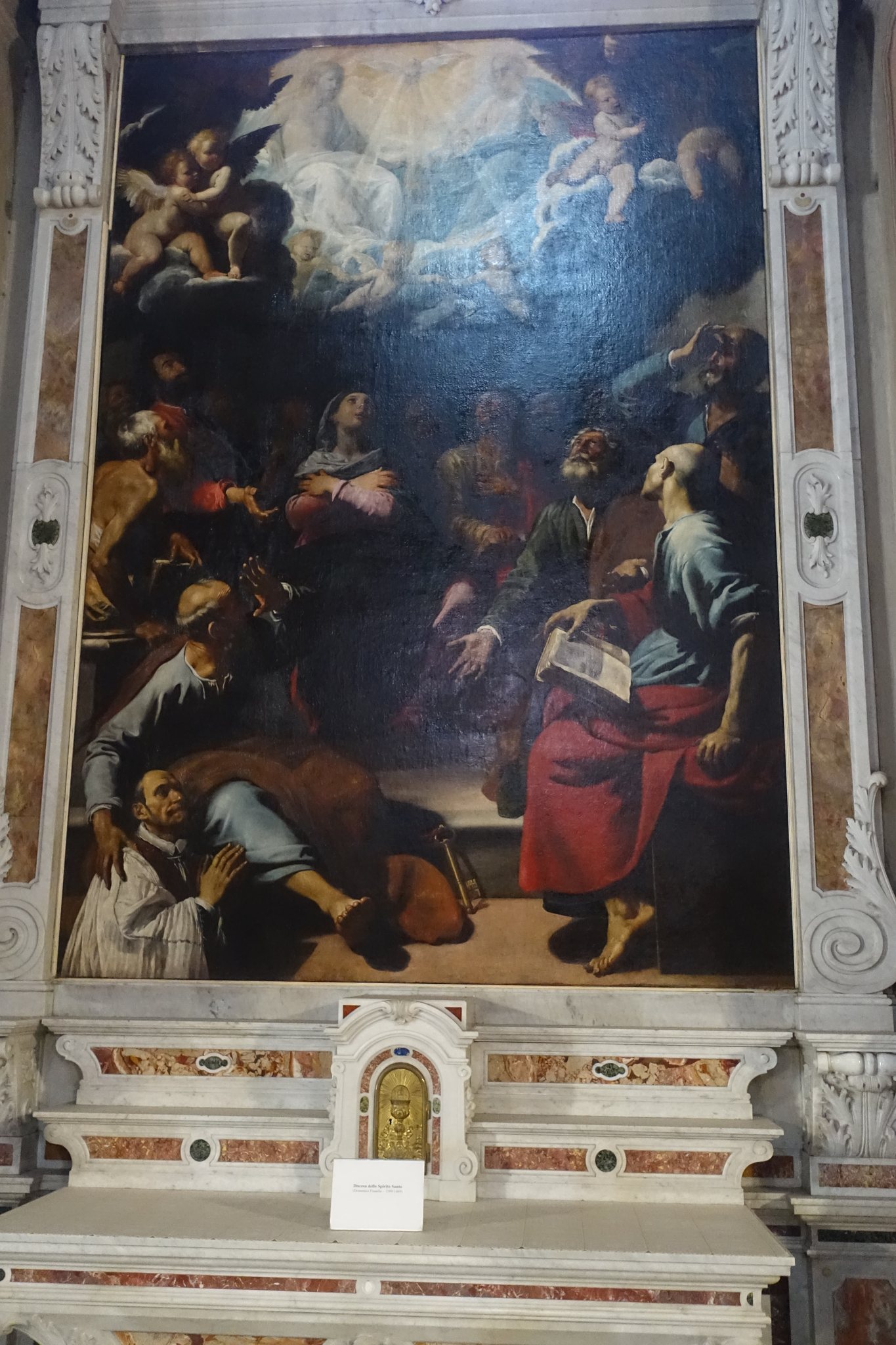
Lazzaro De Maestri painted the frescoes in the central nave vault in 1893. The second altar in the right aisle contains Castellino Castello’s Martyrdom of Saint Catherine of Alexandria. The left aisle contains an eighteenth-century wooden sculptural group representing the Deposition, Domenico Fiasella’s Pentecost, Orazio De Ferrari’s Death of Saint Joseph from 1654, and Lazzaro Tavarone’s Our Lady of Mount Carmel and Saints Lawrence and John the Baptist.