Santa Maria della Mercede a Montecalvario: A Baroque Church in Naples
Site at a Glance
- Popularity
- Medium
- Country
- Italy
- Primary era
- Early Modern
- Eras represented
- Early Modern, Modern
- Civilizations
- Italian, Kingdom of Naples, Spanish
- Site type
- Religious
- Remains
- Church
On this page10 sections
History
Santa Maria della Mercede a Montecalvario is a Roman Catholic church in Naples, Italy, founded in 1560 by the Neapolitan noblewoman Ilaria d’Apuzzo. Its interior received Baroque decoration in 1677, and it remains an active church dedicated to Mary within the Archdiocese of Naples.
Franciscan foundation and Baroque development
D’Apuzzo gave the church to Franciscan friars. Observant Franciscans, a branch of the order that followed its religious rule more strictly, built an adjoining convent during the sixteenth century, aided by a further donation of 250 écus, a historical coin, from d’Apuzzo. In the 1580s, the Congregation of the Immaculate Conception, a religious association devoted to the belief that Mary was conceived without original sin, established its seat in the church.
The church was enlarged in the early seventeenth century. In 1677, Gennaro Schiavo received a commission to create a Baroque decorative scheme for its interior.
Suppression, return, and new uses
In 1808, French laws suppressed the convent, which became barracks, and the church closed. A plan by Stefano Gasse turned the space in front of the church into a food market. The monumental staircase was demolished and replaced by a plain stairway surrounded by market stalls; the work was completed in 1816.
Around 1826, the Franciscans returned and restored the church. Further restoration followed in 1858, but the friars left again after Italian unification. French Sisters of Saint Vincent de Paul and Saint Louise de Marillac, driven from France by anticlerical laws, then purchased the former convent from the state. They opened a college there and restored the church.
School and modern restoration
A school building replaced the college in 1928. The complex sustained slight damage in the 1980 Irpinia earthquake and underwent restoration in 1990.
Remains
Church and interior
Plan and entrance
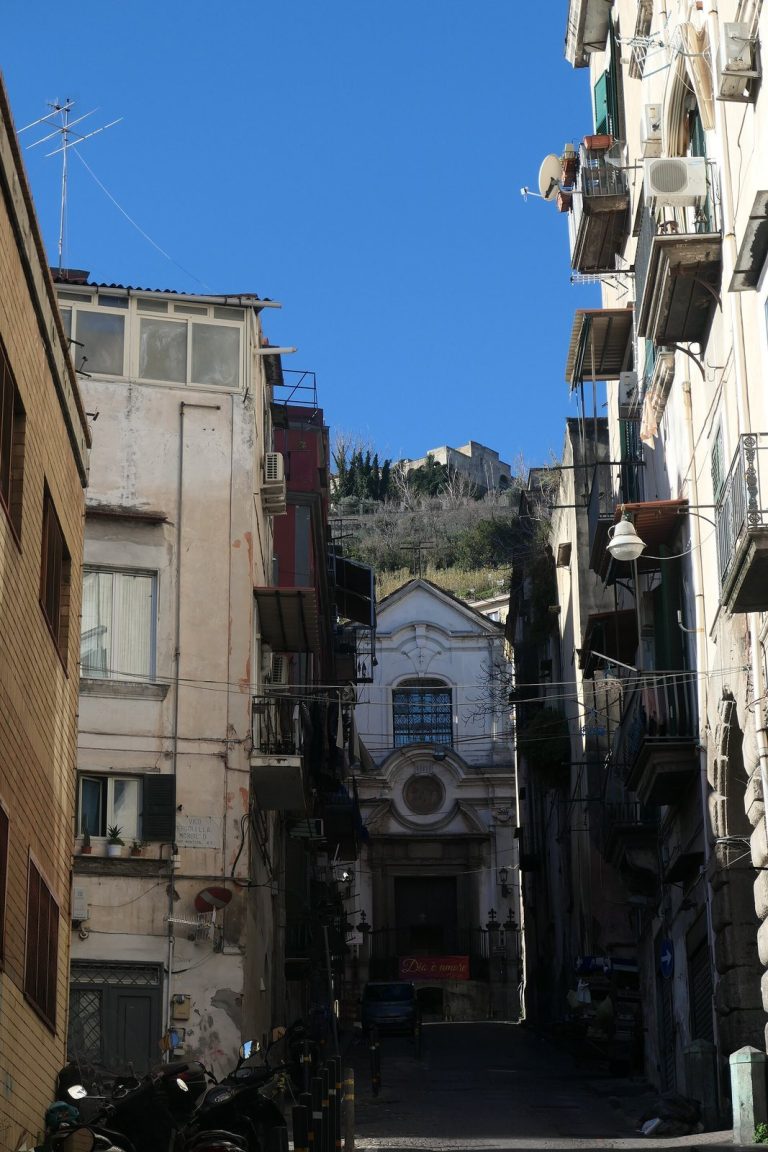
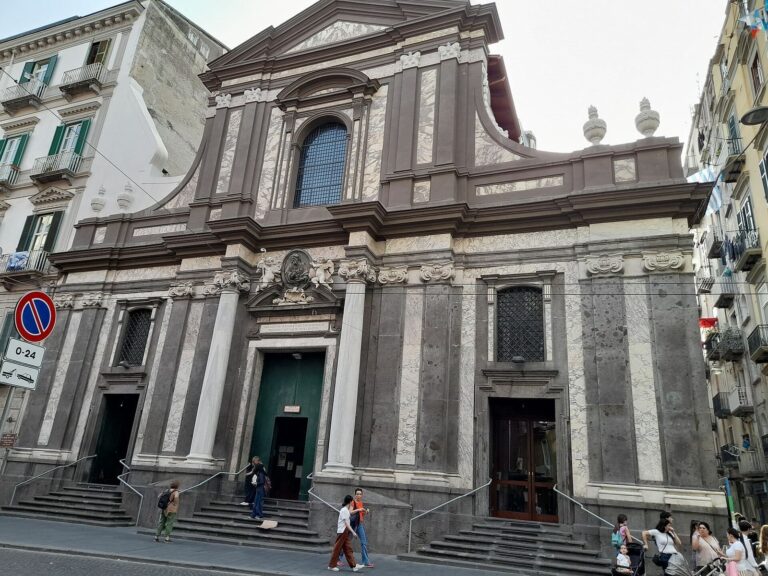
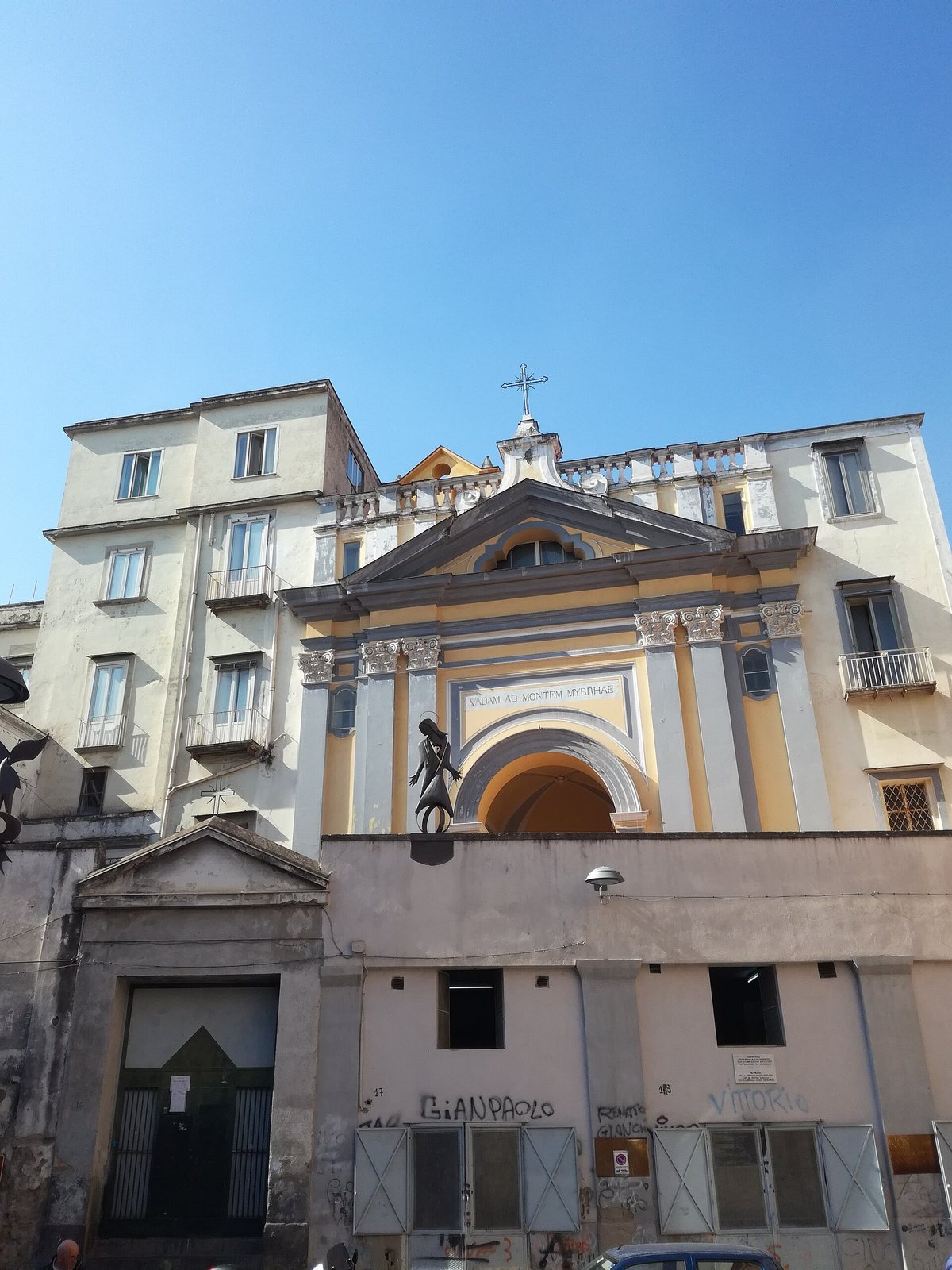
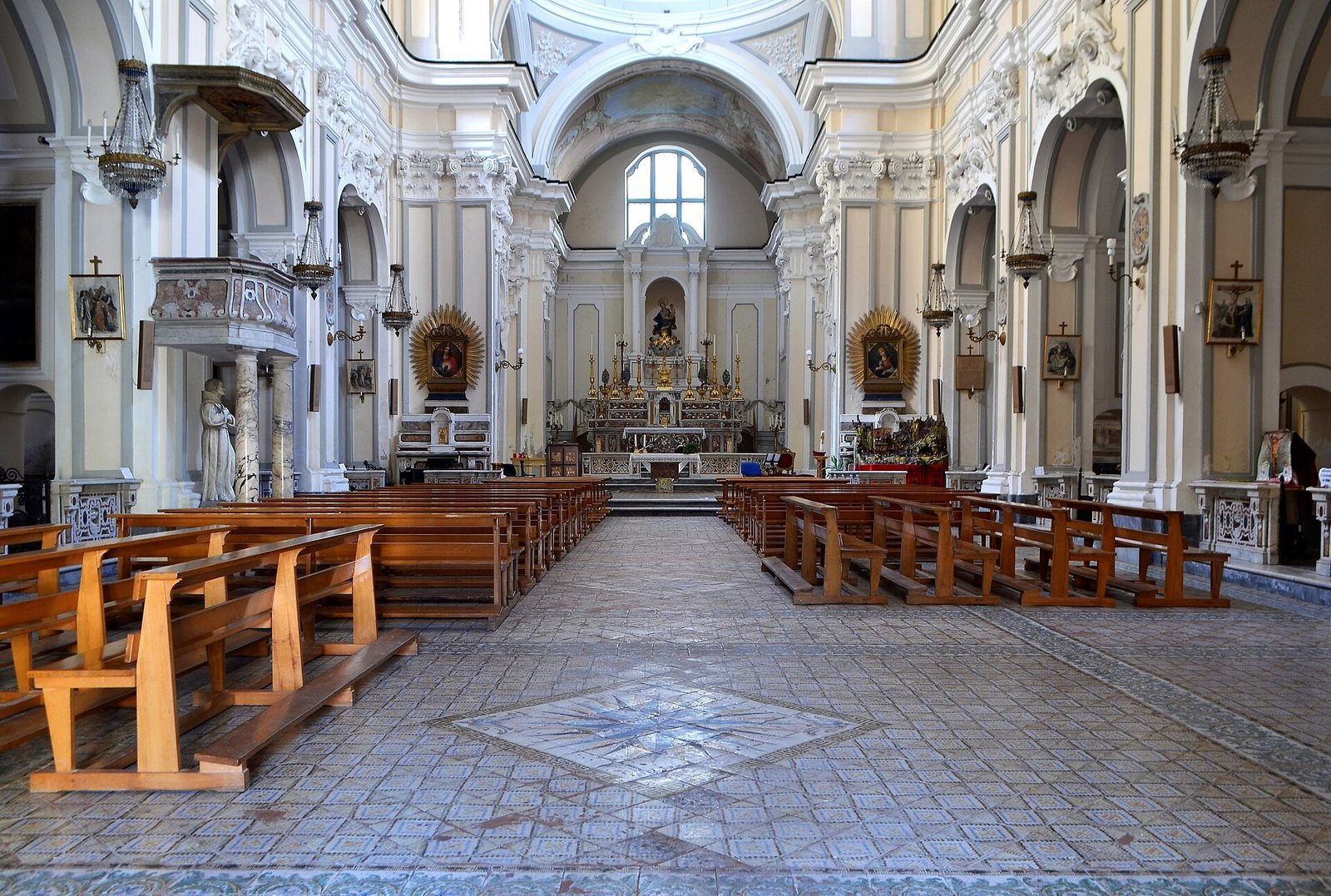
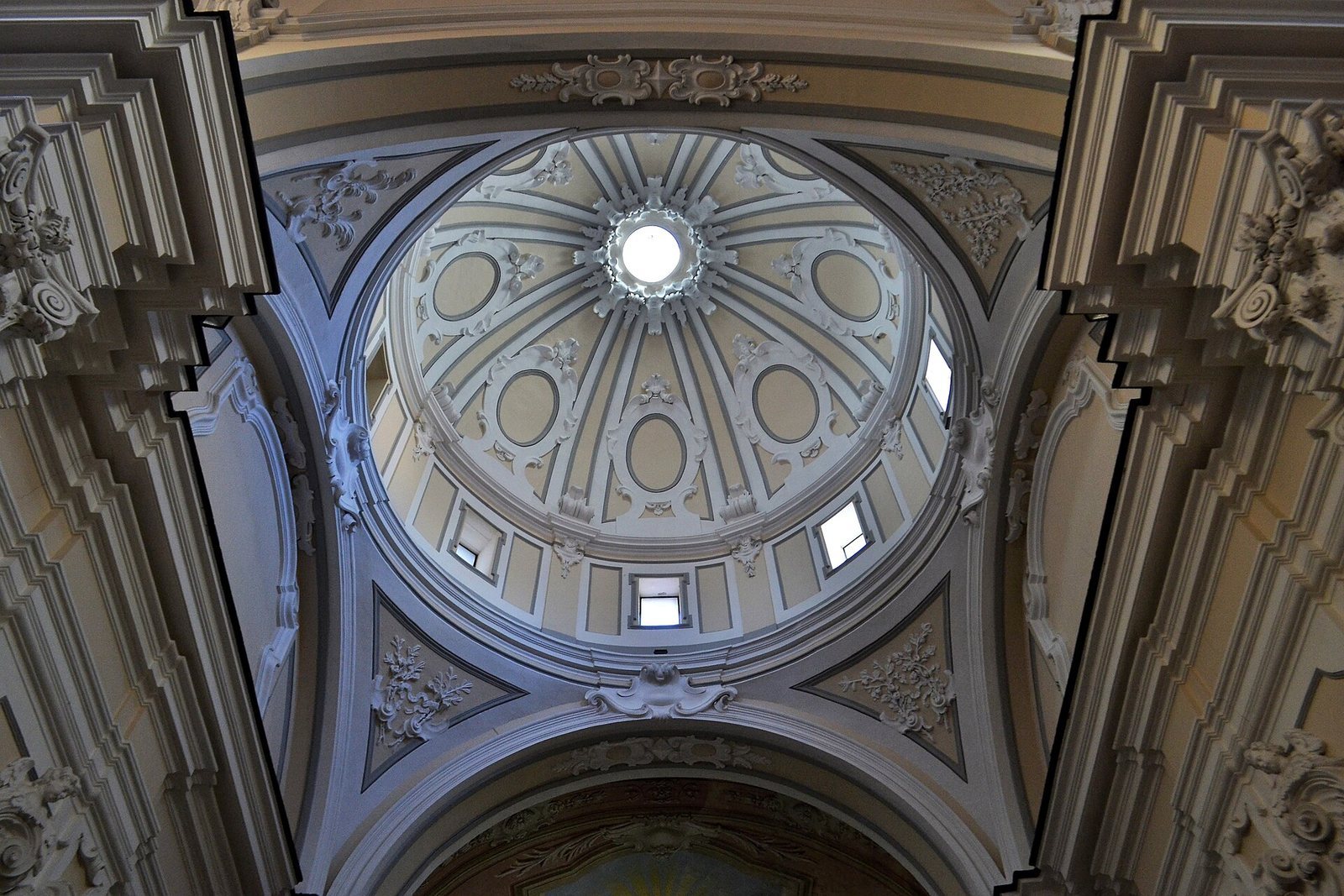
Standing on Largo Montecalvario in Naples’s Spanish Quarters, the Baroque church has a single nave, a dome, and side chapels. A portico with five arches marks the entrance. Two windows on the church’s left side are blocked. A view by Antonio Lafreri also depicts the building with its dome.
Chapels and paintings
The first chapel on the left contains a sixteenth-century panel by Michele Cuira showing the Madonna of the Rosary with the Last Judgment. Other chapels contain a Deposition by a follower of Giovan Bernardo Lama and a triptych, or three-panel altarpiece, of the Annunciation with Saint Andrew and Saint Veronica, from the school of Andrea Sabbatini.
Altar, artworks, and memorials
The main altar and two holy-water stoups come from the workshop of Cosimo Fanzago. The church also holds works by Leonardo Castellani, Giacomo da Cosenza, Fabrizio Santafede, Vincenzo Diano, and Odoardo Fischetti, as well as artists of the Beinaschi school. Another work associated with the church depicts the Virgin Mary with Pope Pius V and Philip II. Beneath the marble of the main altar is a restored predella, the lower section of an altarpiece, showing the procession of the blood of Saint Januarius, Naples’s patron saint. Found beneath the altar marble in 1980, it was restored. Inscriptions, funerary monuments, and sculptures also form part of the church’s interior.
Convent and later fabric
The convent adjoins the church. Its original rectangular portico, built from piperno, a hard volcanic stone commonly used in Naples, is the sole surviving part of the original convent. Later annexes and added upper storeys altered the original volumes of the complex.