Santa Croce in Castellare: A Hilltop Oratory in Vicopisano, Italy
Site at a Glance
- Popularity
- Very Low
- Country
- Italy
- Primary era
- Early Modern
- Eras represented
- Early Modern, Modern
- Civilizations
- Grand Duchy of Tuscany
- Site type
- Religious
- Remains
- Chapel
On this page9 sections
History
Tradition and foundation
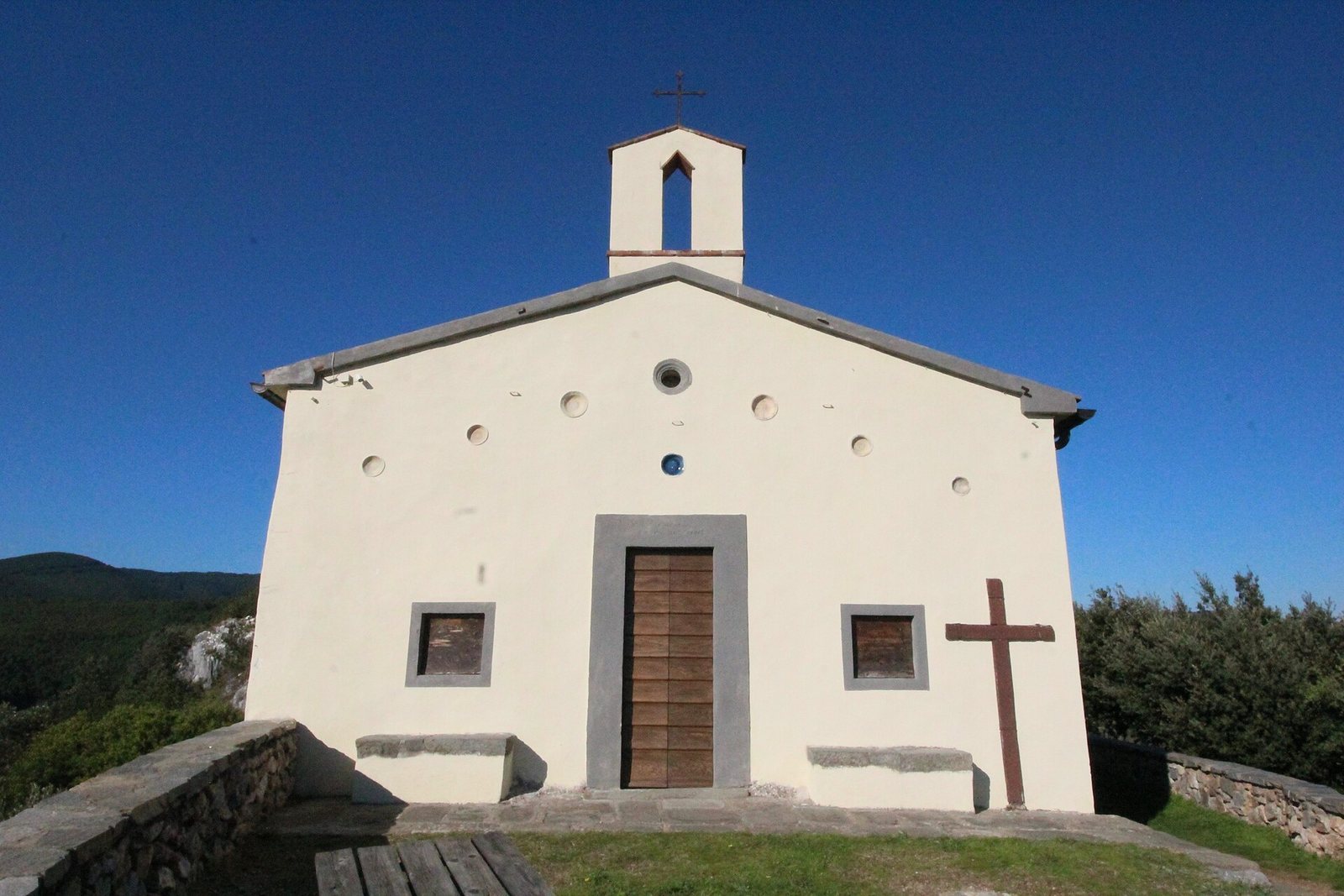
Santa Croce in Castellare is a Catholic oratory on the hilltop above San Giovanni alla Vena, a settlement within Vicopisano, Italy. Local tradition connects the name to an ancient fortress, said to have stood before the barbarian invasions and to have been destroyed in the fourteenth century. Another tradition holds that veterans of the First Crusade, a late-eleventh-century military expedition to the Holy Land, built a church on the summit. An annual celebration recalled their victorious return from Jerusalem.
Construction of the present oratory began in 1656 under parish priest Giuliano Bonanni, with money raised through local alms. It opened on 14 September 1657, the year it was also consecrated. Dedicated to the Holy Cross and the souls in Purgatory, understood in Catholic teaching as undergoing purification after death, the oratory belongs to the Catholic Archdiocese of Pisa.
Enlargement and wartime damage
In 1718, parish priest Giovan Battista Frullani organized an enlargement to allow more people to attend Mass. Valerio Batini supported the work through a bequest and donated a relic of the Holy Cross; other devotees also contributed. The enlarged oratory was inaugurated in May 1723, and further work to increase its size took place around 1818.
On the night of 20–21 June 1931, someone tried to steal an ancient crucifix. It was sent to the Superintendency for restoration, but its whereabouts later became unknown for a long period. After it was found and restored, it was placed above the main altar in the parish church. During the Second World War, American artillery targeted the hilltop, where German forces had set up an observation point. On 14 July 1944, shelling detonated explosives the Germans had brought to the summit, badly damaging the oratory.
Rebuilding
After the war, local residents carried building materials up the hill and rebuilt the oratory, which reopened for worship in 1949. The parish priest brought in a stone altar and a wooden structure bearing a painting of the Last Supper from the Confraternity of the Blessed Sacrament, a lay Catholic association devoted to Eucharistic worship.
A gas leak caused an explosion that gutted the church on 2 May 2017. Reconstruction began with the laying of a cornerstone on 5 May 2018 and was completed in April 2019.
Remains
Hilltop building and setting
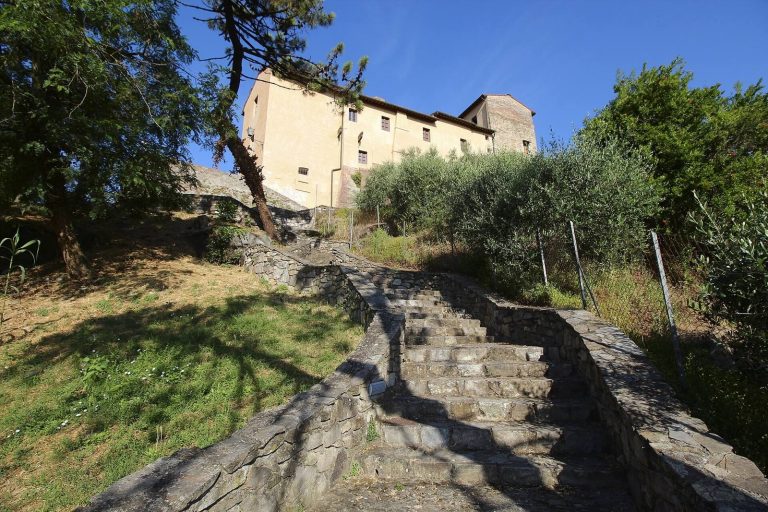
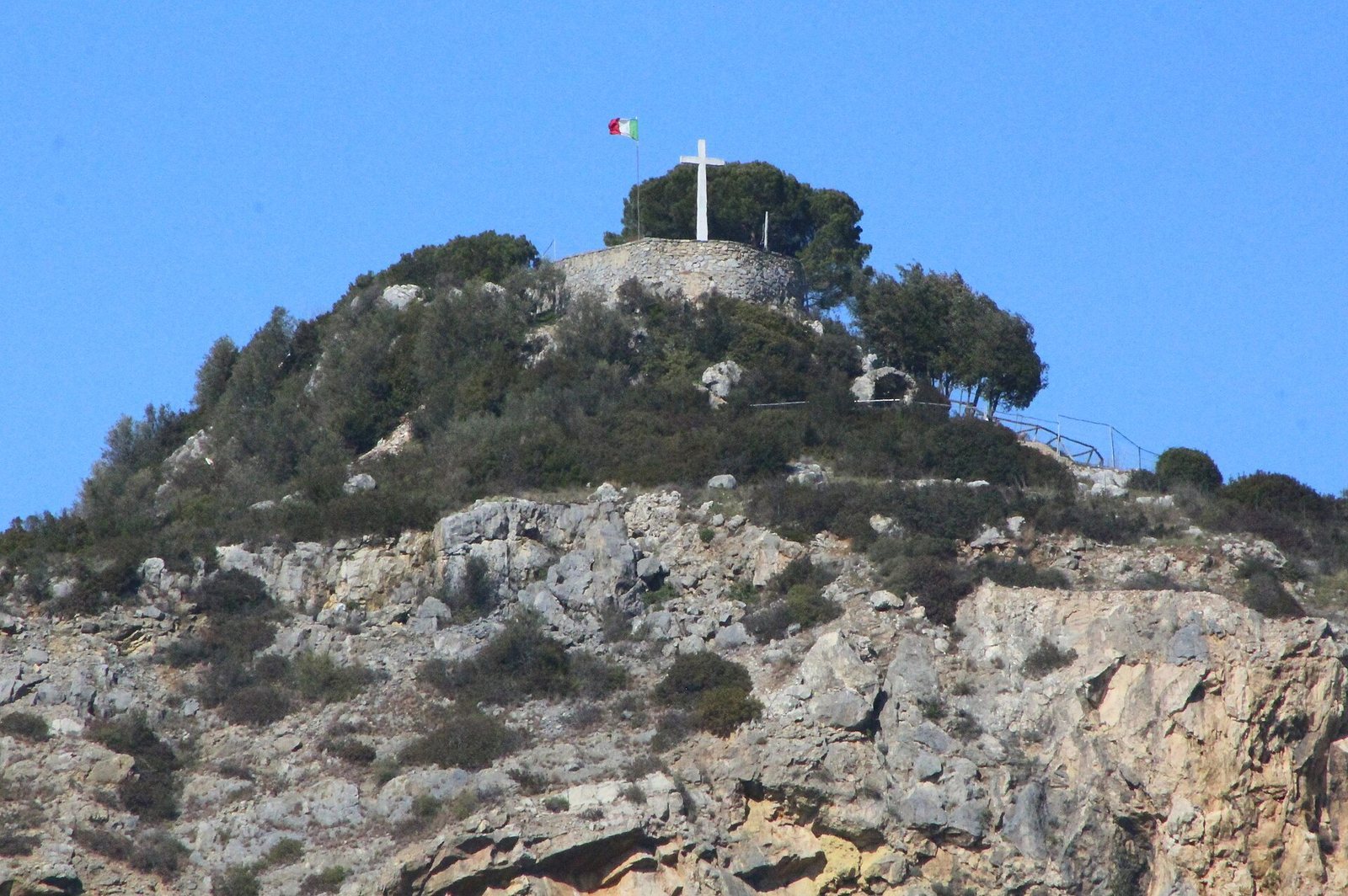
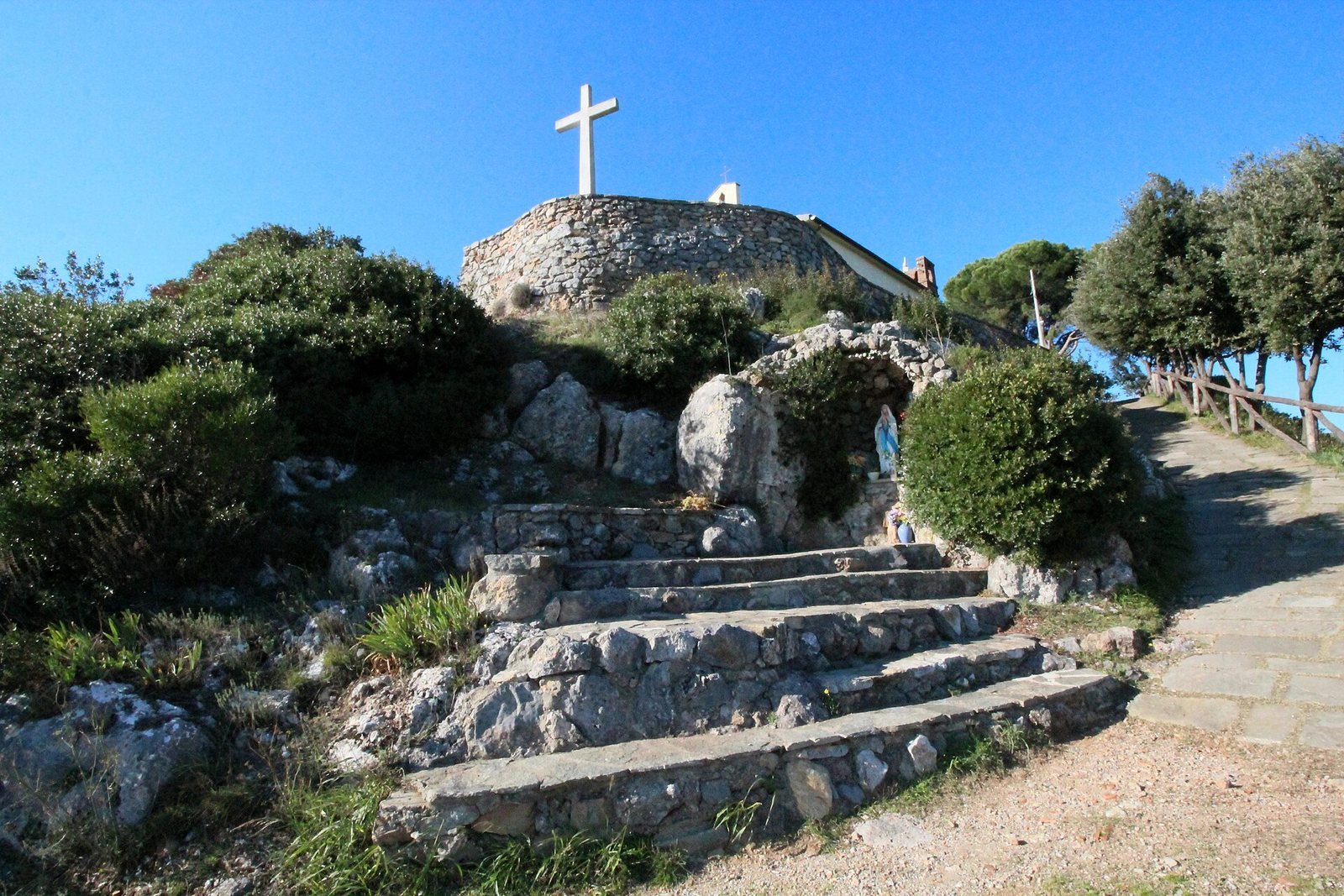
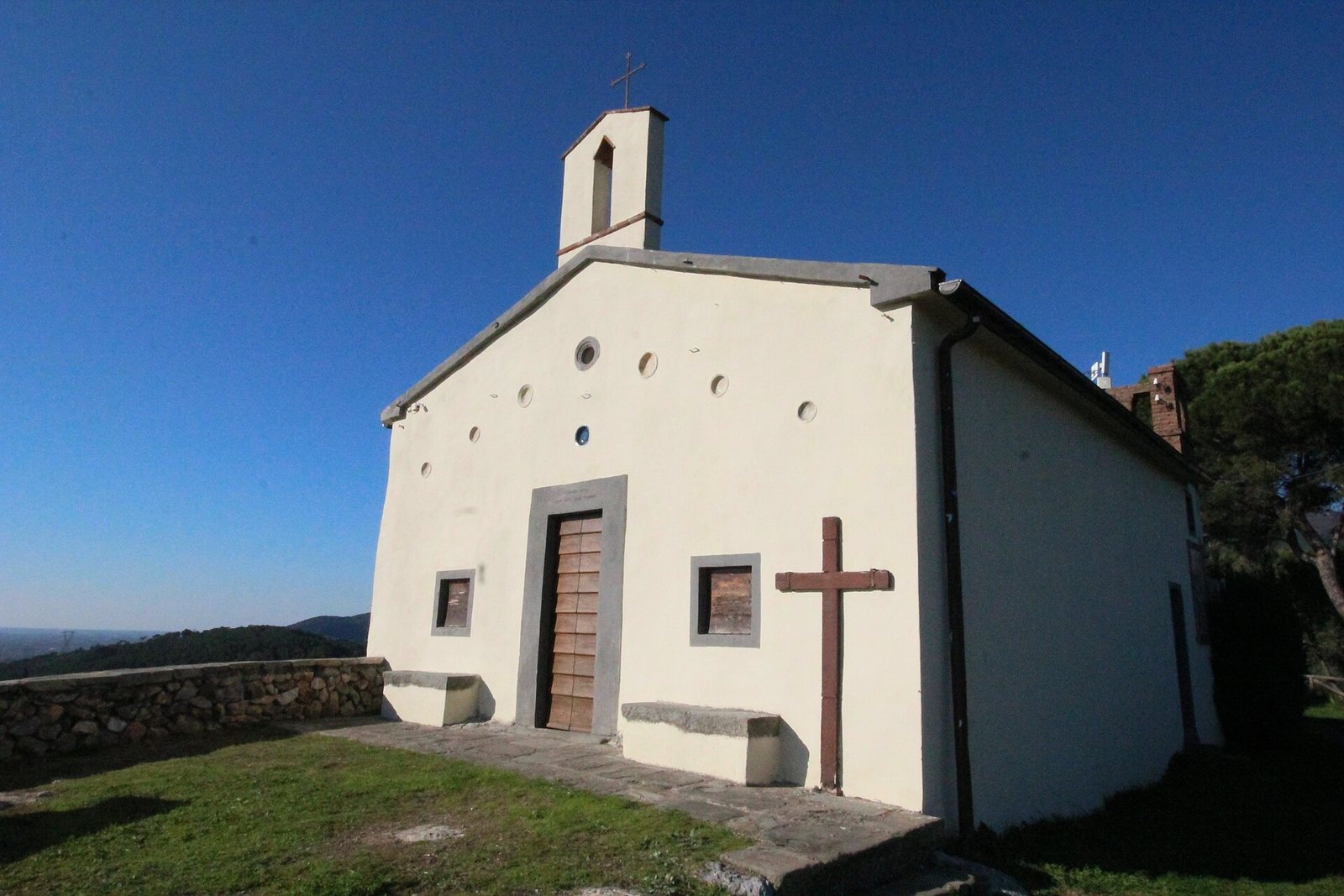
The small oratory stands on the summit above the center of San Giovanni alla Vena. It was probably built over the foundations of an older structure, which some have identified as the castle associated with local tradition. The 1944 blast destroyed the roof, damaged the walls and reduced the altar to rubble. After the 2017 explosion, only the north wall remained intact; the building was subsequently reconstructed. A large white cross, illuminated at night, marks the oratory and can be seen from below. A terrace at the front overlooks the plain.
Cross and furnishings
Cross associated with Enrico di Tedice
A cross associated with Enrico di Tedice, a medieval Pisan artist, was transferred to the oratory in 1723 from the chapel of the Madonna of the Rosary in the parish church of San Giovanni Evangelista.
Altar and Last Supper painting
The stone altar and wooden structure bearing the Last Supper painting were brought to the oratory after its postwar reconstruction. The ancient crucifix that was stolen in 1931, later recovered and restored, is now above the main altar of the parish church.