Sant Julià Castle: A Late-Nineteenth-Century Military Fortification in Spain
Site at a Glance
- Rating
- 4.4
- Popularity
- Low
- Country
- Spain
- Primary era
- Modern
- Eras represented
- Modern
- Civilizations
- Spanish
- Site type
- Military
- Remains
- Fort
On this page9 sections
History
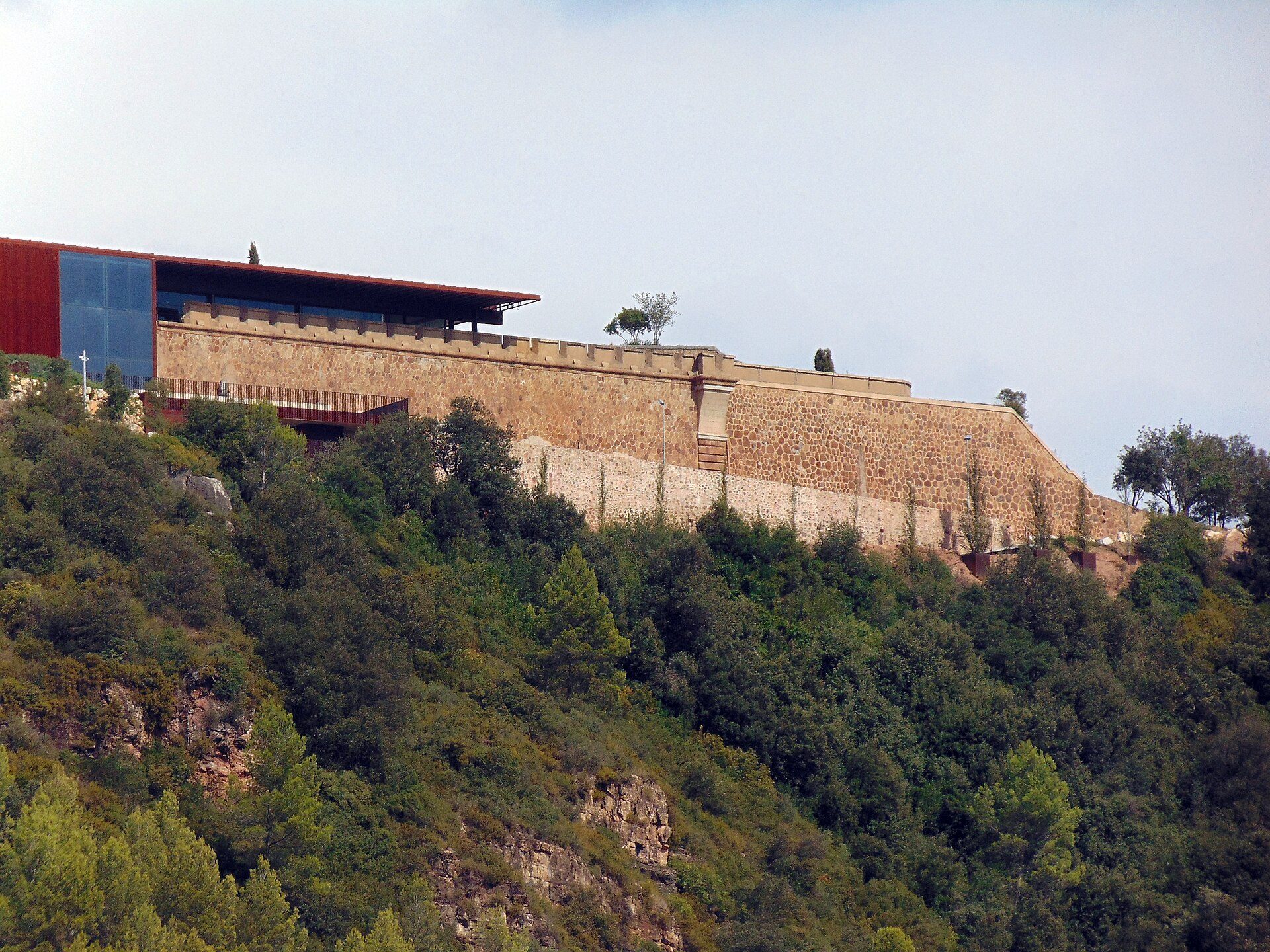
Sant Julià Castle is a late-nineteenth-century military fortification in Spain, located at Sant Julià de Ramis near Girona. Construction began in 1893 and continued until 1912 as Spain strengthened the principal Pyrenean passes in response to the post-1870 military situation and the development of more powerful rifled artillery. The fort followed the defensive system associated with General Séré de Rivières, a French military engineer whose designs emphasized artillery batteries, ditches, infantry fire positions, and protected underground communications. The castle is described as the only Catalan example of this system.
Construction and military use
The fort was designed as part of a broader border-defense policy based on Séré de Rivières principles. Its military role combined artillery positions above ground with protected infantry defenses and underground communications. A garrison arrived in 1916, four years after construction was completed.
War damage and later reuse
In 1939, during the retreat of Republican troops toward France at the end of the Spanish Civil War, an attempt was made to blow up the fort. The explosion affected the entrance, which remained damaged in that condition. After the war, the complex first served as a depot for armaments collected in the Girona area and later became a munitions depot.
The fort closed in 1963. In 1991, the Ministry of Defence sold it to a commercial company, after which little work was carried out and the site became abandoned. For many years, mushroom cultivation altered parts of the interior. An archaeological intervention took place in 2009 within a restoration project intended to establish an international contemporary-art centre. Sant Julià Castle is designated a national cultural-interest property as a historic monument.
Remains
Outer defenses and artillery positions
Trapezoidal fort and ditch
The fort has a trapezoidal plan with a perimeter of approximately 660 metres. A ditch surrounds the complex, with a masonry counterscarp, the outer retaining or defensive wall on the far side of the ditch. The principal facade and the surviving main entrance stand on the west side. A complete caponier, a protected structure projecting into or flanking a ditch, occupied the northern front, while a half-caponier defended the east. The gorge caponier was probably destroyed at the end of, or shortly after, the 1936–1939 war.
Artillery battery
A large artillery battery rises above a line of fire intended for infantry. The artillery sector is divided into three batteries containing fourteen barbette positions, open gun platforms from which artillery could fire over a parapet. Each position has an associated traverse shelter, a raised or thick defensive structure designed to protect the guns and communications from enemy fire. Caponiers and galleries with loopholes, narrow openings through which defenders could fire, reinforced the defensive arrangement.
Underground military complex
The internal departments lie below the present ground level and occupy three levels linked by an extensive network of corridors, galleries, and stairways. Approximately forty rooms served as barracks, stables, supply facilities, latrines, an infirmary, officers’ quarters, and other military purposes. The corridors have barrel-vaulted ceilings and loopholes, linking the living, storage, and defensive spaces within the fort.
Visible masonry and later alterations
Above ground, the surviving structures include the main walls, entrances with elliptical vaults, and a parapeted wall walk. This protected passage along the fortification wall is shielded by a parapet and fitted with merlons. The damaged entrance preserves the physical effect of the 1939 explosion, while interior modifications reflect the later period of mushroom cultivation.