Sant’Isidoro a Capo le Case: A Franciscan Church, Monastery, and College in Rome
Site at a Glance
- Popularity
- Medium
- Country
- Italy
- Primary era
- Early Modern
- Eras represented
- Early Modern, Modern
- Civilizations
- Papal States
- Site type
- Religious
- Remains
- Monastery
On this page15 sections
History
Sant’Isidoro a Capo le Case is a Roman Catholic church, monastery, and Franciscan college on Rome’s Pincian Hill in Italy. Begun in 1622, the complex includes a Baroque church and became an important center of Irish Franciscan life. It follows the Roman Rite, the principal liturgical tradition of the Latin Catholic Church, and belongs to the Diocese of Rome and the parish of Sant’Andrea delle Fratte.
Foundation and Irish college
The project followed Pope Gregory XV’s canonization of Isidore of Madrid, also known as Isidore the Farmer, and four other saints in 1622. Spanish friars of the Discalced Franciscan order, a branch committed to an austere way of life, had come to Rome to establish a convent for Spaniards and a church dedicated to Isidore. A shortage of money stopped work in 1624, and the friars left the city.
In 1625, the unfinished complex passed through the Franciscan leadership to the Irish Franciscan Luke Wadding. Irish friars had left Ireland because of persecution by British authorities. A gift from the nobleman Ottaviano Vestri di Barbiano supported the monastery’s foundation, and Pope Urban VIII’s 1625 bull recorded the gift. Under Wadding, the institution became Saint Isidore’s College. Urban VIII formally recognized its school of studies as the Pontifical Irish College, with Cardinal Ludovico Ludovisi as patron.
The college trained missionaries who later served in the Americas and Australia. Its professors included Hickey, Patrick Fleming, and Ponce, followed some years later by the theologian Bonaventure Baron. Francis O’Molloy succeeded Wadding at St Isidore’s, while John Punch served as superior both there and at the Irish College in Rome. In 1656, the Franciscans established a novitiate, where new members prepared to join the order, at Capranica near Sutri. Former students later recognized as saints or blesseds included Humilis of Bisignano, Bonaventure of Barcelona, and Charles Meehan; Fleming was also an alumnus.
Suppression and renewed Franciscan life
During Napoleon I’s rule, the French emperor suppressed the monastery. From 1810 to 1820, its buildings housed the Nazarenes, a group of nineteenth-century artists known for religious subjects. Monastic life resumed after Napoleon’s defeat. James McCormack, the monastery’s Franciscan superior, served during the Napoleonic invasion. Via degli Artisti, the street alongside the convent, recalls the artists’ presence.
Continuing Irish presence
The church’s dedication was extended to include Saint Patrick, Ireland’s patron saint. In 2008, the work of a Franciscan college from Grottaferrata, together with its library and archive, transferred to Sant’Isidoro. Since 2017, following the designation of San Patrizio at Villa Ludovisi as the national church of the United States, Sant’Isidoro has served as the National Church of Ireland in Rome.
Remains
Monastic buildings
Cloisters
The convent is arranged around two cloisters, covered walkways surrounding courtyards. Antonio Felice Casoni designed the smaller Spanish cloister in 1626. The other, known as the Wadding cloister, retains wall paintings dated to 1701–1702.
Hall
A large hall in the complex preserves frescoes painted in 1672 by the Franciscan Emanuele da Como.
Church
Plan and entrance
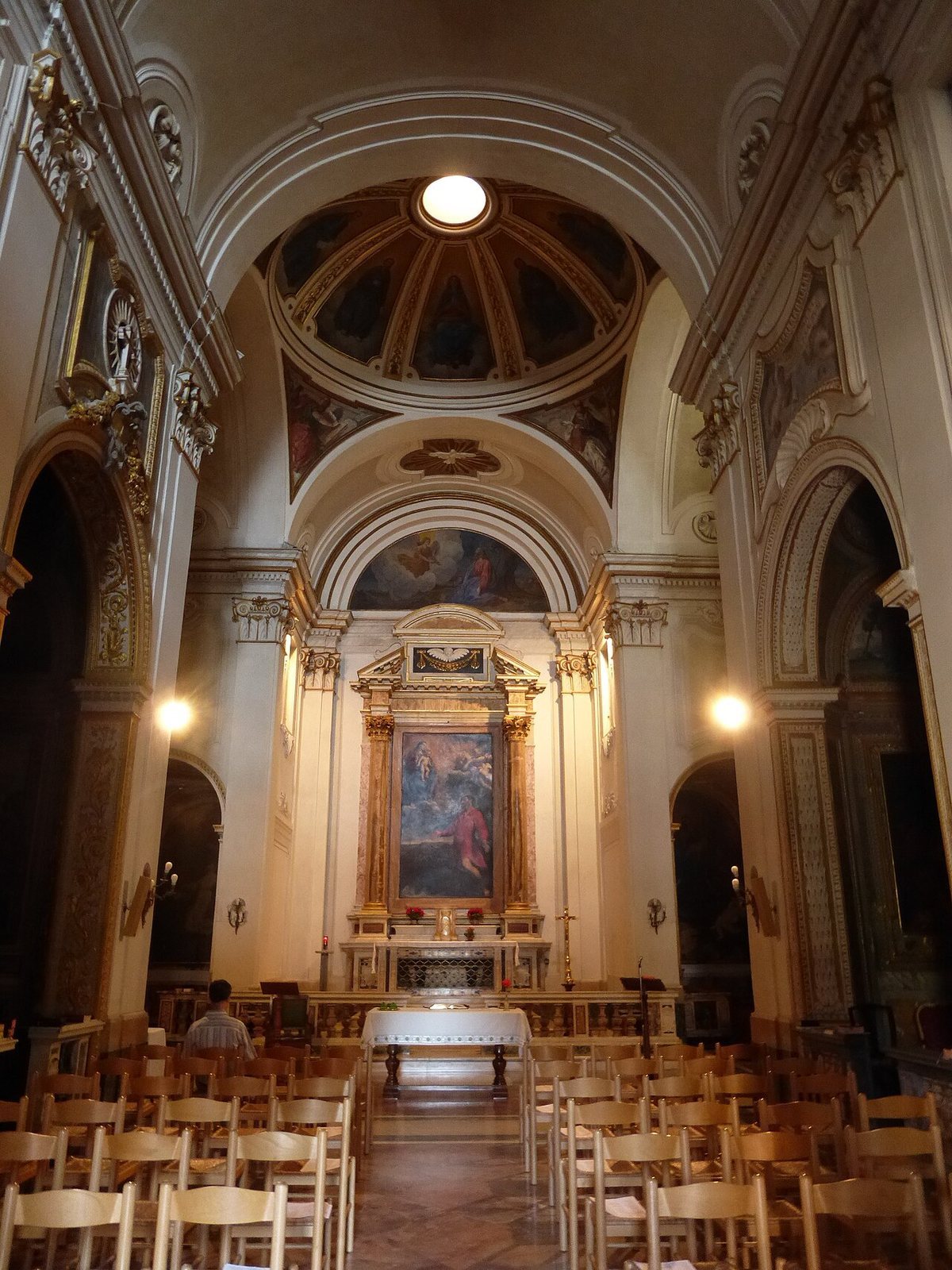
The Baroque church has a single main space, or nave, laid out in the shape of a Latin cross. A barrel vault, a continuous curved ceiling, covers the nave. Two side chapels open from it, with another pair in the choir. A flattened dome rises where the crosswise arm, or transept, meets the main space.
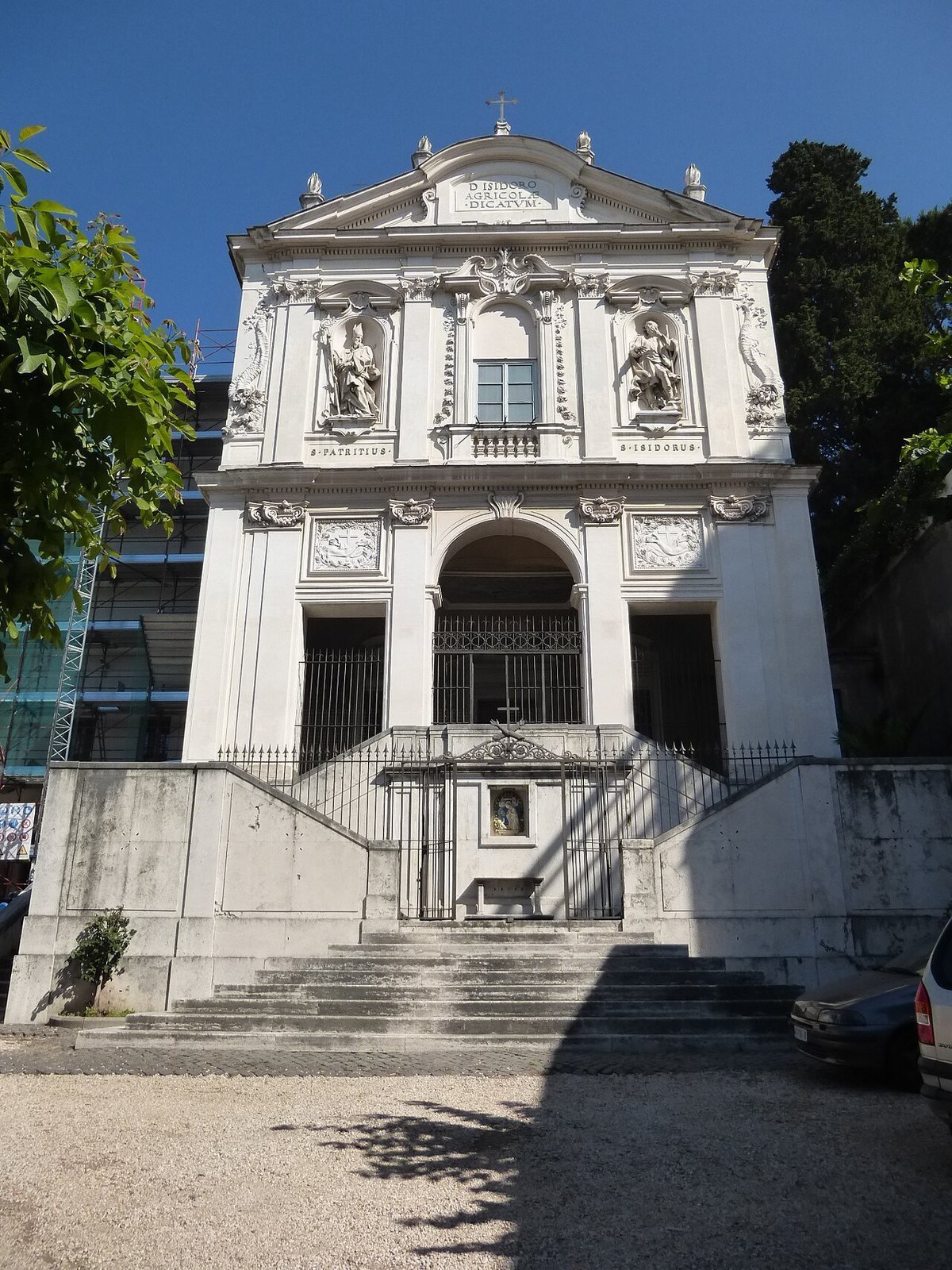
Antonio Felice Casoni is credited with the church’s initial design. Domenico Castelli is associated with the choir and entrance porch. The porch and its double-ramped staircase were completed before Carlo Francesco Bizzaccheri designed the façade, which was built in the early eighteenth century. Statues of Saints Patrick and Isidore stand on the façade.
Cappella Da Sylva
The Cappella Da Sylva lies to the right of the high choir and was designed, or rebuilt to a design, by Gian Lorenzo Bernini in 1663. Its dome and curved triangular supports, called pendentives, are gilded. An elliptical altarpiece depicts the Immaculate Conception, the Catholic teaching that Mary was preserved from original sin from the beginning of her life. The chapel also contains frescoes by Carlo Maratta.
Funerary monuments on the chapel’s right wall commemorate Rodrigo Lopez De Sylva and his wife Beatrice; those on the left honor their son Francesco Niccolò and his wife Giovanna. The dedication inscriptions are reversed. Low-relief portraits, sculptures that project only slightly from their backgrounds, sit in red jasper frames among allegorical figures. Peace holds an olive branch and Justice a bundle of rods called a fasces, an ancient Roman emblem of authority. Charity and Truth are shown bare-breasted, with Charity squeezing her breasts. Black-marble drapery connects the portraits and figures. The reliefs were probably made in collaboration by Paolo Bernini, Giulio Cartari, and Paolo Naldini. In 1860, friars covered the figures’ breasts with black-painted bronze coverings; these were removed during restoration in 2002.
High altar and ceiling paintings
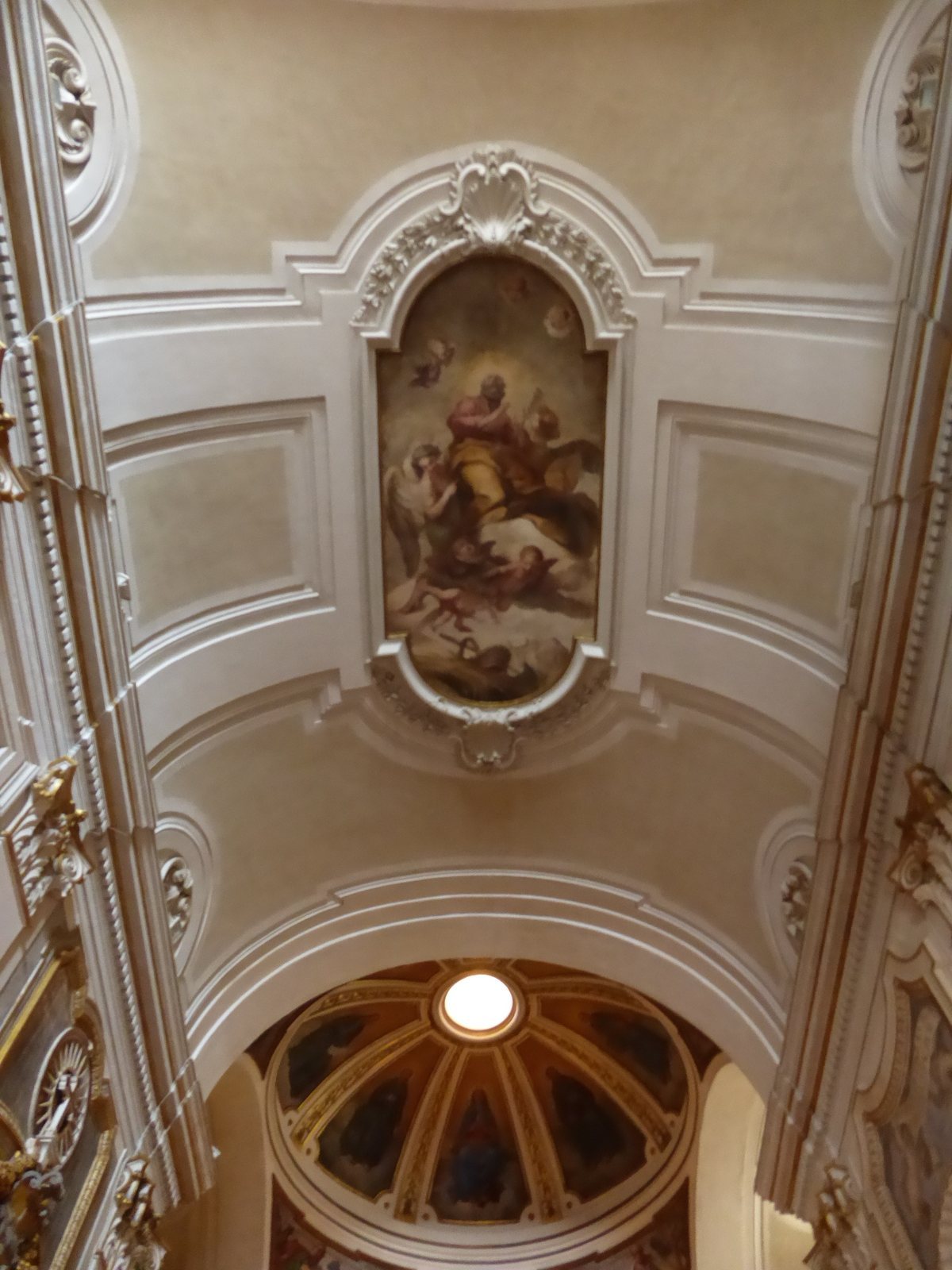
The high altar painting by Andrea Sacchi, dated around 1622, shows the Virgin and Child appearing to Saint Isidore. A ceiling painting of Isidore in glory was made by Charles-André van Loo in 1729. The painting in the dome is attributed to Domenico Bartolini.
Side chapels
The first chapel on the right contains Carlo Maratta’s scenes from the life of Saint Joseph, painted in 1650–1652. In the second chapel on that side, Pietro Paolo Naldini’s scenes from the life of Saint Anne date to around 1657. The second chapel on the left contains Giovanni Domenico Cerrini’s painting of Saint Anthony, dated 1680.
Other paintings
Works associated with the church include Maratta’s The Marriage of the Virgin, The Flight into Egypt, The Death of Saint Joseph, The Nativity of Jesus, The Dream of Saint Joseph, The Glorification of Saint Joseph, and The Exaltation of the Holy Cross. Pietro Paolo Ubaldini’s paintings include The Marriage of Saints Anne and Joachim, The Eternal Father, The Virgin and Child with Saint Anne, The Birth of the Virgin, and The Presentation of the Virgin in the Temple. Other works include the anonymous eighteenth-century paintings The Glorification of Saint John Nepomuk and The Stigmata of Saint Francis, as well as Cerrini’s The Christ Child Appearing to Saint Anthony of Padua, dated 1655.
Memorials and burials
The church contains Giovanni Maria Benzoni’s monument to Isabella Ball Thomas and her daughter Isabella, John Hogan’s 1838 epitaph to Amelia Curran, and a 1628 monument to Alfonso Manzanedo de Quiñones with a bust attributed to Giuliano Finelli. Francesco De Rossi made the monument to Antonio Borani, and Vincenzo Gajassi made the 1846 monument to Ottavia Bryan. Luke Wadding and Archbishop Aodh Mac Aingil are buried in the church crypt, a burial chamber beneath the church. Bonaventure Baron is buried in the College.