Sant’Agostino in Ancona: A Former Augustinian Church
Site at a Glance
- Rating
- 4.5
- Popularity
- Very Low
- Country
- Italy
- Primary era
- Medieval
- Eras represented
- Medieval, Early Modern, Modern
- Civilizations
- Italian
- Site type
- Religious
- Remains
- Church
On this page13 sections
History
Foundation and medieval church
Sant’Agostino in Ancona is a former Roman Catholic church in Ancona, Italy, founded by Augustinian friars in 1341 as Santa Maria del Popolo. The Augustinians are a Catholic religious order shaped by the rule and writings of Augustine of Hippo. Built in the Gothic style and dedicated to Augustine, the church was completed in 1460. It stood where pilgrims traveling from the coast toward Rome converged.
Renaissance and eighteenth-century changes
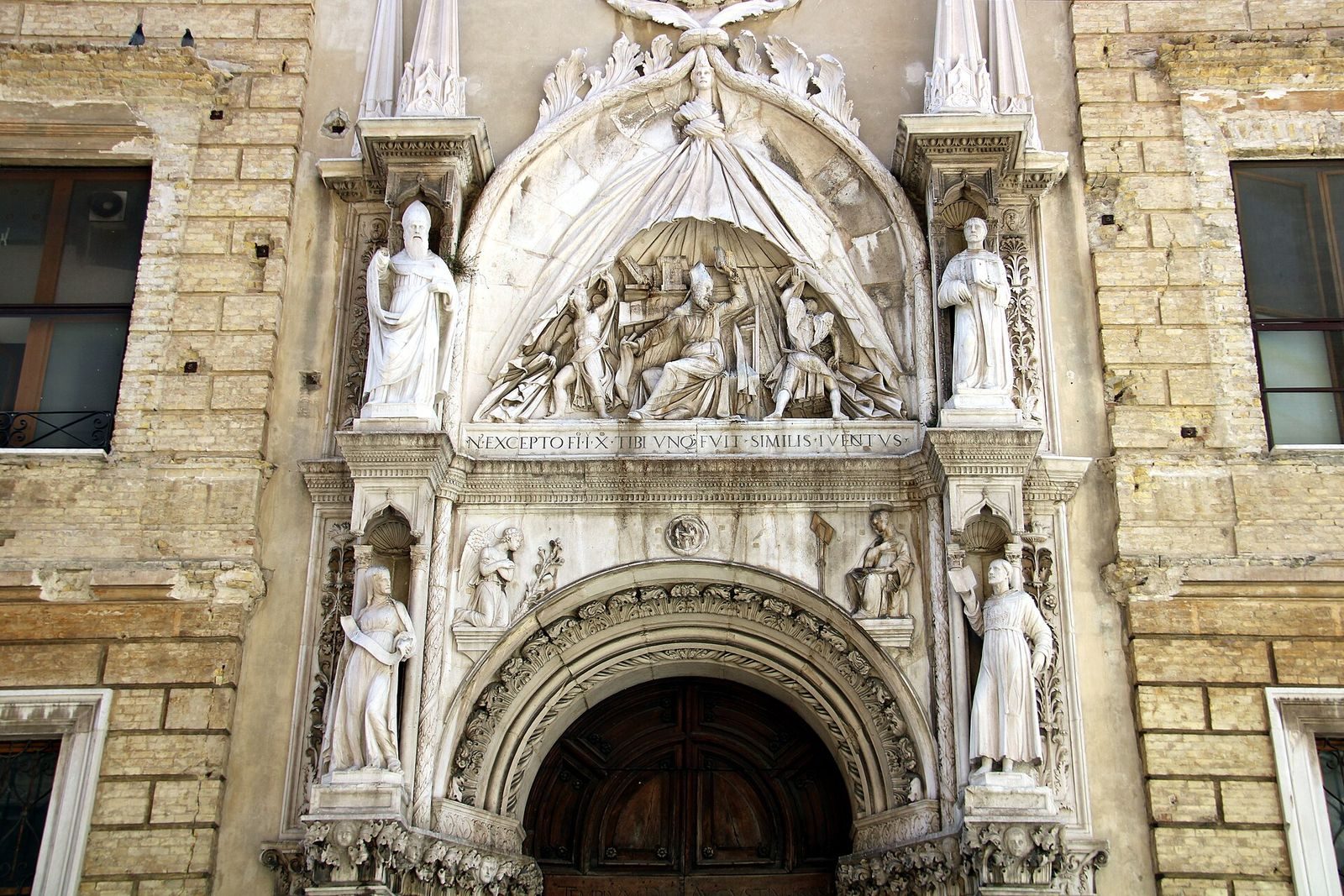
In 1460, sculptor Giorgio Orsini da Sebenico received the commission for the church portal. After his death, Michele di Giovanni da Milano and Giovanni Veneziano completed the work in 1493–94, adding two carved reliefs beyond the initial design.
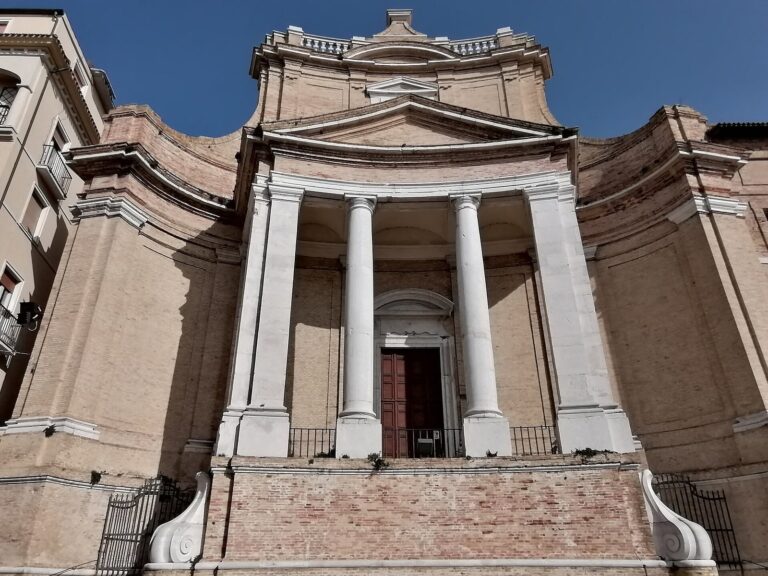
From 1751 to 1764, architect Luigi Vanvitelli led a comprehensive renovation that lengthened the church and reshaped its interior. He retained the fifteenth-century portal while making extensive changes to the building.
Secularization and later use
The church was deconsecrated in 1860 amid the secularization that followed Italian unification, and it became the Cialdini Barracks. Its interior was divided into floors and rooms, while fixed fittings and movable furnishings were distributed among churches in Ancona and nearby areas.
The former church’s later association with telecommunications drew on Guglielmo Marconi’s 1904 experiment near the old lighthouse on Colle dei Cappuccini. There, he tested how solar rays affected the transmission of radio waves. The concept for a museum devoted to telecommunications, especially radio, was connected to that experiment.
Remains
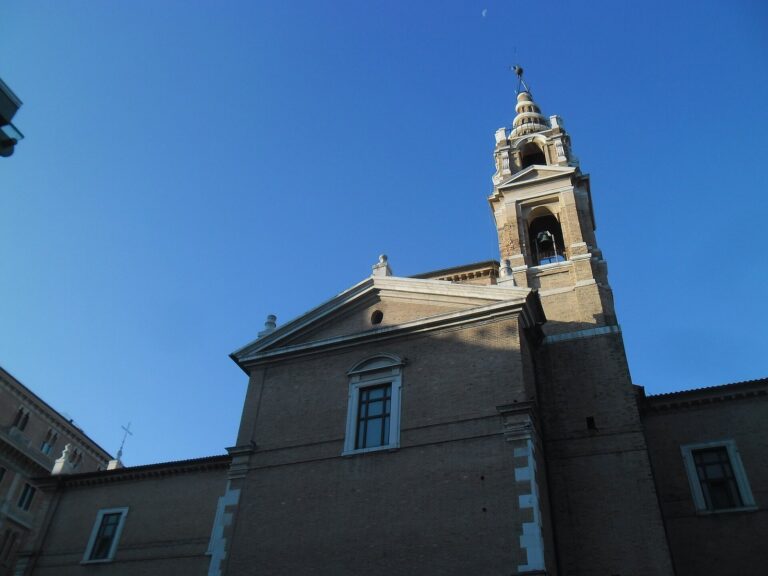
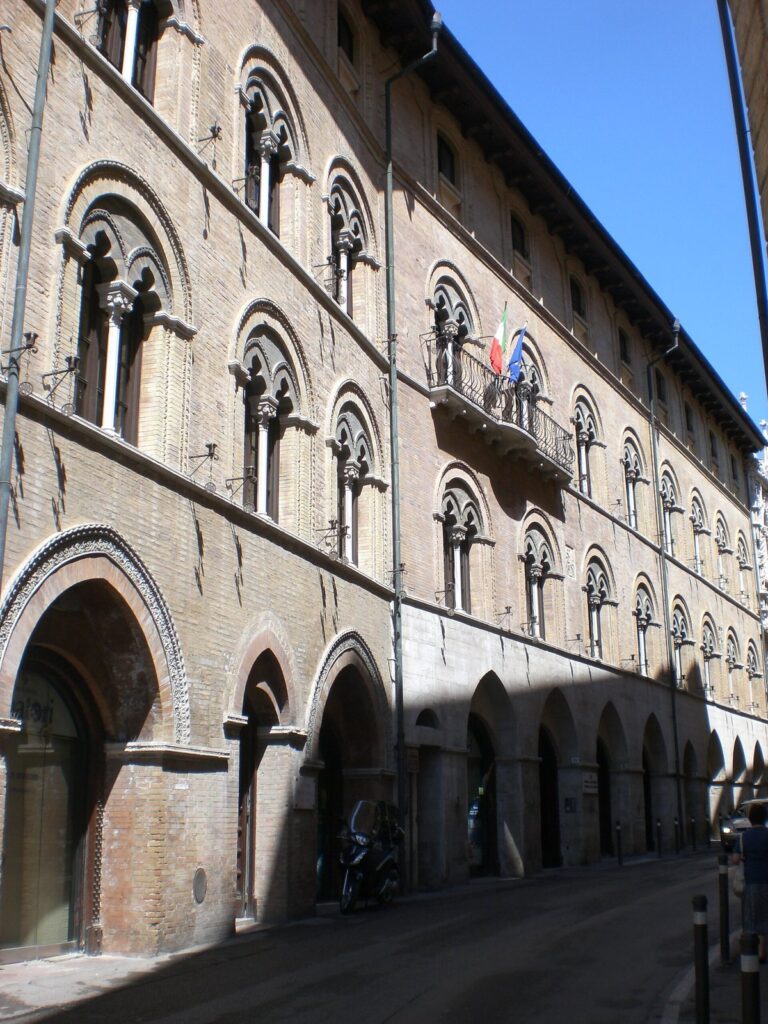
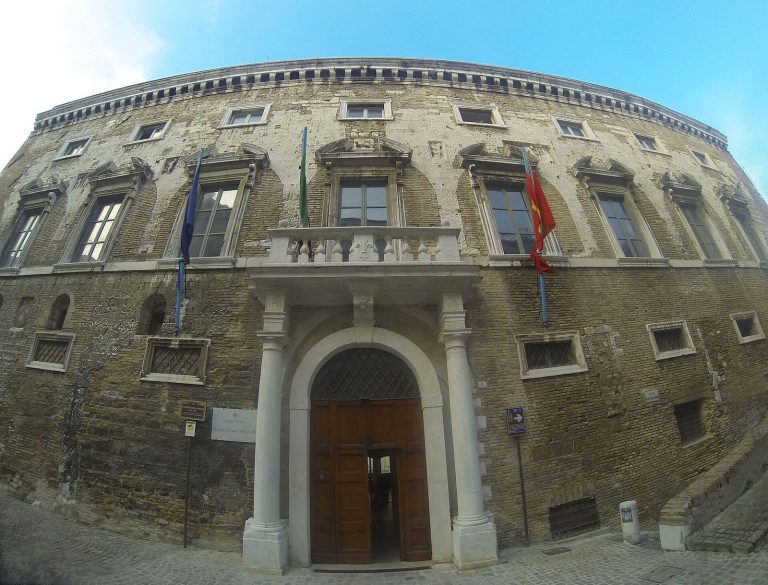
The surviving building combines traces of its Gothic origins with later alterations. Its original façade has been destroyed, the belfry shortened, and the exterior reshaped to resemble a palace. The carved portal and wooden entrance door remain among the church’s most distinctive surviving features.
Church fabric and entrance
Portal and doorway
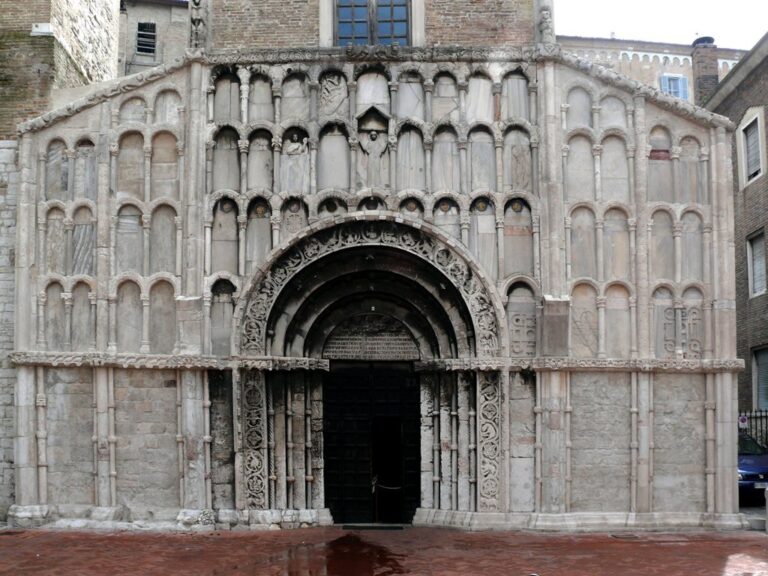
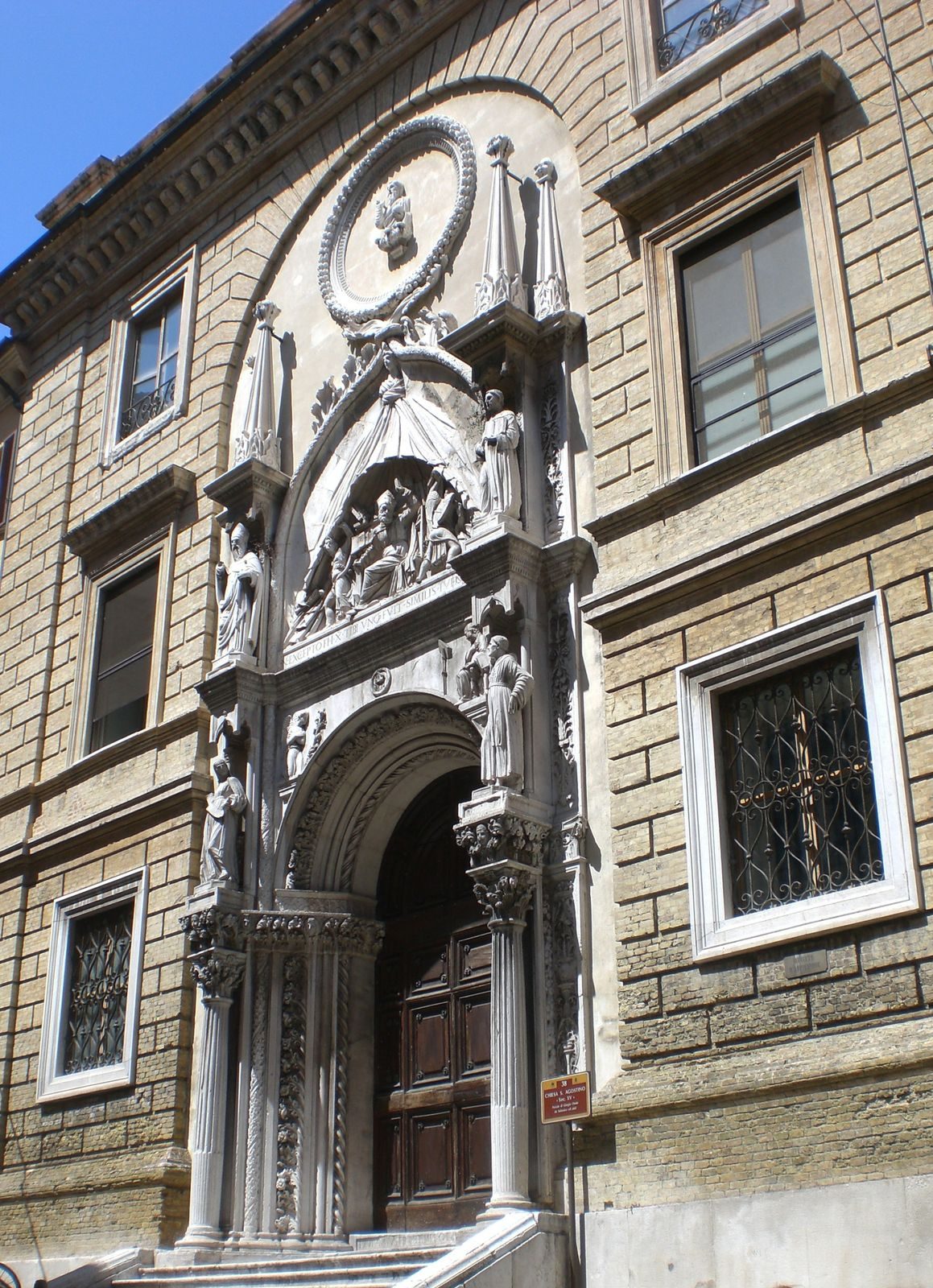
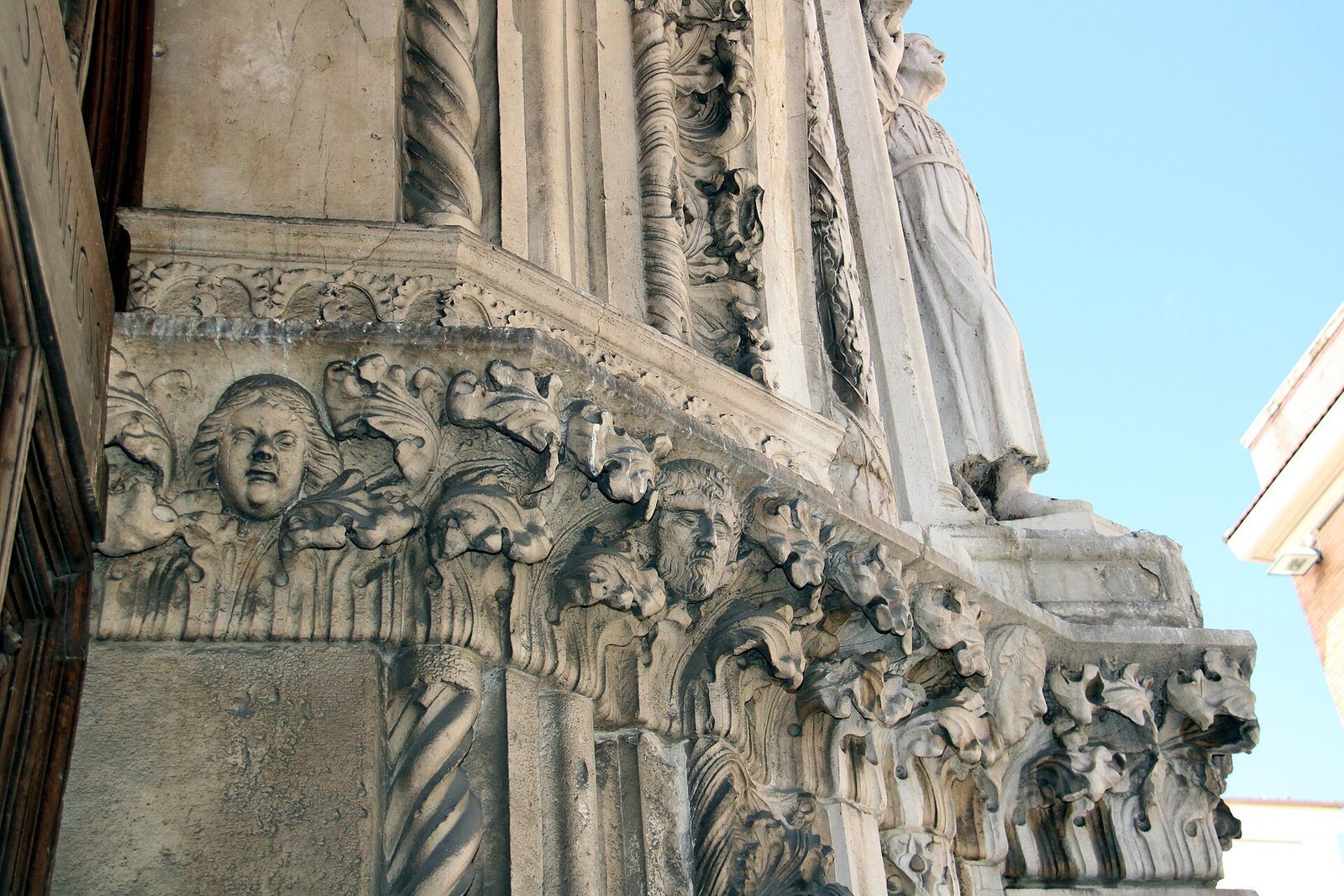
The portal combines Gothic and Renaissance forms associated with the Adriatic Renaissance, a regional blend of those artistic styles. Figures of Saint Monica, Saint Nicholas of Tolentino, Saint Simplician, and Blessed Augustine Trionfi appear in its carved decoration. In the curved area above the entrance, a high-relief scene shows Augustine rejecting heretical books while presenting the Scriptures. Two shallower reliefs decorated with grotesque figures flank the portal.
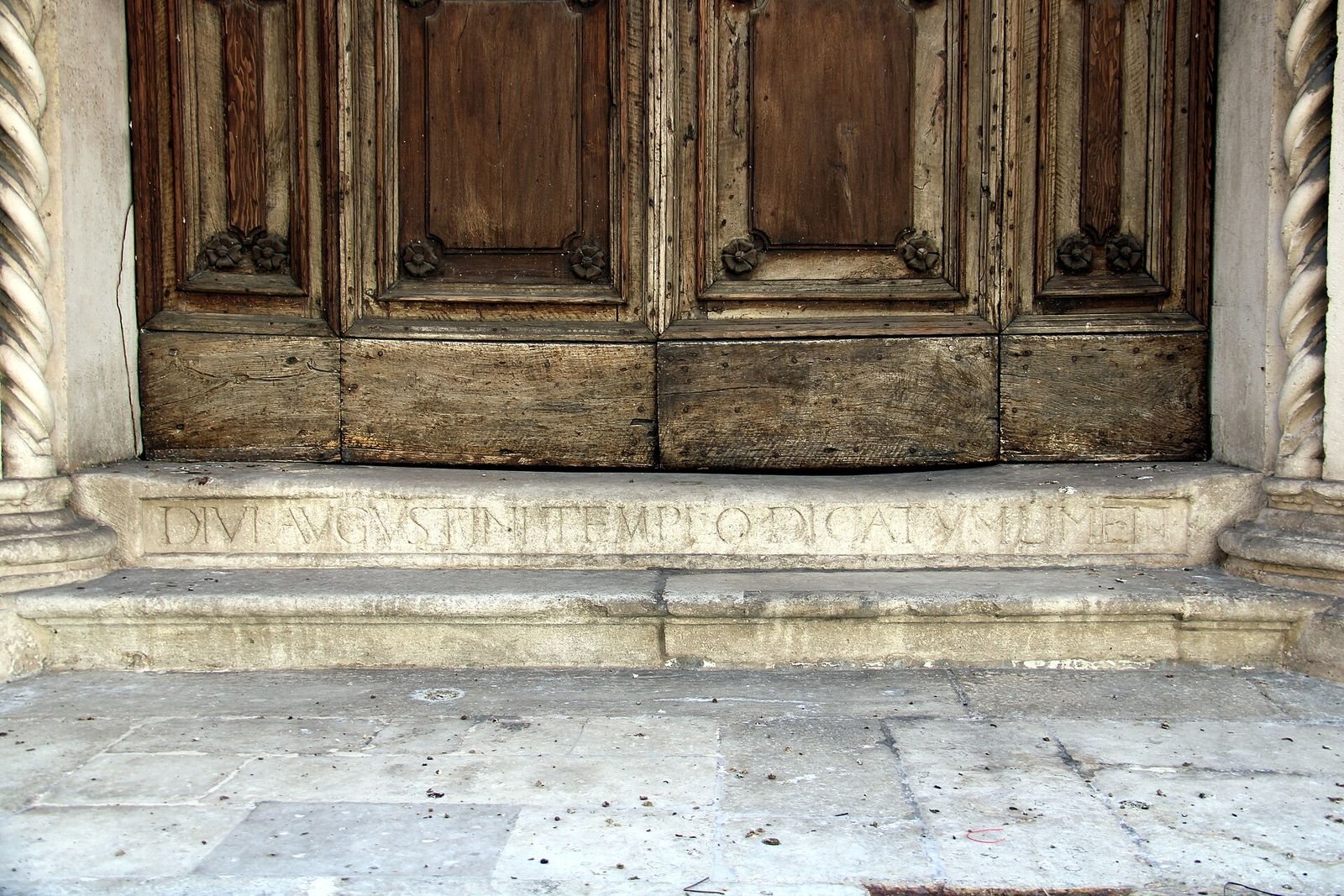
A wooden door dated 1655 sits within an arched recess. The surrounding wall is finished to imitate the joints between stone blocks. During Vanvitelli’s renovation, the rose window was closed, and a bust of the Eternal Father by Orsini, once positioned above the portal, was placed within it.
Interior and surviving spaces
The church interior was divided into separate floors and rooms after its conversion to barracks. The apse was cut off to make way for road traffic and adapted as a stairwell in a residential building, which was later destroyed during the Second World War. At the rear, a room formerly used as the Oratory of Saint Nicholas of Tolentino, a small space for prayer, survives as an orthopedic workshop. It retains a column and an intermediate gallery with original ribbed cross vaults, vaulted ceilings reinforced by intersecting ribs. Frosted glass now screens these features from outside.
Former cloister and museum spaces
Spaces in the former Augustinian cloister house the Rear Admiral Guglielmo Marconi Museum Hall and related displays. They include a simulator for a Sauro-class submarine, a class that included the Guglielmo Marconi (S 521), and the Column Room, where a radio-history display ranges from 1895 to mobile phones. Another room, named for Admiral Salvatore Pelosi, contains a functioning amateur-radio station provided by the Ancona branch of the Italian Radio Amateurs Association. The former cloister also contains a workshop and a conference room.
Paintings formerly in the church
Baptism of Christ
Pellegrino Tibaldi painted Baptism of Christ on commission from Giorgio Morato, a merchant from Ancona’s Armenian community, in 1554–56. Its predella, the lower row of panels beneath an altarpiece, showed the Visitation, the Nativity of John the Baptist, and the Beheading of John the Baptist. During Vanvitelli’s renovation, the painting was separated from its frame and predella and placed in the choir. It remained there until 1860, when it was moved to San Francesco alle Scale, although it had been intended for the civic picture gallery. The painting is still at San Francesco alle Scale. Its three predella panels are now held, respectively, by the National Gallery of the Marches in Urbino, a private collection in Senigallia, and the Brera Picture Gallery in Milan.
Saint Francis Receiving the Stigmata
Cristoforo Roncalli’s painting, dating to about 1612–15, once stood at the altar of Saint Francis. It is now at the Monastery of San Silvestro Abate in Montefano.
Saint Augustine Altarpiece
Extensive fragments of Andrea Lilli’s altarpiece survive in the Francesco Podesti Civic Picture Gallery. Among them is a notable view of Ancona.