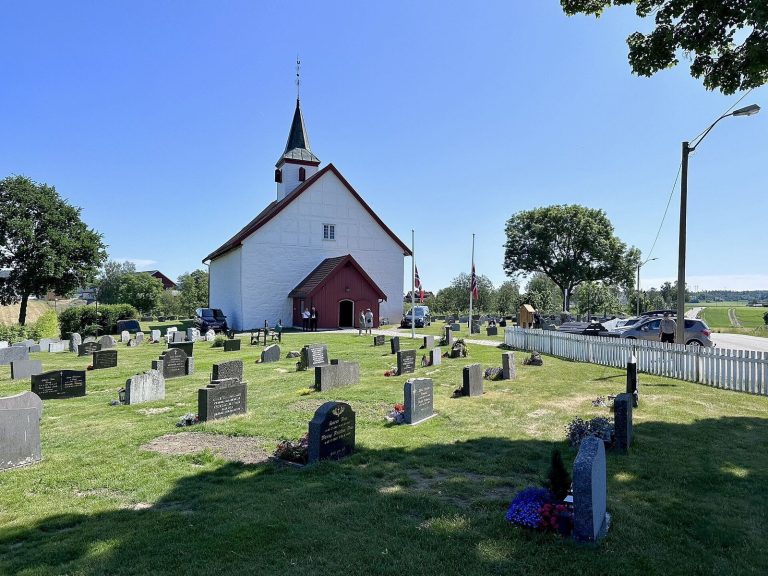
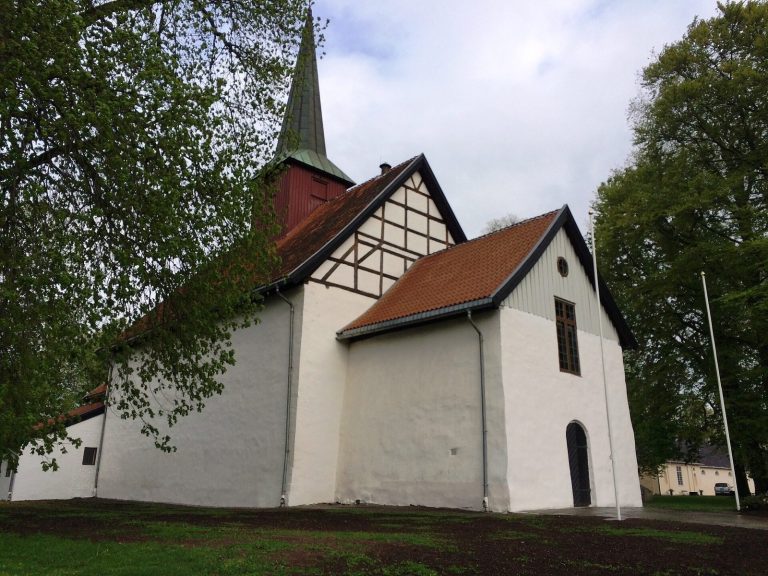
Løvøy Chapel: A Medieval Stone Parish Church in Norway
Site at a Glance
- Popularity
- Low
- Country
- Norway
- Primary era
- Medieval
- Eras represented
- Medieval, Early Modern, Modern
- Civilizations
- Danish, Norwegian
- Site type
- Religious
- Remains
- Chapel
On this page11 sections
History
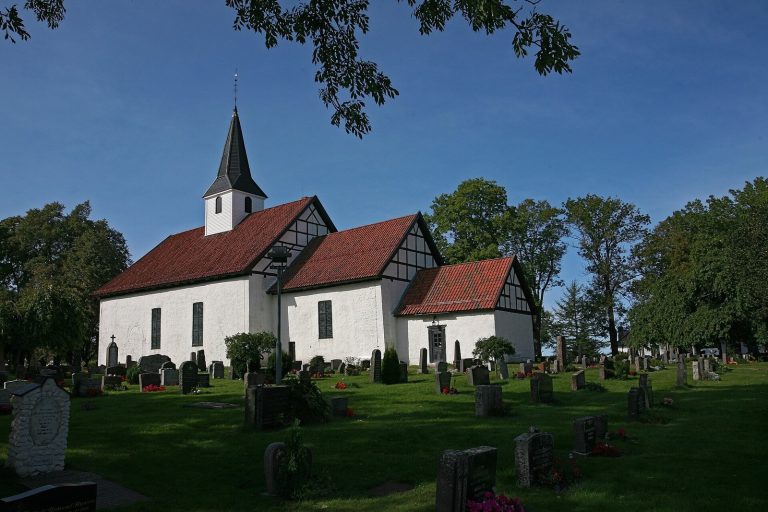
Løvøy Chapel is a medieval stone parish church on the Løvøya peninsula north of Horten, Norway. It is generally dated to the second half of the 13th century and was built as a Catholic church. Today it is an Evangelical Lutheran parish church of the Church of Norway, within the Diocese of Tunsberg, a regional church jurisdiction, and the Nord-Jarlsberg deanery, a smaller administrative district.
Medieval chapel and pilgrimage
A tradition assigns the chapel’s construction to the reign of Olaf Kyrre, king of Norway from 1066 to 1093, though its usual dating is later. Its earliest surviving written record is from 1398. Dedicated to St Hallvard, traditionally regarded as Oslo’s patron saint, and St Martin, it was known for most of its history as St Hallvard’s Church.
In Catholic times, the chapel was an important pilgrimage destination in eastern Norway. Pilgrims also stopped on Løvøya while travelling to Nidaros, the historic name for Trondheim and a major medieval Christian pilgrimage destination. The nearby St Olav’s Well drew visitors who believed its water could heal. St Olav refers to Olaf II Haraldsson, a Norwegian king venerated as a saint.
Decline and rebuilding
After the Reformation in 1536, the religious movement that ended Catholic church authority in Norway and established Lutheran structures, the chapel fell into disrepair and closed for worship. In 1598, Bishop Jens Nilssøn described it as deserted, with services stopped for years and local people attending Borre Church. Burials in the surrounding cemetery continued until the end of the 17th century, while pilgrims still visited the ruined chapel. In 1717, summer visitors came in large numbers and donated money towards repairs.
AP Styhr received permission to rebuild the church in 1720. The work was completed by 1723, the year he died, but the building again deteriorated. By the 19th century, only its roofless walls remained.
Protection and renewed worship
The ruins were protected in 1882. In 1886, the Society for the Preservation of Ancient Norwegian Monuments took ownership and responsibility for them. Restoration to secure the remains began in 1928 under Norwegian architect and antiquarian Gerhard Fischer. At the request of antiquarian and local associations, and with approval from the National Archives, Fischer prepared a plan for complete restoration in 1935. The work was completed in 1950, and the chapel returned to worship on 27 August that year. Its formal name changed from St Hallvard’s Church to Løvøy Chapel in 1962. It also has automatic protection under Norway’s cultural-heritage system.
Remains
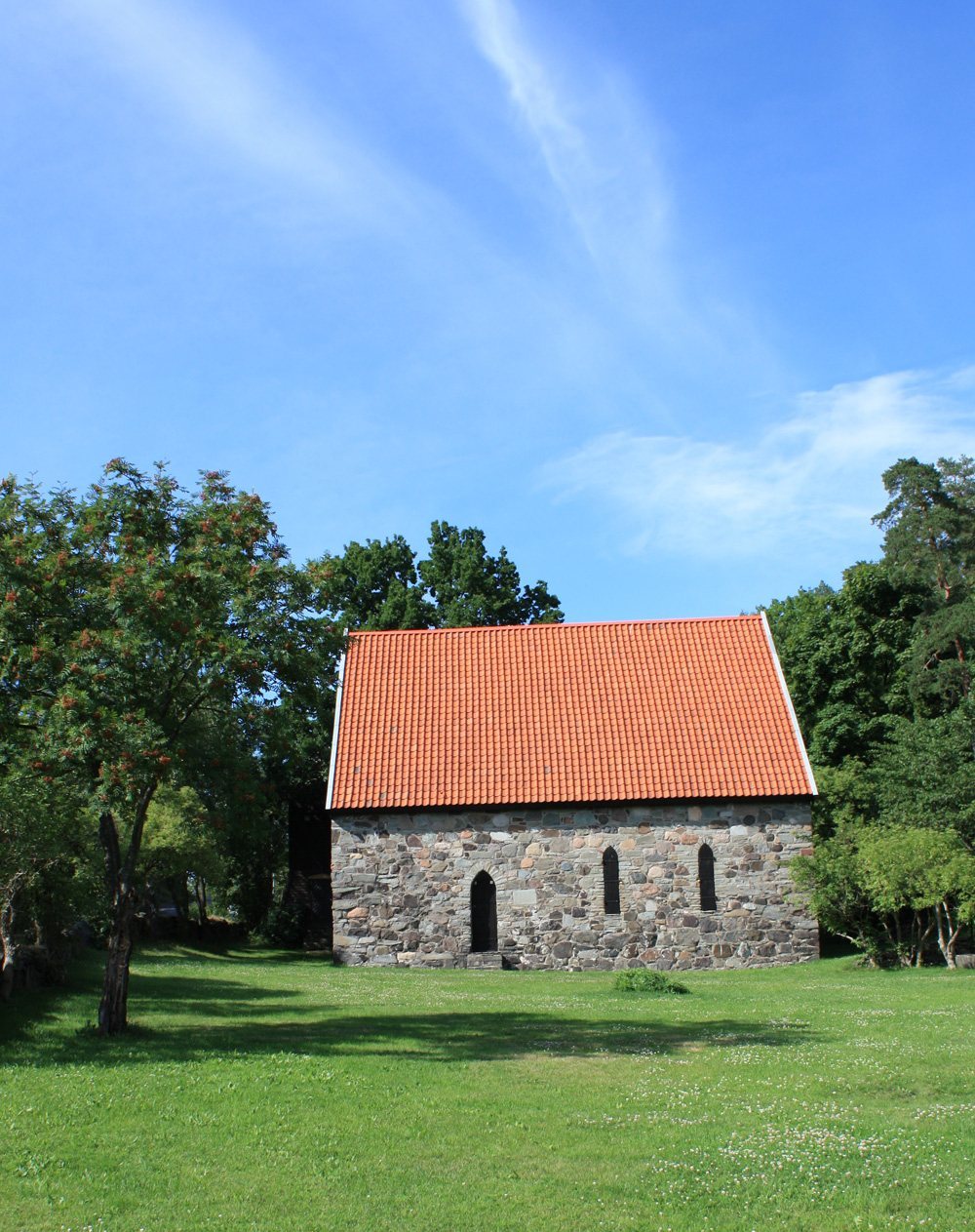
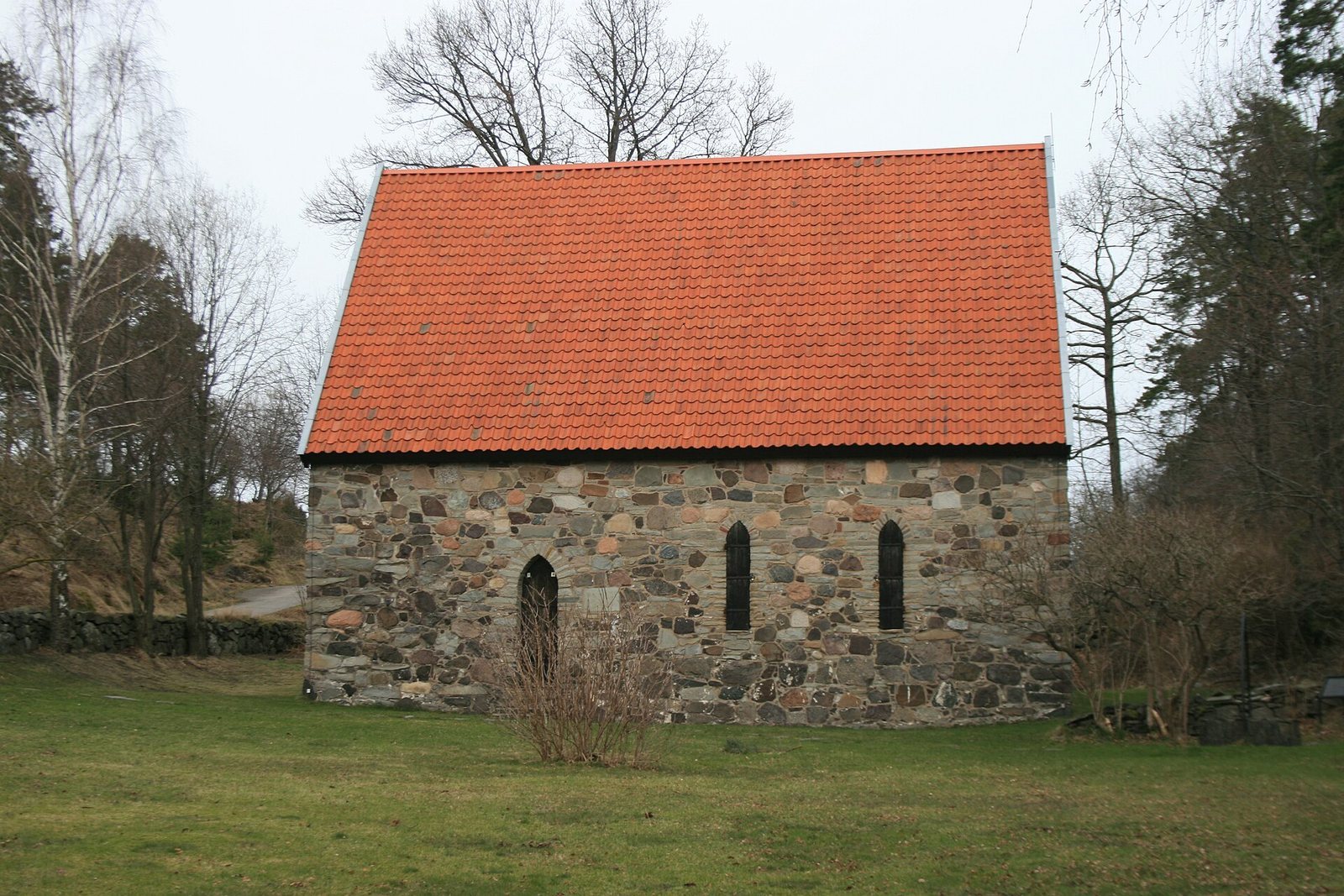
The restored chapel is a small rectangular building of local stone, with a traditional Norwegian long-church plan. In this form, the main worship space and choir are arranged along the building’s length.
The chapel
Plan and walls
The long walls measure just over 10 metres, and the end walls are 7 metres across. The main room is undivided, without a partition between the worship space and choir. Circular openings for light pierce the end walls, a feature of this church form also found in churches on Orkney and the Isle of Man. Before restoration, two end walls with round openings survived, while the side walls were partly collapsed; the restored chapel was based on these remains.
Altar and furnishings
The original stone altar remains in use. Its stone table has a marble top, and the altar slab was returned during the mid-20th-century restoration after serving for years as a threshold at Falkensten bruk. Much of the interior decoration is by Britt Bakken and Hans Gerhard Sørensen. Their work includes the pulpit and altar rail, a low barrier beside the altar. Sørensen’s cross-shaped mosaic altarpiece, depicting the Risen Christ, dates to 1970. A rotating baptismal font of Otta soapstone, made in 1969, bears four scenes from the life of Jesus. A handmade crucifix from Oberammergau in Germany hangs on the north wall, and an Italian figure of Christ purchased in Copenhagen stands at the back of the chapel.
Windows and organ
The stained-glass windows were made in 1977 by G.A. Larsen to designs by Hans L. Rasmussen. The organ was built by Vestfold Orgelbyggeri in the late 1960s and received an additional stop in 2010.
Bells and tower
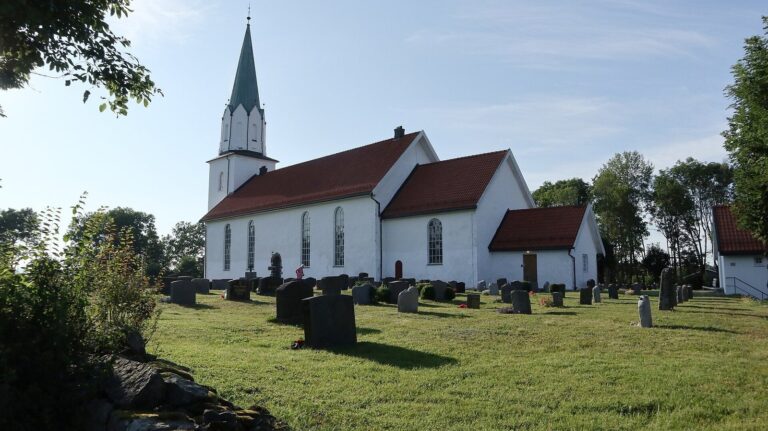
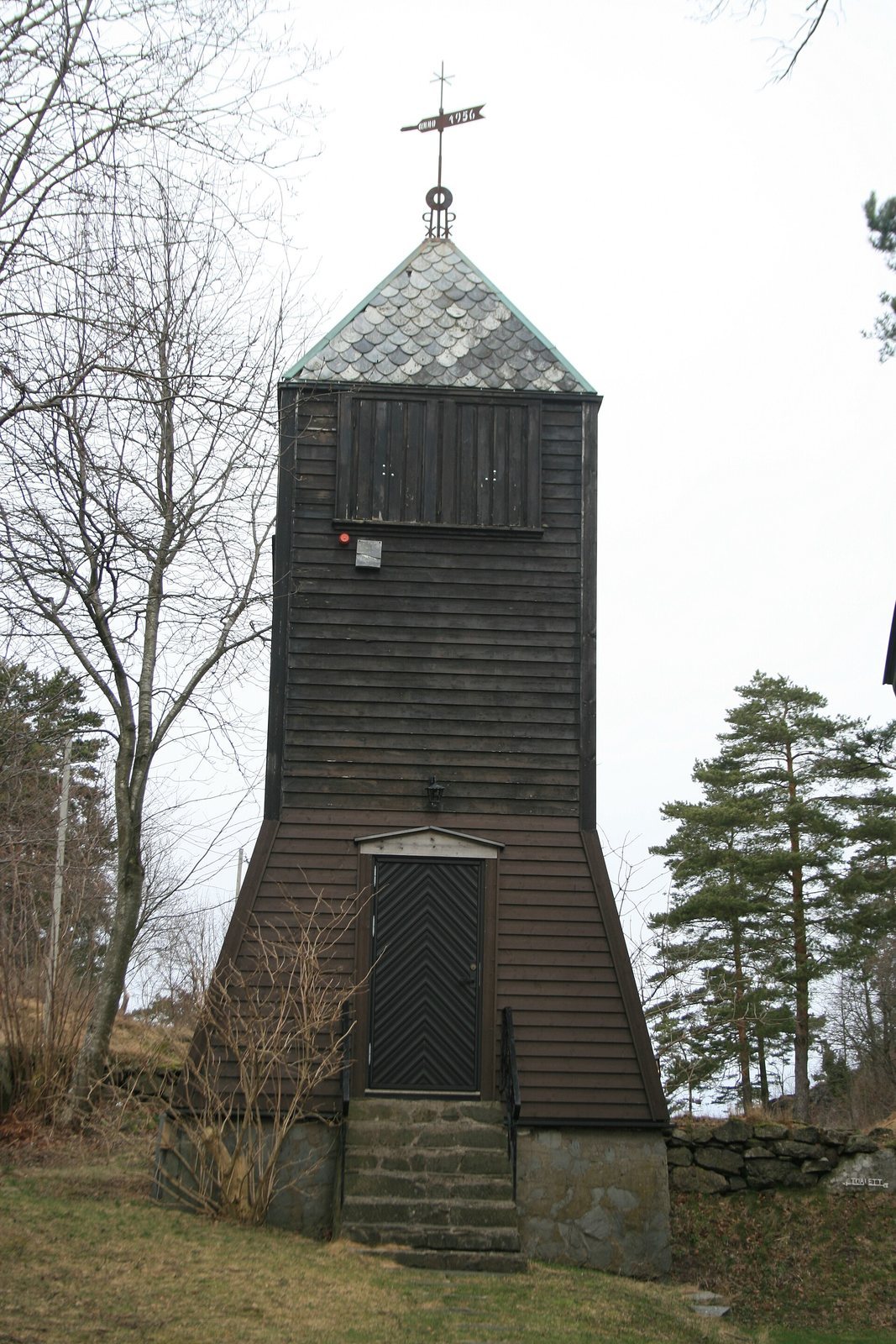
The chapel has two bells made by Olsen Nauen and a later bell tower.
St Olav’s Well
The well lies beside the chapel and is now walled shut.