Sanctuary of Santa Maria della Steccata: A Renaissance Marian Church in Parma


Site at a Glance
- Rating
- 4.6
- Popularity
- Medium
- Country
- Italy
- Primary era
- Early Modern
- External website
- Open
- Eras represented
- Early Modern, Modern
- Civilizations
- Duchy of Parma and Piacenza, Papal States
- Site type
- Religious
- Remains
- Basilica
On this page15 sections
History
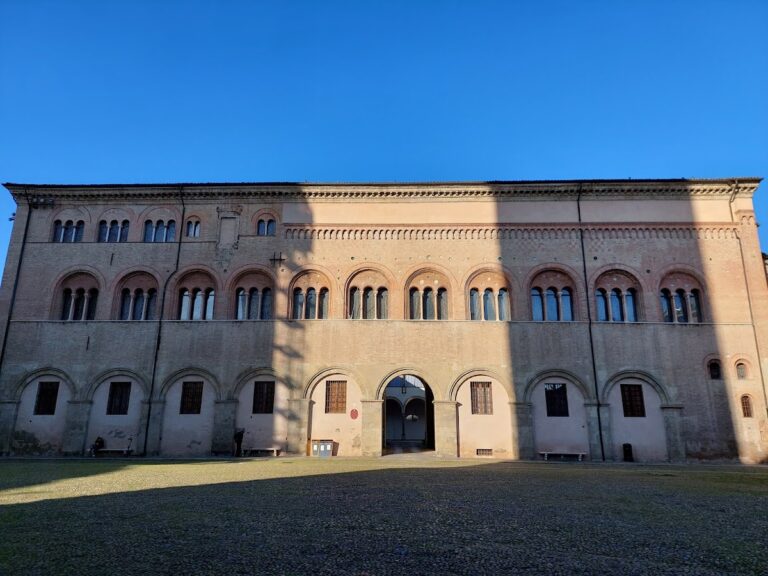
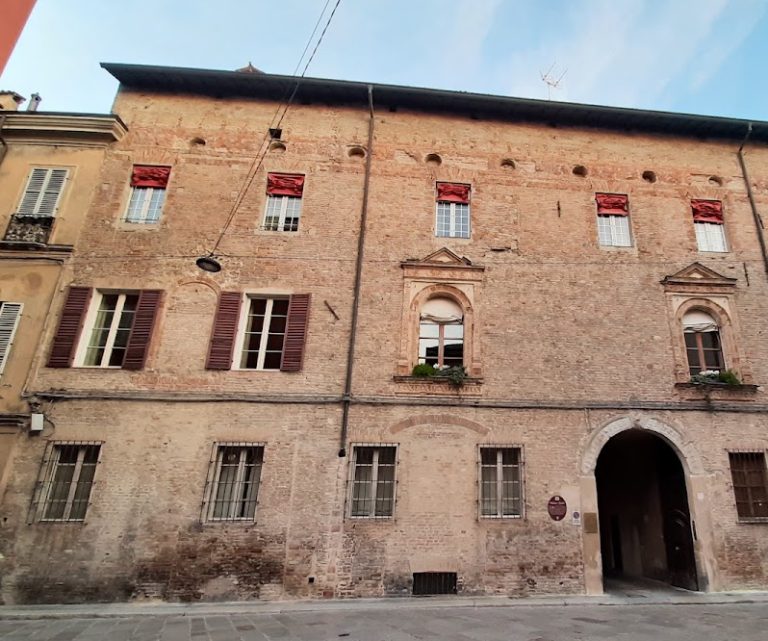
The Sanctuary of Santa Maria della Steccata is a Renaissance Marian church in Parma, Italy, constructed principally between 1521 and 1539 to protect and accommodate a venerated sacred image. Its centralized plan and prominent dome belong to Renaissance architecture, while later decoration and alterations introduced Baroque elements. Since 1718, the church has served as the magistral church, or principal church, of the Constantinian Order of Saint George.
Medieval origins and the title della Steccata
The sanctuary originated in a religious complex established in the late fourteenth century. An oratory stood here by 1392, and in 1492 the Knights of Malta had built or maintained a small chapel on the site. The original complex housed a revered image of Saint John the Baptist, regarded in local tradition as miraculous. Another tradition identified the sacred image as a fresco on the outside wall of a house on what was then Strada San Barnaba, now Strada Giuseppe Garibaldi.
The house later became the seat of the Confraternity of the Virgin Annunciate, which provided marriage dowries for poor unmarried girls who lacked paternal protection. By the end of the fourteenth century, the confraternity’s oratory also displayed a fresco of the Nursing Madonna. Devotion to the image drew large local crowds, and a fence, possibly erected to manage the pilgrims, gave the Madonna and the sanctuary the title della Steccata. Pope Alexander VI used this title for the image in a papal bull dated 1 March 1493.
As devotion increased, the fresco was removed from the exterior wall and transferred into the oratory. The small building eventually became inadequate for the growing cult, leading the Parma community to commission a larger sanctuary. The decision transformed a modest devotional complex into the church that survives today.
Construction and Renaissance design
Construction began on 4 April 1521, when Nicolò Urbani, bishop of Lodi, laid the foundation stone. Bernardino Zaccagni and his son, Giovan Francesco Zaccagni, directed the initial work. After disagreements, Gian Francesco d’Agrate took over in 1525. The authorship of the primary design remains uncertain. The centralized arrangement recalls Bramante’s projected design for Saint Peter’s Basilica in Rome, and Giorgio Vasari wrote that the church was built, as he put it, according to Bramante’s design and direction. Its plan also recalls Santa Maria della Consolazione at Todi, although the two churches differ in their vault sections and corner chapels.
The dome was constructed in 1526 and 1527. It is associated with d’Agrate and was built with the assistance of Antonio da Sangallo the Younger, a Renaissance architect and military engineer sent to Parma by Pope Clement VII for military-architecture work. The church was consecrated on 24 February 1539 by Cardinal Gian Maria Ciocchi del Monte, the papal legate to Parma and Piacenza.
In May 1531, Parmigianino received a commission for a cycle devoted to the Virgin Mary, including a planned Coronation of the Virgin. Prolonged difficulties prevented the full completion of the project, but he finished the frescoes on the eastern presbytery arch by 1539. The church’s later artistic development continued after consecration, with major frescoes, paintings, furnishings, and Baroque alterations added over subsequent centuries.
The Constantinian Order and dynastic use
In 1718, Pope Clement XI transferred the sanctuary from the congregation that had commissioned it to Francesco, duke of Parma and Piacenza. He made it the seat of the Constantinian Order of Saint George, a Catholic chivalric order whose institutional history is connected with the Farnese and Bourbon-Parma dynasties. The order’s grand mastership had passed to the Farnese family through Andrea Flavio Comneno in 1699. The Parmesan branch has been independent since 1817 and continues to be awarded by the House of Bourbon-Parma.
The Farnese ruled the Duchy of Parma and Piacenza from the sixteenth to the eighteenth century. The Bourbon-Parma dynasty later inherited the duchy and retained dynastic and titular claims after the duchy ceased to exist. This connection made the sanctuary a dynastic burial place as well as the church of the Constantinian Order.
Ottavio Farnese’s ashes were transferred to the church in 1813, after San Pietro Martire was deconsecrated and demolished to enlarge the Palazzo della Pilotta. At the direction of Maria Luigia of Austria, a crypt was created in 1823 for the tombs of the Farnese and Bourbon-Parma dynasties. Ashes were also transferred there from the church of Santa Maria del Tempio.
The sanctuary received further commemorative burials and monuments in the nineteenth and twentieth centuries. Tommaso Bandini’s marble Pietà was installed near the entrance in 1851 as a memorial to Maria Luigia. In 1905, Lorenzo Bartolini’s 1831 funeral monument to Adamo di Neipperg was moved here from the church of San Ludovico. Bertrando Rossi and Sforzino Sforza were also buried in the church.
Pope Benedict XVI raised the Marian sanctuary to the status of a minor basilica on 9 February 2008. Carlos Hugo, duke of Parma and former head of the House of Bourbon-Parma from 1977 to 2010, was buried in the crypt on 28 August 2010. His granddaughter, Princess Luisa of Bourbon-Parma, was baptized at the church on 29 September 2012. Princess Maria Teresa of Bourbon-Parma was buried there in 2021, followed by Princess Cécile Marie of Bourbon-Parma in 2022. Part of the complex has housed the Constantinian Museum of the Steccata since 2006.
Remains
The surviving church is organized around a centralized Greek-cross plan, in which four arms of approximately equal length meet at a central crossing. The arms follow the cardinal directions and each ends in a large, symmetrical apse, a curved termination of the church. Four quadrangular chapels occupy the spaces between the arms, projecting at the exterior corners of the cross.
Plan, entrances, and vaults
The principal entrance originally opened onto the southern piazza, but it was moved to the eastern apse during the eighteenth century. The entrance passage continues through an arch toward the choir of the knights, known as the Coro dei Cavalieri. Above the crossing rises the central dome. Each arm has a semi-dome over its curved end, while sections of barrel vault lie between the crossing arches and the apses.
The building’s exterior is arranged in three levels comprising the apses and corner chapels, the roof and presbytery, and the dome. Its vault sections and corner chapels distribute structural forces differently from Santa Maria della Consolazione at Todi. The windows were placed in relation to the interior paintings, creating a progression of illumination from the more shaded intermediate bays to the brighter apses and the intensely lit dome. Gilded leaves on the transverse arches and gilded copper rosettes in the barrel vaults reinforce this effect.
Paintings and sculptural decoration
Parmigianino’s frescoes and paintings
The eastern presbytery arch contains Parmigianino’s frescoes of the Three Wise Virgins and the Three Foolish Virgins, painted between 1531 and 1539. Their strongly classicizing forms reflect the influence of the Golden Hall of Nero’s Golden House, Raphael’s frescoes in the Vatican Loggias, and the paintings at Villa Madama. Two oil paintings on canvas by Parmigianino, Saint Cecilia and King David, date from approximately 1523 and were originally intended to serve as organ shutters.
Frescoes and altarpieces
The eastern apse contains Michelangelo Anselmi’s large fresco of the Coronation of the Virgin with Saints, painted in 1541 from a design by Giulio Romano. Anselmi also painted the adjacent ceiling fresco of the Adoration of the Magi. Bernardino Gatti painted the Assumption of the Virgin in the dome between 1560 and 1572, and Aurelio Barili added frescoes in 1588.
Other paintings include Jan Soens’s Holy Family, Giambettino Cignaroli’s Trinity with Saints Nicholas, Basil, and Gregory, Marcantonio Franceschini’s Madonna and Child with Saints Joseph and George from 1718, and Girolamo Mazzola Bedoli’s Christ with Saint Anthony of Padua and Mary Magdalene, commissioned in 1605.
Baroque choir and main altar
The Baroque tribune and altar in the choir were begun by Mauro Oddi and completed by Andrea and Domenico della Meschina between 1758 and 1765. The main altar displays the Nursing Madonna in a gilded frame with cherubs and putti, small winged child figures used as decorative motifs. A gilded crown surmounts the frame, while two Solomonic columns, whose shafts spiral around their length, stand beside it. Statues of Saint Joseph and King David, made by Francesco and Giovanni Baratta, occupy the base.
Monuments and furnishings
The church contains the funeral monuments of Bertrando Rossi, Ottavio Farnese, Sforzino Sforza, and Adamo di Neipperg. Near the entrance stands Tommaso Bandini’s marble Pietà, made between 1845 and 1849 as the memorial to Maria Luigia. The sacristy preserves notable wooden sacred furnishings, and wooden choir stalls stand behind the main altar. The sacristy furnishings form part of the Constantinian Museum route.
Crypt and dynastic burials
The crypt contains the tombs of twenty-six members of the Farnese family. Among them are Alexander Farnese, duke of Parma, and his wife, Infanta Maria of Portugal, as well as Duke Ottavio I Farnese, Duke Ranuccio I Farnese, Duke Odoardo I Farnese, Duke Ranuccio II Farnese, Duke Francesco I Farnese, and Duke Antonio I Farnese. Other burials include members of the Farnese family and their related noble houses, including Princess Margherita Farnese, Princess Margherita Aldobrandini, Princess Margherita de’ Medici of Tuscany, Princess Margaret Yolande of Savoy, Princess Isabella d’Este of Modena, Princess Maria d’Este of Modena, Princess Vittoria Farnese, Princess Caterina Farnese, Princess Eleonora Farnese, and Countess Palatine Dorothea Sophie of Neuburg.
The Bourbon-Parma burials include Duke Philip I of Parma, Prince Philip Maria of Parma, Princess Maria Antonietta Luisa of Parma, Princess Maria Luisa of Parma, Princess Maria Enrichetta of Parma, Duke Charles III of Parma, and titular Duke Carlos IV of Parma. A crystal urn in a niche holds the heart of Charles III. Later members of the dynasty, including Carlos Hugo, Princess Maria Teresa, and Princess Cécile Marie, are also buried in the crypt.
Organs
Antegnati organ
An organ from a demolished church served in the basilica from its opening for worship. Benedetto Antegnati received a commission for a replacement in 1574. Claudio Merulo, who served at the Parma court from 1591, requested substantial modifications to make the instrument better suited to his music. Members of the Antegnati family later restored it, and Antonio Negri-Poncini enlarged it in 1778. The Tamburini company restored it in 1970. It has fully mechanical action, one keyboard, and a 19-note pedalboard, both with a short first octave.
Vegezzi-Bossi organ
Carlo Vegezzi-Bossi built a second pipe organ in 1892 for a gallery specially constructed in the apse. Giovanni Tamburini restored it in 1940 and replaced its original mechanical action with a new mechanical system. In 1970, the same company enlarged the instrument, combined it with the older organ, and supplied a new console. The resulting organ has electric action, four 61-note keyboards, and a 32-note pedalboard.