Sanctuary of Saint Donatus: A Romanesque Church in Ripacandida, Italy
Site at a Glance
- Popularity
- Medium
- Country
- Italy
- Primary era
- Medieval
- Eras represented
- Medieval, Early Modern
- Civilizations
- Habsburg, Kingdom of Naples, Spanish
- Site type
- Religious
- Remains
- Sanctuary
On this page10 sections
History
The Sanctuary of Saint Donatus is a Romanesque Catholic church in Ripacandida, in Italy’s Basilicata region. It belongs to the Diocese of Melfi-Rapolla-Venosa, a Catholic district overseen by a bishop. The sanctuary is dedicated to Saint Donatus, revered as a bishop and the town’s protector. His popular cult, which has endured for nearly a millennium, remains closely tied to local identity.
Medieval church and custodianship
The church may occupy the site of an earlier building listed in a 1152 bull by Pope Eugene III, addressed to Ruggero, bishop of Rapolla. Benedictine monks of Montevergine Abbey cared for the church until the middle of the fifteenth century.
Caracciolo patronage
Several stages of fresco painting took place between 1460 and 1532, during the period of Caracciolo family rule. One commission was initiated by Ser Francesco da Ripacandida, a notary and lay affiliate of the Franciscan order. From 1498, Troiano II Caracciolo commissioned paintings for the entrance bay after recovering property that had belonged to his father, Giovanni II, Duke of Melfi.
Later devotion and change
In 1718, Giuseppe Teroni, Duke of Ripacandida, commissioned an altar at the Church of Santa Maria del Carmine to commemorate his wife, Giulia Gaudioso, who had died in 1716. Her remains had been placed at the foot of its altar table. After the 1725 earthquake left the church at risk of collapse, the altar and its associated painting were transferred to the sanctuary in 1732. The sanctuary is also twinned with the Basilica of Saint Francis in Assisi and received a relic of Saint Francis, the patron saint of Italy.
Following the suppression of religious orders after Italian unification, the Franciscan friars’ garden beside the sanctuary became a municipal garden named for Saint Francis of Assisi, remembered as a messenger of peace. From 1982 to 2000, anthropologist Thomas Hauschild made the sanctuary the principal focus of his research. Working with local collaborator Luigi Gilio, he gathered accounts of the Saint Donatus cult and argued that it was central to the identity of Ripacandida and its surrounding area. Hauschild proposed that the sanctuary’s position between two hills might have offered some protection from earthquakes. In popular tradition, Donatus was imagined as able to make people and even entire landscapes tremble.
Remains
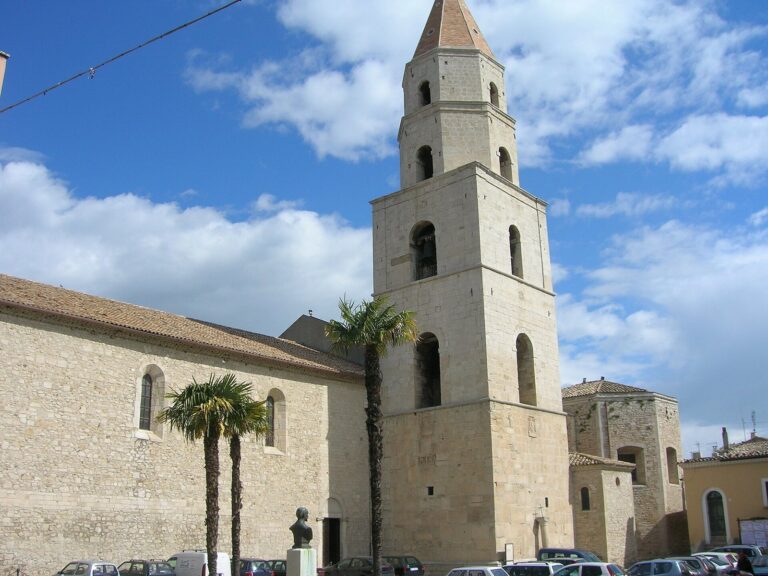
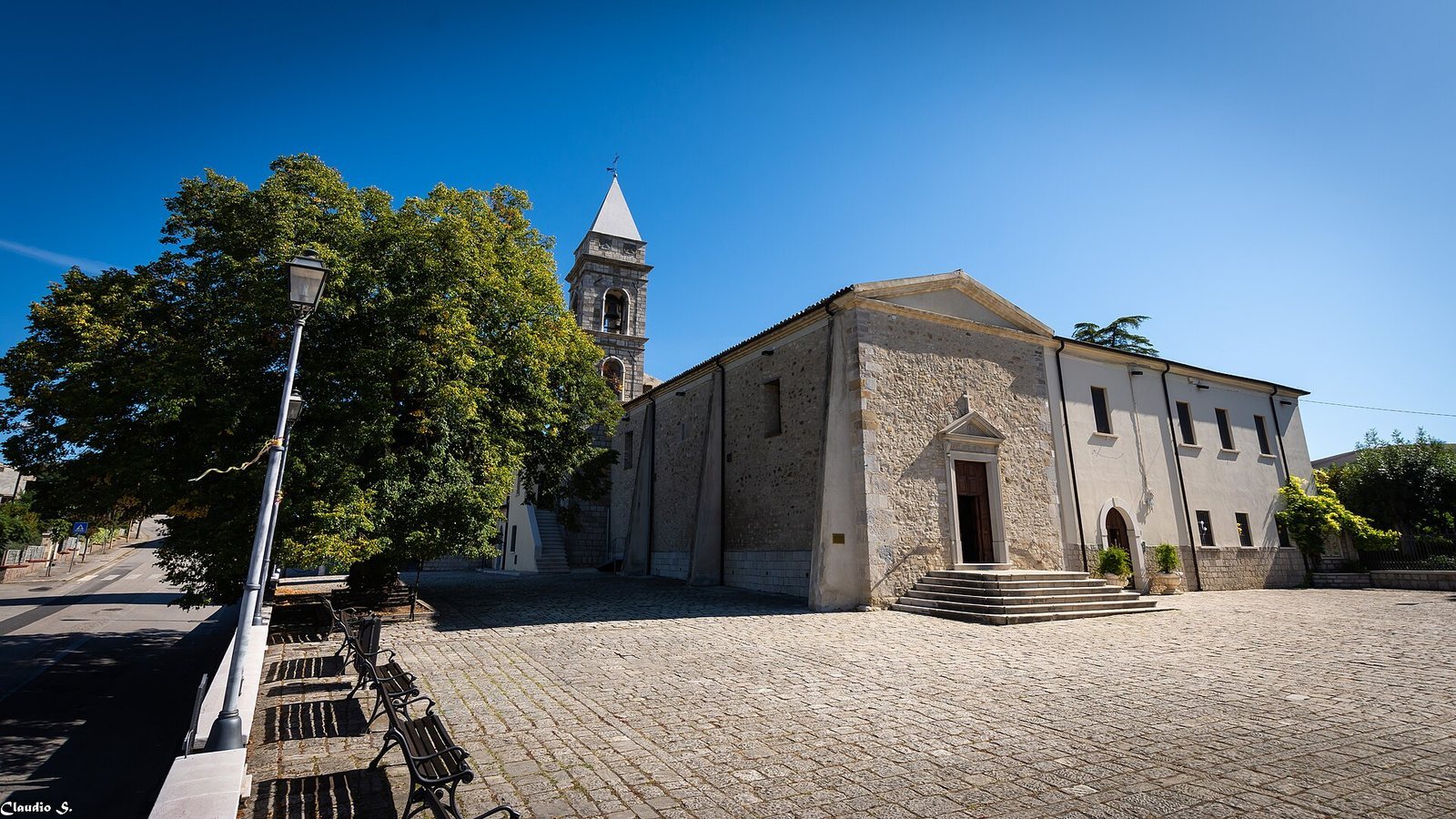
The church has a plain exterior and a single-nave interior divided into three bays. An attached historic garden forms another part of the sanctuary complex.
Church and interior
Plan and structure
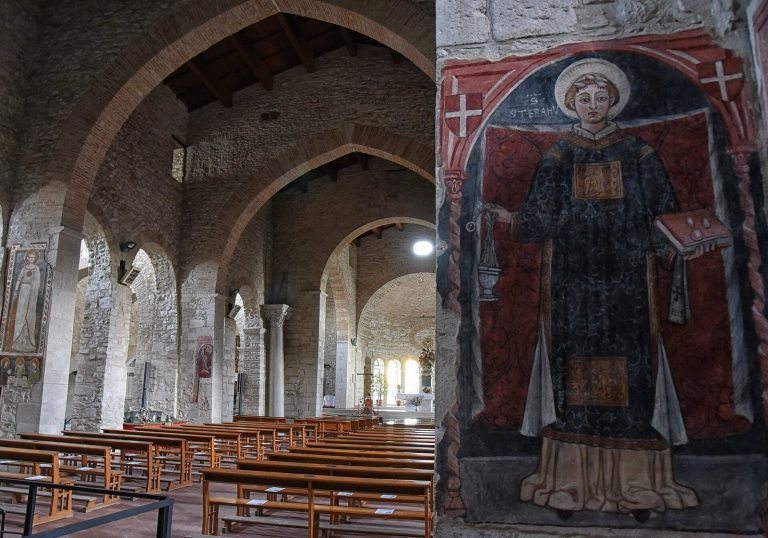
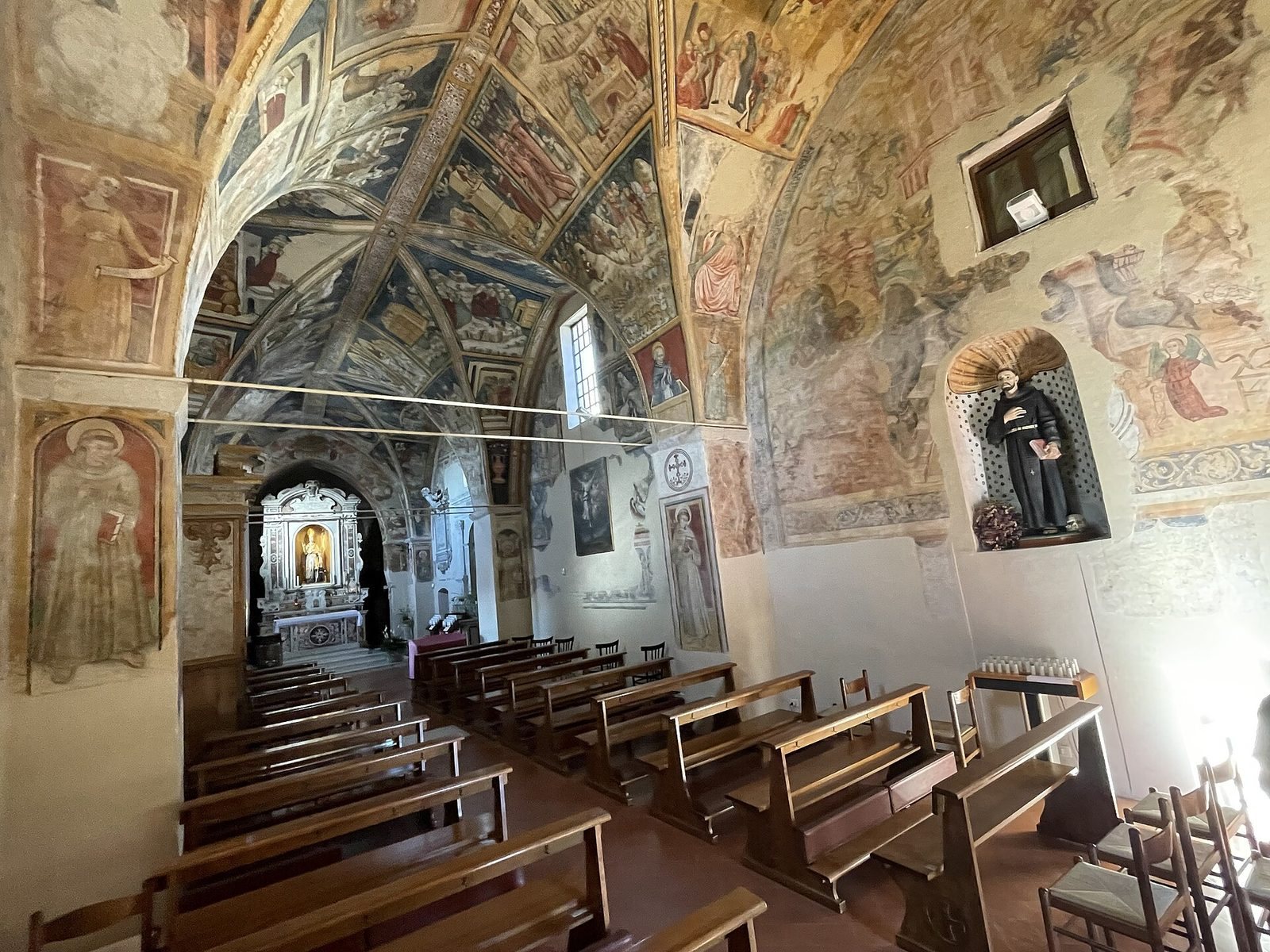
The simple façade has a seventeenth-century portal. Inside, four piers divide the nave into three bays, which are covered by cross vaults, formed where barrel vaults intersect. Stilted arches, whose curves rise from short vertical sections, support the vaulting.
Fresco decoration
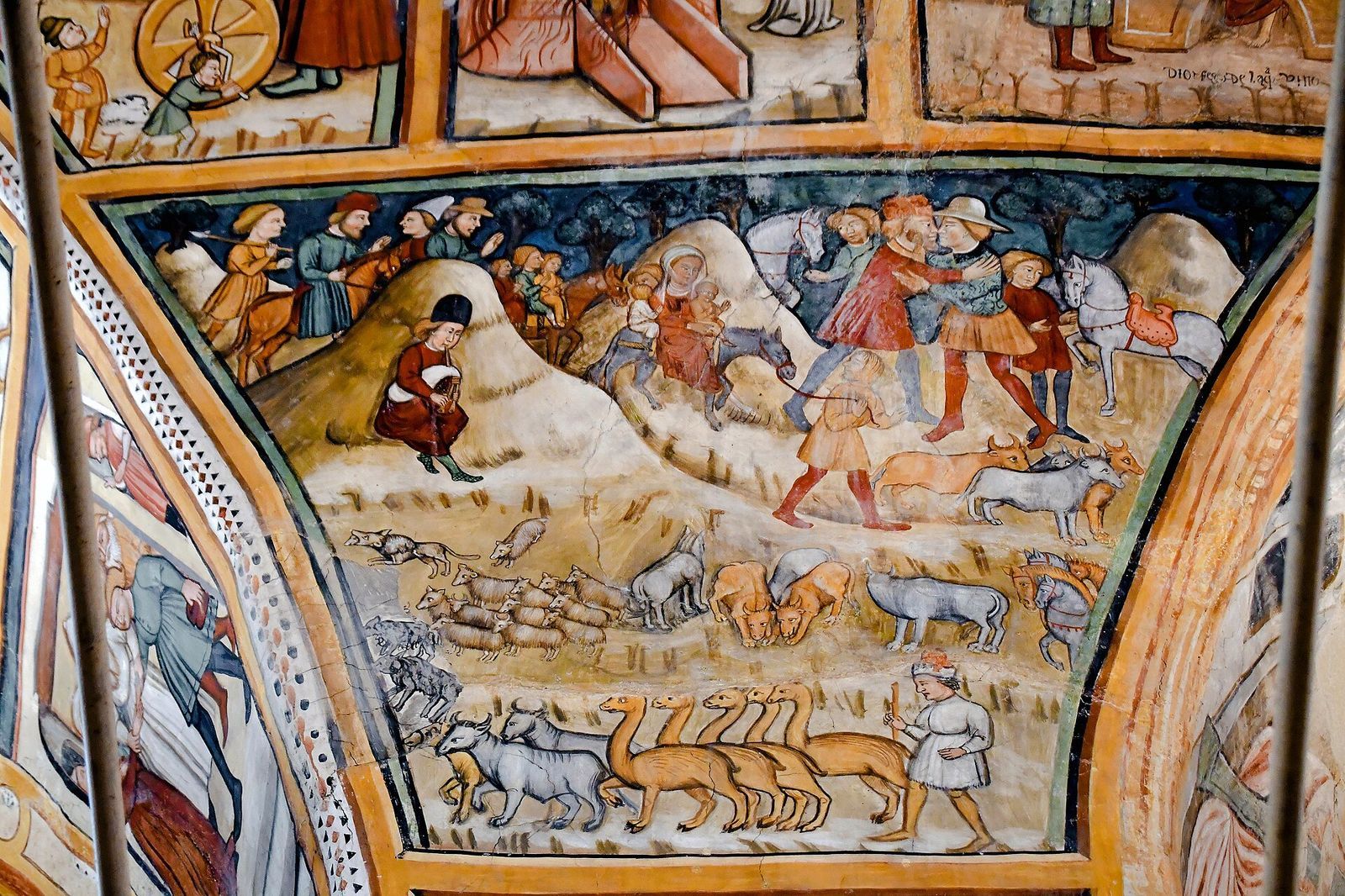
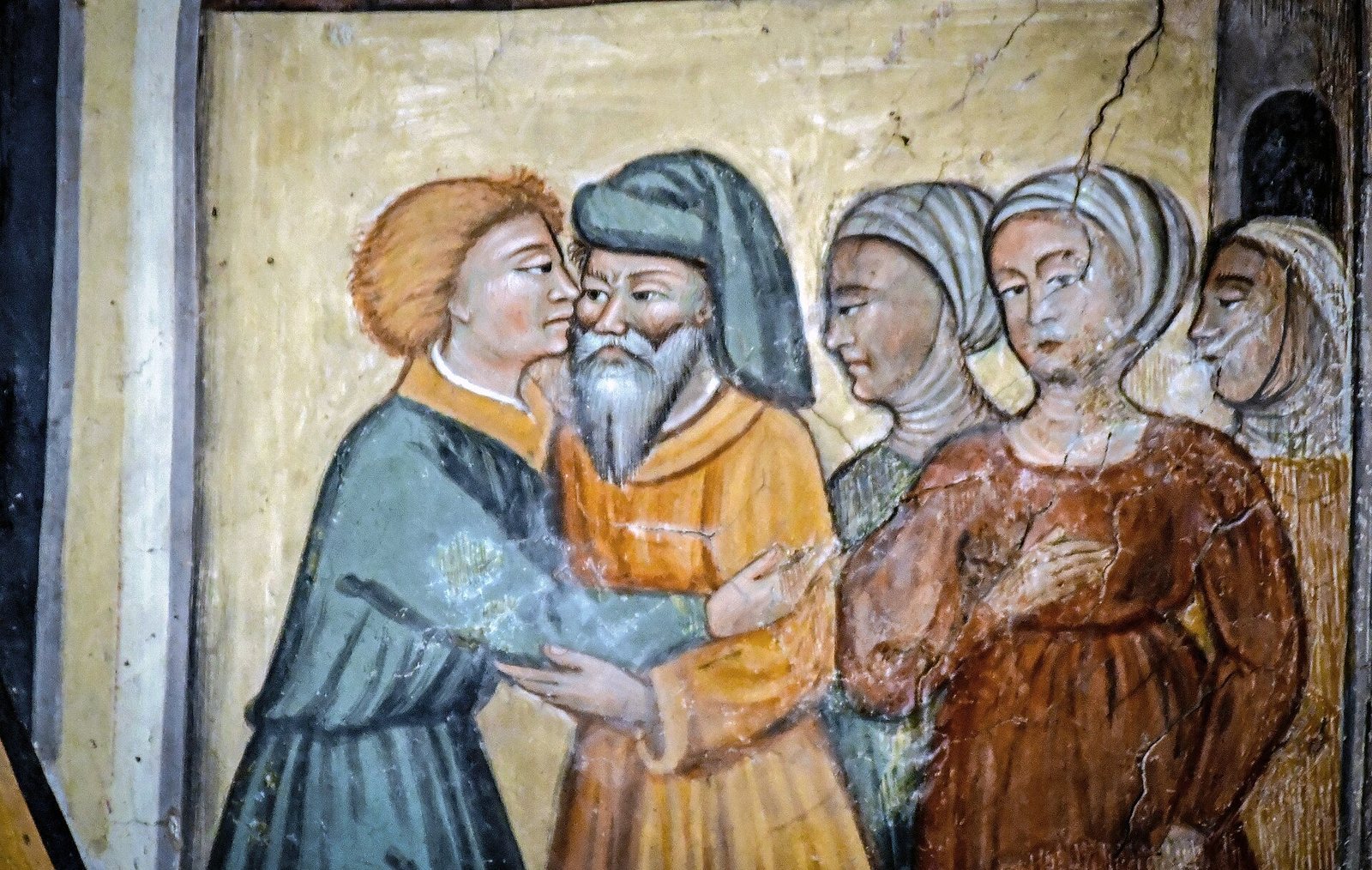
The frescoes extend across the nave vaults. The third bay contains scenes from Genesis attributed to the conventionally named Master of the Stories of Adam and Eve; the second bay depicts patriarchs in paintings assigned to the Master of the Stories of the Patriarchs. These titles identify painters whose personal names are unknown. In the entrance bay, a monumental Last Judgment includes an unusual image of Purgatory as a hair-thin bridge. The vaults there also carry a cycle of scenes centered on Christ.
Furnishings and memorials
An eighteenth-century organ stands in the second bay on the left. On the right wall is Paolo De Matteis’s painting of the Martyrdom of Saint Julia, probably made in 1718 as the altarpiece for Santa Maria del Carmine. A cenotaph on the right wall of the third bay commemorates Giulia Gaudioso, and its inscription gives the date 1716. At the end of the nave, the Baroque altar is made of polychrome marble. A wooden statue of Saint Donatus, made in the eighteenth century, took the place of De Matteis’s painting at the altar in the mid-twentieth century.
Historic garden
A gate opens into the garden, where two paths pass between clipped hedges toward an Aleppo pine more than three centuries old. The older portion is raised slightly above the surrounding level and reached by two short stairways flanked by small classical statues. Old yews and sequoias also grow there. A winding path beneath the sanctuary’s bell tower is known as the labyrinth.