San Pantaleo: A Roman Catholic Church in Rome
Site at a Glance
- Popularity
- Medium
- Country
- Italy
- Primary era
- Early Modern
- Eras represented
- Medieval, Early Modern, Modern
- Civilizations
- Papal States
- Site type
- Religious
- Remains
- Church
On this page10 sections
History
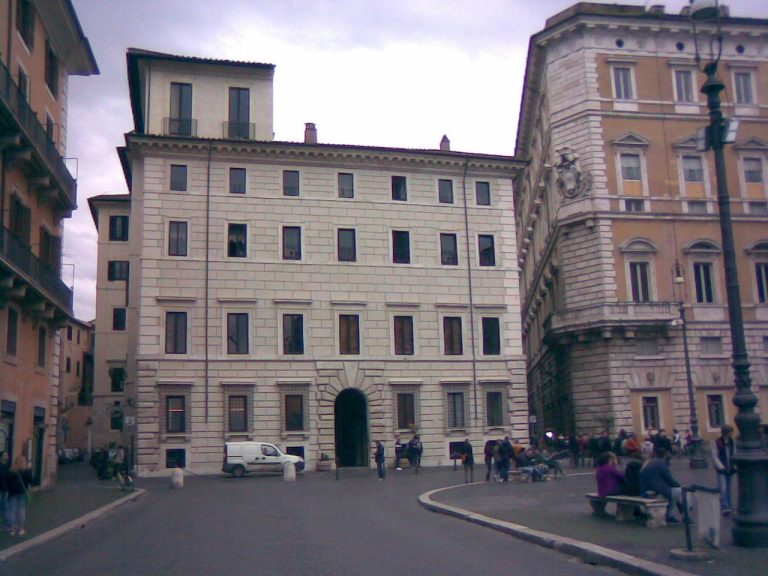
San Pantaleo is a Roman Catholic church on Piazza di San Pantaleo in Rome, Italy. A church stood on the site by the 12th century. In 1186, a papal decree by Urban III listed it as dependent on San Lorenzo in Damaso, under the name Sancti Pantaleonis de Pretecarolis. Honorius III consecrated the church in 1216.
Its name appeared in several forms over time, including San Pantaleo a Pasquino and San Pantaleone alle Scuole Pie. The meaning of Pretecarolis is uncertain. Suggested explanations link it to a family called Preta, a priest named Carlo, or a merchant named Carolus who held a market concession. One tradition connects the family to Preta, near Amatrice, and says that a family member named Carlo was buried in the church.
Medieval and early modern changes
In 1418, Alessandro Savelli, owner of a neighboring palace, carried out work on the church. In 1621, the church and adjoining convent were entrusted to Joseph Calasanz and the Piarists, the Catholic religious order he founded to promote education. The Piarists restored the church that year, and the complex became their general curia, or central governing headquarters. The order owns the complex. The church may also have been associated with a group of English priests.
A major rebuilding took place between 1681 and 1689 under architect Giovanni Antonio de Rossi. The church is dedicated to Pantaleon of Nicomedia, a patron of physicians who was martyred in 305 under the Roman emperor Diocletian, during the onset of persecution against Christians. Joseph Calasanz is also closely associated with the church, as is Giovanni Alfonso Borelli, the 17th-century mathematician and physiologist buried there.
The 19th-century façade
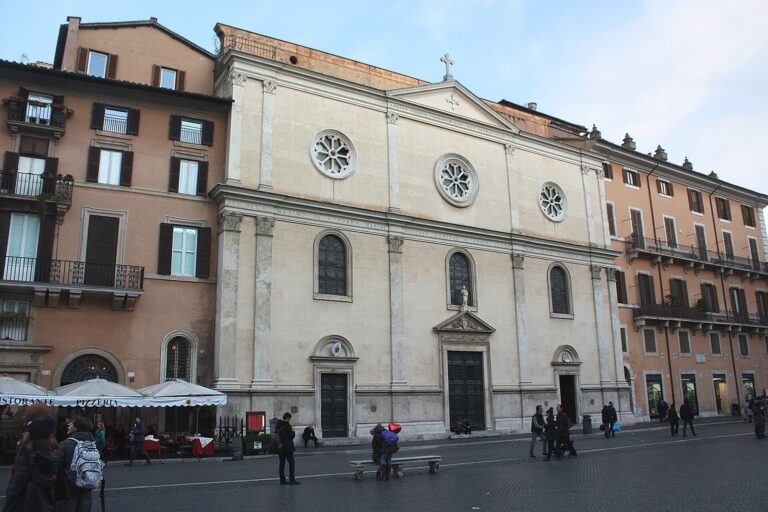
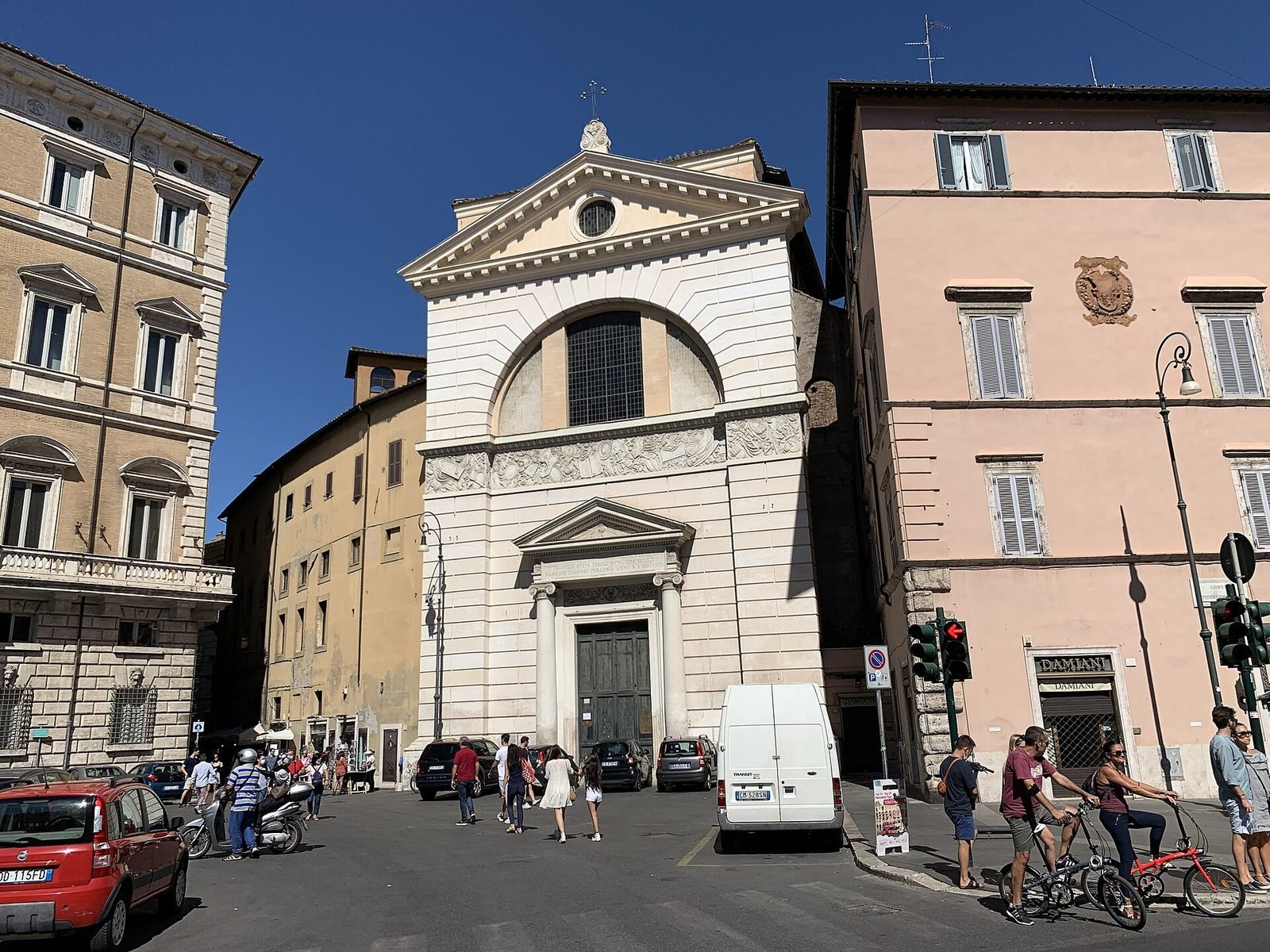
Banker and prince Giovanni Torlonia patronized a new façade designed by Giuseppe Valadier. The design is dated to 1806, the façade to 1807, and the commission to 1808. The church follows the Roman Rite, the Roman Catholic Church’s liturgical tradition, and belongs to the Diocese of Rome and the parish of San Lorenzo in Damaso.
Remains
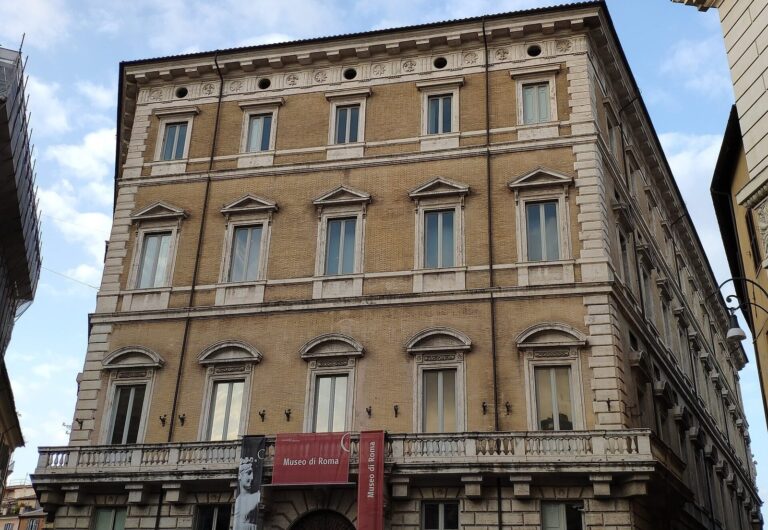
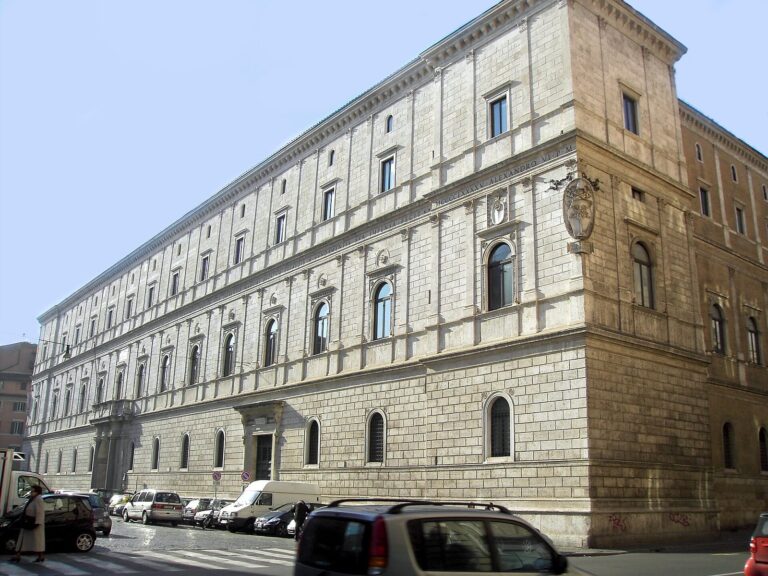
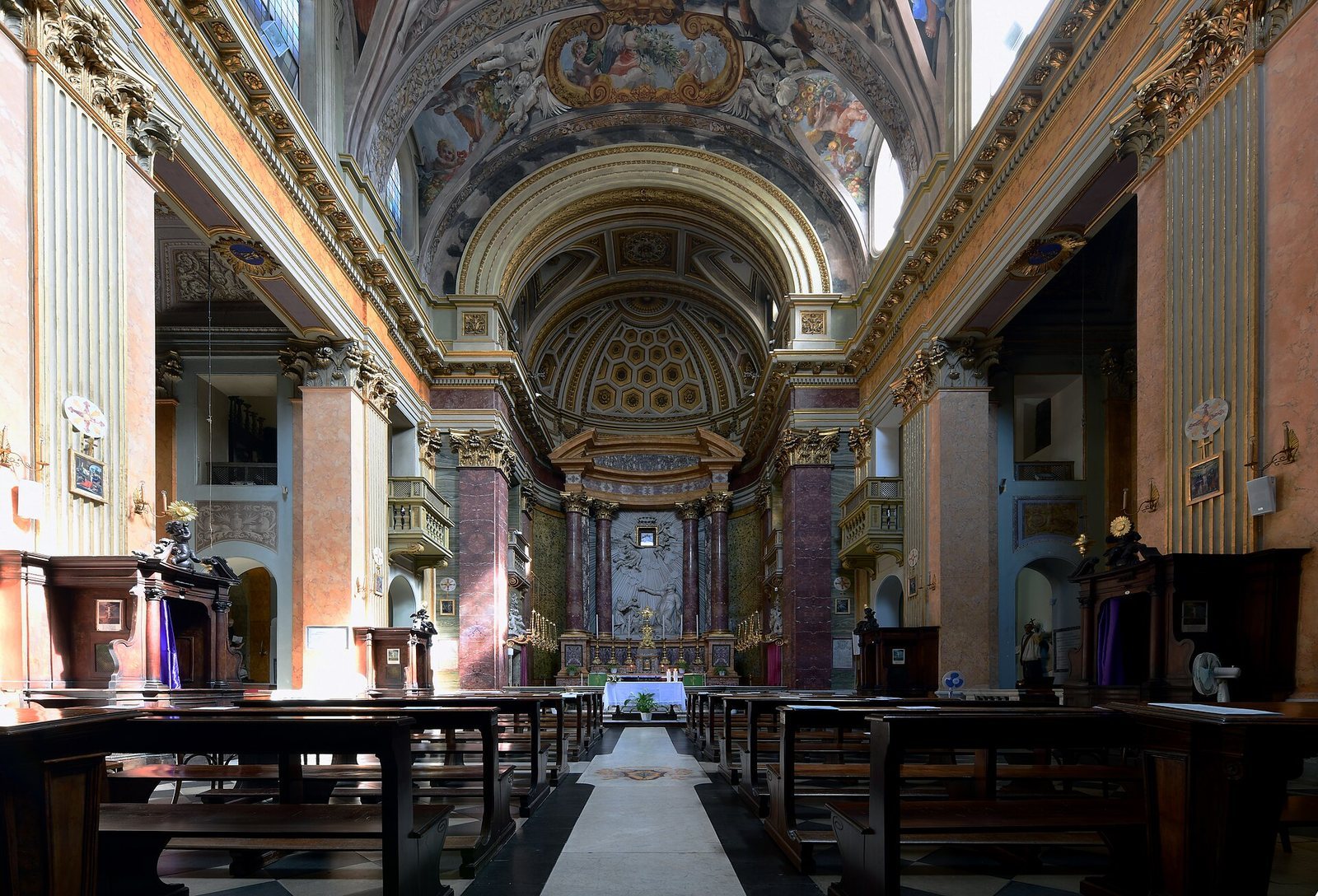
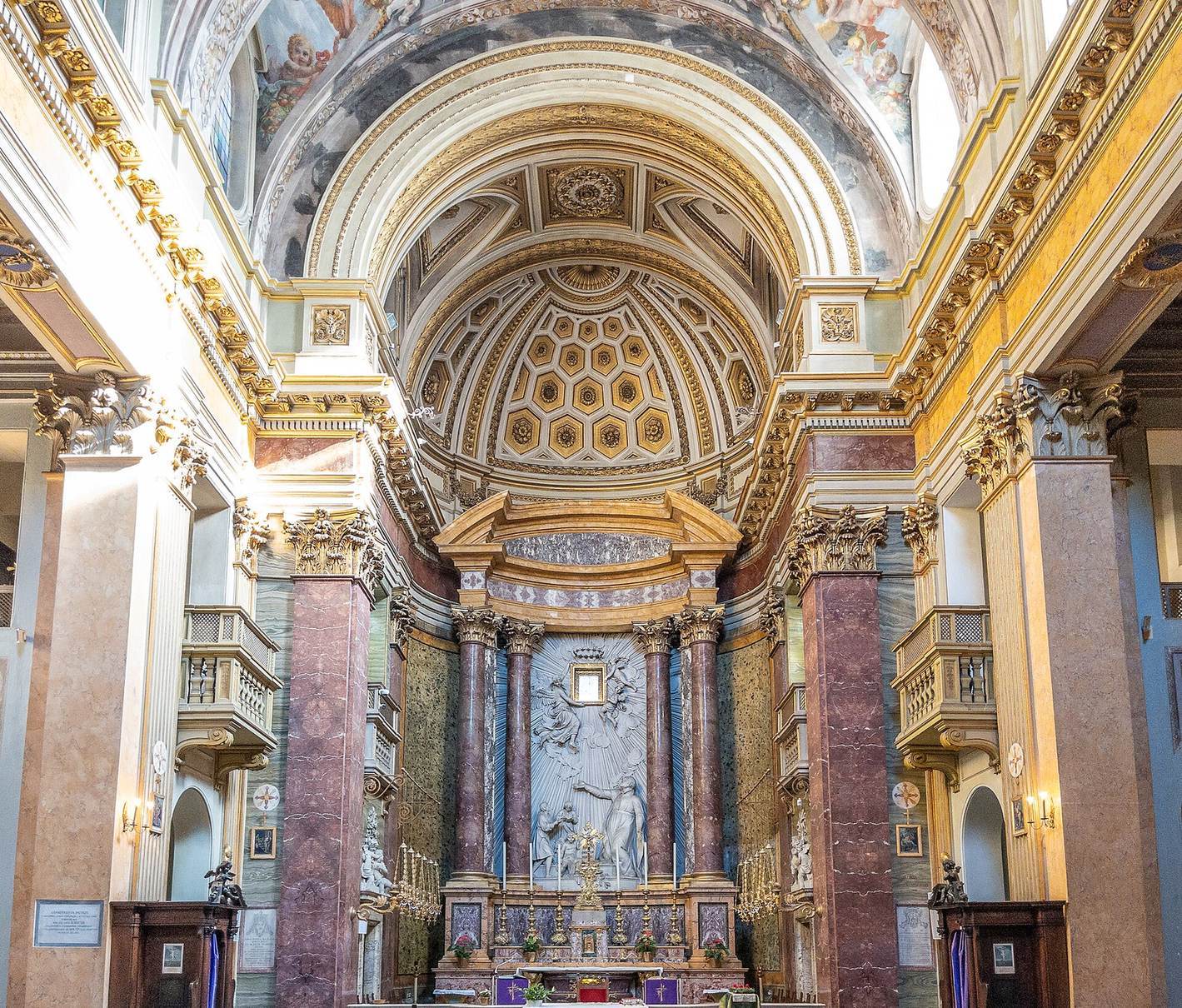
San Pantaleo faces Piazza di San Pantaleo along Corso Vittorio Emanuele II in Rome’s Parione district. Palazzo Braschi, which houses the Museo di Roma, also faces the piazza. The church combines a Neoclassical exterior, drawing on ancient Greek and Roman forms, with a Baroque interior, an elaborate European style associated especially with the 17th and early 18th centuries. Inside, a single main body has a continuous arched ceiling, two side chapels on each side, and a deep recessed area at the far end.
Façade
A high frieze divides the façade horizontally. Pietro Aureli’s sculpted decoration includes a cornucopia, Christian symbols, scrolls, books, and shields, arranged in a composition resembling a triumphal procession.
Main altar
Carlo Murena’s altarpiece frames a large marble relief by Luigi Acquisti, dated 1802 and placed on the wall behind the main altar. It shows Joseph Calasanz presenting children to the Virgin Mary and Christ Child, accompanied by other Piarist priests. The image known as the Madonna delle Scuole Pie di San Pantaleo is incorporated into the relief. Aurora Berti, a woman from Perugia consecrated to God through a Catholic rite, donated the image; she died in 1720. Lorenzo Merlini made her funerary monument. The church is also associated with an altarpiece attributed to Mattia Preti and paintings linked to Andrea Pozzo.
Ceiling painting
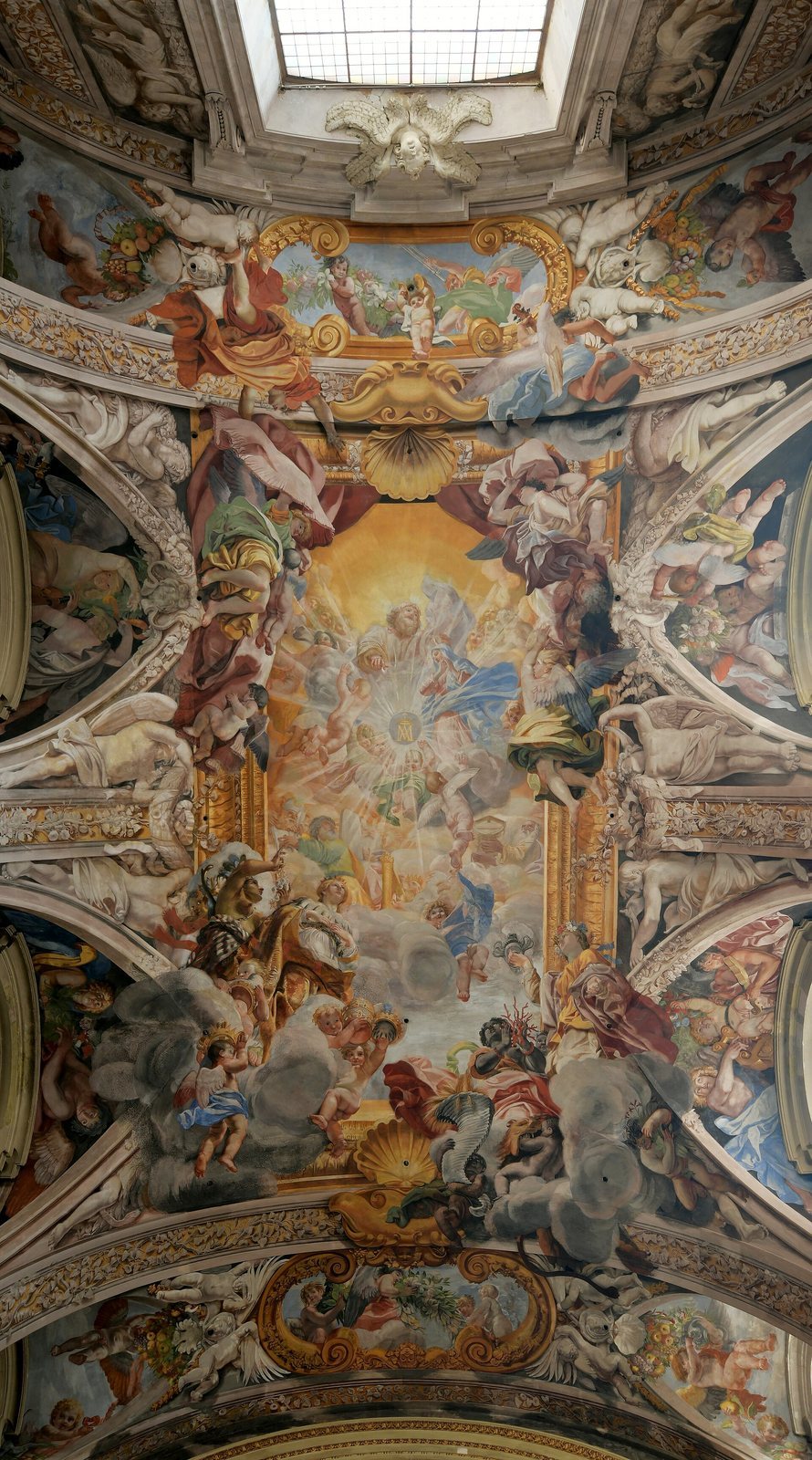
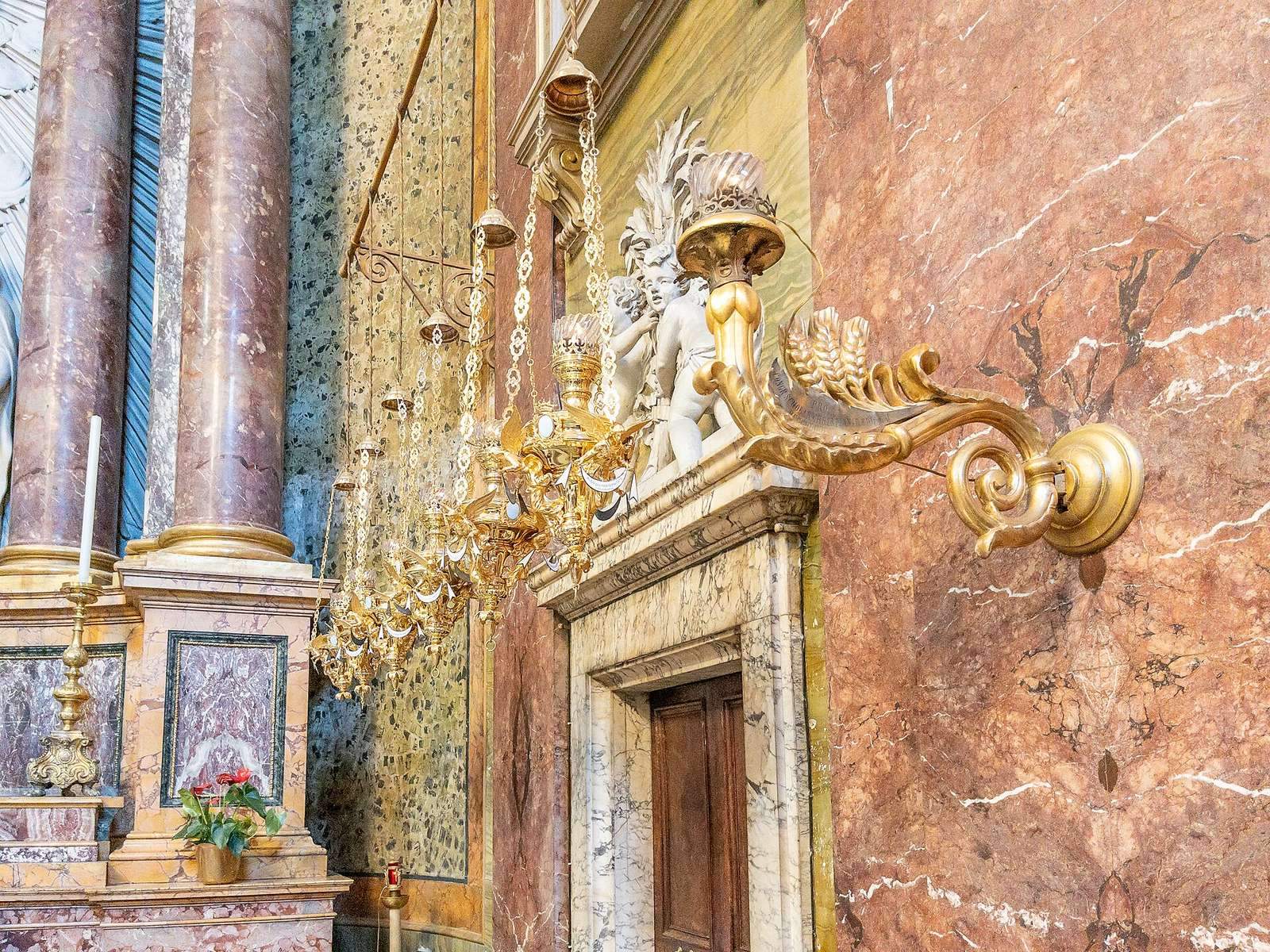
Filippo Gherardi painted the ceiling fresco Triumph of the Name of Mary between 1687 and 1692. It depicts the four continents then known to Europeans. Europe appears as a crowned woman near God, with cherubs offering crowns, including one for the Pope. The Americas appear to the west as an Amazon carrying a quiver and arrows; Asia, to the east, is a flower-crowned woman offering a cup of eastern spices. To the south, Africa holds coral, while a cherub below carries grain in a cornucopia.
Side chapels
The first chapel on the right is dedicated to Christ crucified and contains an 18th-century crucifix above its altar. The second right-hand chapel is dedicated to Saint Joseph, the husband of Mary and earthly father of Jesus in Christian tradition. Its altarpiece, The Death of Saint Joseph, is attributed to Sebastiano Ricci and dated 1690; relics of Saint Flavian lie beneath the altar. On the left, the first chapel honors Saint Anne, Mary’s mother, with an altarpiece by Bartolomeo Bosi showing Anne and Joachim with the young Virgin Mary. The second is dedicated to Saint Pantaleon and contains a painting of him healing the sick, made by Tommaso Amedeo Caisotti after an original by Mattia Preti. Piarist priest Pietro Casani is buried beneath its altar.
Calasanz’s tomb and convent rooms
The body of Joseph Calasanz rests in a porphyry urn beneath the main altar. Porphyry is a hard, durable stone often used for prestigious objects. In the adjoining convent, rooms he inhabited are preserved with objects that belonged to him and numerous relics.
Sacristy passage
A passage leading to the sacristy contains paintings of Saints Justus and Pastor by Pomarancio. It also holds a tombstone dated 1577 for Laudomia, daughter of Giovanni Bracalone de Carlonibus, also known as Giovanni Brancaleone.