Bogenhausen Cemetery: A Historic Burial Ground in Munich
Site at a Glance
- Popularity
- High
- Country
- Germany
- Primary era
- Modern
- Eras represented
- Modern
- Civilizations
- German
- Site type
- Burial
- Remains
- Necropolis
On this page5 sections
History
Ninth-century origins
Bogenhausen Cemetery is a historic burial ground in the Bogenhausen district of Munich, Germany. It was probably established in the ninth century as a burial place for families long established in Bogenhausen.
Municipal administration and redesign
Bogenhausen became part of Munich in 1892, but the city took over the former village cemetery only in 1902. The cemetery was completely redesigned in 1952. In 1959, the municipal section, burial field 3, and graves along the boundary wall were rearranged in a more open layout. Older graves were destroyed during the work.
A burial place for public figures
From the mid-twentieth century, the cemetery became a preferred burial place for prominent artists and other public figures. Its history is regarded as reflecting Munich’s and Germany’s cultural and intellectual life. Conductor Rudolf Kempe was reburied in Stratford-upon-Avon in March 2007, and politician Zita Zehner’s grave was removed in 2011.
Remains
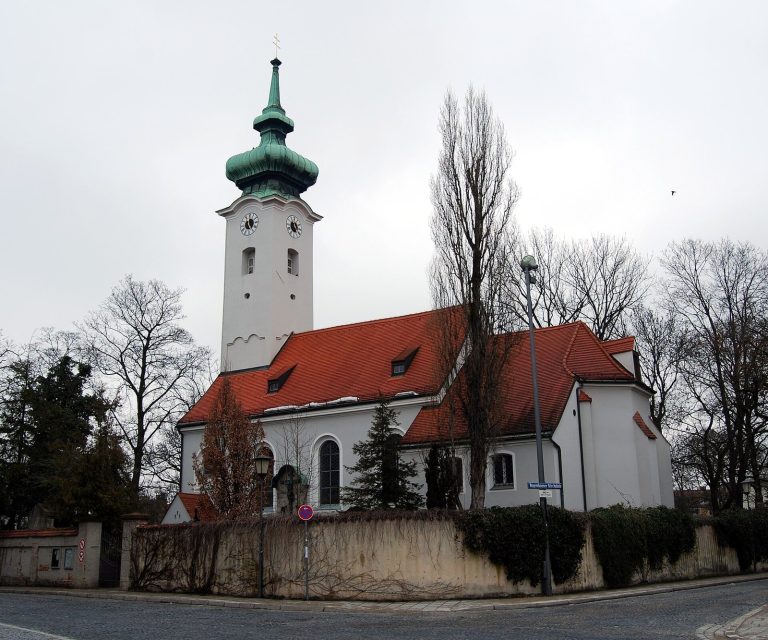
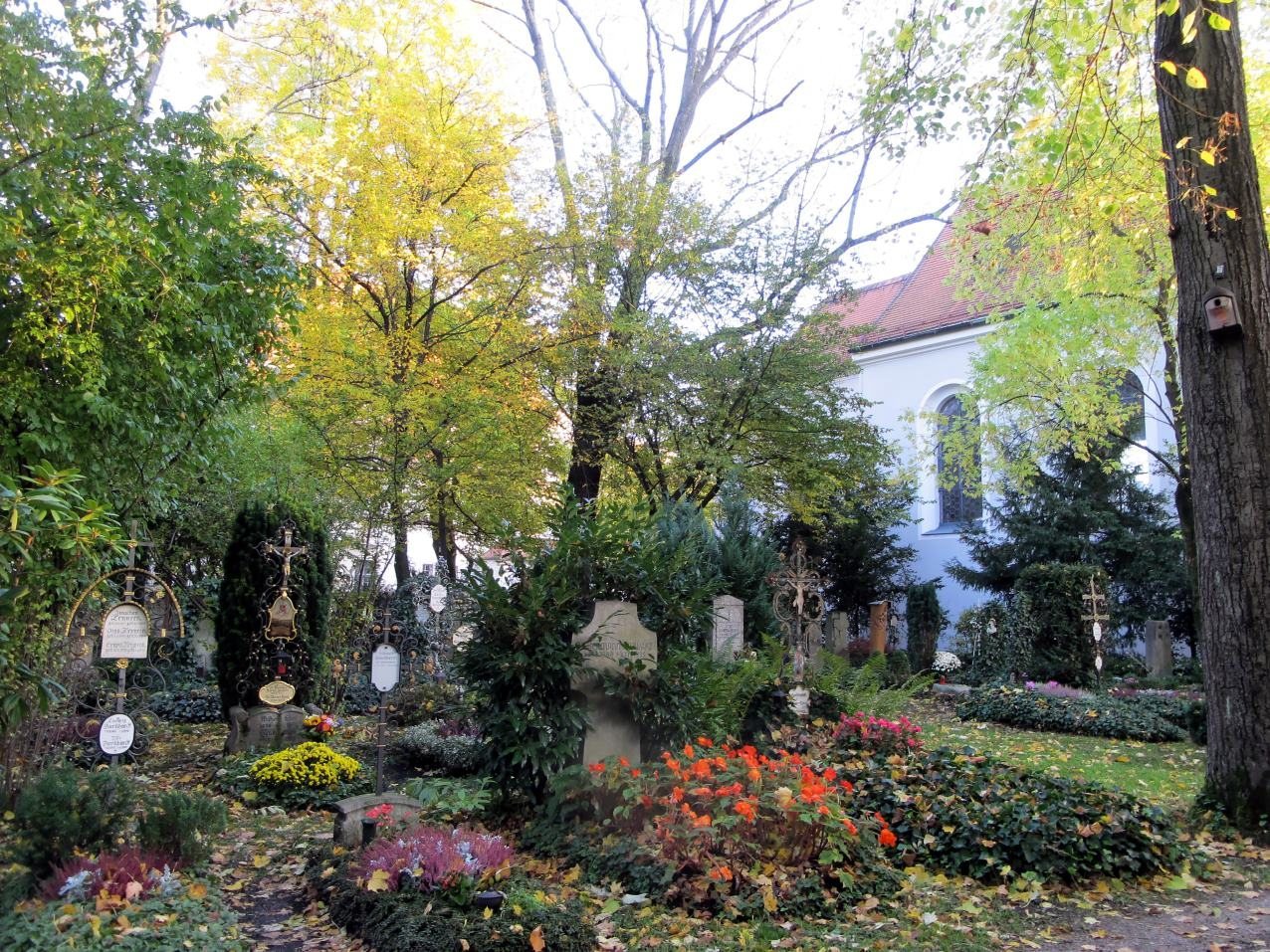
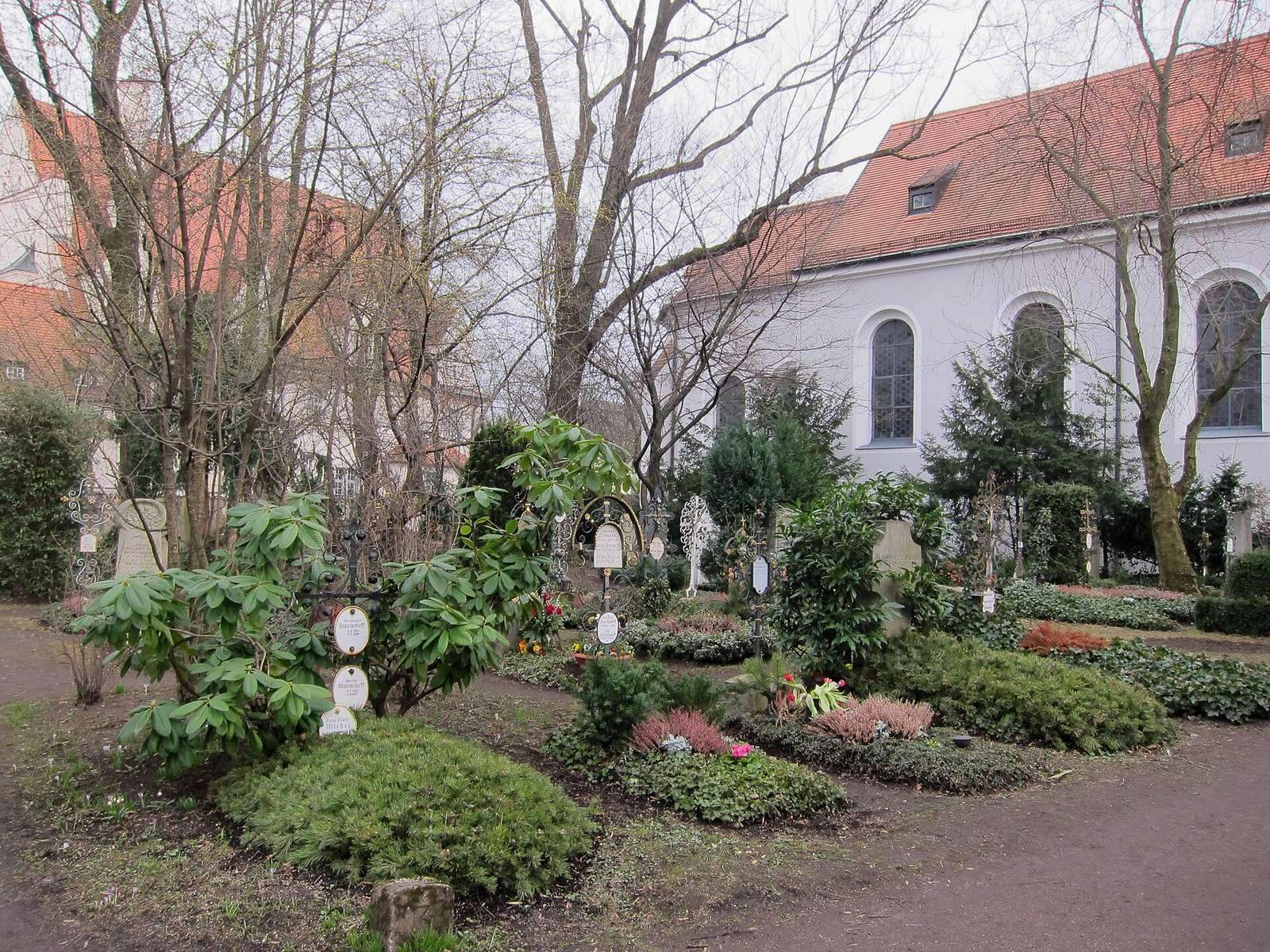
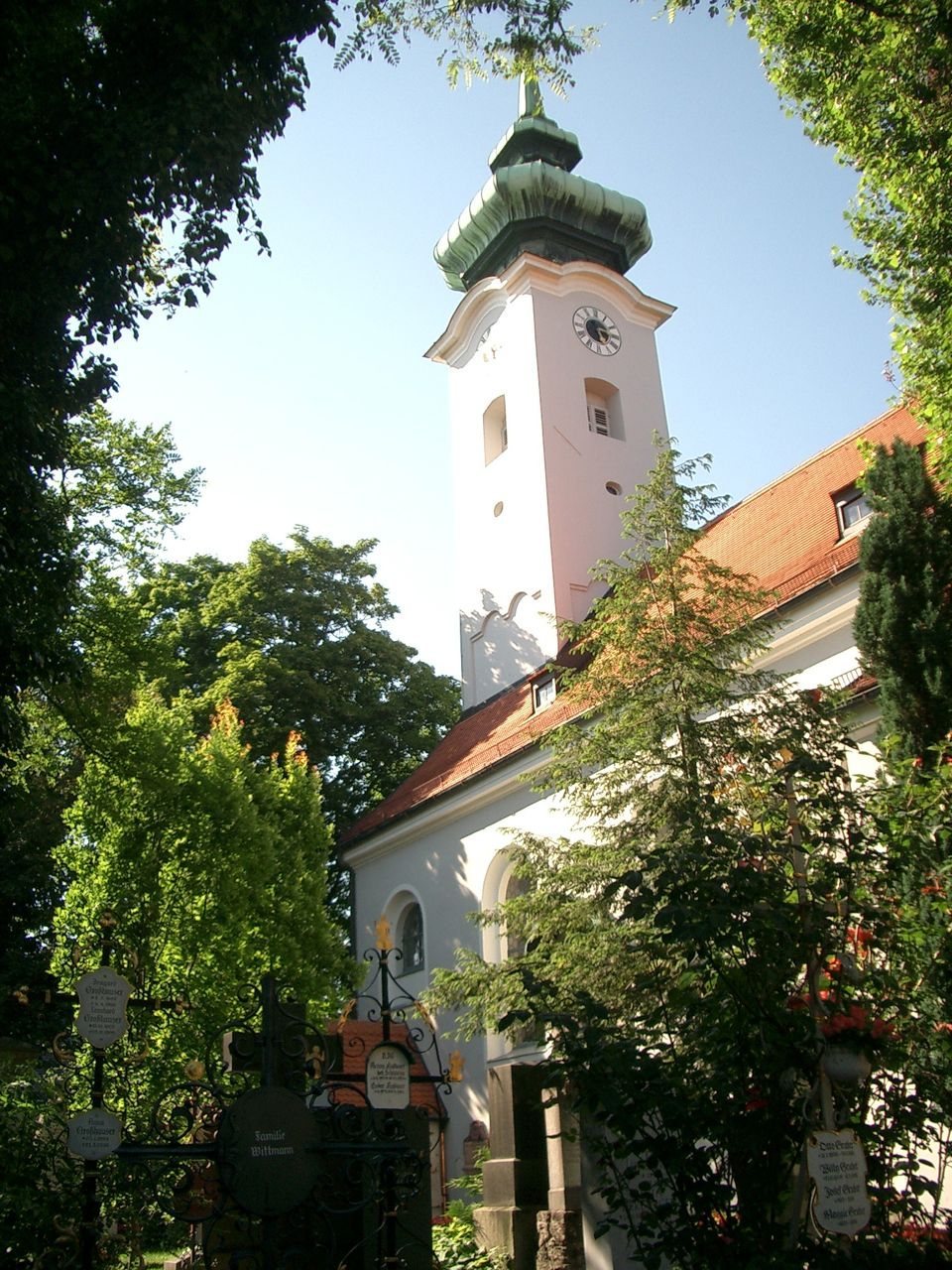
Also known as St. George’s Cemetery, the site lies on the right bank of the Isar beside the late-Baroque Church of St. George. Late Baroque is the later phase of a European style that developed during the seventeenth and eighteenth centuries. The cemetery opens directly onto the church forecourt and is enclosed by an ivy-covered wall. Its layout has three burial fields. The older southern section and adjoining graves along the wall belong to the Holy Blood Parish Church Foundation. Almost all of the northern section, including wall graves and urn niches, belongs to the City of Munich.
Modest graves predominate, with painted wrought-iron crosses and small headstones. This appearance differs from that of Munich’s larger cemeteries, where mausoleums, marble sculptures, and stone angels are features.