Market Square in Kielce: The City’s Historic Market and Civic Center
Site at a Glance
- Popularity
- Medium
- Country
- Poland
- Primary era
- Modern
- Eras represented
- Early Modern, Modern
- Civilizations
- Polish–Lithuanian Commonwealth, Russian
- Site type
- Economic
- Remains
- Market
On this page16 sections
History
Market Square in Kielce is a historic commercial and civic square in central Kielce, Poland. It has existed since the second half of the 12th century and served as the city’s commercial center.
Medieval market and municipal life
Local markets were held here until 1935. In the mid-14th century, when Kielce received municipal rights under Magdeburg law, a medieval system of town law and self-government, the square took the name Rynek. It was also known as Kielce’s Old Town.
The old town hall and the 1800 fire
Construction of the stone town hall probably began before 1523, at the initiative of Jan Konarski, bishop of Kraków. The building later fell into disrepair, despite repair orders issued in 1749 and 1759. Wooden stalls were attached to it and were often used as toilets.
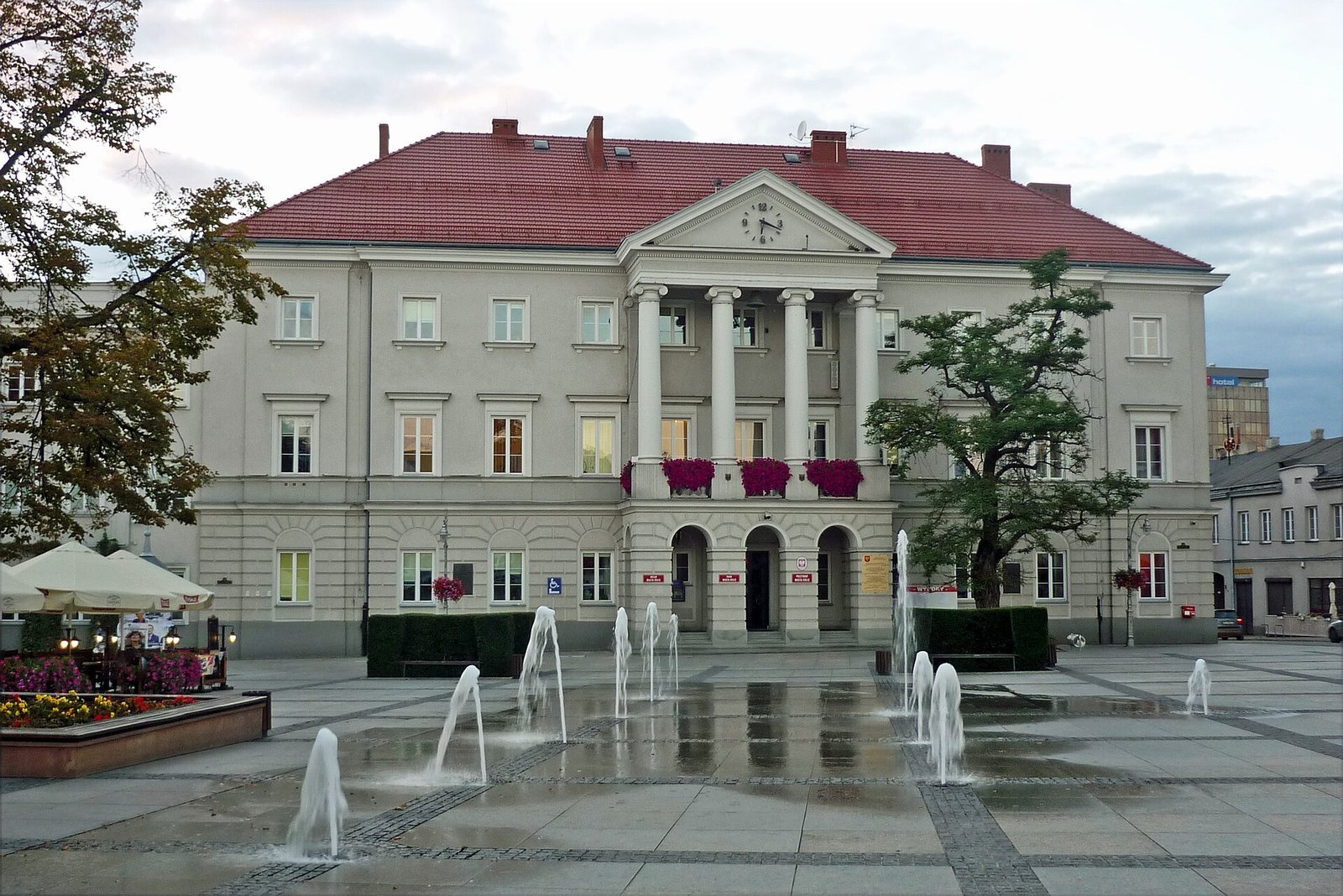
On 24 May 1800, a major fire destroyed the town hall and 276 other houses. The town hall ruins remained for many years. In 1834, a new town hall was built beside them; it continues to serve as Kielce’s city hall.
Townhouses and changing uses
The townhouse called Wójtostwo is mentioned from the 16th century. Its name refers to the office or estate of a local municipal head. Tadeusz Kościuszko, a Polish commander and statesman who played a leading role in the 1794 uprising, stayed there for two days in June of that year. The 1800 fire also destroyed the townhouse. After its rebuilding, it was sold to Jan Höningman in 1858. He opened a colonial-goods shop on the ground floor and converted the rest into the Hotel Saski.
In the 19th century, the Kosterski townhouse housed both a shop and an Orthodox church. Its ground floor has been occupied by Kielce’s oldest delicatessen since 1954. During the communist-era Polish People’s Republic, the square was renamed Partisans’ Square.
Twentieth-century changes
German construction of a fire reservoir in 1943 exposed the old town hall ruins again, but the reservoir walls covered them. After the war, the reservoir was converted into a fountain, which remained until 2008. Later archaeological work beneath the dismantled fountain brought the ruins to light.
Before the 2011 redevelopment, a roundabout surrounded the square. It was Kielce’s only roundabout where vehicles entering had priority. The project sought to restore the square’s earlier character by removing the fountain and vehicle traffic. Another redevelopment began in 2023 as part of a green renewal of central Kielce, covering the square, Saint Thecla Square, Bodzentyńska Street, Irena Sendler Square, and the Avenue of the Nine Centuries of Kielce.
Remains
Layout and approaches
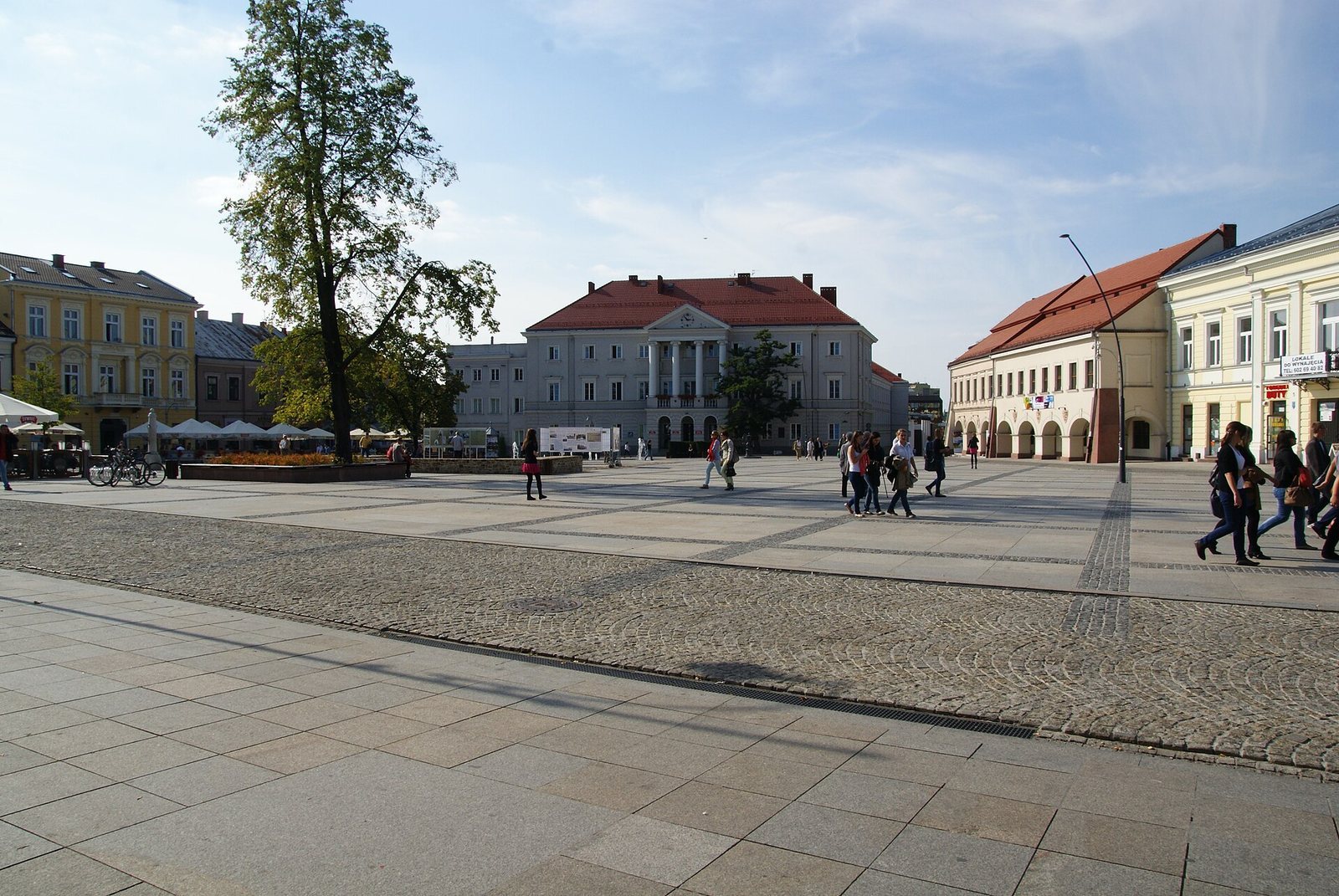
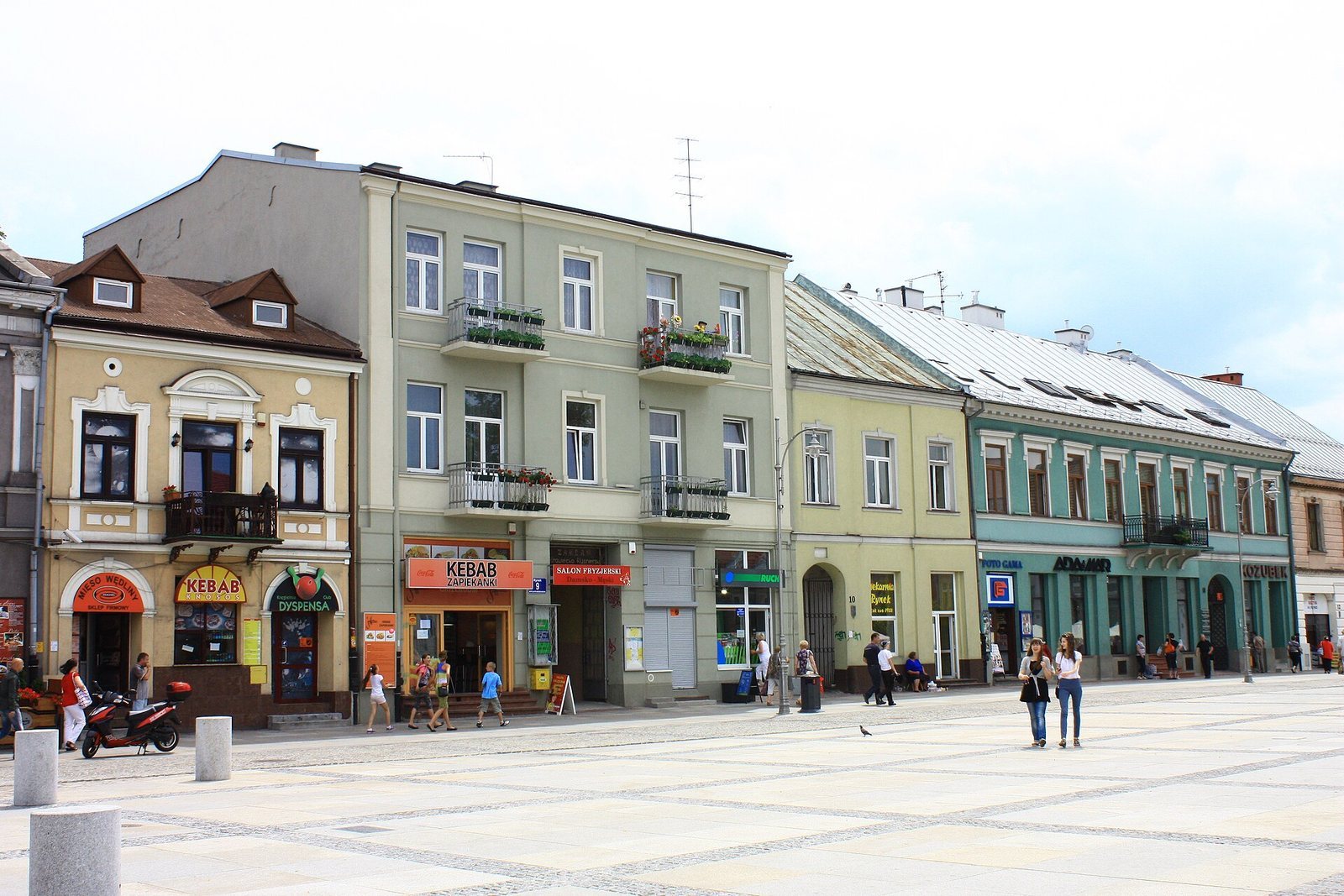
Piotrkowska, Kozia, Warszawska, Bodzentyńska, Mała, and Leśna streets approach the square. The city hall fills its western frontage, while townhouses line other sides. A small square at the northeast corner, between present-day Warszawska and Bodzentyńska streets, contains a statue of Saint Thecla, an early Christian saint, dating from 1765.
Town hall buildings
Kielce City Hall
The three-storey city hall occupies the full western side of the square. It has a roof that slopes down on all sides, and arched porticoes shelter its entrance.
Former town hall
The former town hall was a two-storey stone building with a tower capped by a helmet-shaped roof. Its ground floor held an entrance hall, a guardroom, and a room later rented as a cloth shop. The tower contained a prison, while the upper floor held a council chamber, a room for the town head, and an archive. Iron standards for weights and measures stood by the doorway and in the entrance hall. These included an iron cubit, a traditional measure of length commonly based on the forearm; an inspector checked and stamped the standards for a fee. A pillory, a fixed device for public punishment, stood beside the building. The ruins lie beneath the former central fountain site, and their outline is marked on the square’s surface.
Townhouses
Sołtyk townhouse and its neighbor
On the southern side, at the corner of Mała Street, stands the Sołtyk townhouse, built in 1767 by Maciej Gilba, cook to Kajetan Sołtyk, the Catholic bishop of Kraków. The two-storey building has a basement and arcades, and an eagle representing the Sołtyk family coat of arms appears on its façade. Altered in 1960, it now houses a café. Beside it is a 19th-century townhouse with a Neo-Baroque front and interior stucco decoration. It contains offices of Gazeta Wyborcza, a Polish daily newspaper.
Wójtostwo
Wójtostwo stands on the eastern side of the square, at the corner of Saint Leonard Street. A plaque on its wall commemorates Kościuszko’s stay. The upper floor is residential, while service businesses occupy the ground floor.
Kosterski and Tomkiewicz townhouses
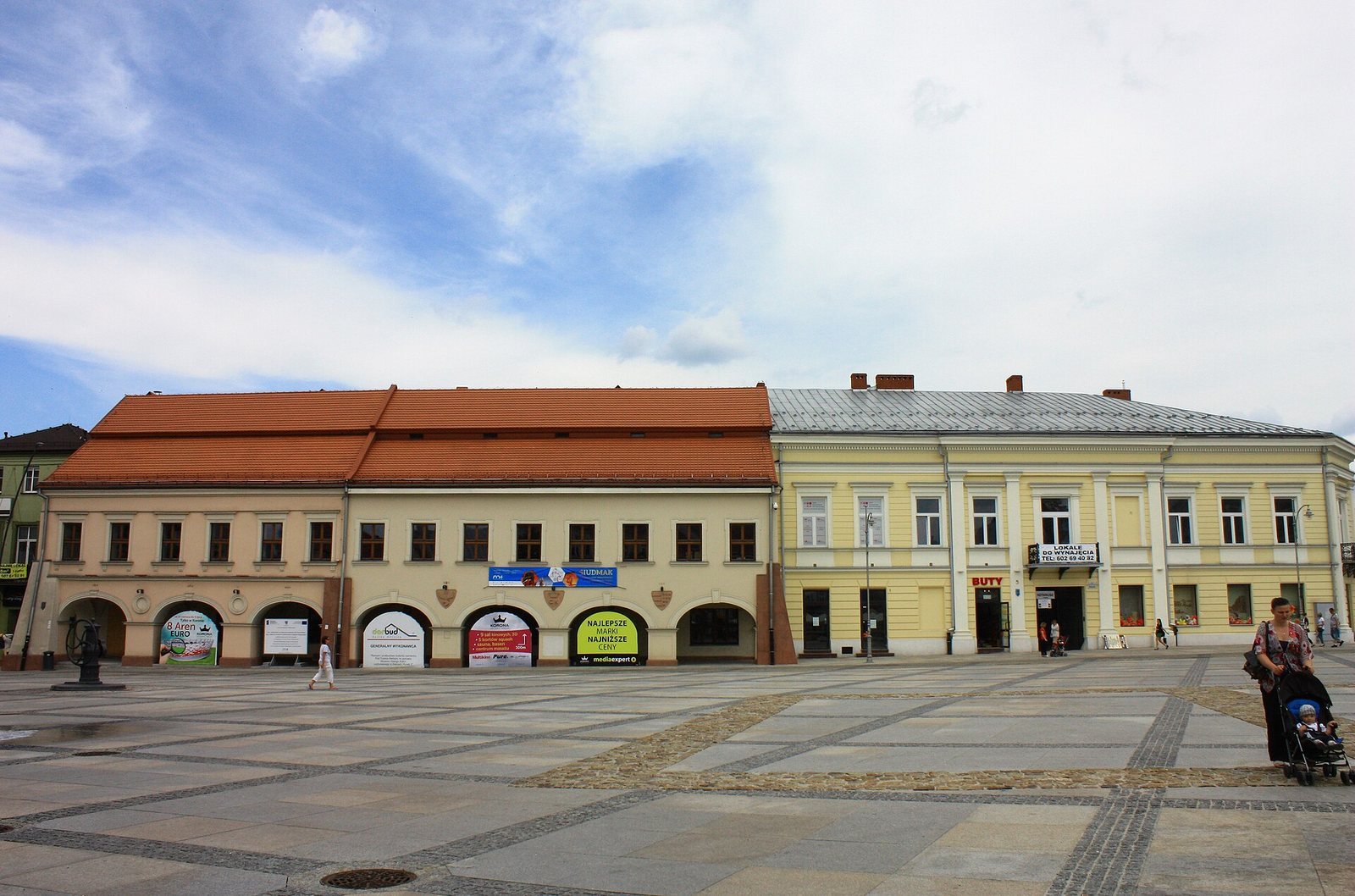
The 18th-century Kosterski townhouse, at Rynek 5 on the northern corner of the square and Warszawska Street, has a four-sided plan and façades facing the square, Warszawska Street, and Orla Street. Its north façade has a classicizing appearance, with masonry joints emphasized across the surface. The Tomkiewicz townhouse, at Rynek 3, contains the National Museum in Kielce and the administration of the Provincial Public Library. It has a basement, two storeys, and a row of arches with vaulted ceilings along the front; its construction date is uncertain.
Other dated houses
The square’s other houses include Rynek 10 and 11, both from the first half of the 19th century; Rynek 12, from the 18th century; Rynek 14, from the turn of the 18th and 19th centuries; Rynek 15, from the first quarter of the 19th century; and Rynek 16, from the first half of the 19th century.
Square surface and central features
In the 2011 redevelopment, the square was paved with small stone blocks. A pillory, a pump, bicycle racks, and places to rest were installed. The outline of the former town hall, whose remains lie beneath the site of the central fountain, is traced on the paving.