San Giovanni Battista dei Fiorentini: Church of Naples’s Florentine Community
Site at a Glance
- Popularity
- Medium
- Country
- Italy
- Primary era
- Medieval
- Eras represented
- Medieval, Modern
- Civilizations
- Italian, Kingdom of Naples, Kingdom of the Two Sicilies
- Site type
- Religious
- Remains
- Church
On this page8 sections
History
Origins and the Florentine community
San Giovanni Battista dei Fiorentini was a Roman Catholic church serving Naples’s Florentine community in Naples, Italy. It belonged to the Archdiocese of Naples, a church district led by an archbishop. The Florentines first settled near the port in the thirteenth century, when an early church associated with the name was built for the Servite order, a Catholic religious order also known as the Servants of Mary.
The foundation of the church associated with Isabella of Chiaromonte is dated to 1461, though 1418 and 1448 have also been proposed. Isabella, queen of Naples and wife of King Ferrante of Aragon, entrusted the church to Dominican friars and commissioned a painting of Saint Vincent Ferrer, a Dominican preacher and saint. In 1557, the Florentine community moved to the church of San Vincenzo and dedicated it to Saint John the Baptist, the Christian prophet who baptized Jesus.
Renovations, closure, and demolition
The church was renovated in 1580 and 1624, after the earthquake of 1732, and again in 1845. The architect Gaetano Fazzini directed the 1845 work, which gave the building a Neoclassical appearance, drawing on ancient Greek and Roman forms, and removed its portico, a covered entrance or walkway.
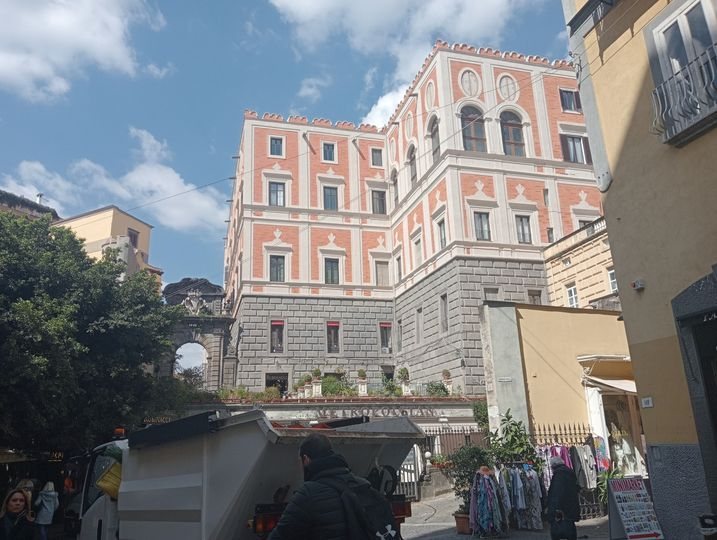
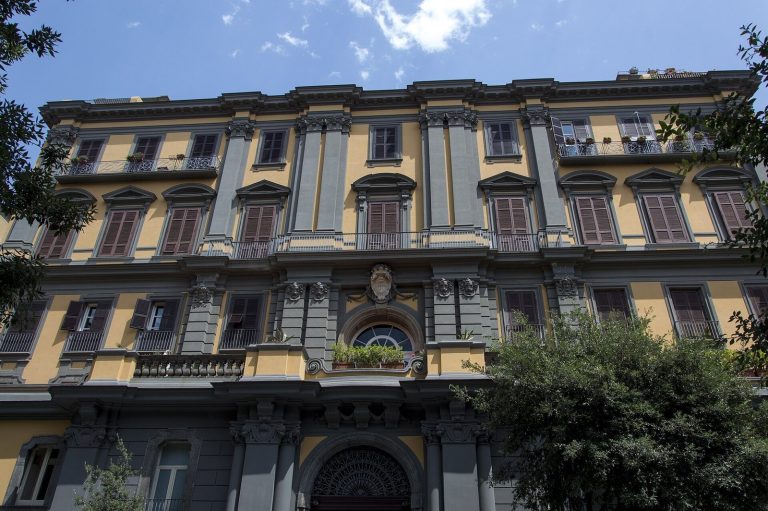
During Fascist-era redevelopment around Corsea, construction extended beneath the church, which was left standing. Palazzo Fernandez, designed by Ferdinando Chiaromonte, was built beside it in the late 1930s. In 1937, the church was included in a redevelopment plan for the Guantai Nuovi area and closed by Cardinal Alessio Ascalesi. The Second World War delayed the planned work. In 1942, the eight statues of the Apostles were taken away for protection from bombing. In 1950, the CERC company was authorized to remove architectural elements considered worth preserving.
The church was demolished in 1952–53 during redevelopment of the Rione Carità promoted by Naples mayor Achille Lauro. Wartime bomb damage was given as the reason, but the church had not been struck; its presence obstructed the building works. It suffered a partial collapse shortly before demolition. The destruction also obliterated the burial place of Artemisia Gentileschi, a Baroque painter, and that of Bernardo Tanucci, a Tuscan statesman who served as a minister to Charles III. Tanucci’s grave was in the underground burial chamber at the center of the church.
Rebuilding in Arenella
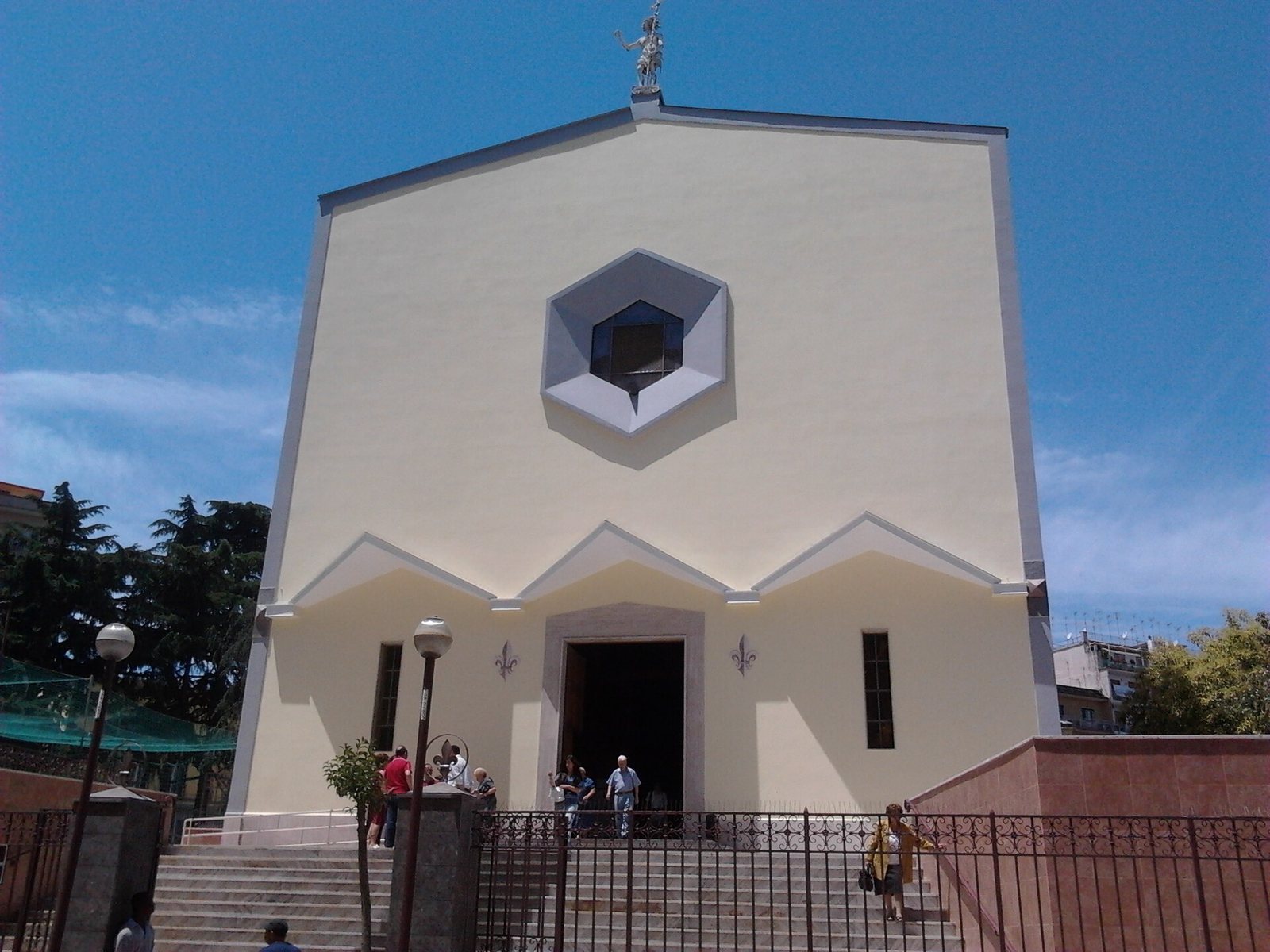
A new church was built in the Arenella district and consecrated in 1959 by Cardinal Alfonso Castaldo. The remains of Angela Iacobellis, known in the Catholic Church as a Servant of God, were transferred there from a cemetery chapel on 21 November 1997. A statue of Saint John the Baptist was placed at the top of the facade in 2000, and the facade was reworked in 2008.
Remains
The former church site
The original church stood beside the old Via dei Fiorentini in the Carità district. Palazzo Fernandez now occupies the site, with its southern extension covering part of the church’s footprint; the first section of Via dei Fiorentini was incorporated into the palace’s inner courtyard. Before its portico was removed during the 1845 renovation, the church had a small Renaissance portico. Its dome was undecorated. Inside, eight statues of Apostles stood on the pillars between the side chapels. Seven are attributed to Michelangelo Naccherino and his workshop, including one made by Francesco Cassano; Pietro Bernini sculpted the eighth in 1601.
Paintings and sculpture in Arenella
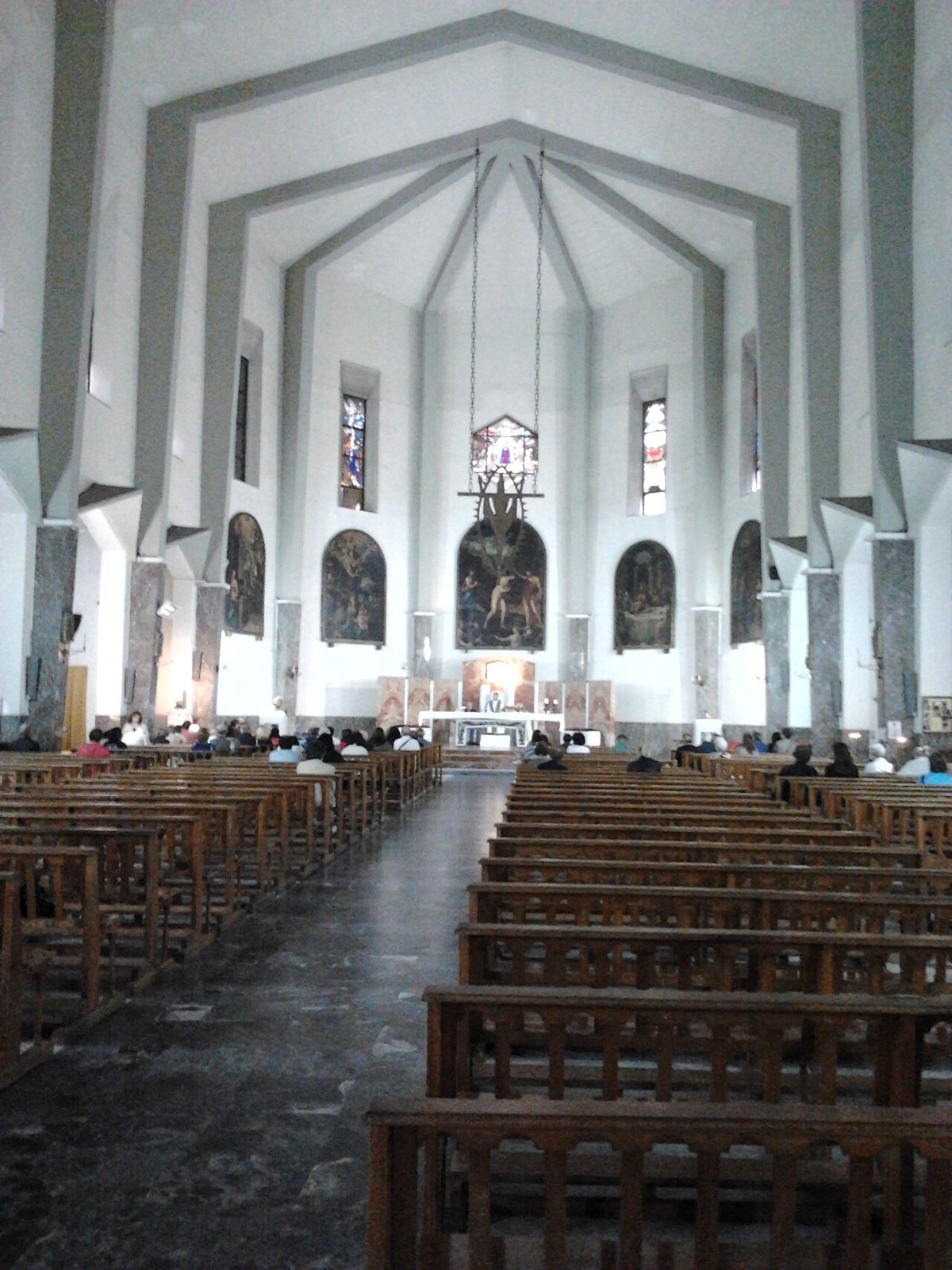
The rebuilt church, on Via Pacio Bertini near Piazza degli Artisti, holds nine sixteenth-century paintings by Marco Pino and Giovanni Balducci that came from the former church. It also contains Francesco Boldrini’s Saint John the Baptist in Prison, while Pino’s Baptism of Christ is displayed at the altar. Alfredo Scotti’s statue of Saint John the Baptist stands atop the facade.
The relocated Apostle statues
The eight statues removed in 1942 are now at the Basilica of the Incoronata Madre del Buon Consiglio at Capodimonte, where they were placed on its high altar.