Sakitsu Village: A Fishing Settlement and Hidden Christian Community in Amakusa
Site at a Glance
- Popularity
- Medium
- Country
- Japan
- Primary era
- Early Modern
- Eras represented
- Early Modern, Modern
- Civilizations
- Japanese, Tokugawa
- Site type
- City
On this page13 sections
History
Harbor and the arrival of Christianity
Sakitsu Village is a historic harbor settlement on the western shore of Sakitsu Harbor in Amakusa City, Kumamoto Prefecture, Japan. Its history is closely associated with a community that maintained Christian beliefs and practices in secret during the prohibition of Christianity. The Amakusa clan controlled southern Amakusa during Japan’s Muromachi period, which preceded the Tokugawa-governed Edo period.
In 1569, a local lord invited Luís de Almeida, a Portuguese Jesuit missionary and physician, to encourage trade with Europeans and preach Christianity. The lord was baptized in 1571 and took the name Don Miguel. Churches were built in his domain. Sakitsu was already an established harbor, although it lay away from the usual route. Ships making Japanese missions to China’s Tang dynasty, which ruled from 618 to 907, sometimes called there. The Jesuit Luís Fróis recorded the place as Saxinoccu, a name by which it was also known in Europe.
Christianity under prohibition and shogunal rule
After the Christian daimyo, or feudal lord, Konishi Yukinaga gained control of southern Higo, including Amakusa, he sheltered missionaries despite Toyotomi Hideyoshi’s order expelling them. Christianity was banned in 1613, and Sakitsu’s Christians continued their faith in secret. A confraternity, an organized religious association, was formed in 1621, and a priest carried out clandestine missionary work there in 1629.
Sakitsu’s residents did not take part in the Shimabara-Amakusa Rebellion of 1637. Isolated from the outside world, they had not heard of the uprising and escaped punishment. After the rebellion, Amakusa came under the Tokugawa shogunate, the military government headed by a shogun. Its administrator Suzuki Shigenari introduced a system that gave designated ports fishing rights in exchange for supplying official boats and crews. His successor extended the arrangement to 17 ports in 1659, including Sakitsu, helping to foster the local fishery for silver-striped round herring.
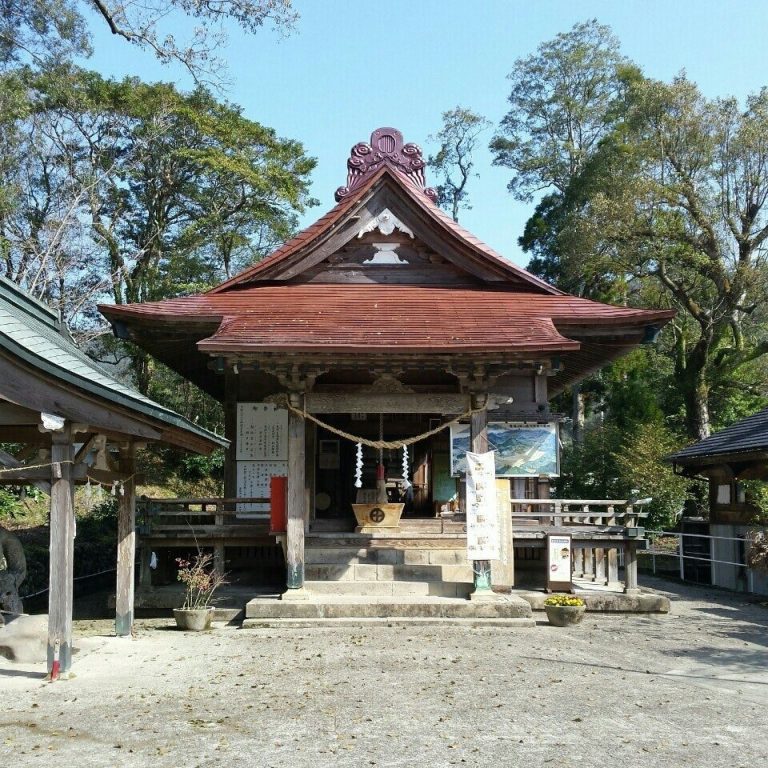
Sakitsu’s Suwa Shrine was established in 1651. Christians visiting it recited the words Amen Deus. In 1717, the Nagasaki magistrate’s office set up a lookout post at the bay entrance to monitor foreign vessels, clandestine arrivals, and smuggling, with local officials stationed there. Under religious-registration controls, Christians presented themselves publicly as Buddhists. The settlement’s isolation and its past dependence on access by sea also helped residents conceal their beliefs.
During inspections, people suspected of Christianity were ordered to tread on a fumie, a Christian image used to test their faith. Traditions say that some Sakitsu residents placed paper under their feet to avoid direct contact, or afterward washed a foot and drank the water as an act of seeking forgiveness. Hidden Christians, people who maintained Christian belief and worship under the prohibition, also used prayers known as orasho. Alongside rosaries and medals, they treated shells such as abalone and pen shells as sacred objects. Notes made by a French missionary priest around 1882 associate patterns on shells with martyrs believed to have been cast into the sea, rather than with the Virgin Mary.
In 1805, authorities investigated 5,205 suspected Christians among 10,669 people in Sakitsu, Imatomi, Oe, and Takahama. The inquiry followed the seizure of Christian objects in Imatomi the previous year. The shogunate released those investigated rather than risk disrupting the administration of its territory. The Takahama headman argued that the people had been mistaken for Christians and had reformed, but many continued to practice their faith. Testimony that people fasted during Lent, the Christian season of preparation for Easter, showed that Christian observances and teachings had endured.
Return to public Catholic life and local growth
After the ban on Christianity was lifted in 1873, many Sakitsu residents returned to Catholicism in 1876. A request made in 1878 to change their religious registration was rejected because the new household registers no longer included religion. A small church was built beside Suwa Shrine in 1880 and replaced by a larger one in 1885. By the middle of the Meiji period, a time of major institutional change that began in 1868, about 550 of Sakitsu’s 600 households were described as Christian.
From the late nineteenth century, activity in the Amakusa coalfield and a shipping route to Nagasaki increased the movement of people and goods through Sakitsu. Inns, restaurants, and a cinema opened, and the settlement became a busy center in lower Amakusa. Fishing later expanded, particularly the production of dried whitebait, as fishing methods changed and vessels grew larger.
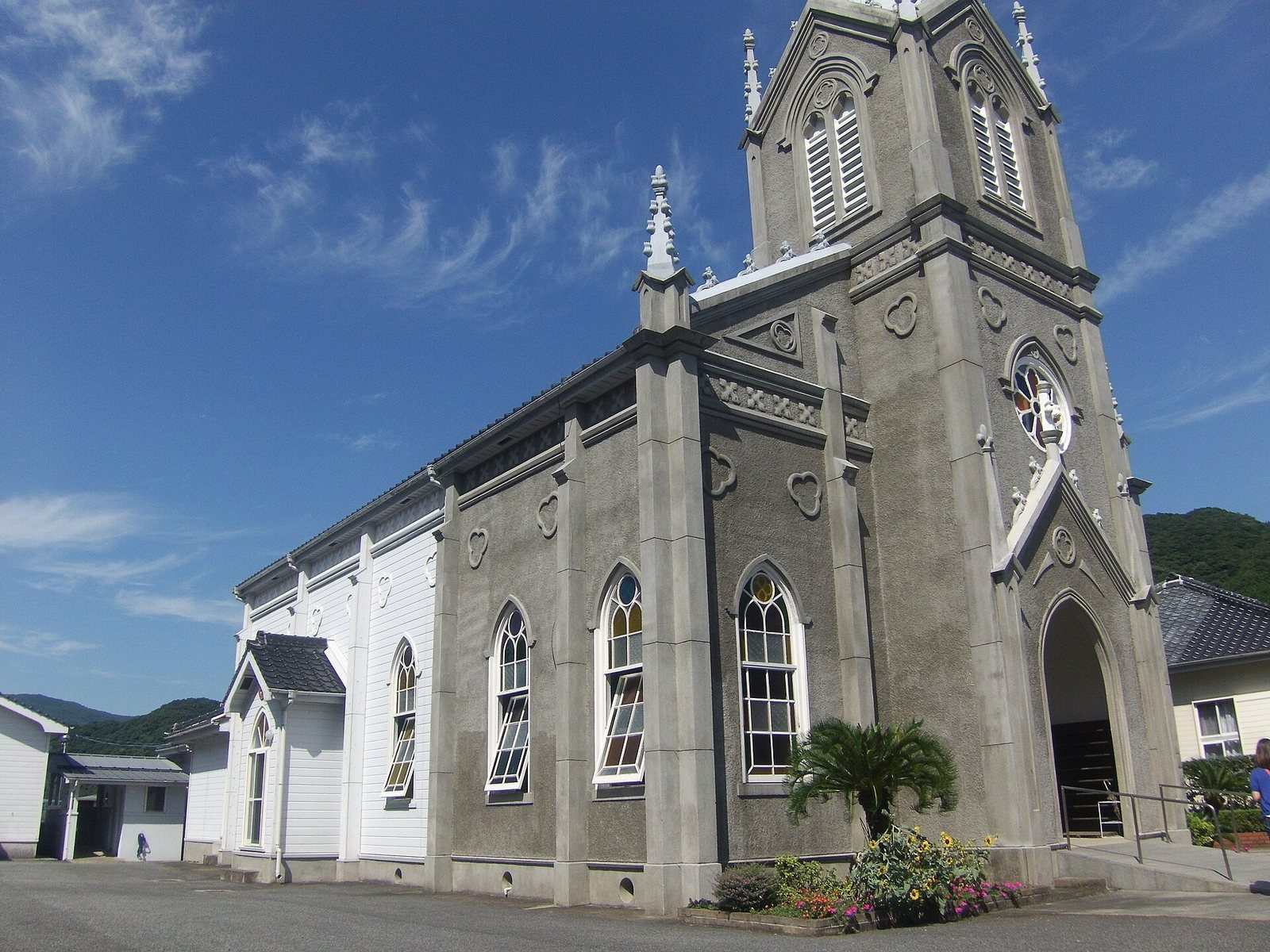
Sakitsu Catholic Church was built in 1934 at the request of the French priest Halbout, who had arrived in 1927. It stood on the former residence of the Yoshida headman, where Christians had once been required to tread on religious images. At the church’s dedication, 536 believers were present. Today, about 400 Christians belong to the congregation.
Administrative change and heritage protection
Sakitsu and Imatomi became part of Tomitsu Village in the late nineteenth century. Tomitsu later joined other villages to form the former Kawauramachi in 1954, and the area became part of Amakusa City in 2006. About 350 households now live in Sakitsu.
Sakitsu was designated an Important Cultural Landscape in 2011, a status recognizing landscapes shaped by people’s lives and their natural settings. Imatomi was added to the protected landscape in 2012; together, the settlements form one cultural landscape. Sakitsu was inscribed in 2018 as part of the Hidden Christian Sites in the Nagasaki Region, a World Heritage property associated with Christian communities who kept their faith during the prohibition. A proposed nomination focused on church buildings was withdrawn in 2016 after a recommendation to emphasize the history of clandestine Christian communities. Imatomi is part of the cultural landscape but not of the World Heritage property. Sakitsu Catholic Church is treated as part of the village landscape rather than as a separate component of the property.
Planning to conserve the Sakitsu-Imatomi landscape began in 2010, bringing residents and local, prefectural, and national agencies together to protect the settlement while maintaining everyday convenience. Its protection also draws on laws concerning landscapes, outdoor advertising, national parks, fishing ports, and steep-slope hazards, including limits on tree felling on the slopes behind the village. After the 2016 Kumamoto earthquake, residents began considering earthquake strengthening that would protect the townscape. Concerns about tsunami risk, informed by the area’s history of inundation, also prompted community-led disaster planning.
Remains
Settlement and waterfront
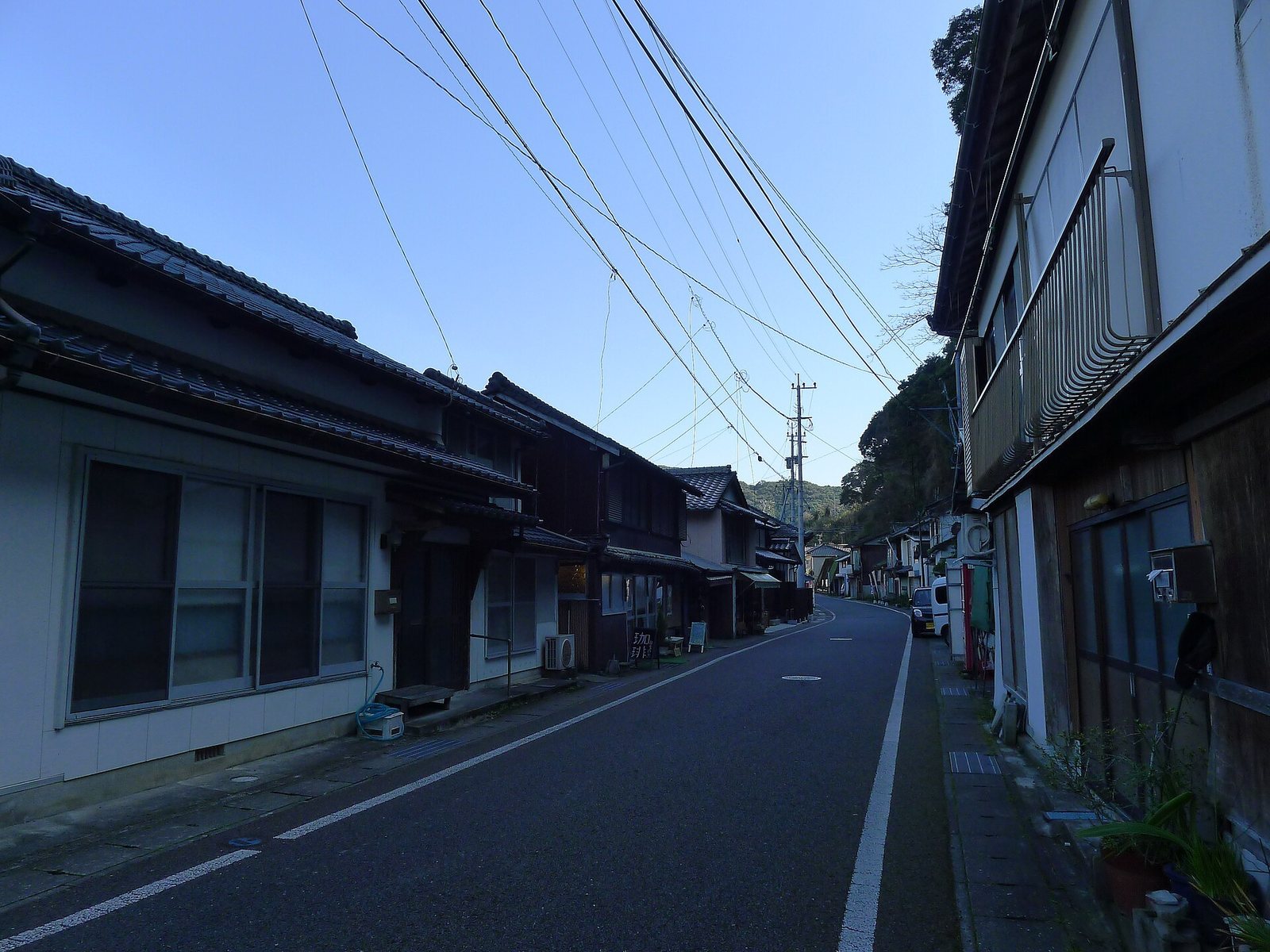
Sakitsu forms a dense, roughly 700-metre-long settlement along the western shore of its harbor, at the eastern foot of the cape centered on Mount Konpira. Its old coastal road branches from National Route 389. Houses on the hillside side occupy slopes cut into the mountain, while those facing the sea stand less than 10 metres from the water at the narrowest point and about 50 metres away at the widest. The arrangement combines closely packed housing with narrow passages and working spaces extending over the shore.
Houses, lanes, and sea platforms
Most houses occupy an area of about 33 square metres. Wooden sea platforms, called kake, project over the water. They average about five metres square and serve for mooring boats, handling fishing gear, and drying fish. Nineteen remain, and they continue to be used. Narrow lanes, known locally as toya, run between the houses and lead to the sea or a platform. About 40 are counted, though the number varies because some became private lanes during postwar sewer works. Some were formed when neighbors facing one another each contributed part of a yard. The platforms and lanes remain part of daily work and community life.
Shoreline and land divisions
Excavations indicate that the shore lay about 10 metres farther inland until the middle of the Edo period, when filling extended the settlement over the water’s edge. Land divisions created through this change appear on a map from 1823. The stone seawall and much of the layout shown on the map have remained nearly unchanged.
Connections with Imatomi
A route through the mountains linked Sakitsu with Imatomi, which remained difficult to reach by other land routes until a road opened. Sakitsu relied mainly on fishing, while Imatomi depended on farming. The settlements exchanged fish-based fertilizer and shells from Sakitsu for bamboo and palm materials from Imatomi, including materials used to make the sea platforms.
Church, shrine, and connecting road
The village’s religious buildings and the road between them are woven into the settlement’s shared landscape. The church and Suwa Shrine stand near one another, linked by a route used for both Catholic and shrine processions.
Sakitsu Catholic Church
The church is a single-storey Gothic building with a central interior space flanked by two side aisles, or passages. Its ceiling has a rib vault, a vaulted ceiling supported by intersecting ribs, and its roof is tiled and gabled. The front spire, entrance hall, and two front sections are reinforced concrete; the rear three sections, including the altar area, are timber, a division attributed to budget limits. The concrete exterior has a rough sprayed-mortar finish. Inside, white plaster walls surround a floor covered with tatami mats. Repairs in 2004-05 addressed deterioration, and the timber sections were covered with decorative plywood.
Suwa Shrine and shared route
The road connecting Suwa Shrine and the church is shared by the Catholic Eucharistic procession, centered on the consecrated host, and the shrine’s festival procession. The route is recognized as a shared cultural space within Sakitsu.