Saints Roch and John the Baptist Church in Brochów: A Gothic-Renaissance Parish Church
Site at a Glance
- Popularity
- Medium
- Country
- Poland
- Primary era
- Early Modern
- Eras represented
- Early Modern, Modern
- Civilizations
- Kingdom of Poland, Polish–Lithuanian Commonwealth
- Site type
- Religious
- Remains
- Fortified Church
On this page8 sections
History
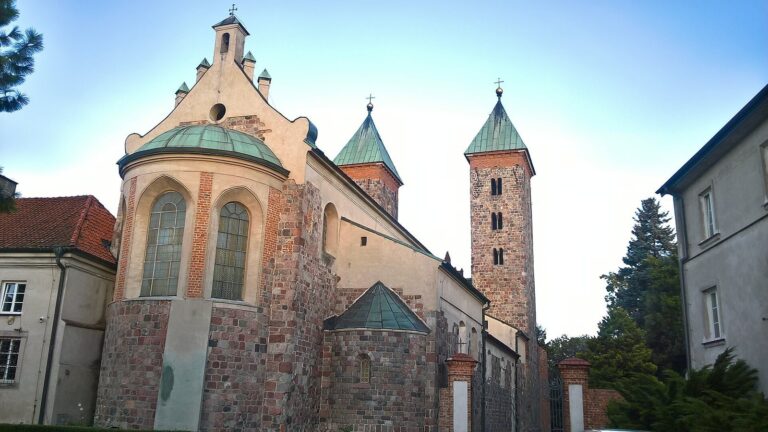
Saints Roch and John the Baptist Church in Brochów is a Roman Catholic parish church in Poland, rebuilt between 1551 and 1561 in the Gothic-Renaissance style. The work rebuilt an earlier Gothic church and was financed by Jan Brochowski, a Polish nobleman who owned the village, and his family. Architect and master mason Jan Baptysta Wenecjanin, active in Mazovia, carried out the building work. The church belongs to the parish of St John the Baptist, within the Sochaczew deanery of St Lawrence and the Diocese of Łowicz.
Dedication and endowment
Jakub Brzeźnicki, an auxiliary bishop serving in the Diocese of Poznań, consecrated the church under the dedication of John the Baptist, the biblical preacher who baptized Jesus, and St Roch, a Christian saint traditionally associated with protection from plague. By 1603, the church’s endowment included one and a half historical land units in Brochów and tithes, payments made to the church, from Wielki Brochów, Mały Brochów, Kromnów, Konary, Dzięglewo, Wola Żelazna, Strzyżew, and Wawrzyszew.
War with Sweden and rebuilding
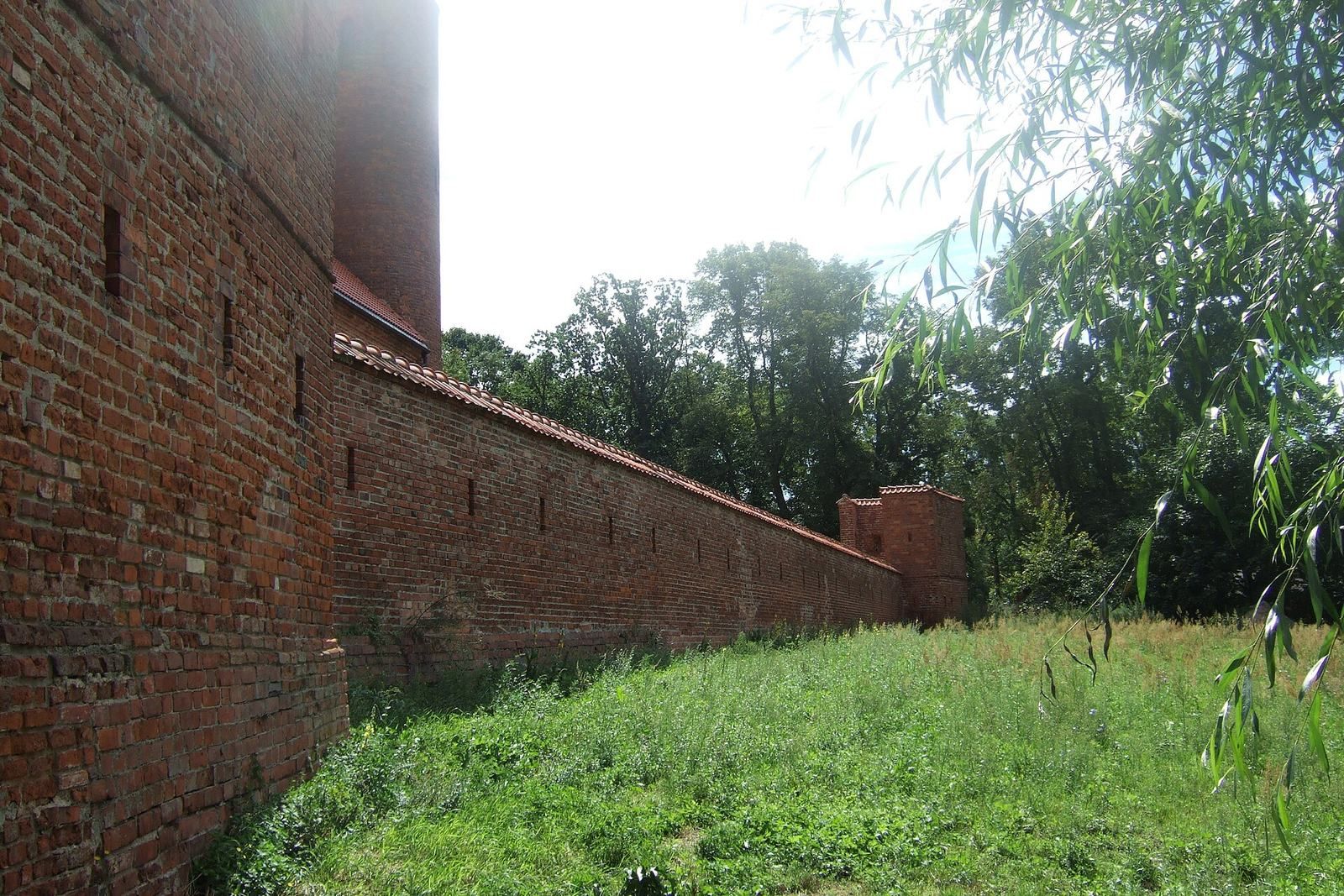
During a war with Sweden in the reign of John II Casimir, king of the Polish-Lithuanian Commonwealth, the church suffered damage so severe that it could not be repaired. The Lasocki family, then owners of the village, had a new brick church built. After 1655, Olbracht Adrian Lasocki sponsored further alterations, including brick defensive enclosures with projecting angular sections around the church grounds.
The Chopin family
On 2 June 1806, Mikołaj Chopin married Tekla Justyna Krzyżanowska in the church. Their son Fryderyk Chopin, the Polish composer and pianist also known internationally as Frédéric Chopin, was baptized there in 1810.
World wars and restoration
During the First World War, the church served as an observation post. Artillery fire in 1915 left it about 70 percent destroyed. It was rebuilt in 1924–1929 to designs by Jarosław Wojciechowski and T. Sawicki, with modernist elements. In September 1939, during the Battle of the Bzura, Polish soldiers occupied the church while covering a river crossing. It was damaged again during the Second World War and restored in 1947–1948.
Conservation work undertaken for the bicentenary of Chopin’s birth partly restored the painted interior decoration. A thorough renovation in 2008–2010 reconstructed the paintings on the vault.
Remains
Plan, towers, and galleries
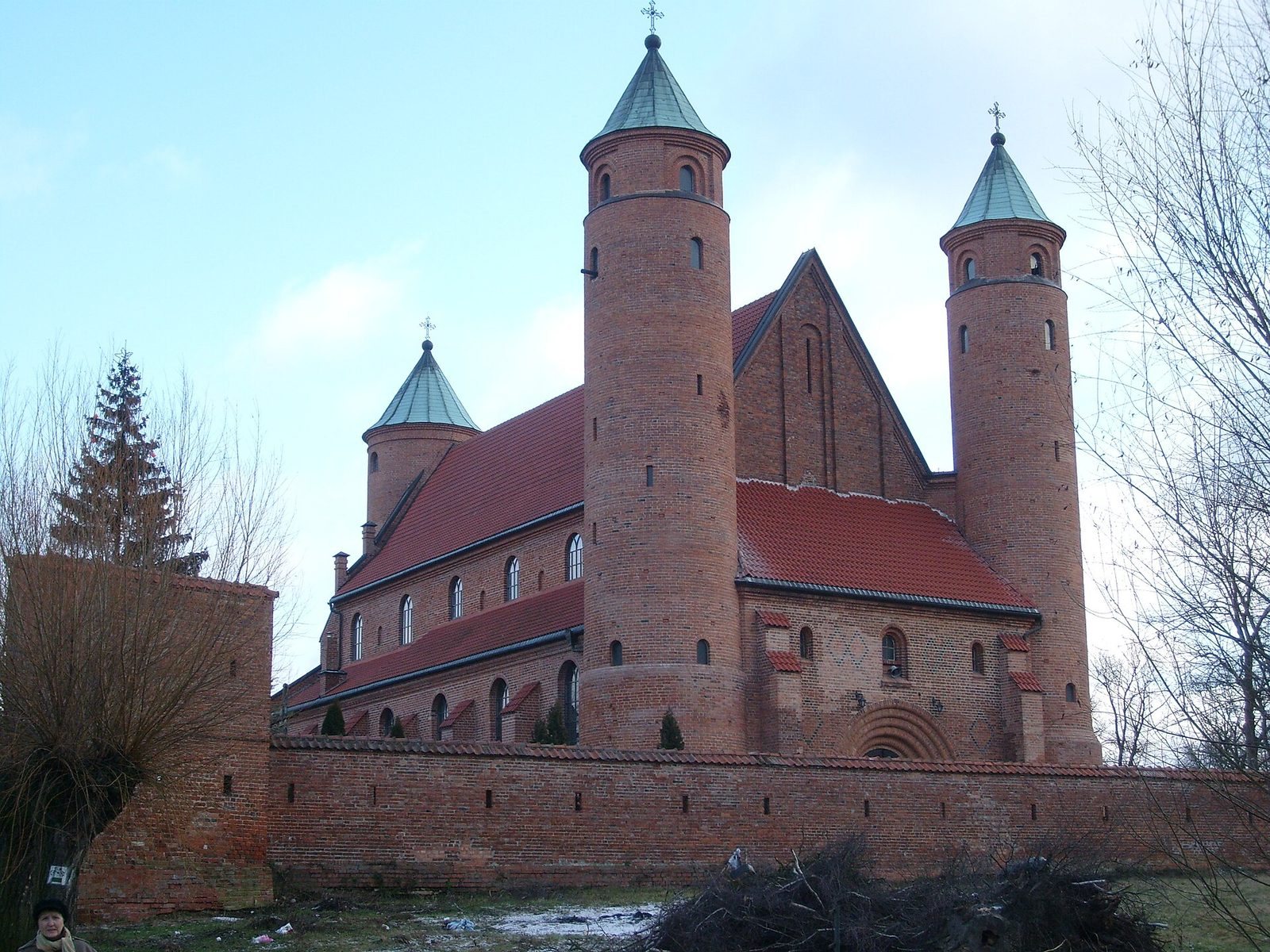
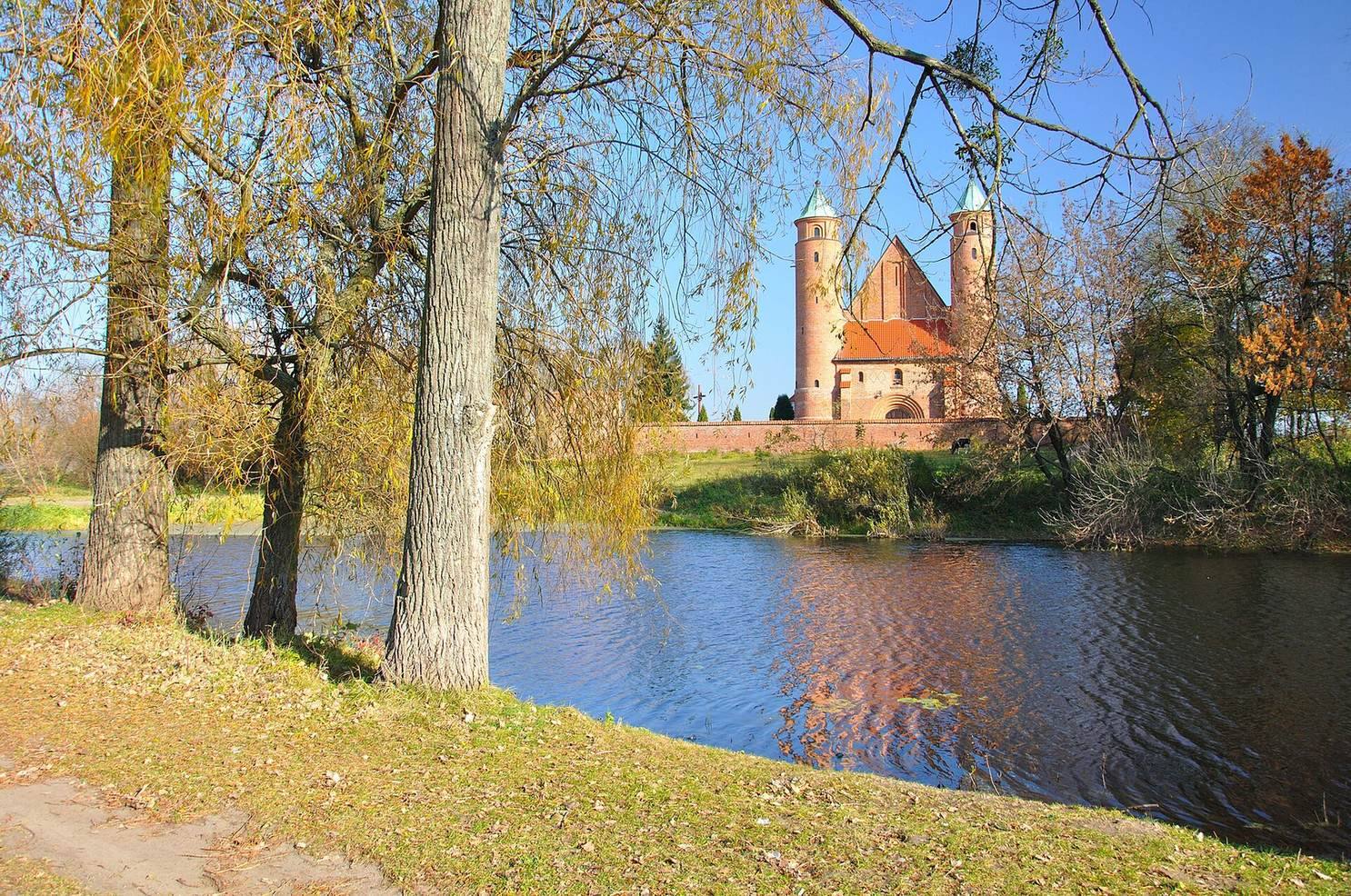
The brick church has a three-aisled plan. Three large cylindrical towers shape its exterior: two at the western corners frame a broad narthex, the entrance hall at the west end, while the third rises above the rounded apse at the chancel end and contains a gallery. A two-storey passage gallery runs around the church, with loopholes, small defensive openings. A further long gallery above the side aisles connects the towers. Remains of a moat survive on the side facing the Bzura. Plaques on the north wall commemorate the Bar Confederation, an eighteenth-century Polish political and military association, and Polish soldiers who fought in the Battle of the Bzura.
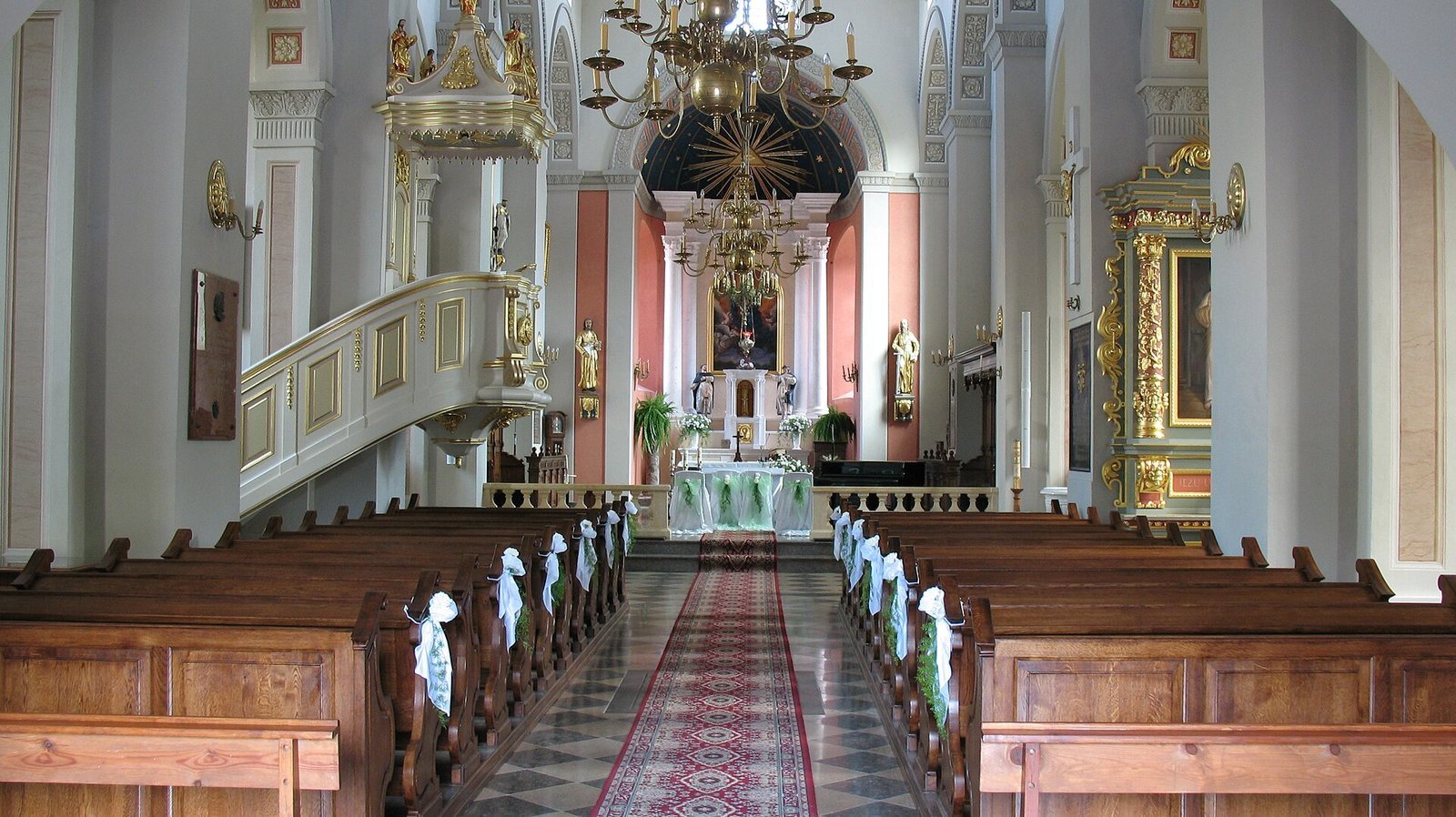
Vault and furnishings
The church’s barrel vault, a ceiling shaped like a half-cylinder, carries a network of repeated rectangular and circular panels. Its painted ornament uses multiple colors, a form of decoration known as polychromy. The interior has three altars and modest furnishings. Its organ has 20 stops, which control groups of pipes, along with two keyboards and a pedal.