Church of St. John the Baptist in Rębowo: A Timber Parish Church
Site at a Glance
- Popularity
- Very Low
- Country
- Poland
- Primary era
- Early Modern
- Eras represented
- Early Modern, Modern
- Civilizations
- Kingdom of Poland, Polish–Lithuanian Commonwealth, Russian
- Site type
- Religious
- Remains
- Church
On this page8 sections
History
The Church of St. John the Baptist in Rębowo is a Roman Catholic timber parish church in Poland. It is dated to 1620, although it may have existed in the sixteenth century. The church was altered around the turn of the seventeenth and eighteenth centuries.
It serves a parish of the same dedication. Repairs took place in 1848 and 1870, followed by further work in 1977–78 and 1995–96.
Remains
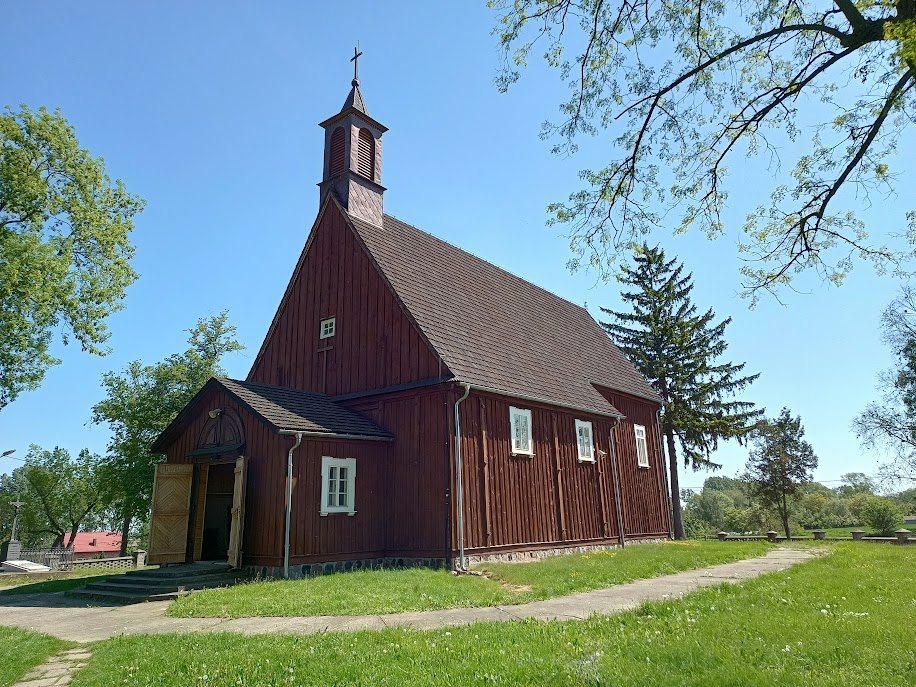
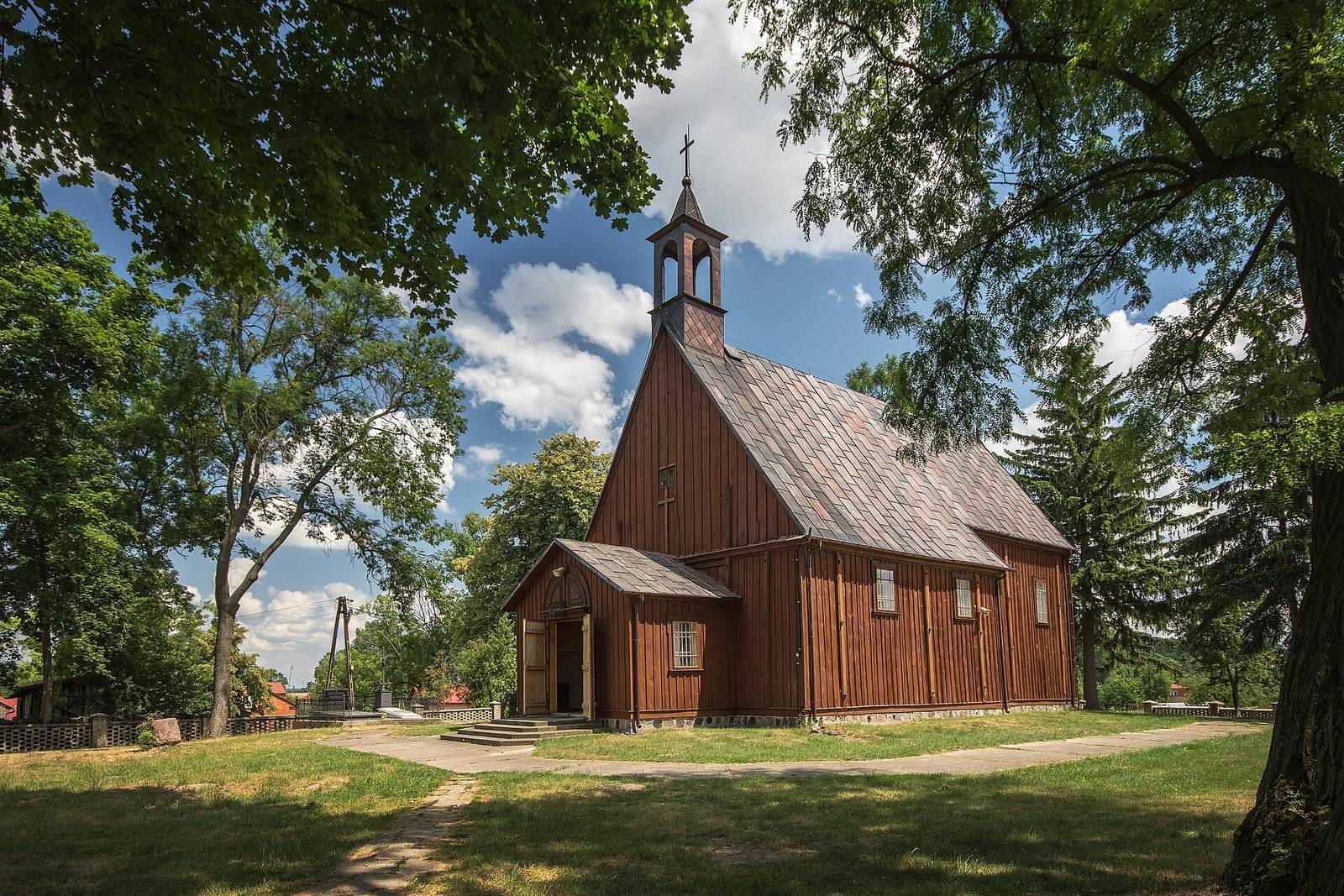
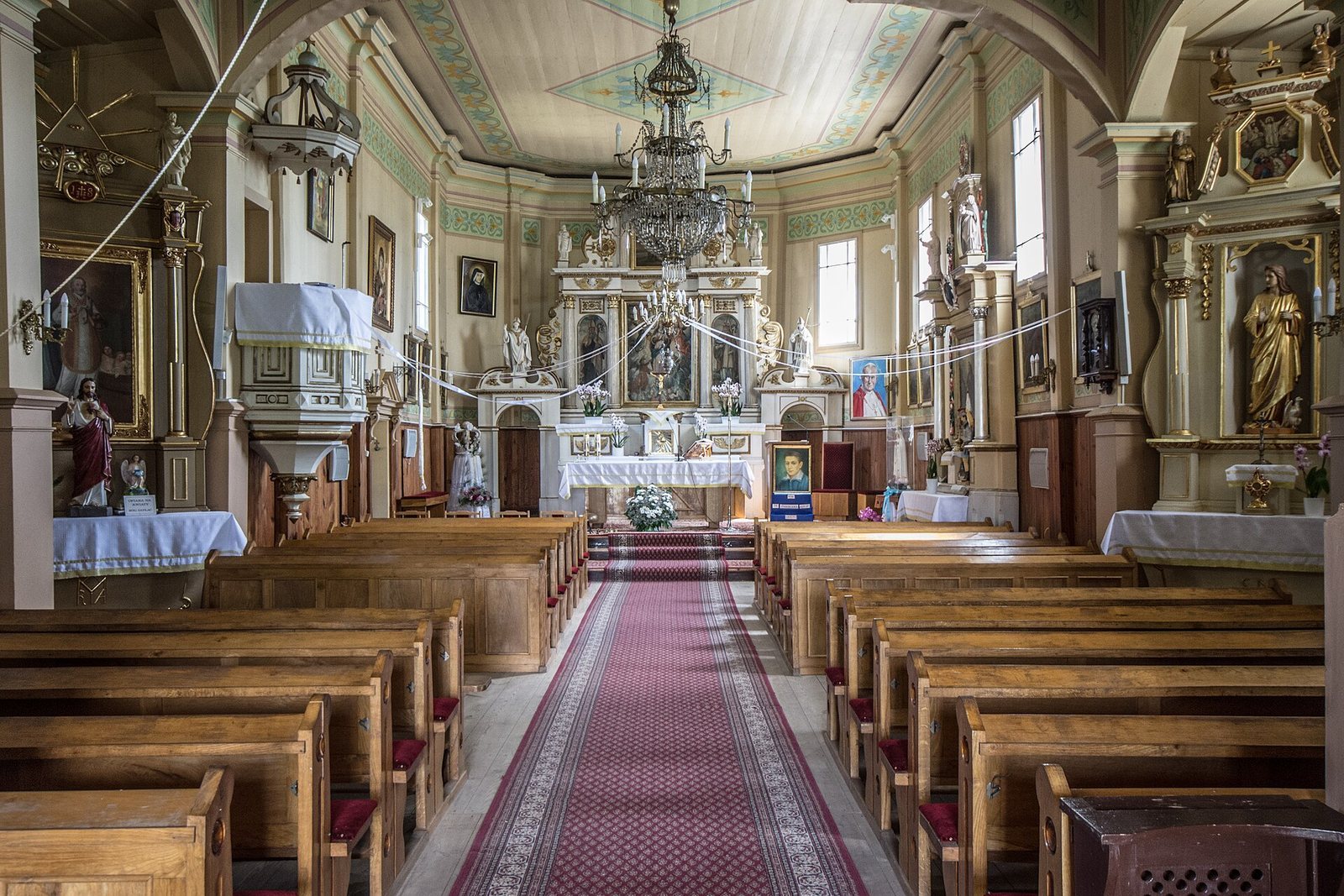
The building is made of horizontal logs joined at the corners and is aligned east to west. Its three-aisled plan has a central main space flanked by two side aisles. The chancel, the sanctuary end of the church, lies to the east.
Building and interior
Exterior form
The chancel is narrower than the main body and ends in a square wall. A side room adjoins it, while a porch stands at the front of the main body. The building has a single-ridge roof, formerly covered in sheet metal and fitted with shingles in 2019. Above the front of the main body is a square bell turret, a small roof-mounted tower for a bell. Its metal conical roof is topped by a lantern.
Interior arrangement
Two pairs of posts divide the interior. The chancel and central space have flat ceilings with enclosed sections at the sides; the side aisles have lower ceilings. The choir loft, an elevated gallery, rests on two posts and has a straight parapet. It holds an organ case and an instrument made in 1911 in Leopold Hartman’s workshop.
Altars and furnishings
Altars
The church has four altars. The main altar, made around 1620, is Mannerist, a style that followed the Renaissance. Two altars stand beside the opening to the chancel. One is Baroque, a later style known for elaborate, dramatic forms, and dates to the early eighteenth century. The other is Neo-Gothic, a revival of medieval Gothic design, and dates to the second half of the nineteenth century. A third side altar, also Baroque, dates to the eighteenth century.
Sculpture and religious furnishings
A group of sculptures depicting the Crucifixion, made around 1540, stands on the beam spanning the division between the main space and the chancel. The painted decoration uses several colors and includes plant motifs. The furnishings also include a seventeenth-century Baroque baptismal font, a pink-granite holy-water basin in a Gothic style, a medieval design tradition, and a smaller black-marble basin in the Baroque style, dating to around the turn of the seventeenth and eighteenth centuries. A holy-water basin is a vessel for water used in religious observance.