Saint Polycarp Church: A Roman Catholic Church in İzmir
Site at a Glance
- Country
- Turkey
- Primary era
- Early Modern
- Eras represented
- Early Modern, Modern
- Civilizations
- Ottoman
- Site type
- Religious
- Remains
- Church
On this page6 sections
History
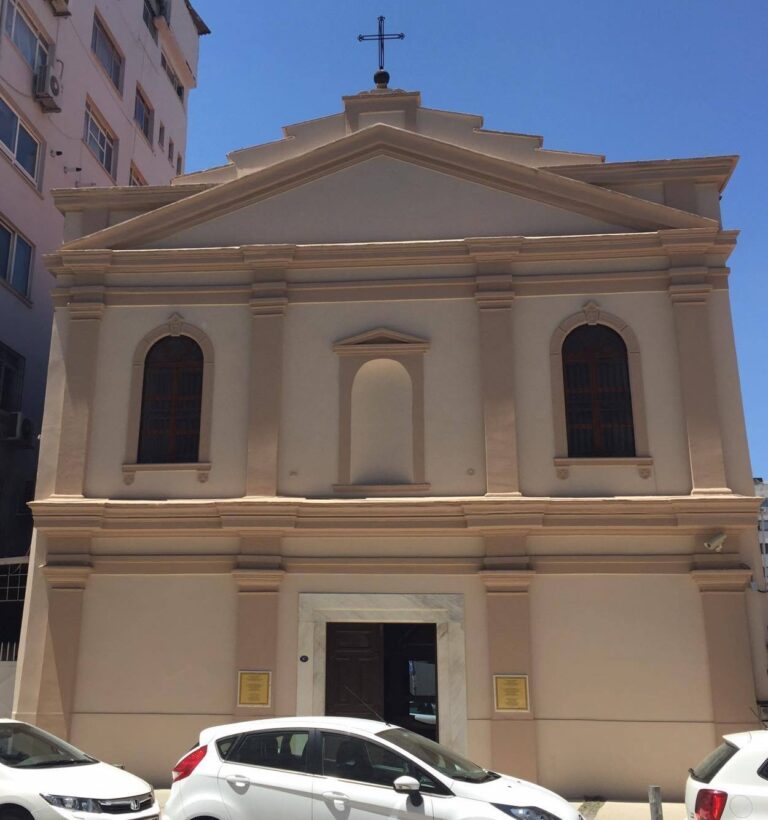
Saint Polycarp Church is a Roman Catholic church in Konak, İzmir, Türkiye. It is the city’s oldest surviving church and one of its oldest buildings. Dedicated to Polycarp, an early Christian bishop of Smyrna, disciple of the apostle John, and martyr who lived around the turn of the first and second centuries, the church belongs to the Latin Archdiocese of İzmir, the local Catholic jurisdiction for Latin Catholics.
Foundation and early history
The church was built in 1625 at the request of French King Louis XIII, with Ottoman permission. It was entrusted to the Capuchins, a branch of the Franciscan religious order, and a monastery was later added to the complex.
Fires and rebuilding
An earthquake in 1688 and a fire in the months that followed damaged the church and its associated buildings. Repairs and rebuilding took place in 1690 and 1691. The church and the surrounding French quarter escaped damage in a 1742 fire, an outcome attributed to Saint Polycarp’s intercession.
A fire in 1763 destroyed the monastery and severely damaged the church. With Ottoman approval and support from French King Louis XVI, the church was rebuilt in 1774 and 1775.
Destruction and reconstruction
The Great Fire of Smyrna destroyed the church in 1922. It was rebuilt in 1929.
Remains
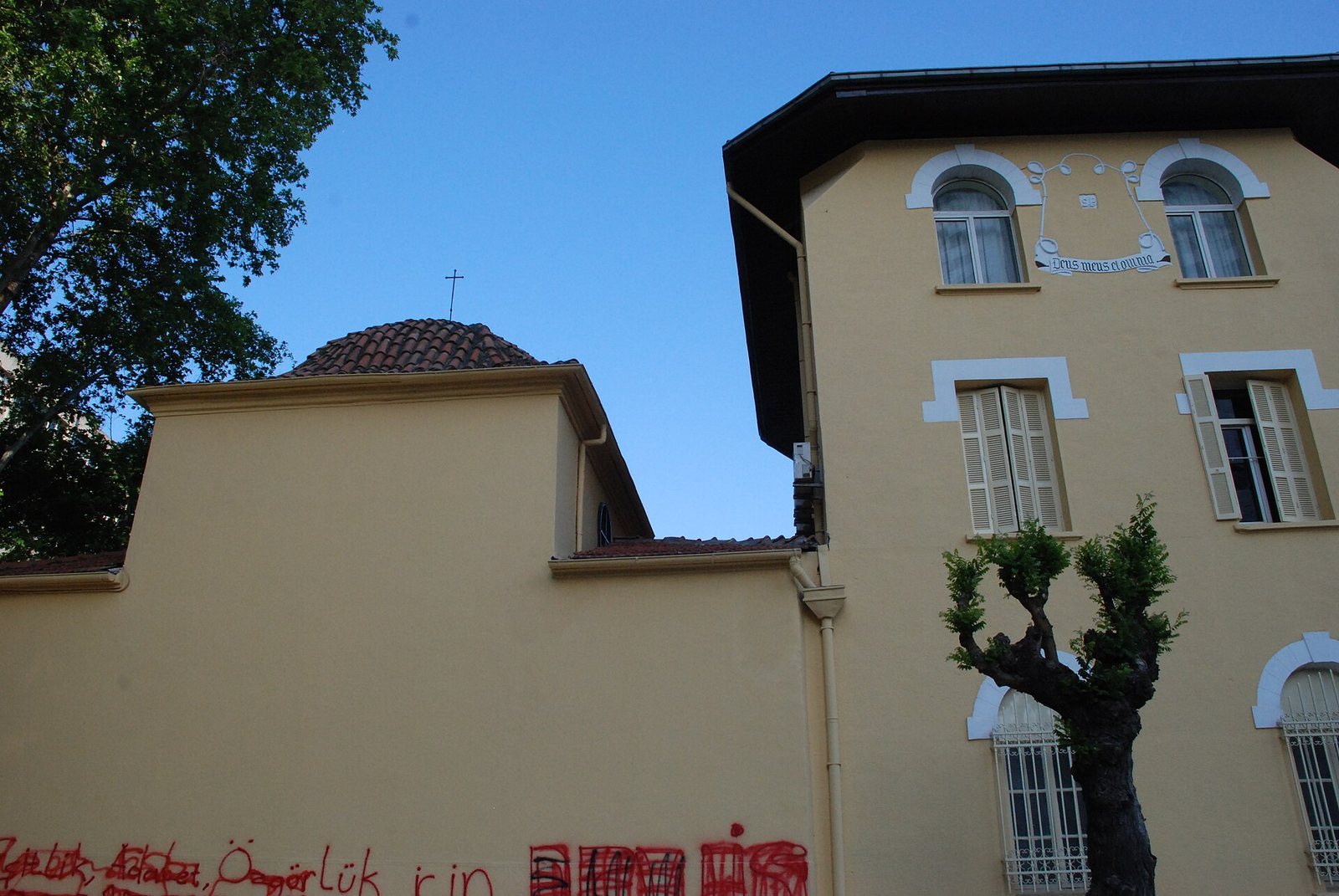
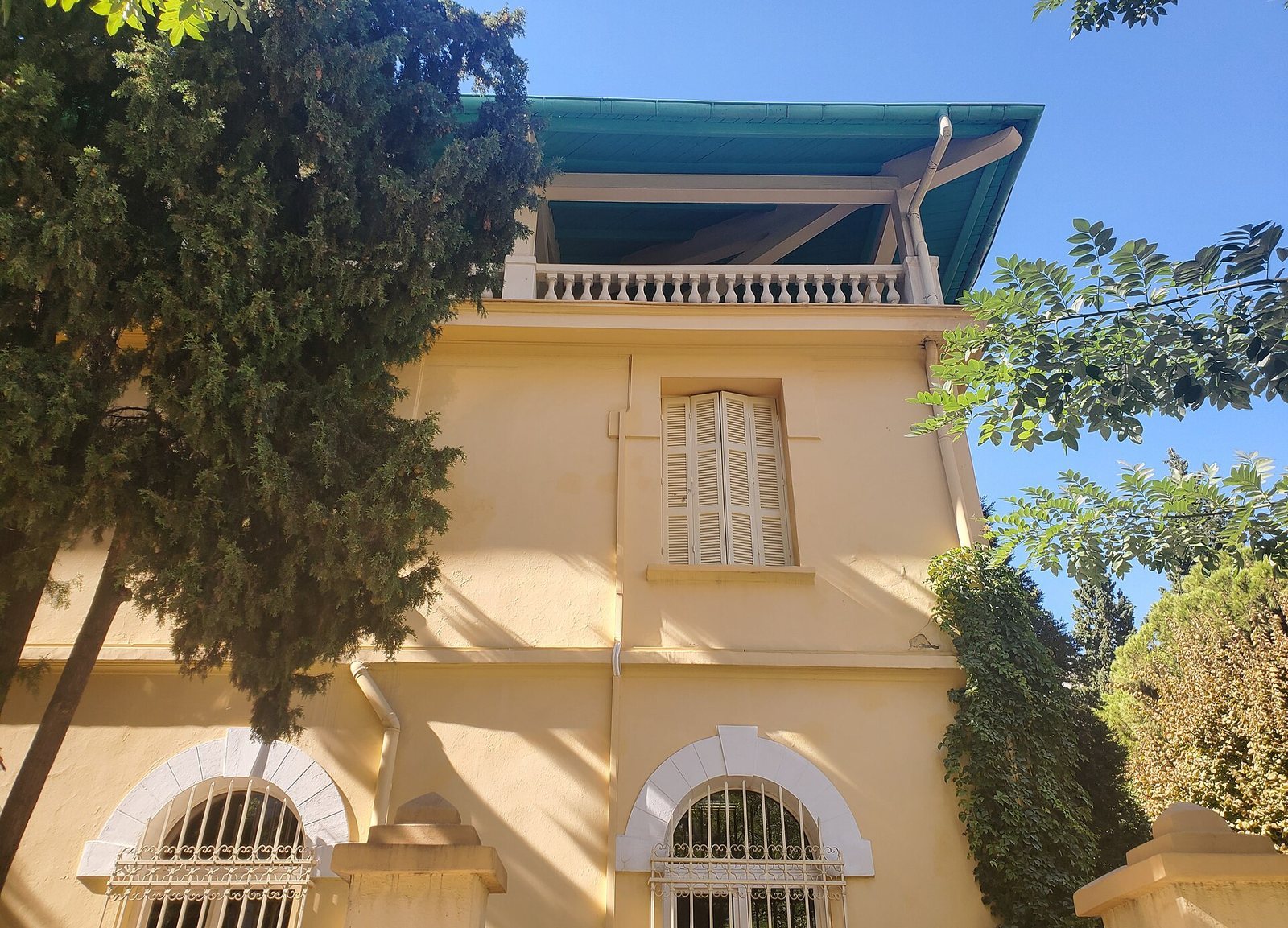
The church is built of stone and brick, with a rectangular plan arranged along an east–west axis. Its basilican layout has a central aisle flanked by two side aisles, forming three naves. At the southwest corner, an octagonal bell tower rises to a spire. The 2020 earthquake damaged both the tower and the church’s interior.
Chapels and interior features
Chapels were added during an enlargement carried out between 1892 and 1898. Painted scenes of Polycarp’s life, created by French artist Raymond Charles Péré, decorate the church. In the scene of Polycarp’s martyrdom, Péré portrayed himself as a bound figure on the left. A marble plaque honoring Louis XIII was installed inside the church in 1820, and the interior also includes an altar.