Saint Mary’s Church, Mali Grad: A Fourteenth-Century Orthodox Cave Church
Site at a Glance
- Popularity
- Medium
- Country
- Albania
- Primary era
- Medieval
- Eras represented
- Medieval, Early Modern
- Civilizations
- Ottoman, Serbian
- Site type
- Religious
- Remains
- Church
On this page6 sections
History
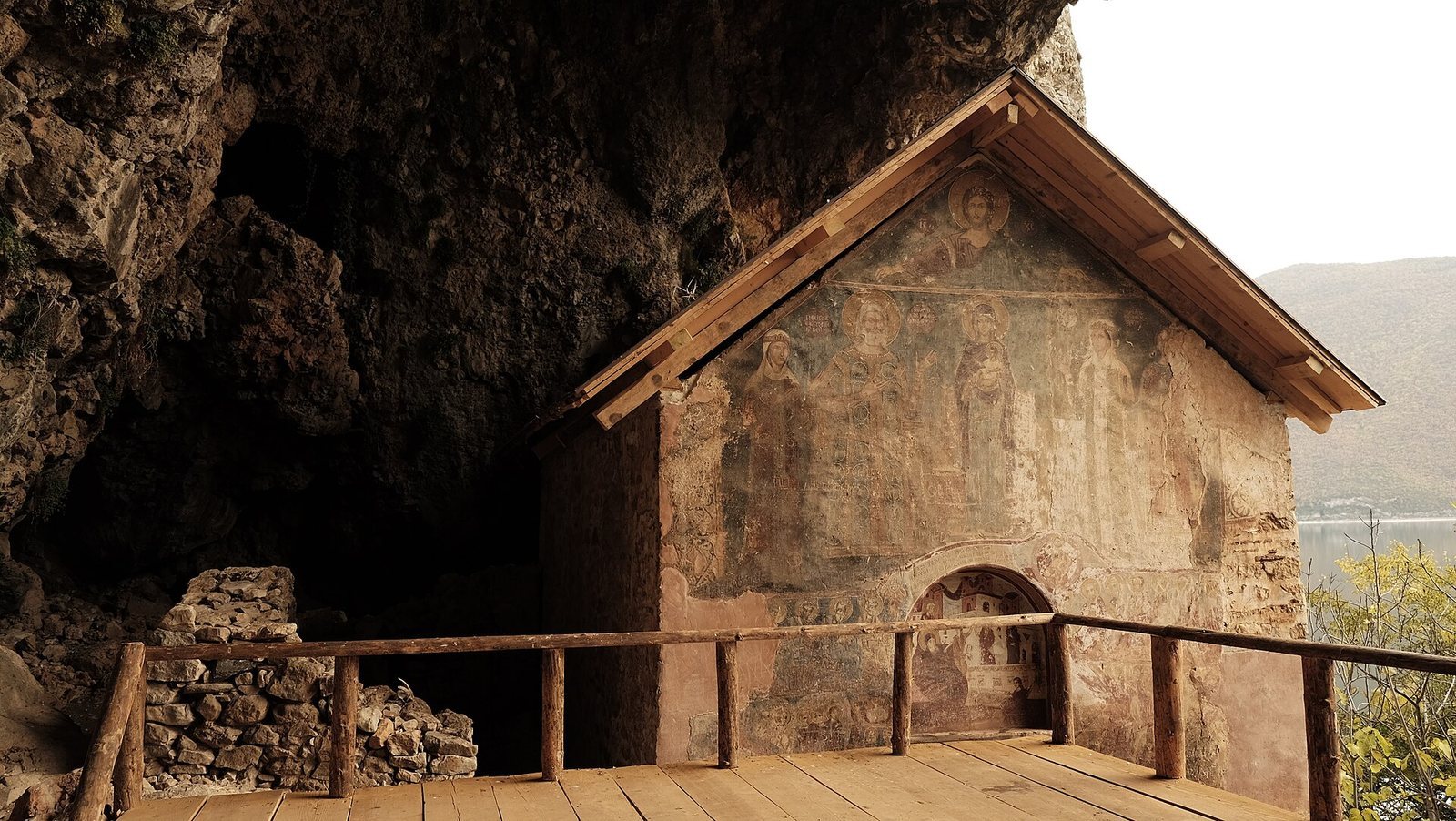
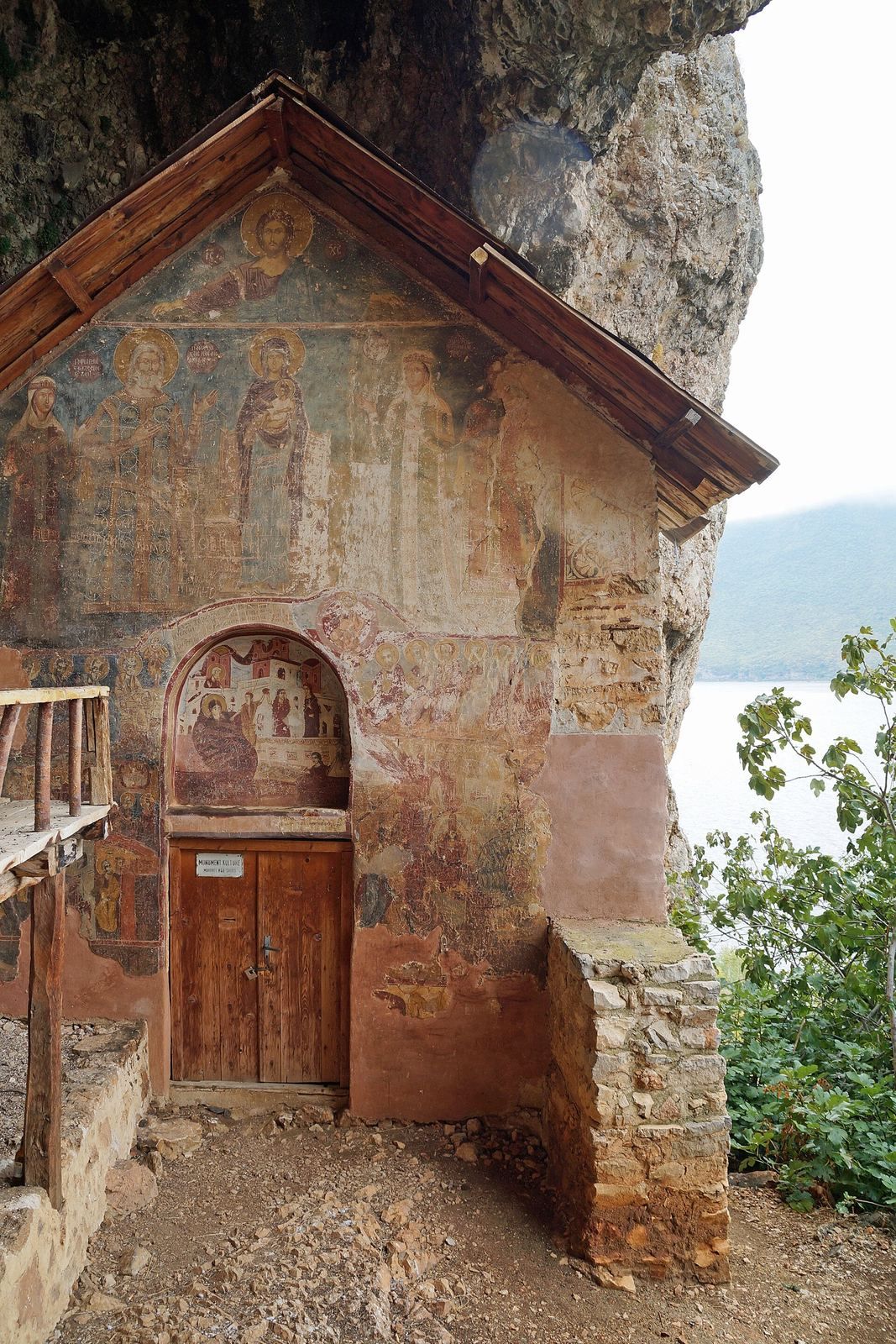
Saint Mary’s Church, Mali Grad, is a rock-cut Orthodox church on Mali Grad Island in Albania’s Lake Prespa. Built in 1345, it is dedicated to the Nativity of the Virgin Mary, commemorating her birth. The church is affiliated with the Albanian Orthodox Church and the Korçë Diocese, and is listed as Albanian cultural monument number 65.
Foundation and renovation
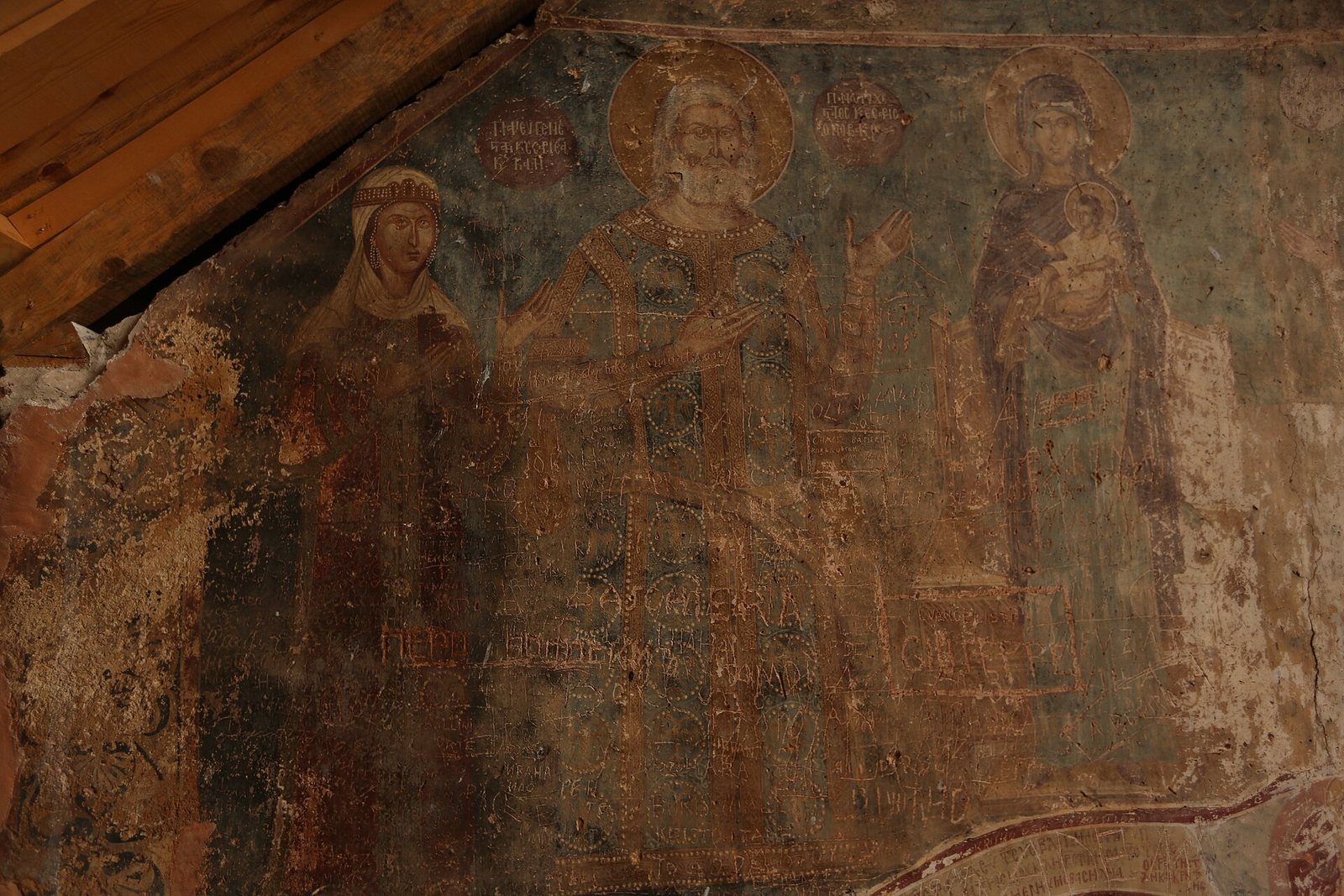
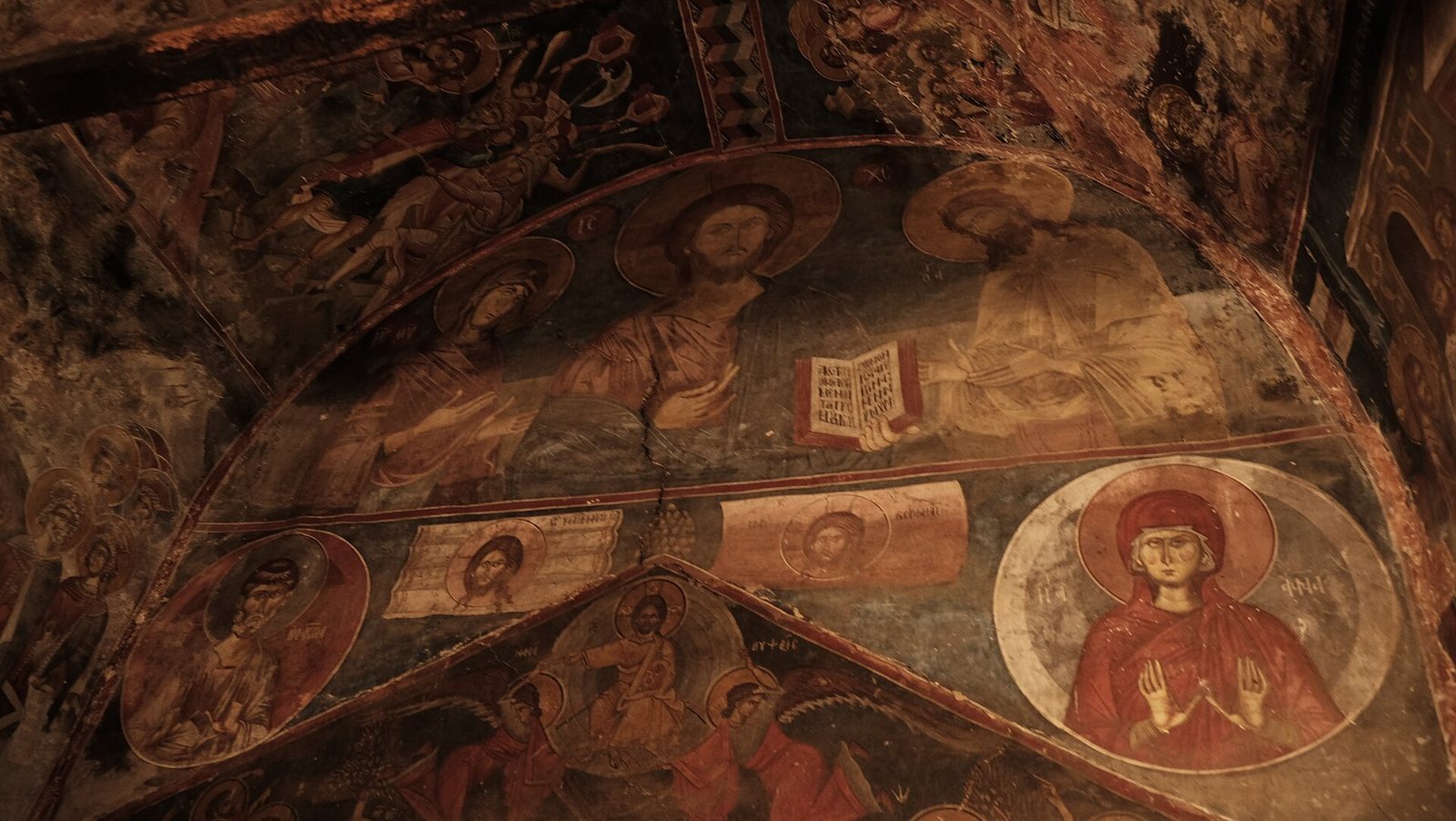
The oldest surviving inscription names Boyko and his wife Eudokia as the church’s first founders. A second inscription, dated 1369, records a renovation by the Serbian nobleman Novak Mrasorović, whose title of caesar denoted high rank at the Serbian court, not Roman emperorship. It also names his wife Kalia, their son Amiral, and their daughter Maria. The church’s painters belonged to the Kastoria painting school, a regional tradition of medieval church painting. Work associated with the same school appears at St Athanasius of Mouzaki in Kastoria and at the Church of Jesus Christ the Life-Giver in Borje near Korçë.
Later painting and study
In 1607, the exterior facade was repainted with a Last Judgment scene, a Christian subject depicting the final judgment of humanity. In the late nineteenth century, Russian medievalist Pavel Mikukov became the first to describe the church’s wall paintings and publish its historical inscriptions. While investigating Novak’s identity, he examined the paintings on the western facade and the founder portraits, and gave a detailed description of the early seventeenth-century paintings.
Remains
Cave setting and inscriptions
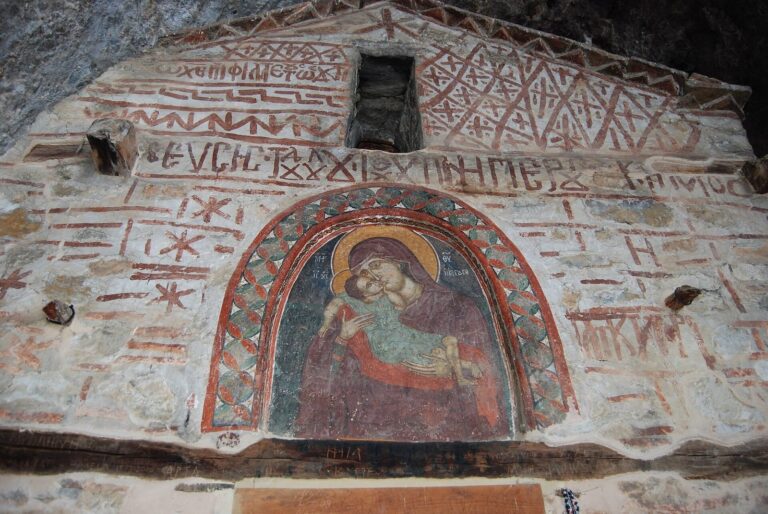
The church occupies a large natural recess on the southeast side of Mali Grad Island, in the Albanian part of Lake Prespa. Three historical inscriptions survive. The oldest is in the apse, a recessed space at the end of a church. Another is inside, above the western doorway on its north side, over images of Saints Constantine and Helena, the Roman emperor and his mother, both venerated as saints. The inscription dated 1369 is in Greek.
Wall paintings
Wall paintings dated to 1369 include images of Novak’s family and his wife Kalia. The western facade bears the Last Judgment composition, while a scene of the Nativity of the Virgin is painted in the curved wall area above the western doorway.