Saint John’s Church: A Gothic Parish Church in Mechelen
Site at a Glance
- Popularity
- Medium
- Country
- Belgium
- Primary era
- Medieval
- Eras represented
- Medieval, Early Modern
- Civilizations
- Habsburg, Holy Roman Empire, Prince-Bishopric of Liège, Spanish
- Site type
- Religious
- Remains
- Church
On this page12 sections
History
Saint John’s Church is a Gothic Roman Catholic parish church in Mechelen, Belgium, dedicated to John the Baptist, the preacher associated with baptizing Jesus, and John the Evangelist, traditionally identified as the author of the Gospel of John. It belongs to the Archdiocese of Mechelen-Brussels and follows the Roman rite, the Catholic Church’s principal liturgical tradition. Its architect is identified as Antoon I Keldermans, a Flemish architect of the late medieval period.
Medieval foundation and expansion
A chapel dedicated to John the Baptist stood here by the thirteenth century and became a parish church during that century. The church grew in the fourteenth century, when a choir, transept, and side aisles were added. Further expansion in the second half of the fifteenth century brought it to the scale of a full place of worship. Bishop Henry of Bergen of Cambrai consecrated the church in 1483.
Tradition holds that the church’s spire came from an earlier St Rumbold’s Tower, a predecessor of the present cathedral tower. This account links the church’s tower to the history of Mechelen’s cathedral.
Sixteenth-century damage and occupation
The church suffered severe damage in 1546, when an explosion at the Zandpoort city gate struck the surrounding area. During the religious wars, opponents of religious images plundered the interior in 1566. In 1572, troops of the Duke of Alba, the Spanish commander and governor Fernando Álvarez de Toledo, used the church as a barracks.
Seventeenth and eighteenth centuries
On 27 December 1616, the church administration contracted the Flemish Baroque painter Peter Paul Rubens to create a triptych for the high altar. Rubens delivered the work in 1617 and retouched it at the church. The 1,800-guilder payment was made in instalments through 1624.
From 1645, Oratorians, priests belonging to the Catholic Congregation of the Oratory, served the church. During the 1670s, the Vendeville family, which included Jean Vendeville, Bishop of Tournai, supported the Oratory priests’ house. An inscription dated 1676 praises the family. A section was added to the sacristy in 1708.
French rule and modern conservation
In 1799, under French republican rule, the church building was sold at public auction. The purchaser later returned it to the church. In 2008, the Flemish Institute for Immovable Heritage discovered fourteenth-century wall paintings in the tower. A thorough restoration began with exterior work, and restoration of the interior was completed in 2018. The church is protected heritage in Flanders.
Remains
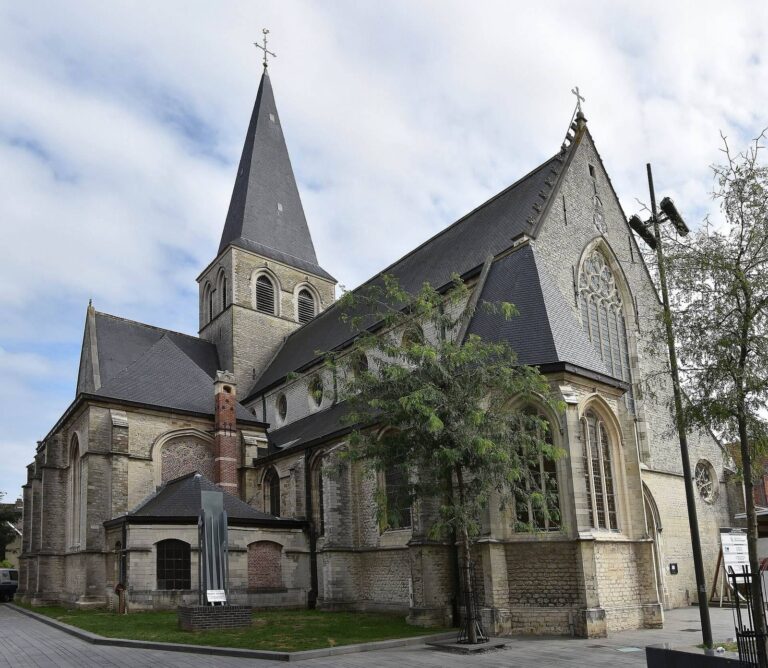
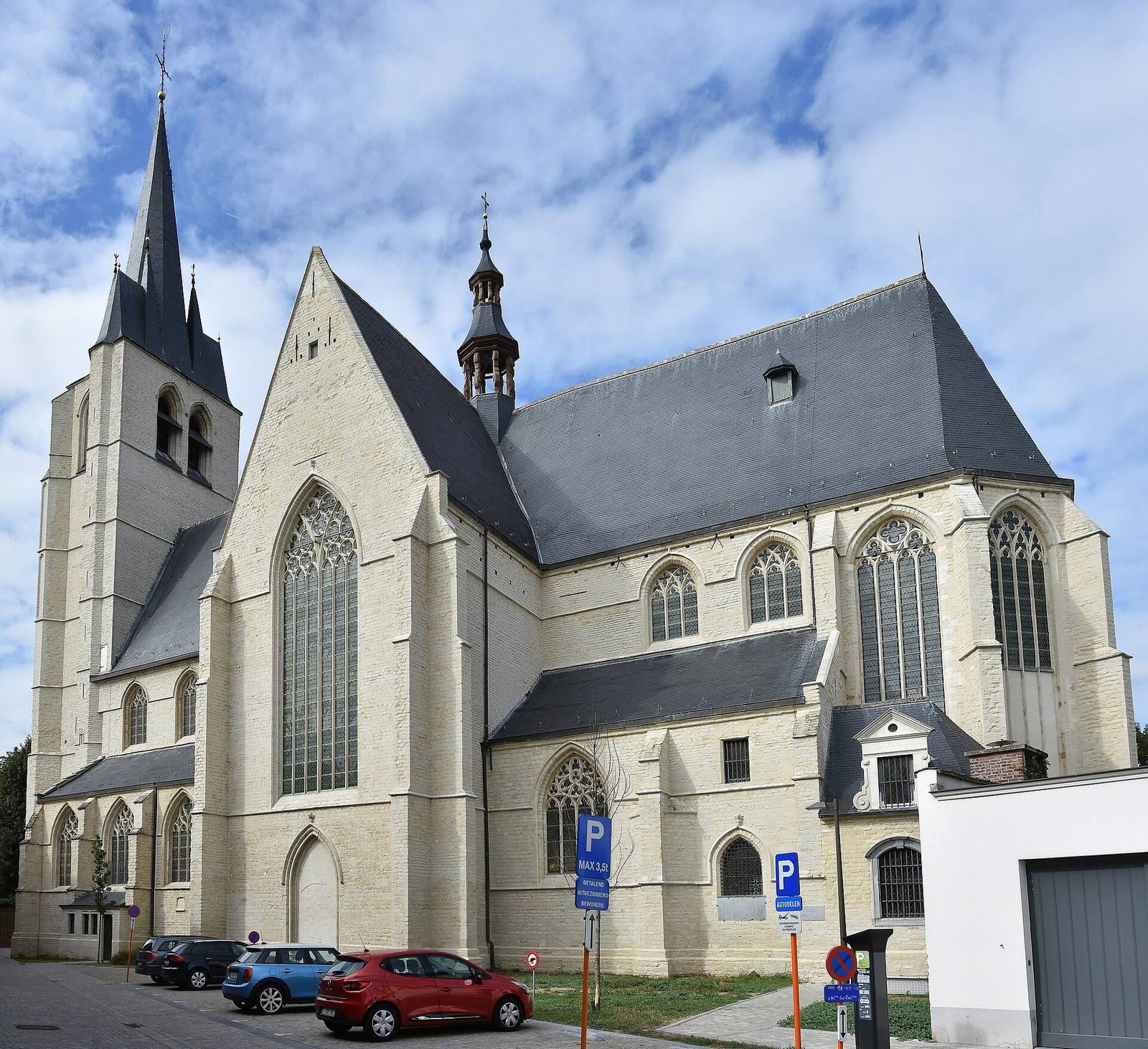
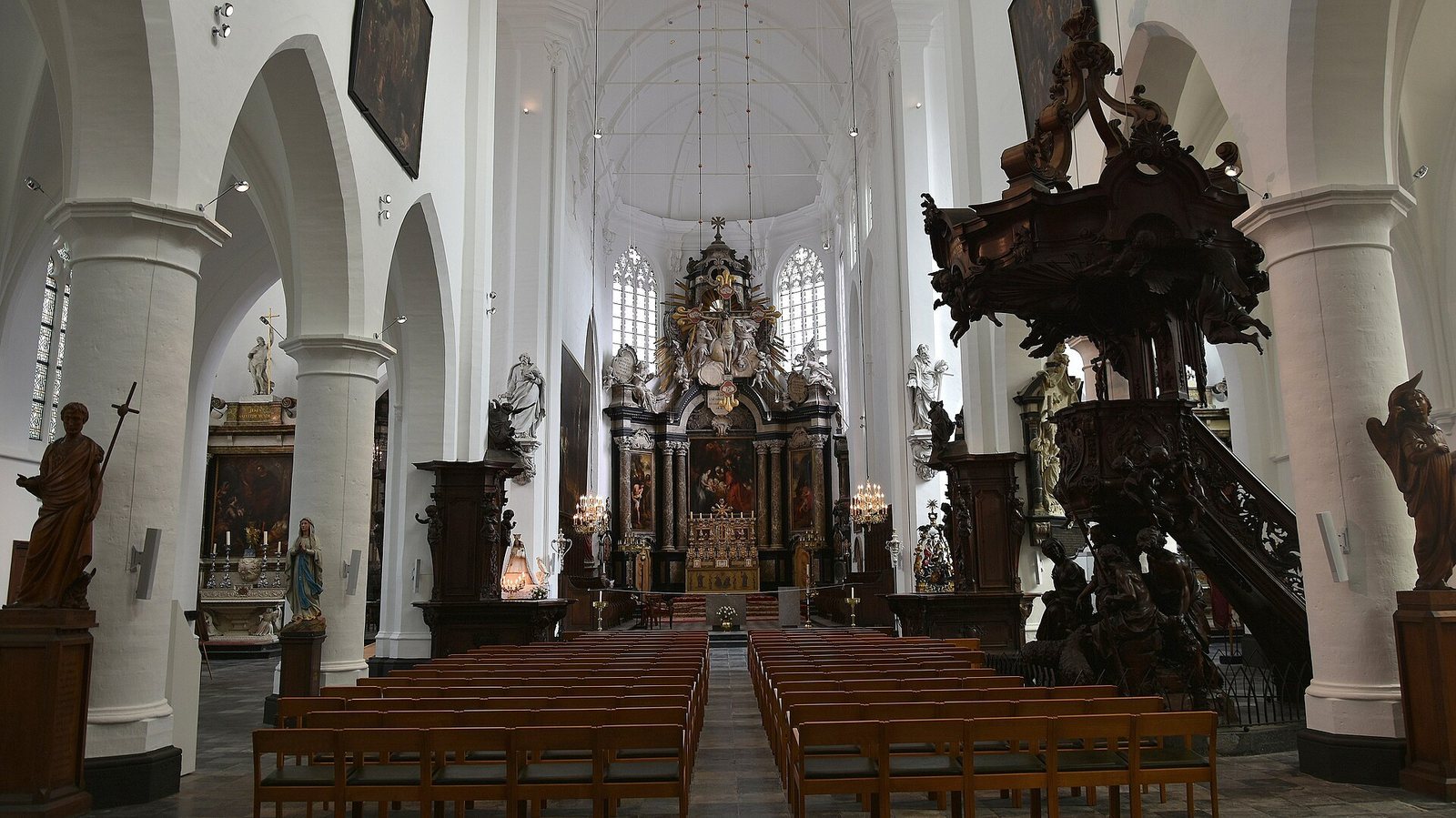
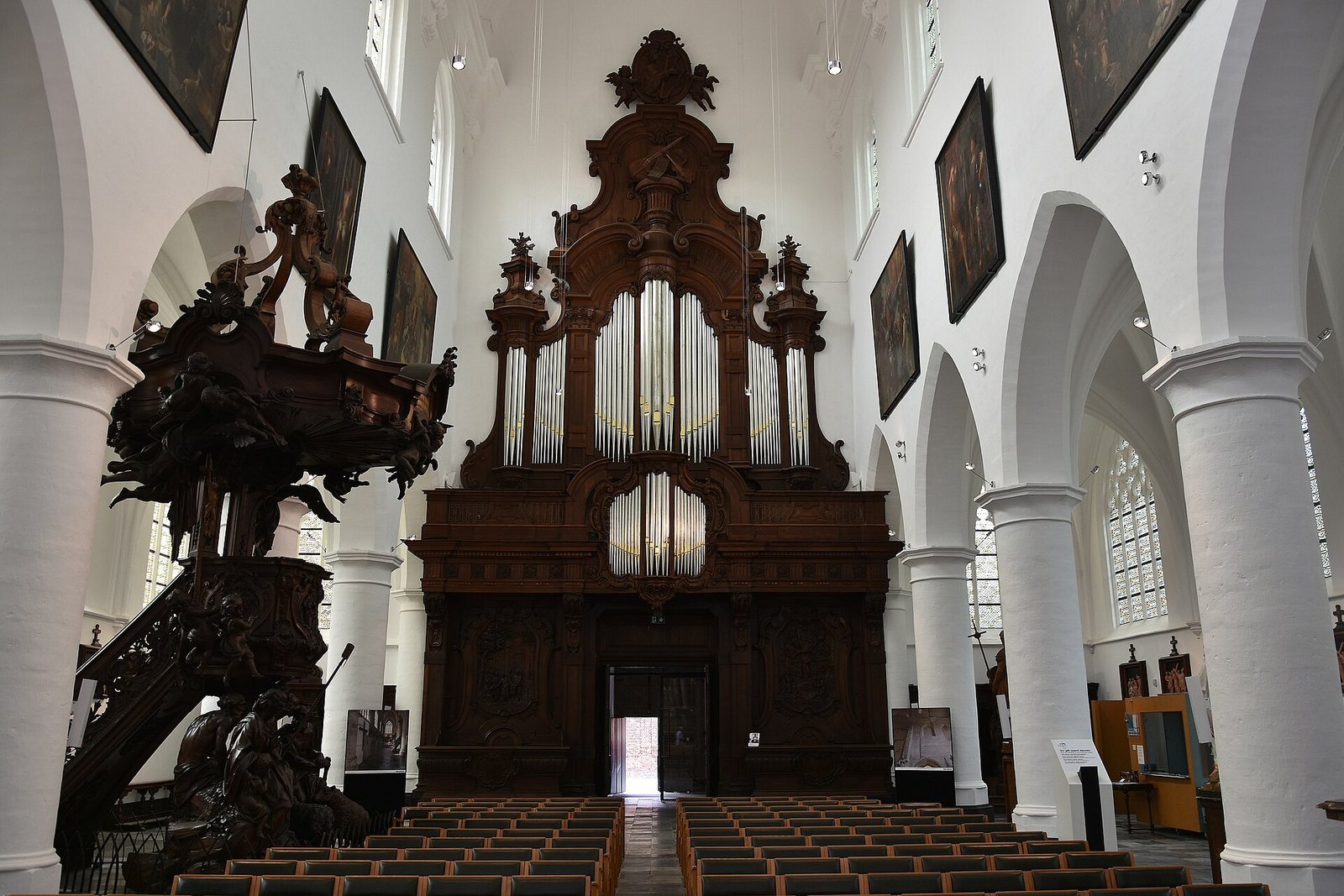
The Gothic church is arranged around a central nave, with side aisles, a transept, and a choir. Its 55.5-metre spire is surrounded by four small turrets. The interior contains the high altar, furnishings along the nave, and an organ at the rear; the tower’s first floor, behind the organ case, holds two large wall paintings.
Architecture and furnishings
Gothic structure and spire
The church’s Gothic form includes the nave, side aisles, transept, and choir. Above it rises the spire, measuring 55.5 metres and encircled by four smaller turrets.
Rubens’s high altar
The high altar includes Rubens’s three-panel altarpiece, or triptych. The central panel shows the Adoration of the Magi. The two wings are painted on both sides, with scenes of John the Evangelist on Patmos and in boiling oil, the beheading of John the Baptist, and the Baptism of Christ.
A predella, the lower section beneath an altarpiece, sits below the central panel. It originally held three small paintings. Christ on the Cross, from Rubens’s workshop, remains in the church. The Adoration of the Shepherds and The Resurrection of Christ are now in the Museum of Fine Arts in Marseille. A restored crucifix and candlesticks are also associated with the high altar.
Other paintings
The church also contains The Announcement of Christ’s Birth, a work from Rubens’s workshop, and a copy by Flemish Baroque painter Jacob Jordaens of his The Four Evangelists. Another version of Jordaens’s painting is in the Louvre.
A separate triptych by Flemish Baroque painter Gaspar de Crayer came from Grimbergen Abbey. Its central panel shows Jesus meeting Veronica, a figure in Christian tradition associated with wiping his face on the way to the crucifixion. The left panel depicts Saint Norbert appointing Hugh of Fosses as his successor in religious leadership, while the right shows The Vision of Saint Norbert.
Pulpit and benches
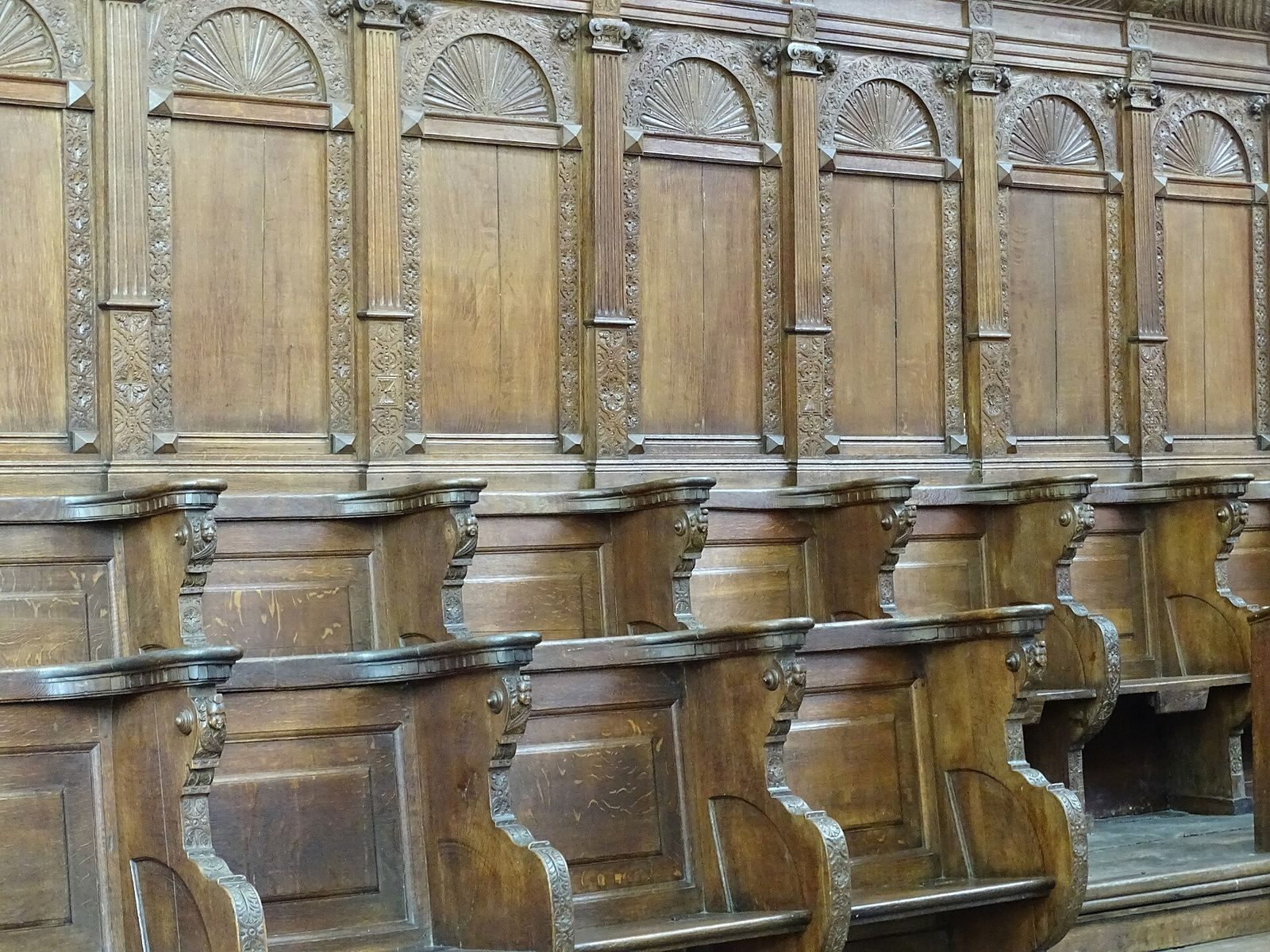
Theodoor Verhaegen, a Flemish sculptor and woodworker, made the pulpit and the churchwardens’ benches set on either side of the central nave. At the rear, Pieter Valckx, also a Flemish sculptor and woodworker, made benches for officials responsible for poor relief.
Organ and tower paintings
Valckx also made the organ case. The organ itself was built by Aegidius-Franciscus van Peteghem in 1774 and later altered and enlarged. It now has 26 stops, which control sets of pipes, two manuals, or hand-operated keyboards, and a pedal, or foot-operated keyboard.
Behind the organ case, on the tower’s first floor, are substantial fourteenth-century wall paintings of Saint Christopher, traditionally associated with carrying Christ, and Saint George, commonly depicted as a dragon-slaying martyr.