Mechelen City Hall: A Historic Civic Complex in Belgium
Site at a Glance
- Country
- Belgium
- Primary era
- Medieval
- Eras represented
- Medieval, Early Modern
- Civilizations
- Holy Roman Empire
- Site type
- Civic
- Remains
- Town Hall
On this page8 sections
History
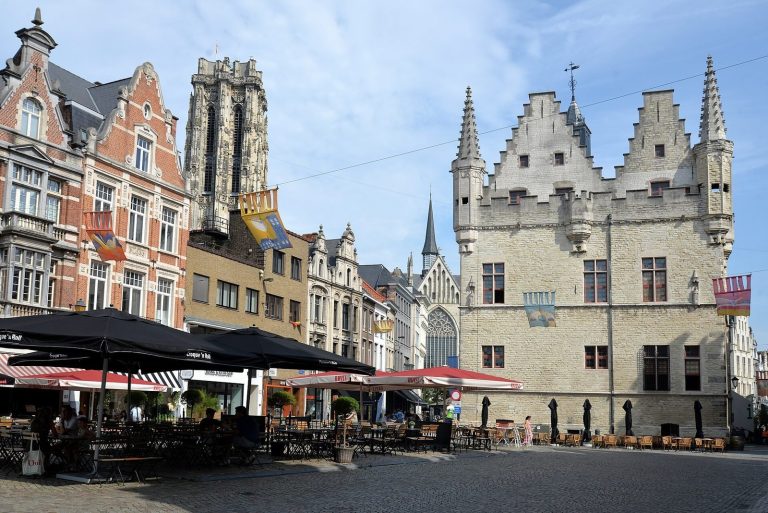
Mechelen City Hall is a civic complex on the east side of the Grote Markt in Mechelen, Belgium. Work began around 1320, during the development of Brabantine Gothic, a regional Gothic form that grew in the historic Duchy of Brabant and surrounding Low Countries. Its three sections became the city hall in 1914, after the city administration had operated from Huis De Beyaert across the square, now a post office.
Medieval buildings and civic works
The Cloth Hall was built between 1311 and 1326. A major fire badly damaged it in 1342, and it was extensively rebuilt. Work on the civic belfry, a bell tower historically associated with municipal authority, began around 1320, but the tower was never completed as planned. A shortage of funds linked to the decline of the cloth trade contributed to that outcome.
The Palace of the Great Council
The Great Council, the supreme court of the Burgundian Netherlands, was established in 1473 by Charles the Bold, Duke of Burgundy. The Burgundian Netherlands were territories in the Low Countries under Burgundian rule. Construction of a palace for the Council began in 1526. Its north side was partly demolished that year to make way for the palace. Financial difficulties following the decline of the Flemish textile trade left the building unfinished for nearly four centuries. Work restarted in 1900, and the palace was completed in 1911 in accordance with its original 16th-century plans.
Municipal use and heritage status
The three sections began serving together as Mechelen’s city hall in 1914. The complex was classified as a historic monument in 1938. In 1999, the belfry was included on UNESCO’s World Heritage List as part of the Belfries of Belgium and France, a group of 56 towers inscribed under criteria (ii) and (iv).
Remains
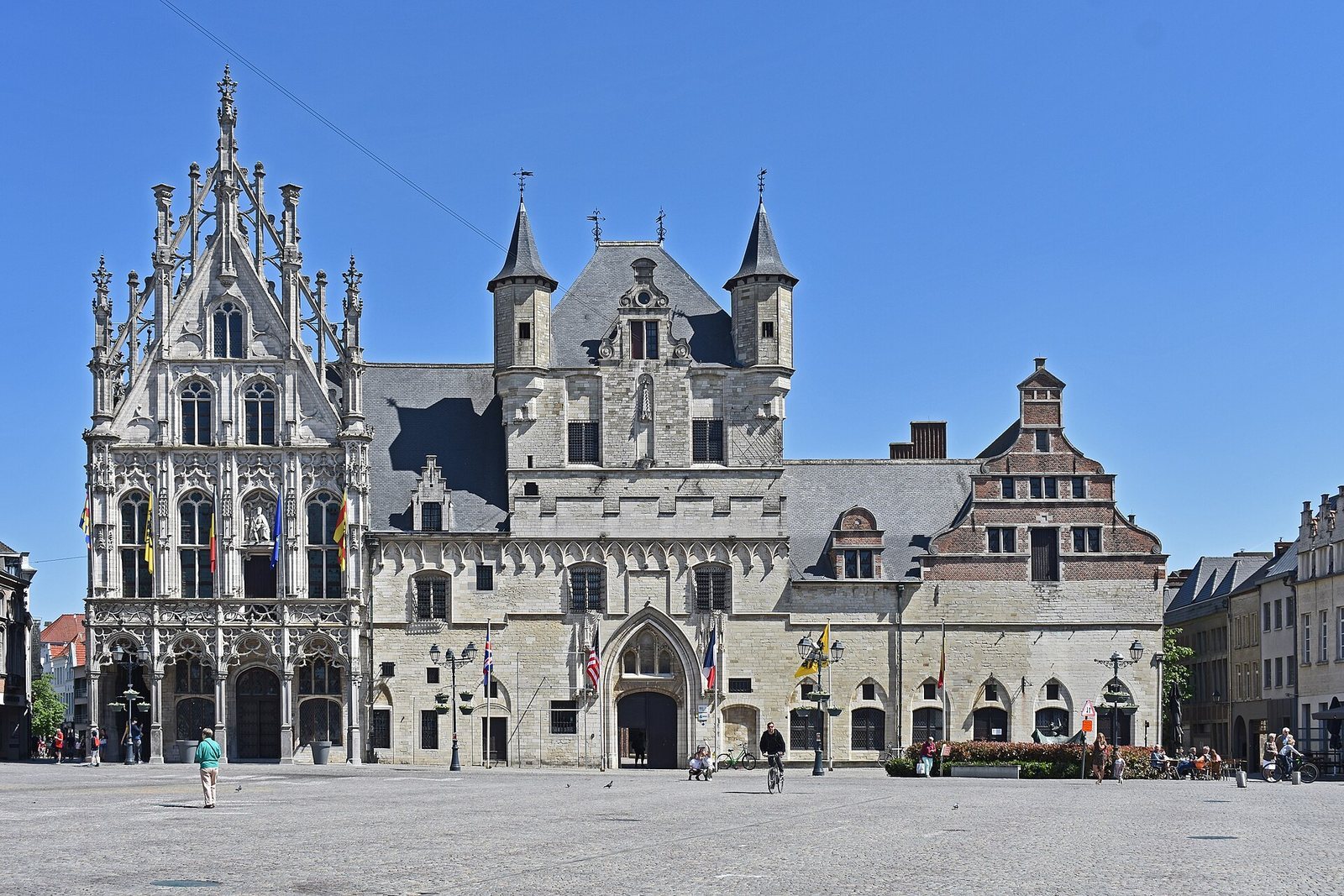
The complex has an aligned three-part frontage on the east side of the Grote Markt. The Palace of the Great Council stands at the left, the civic belfry in the center, and the Cloth Hall at the right. Their forms combine Gothic features with later additions.
Palace of the Great Council
The palace is a late Gothic building with Neo-Gothic furnishings. Its interior includes a wedding hall, a council chamber, and a column hall. A 16th-century tapestry inside depicts the Battle of Tunis, the 1535 campaign in which forces led by Charles V captured Tunis.
Civic belfry
The belfry has a Gothic design with Baroque elements added in the 17th century. Its provisional roof, fitted when the tower remained unfinished, still covers it.
Cloth Hall
The Cloth Hall is the oldest section of the complex. It was built as a covered market for textile goods.