Sagunto Castle: A Multi-Period Fortress in Spain
Site at a Glance
- Rating
- 4.2
- Popularity
- Medium
- Country
- Spain
- Primary era
- Medieval
- Eras represented
- Iron Age, Classical, Medieval, Early Modern, Modern
- Civilizations
- Crown of Aragon, French, Iberian, Roman, Spanish, Umayyad
- Site type
- Military
- Remains
- Citadel
On this page17 sections
History
Sagunto Castle is a fortress in Spain, above the town of Sagunto, whose origins lie in an Iberian settlement of the early Iron Age and whose surviving fabric spans more than two thousand years. The site preserves Iberian, Roman, Islamic, Christian, and later military phases, reflecting the changing political and military history of the region.
Iberian Settlement and Roman Saguntum
The hilltop was first settled by the Edetani, an Iberian people who occupied part of what is now the Valencia region. Their settlement was known as Arse. As Carthage expanded in Iberia, Arse formed a defensive alliance with Rome, drawing the settlement into the rivalry that shaped the western Mediterranean.
In 219 BC, the Carthaginian commander Hannibal Barca sacked Arse. The attack helped trigger the Second Punic War, fought between Rome and Carthage from 218 to 201 BC. Rome retook Sagunto from the Carthaginians in 214 BC. The town later became the Roman Municipium Saguntinum, or Saguntum, during the middle of the 1st century BC.
During the reign of the Visigothic king Wamba, the former Roman municipium came to be called Sagunto. That name remained in use until the end of the Visigothic kingdom in AD 711. Roman rebuilding reshaped the hilltop, including the creation of an Imperial forum under Augustus after the earlier Republican forum had been largely demolished.
Islamic Rule and the Christian Conquest
Under Islamic rule, the settlement was known as Murbitar and Morvedre. Mozarabic usage derived the name from Murum Veterum, meaning “old wall,” producing related forms such as Murvetrum, Morvedre, and Molvedre. Christian documents used the form Murus Vetulus.
Eighth-century records from the reign of Abd al-Rahman I placed Sagunto within the jurisdiction of Tortosa rather than Valencia. The Muslim historian Ibn Hayyan recorded that the castle was taken by force in 929–930. He later described it, under its Arabic name, as submitting to Sultan Abd al-Rahman III in AD 933. Abd al-Rahman I established an independent Umayyad emirate in Iberia, while Abd al-Rahman III became caliph in AD 929.
During Islamic rule, the castle served as a fortress defending the regions of Catalonia and Valencia. The Albacar and most of the outer walls were constructed during this period. El Cid, the Castilian military leader Rodrigo Diaz de Vivar, seized and occupied the castle from 1098 to 1102.
Permanent Christian control came under Jaume I of Aragon in 1238, when the fortress was incorporated into the Kingdom of Valencia. By the middle of the 13th century it had become a Christian garrison, although most of the town’s inhabitants remained Muslim. A growing Jewish community in Morvedre established a cemetery beneath the castle walls in 1328.
Later Fortification and Warfare
Peter IV of Aragon strengthened the castle’s defences during the 14th century, but King Peter of Castile captured it after a siege in 1363. In 1562, Philip II of Spain commissioned the Italian engineer Juan Bautista Antonelli to modernize the defences. The precinct was divided into seven plazas, or independent sections, during this work.
During the War of the Spanish Succession in the early 18th century, the castle was surrendered to the Archduke of Austria and soon afterward came under the control of Philip V of Spain. Its fortifications were again tested during the Peninsular War, the conflict in which Spain and its allies fought French rule in the Iberian Peninsula.
French forces under General Suchet besieged the castle on 23 September 1811. Brigadier Andriani resisted the siege and several assaults, but Suchet eventually captured the fortress. He ordered its repair and reinforcement, and Andriani supervised the modifications. Many surviving towers and bastions belong to the 18th century, while other sections preserve Gothic, Renaissance, and Napoleonic alterations to earlier defences.
Investigation and Protection
The castle was declared a historic-artistic monument in 1931 and is protected as a Spanish cultural-heritage monument. Archaeological work has included investigations by Manuel González Simancas in the upper castle during the 1920s and in the Plaza de Armas from 1932. His investigations left few records. Pío Beltrán Villagrasa helped uncover ceramics and identify two pre-Roman buildings.
The Valencia Museum of Prehistory directed excavations in 1975, followed by excavation of the Roman forum in 1985. Restoration and consolidation of the north wall of the Plaza de Estudiantes in 1992 revealed a Roman-period tower, a medieval tower above it, and a Napoleonic-period wall reinforcing the medieval structure. Excavation beneath rubble from the medieval wall also exposed a defensive structure dated to the first quarter of the 2nd century BC.
Remains
Hilltop Layout and Defensive Walls
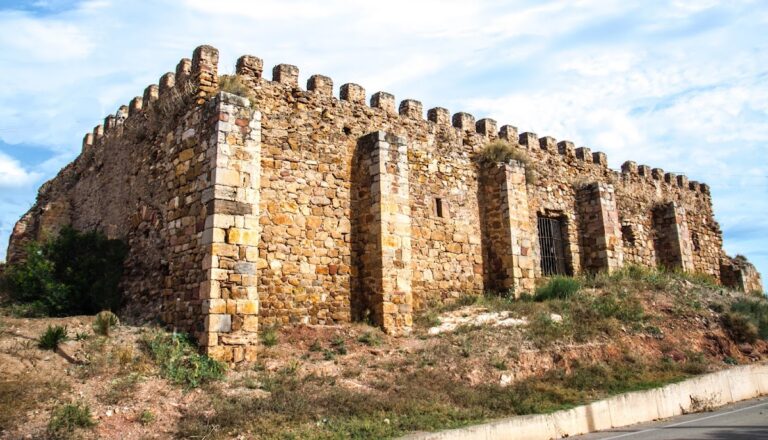
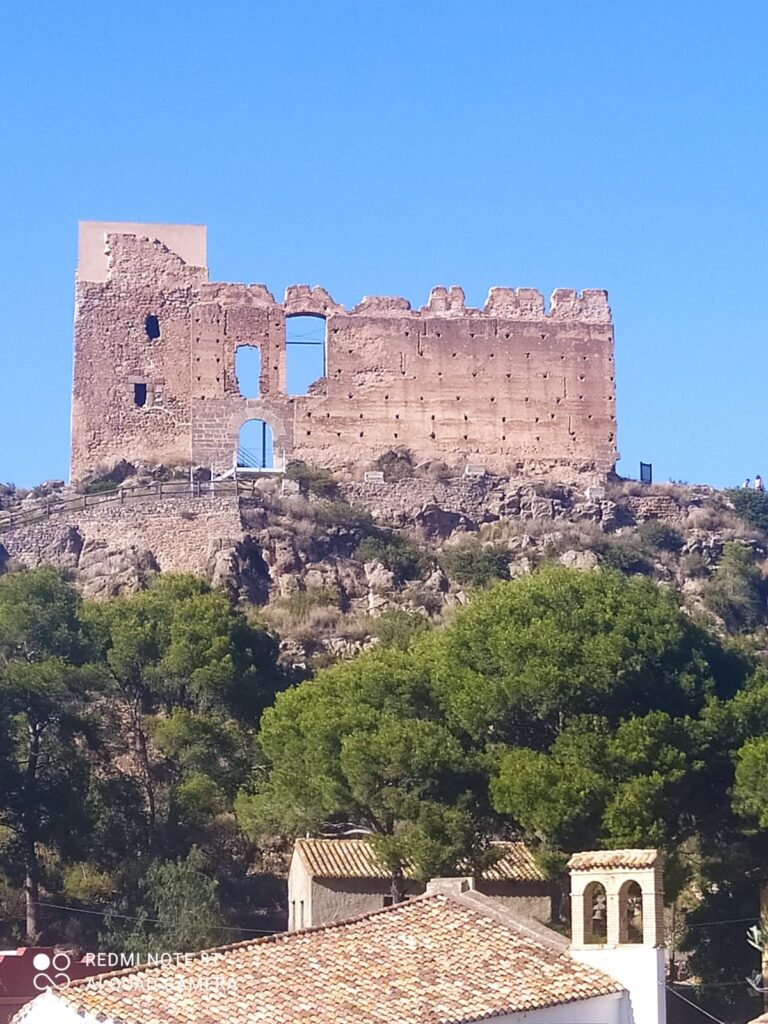
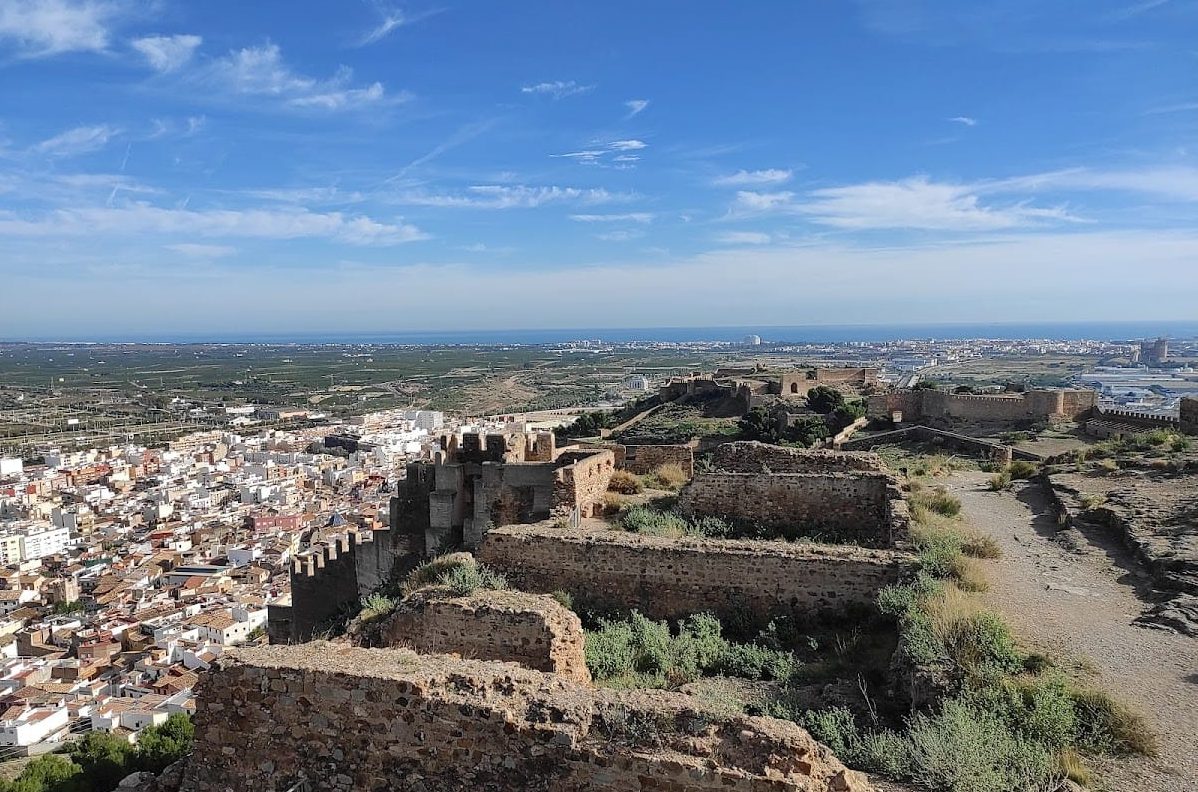
The castle occupies the flat summit of a hill at an elevation of 172 metres, on the final rise of the Sierra Calderona. The position overlooks the Mediterranean Sea and the town of Sagunto, approximately 23 kilometres north of Valencia. Defensive walls surround the summit for about 800 metres from one end of the mountain to the other. Their surviving masonry incorporates several cultural and military periods.
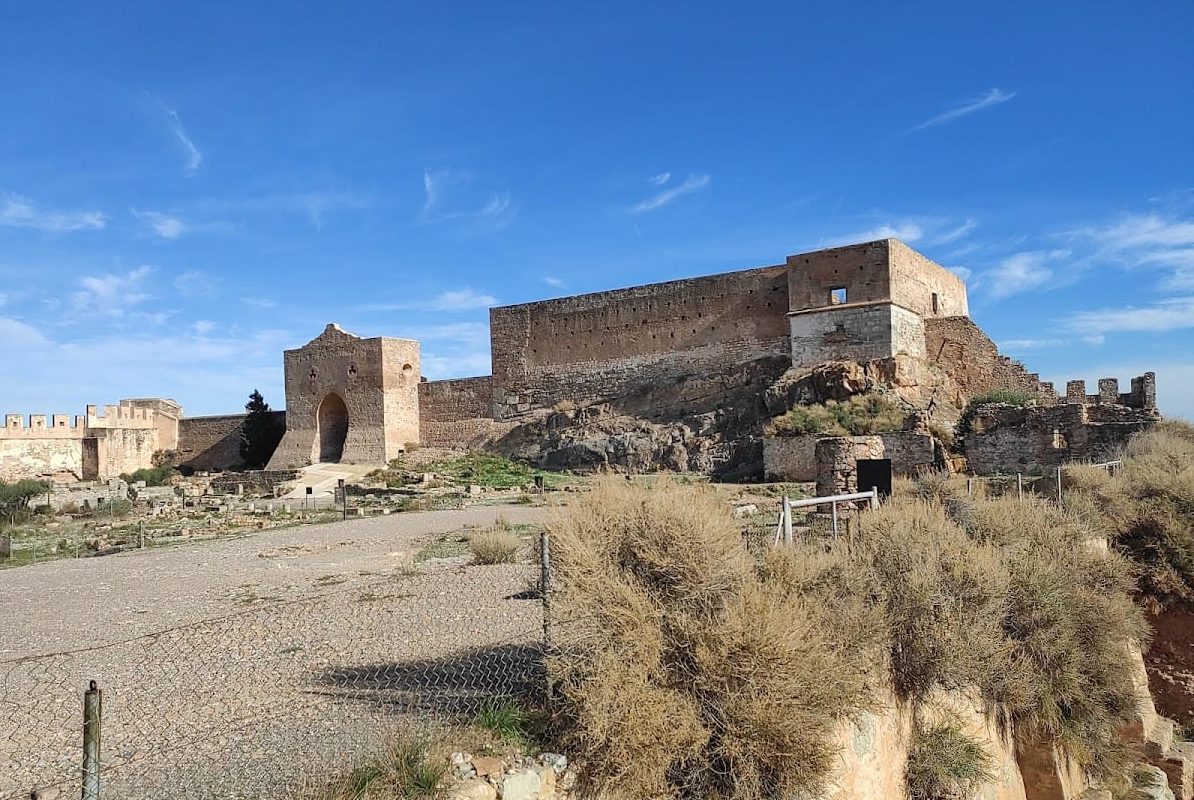
The fortress is divided into seven main plazas or independent enclosures: the Plaza de Armas, Plaza de Almenara, Plaza de los Nueve Pilares, Plaza de San Fernando, Plaza de los Estudiantes, Plaza de la Ciudadela, and Plaza del Espolón. The visible ruins are predominantly those of the Islamic citadel, modified under Christian rule and later by French military engineers.
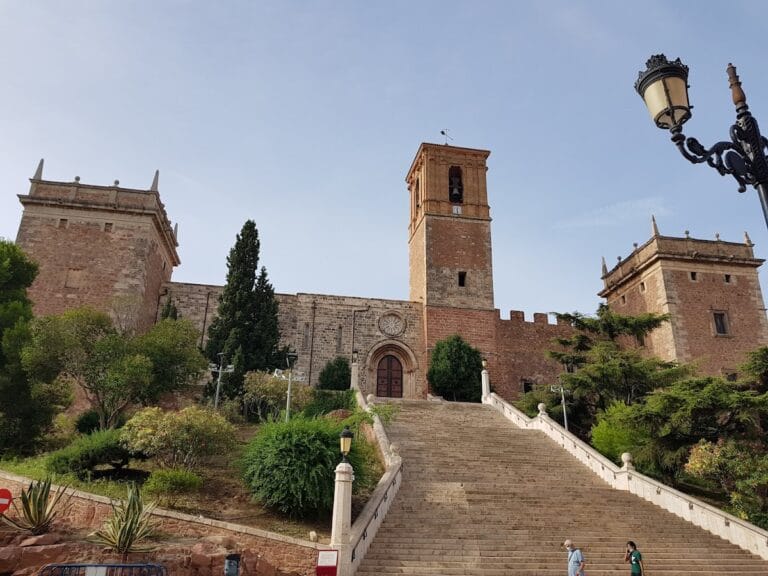
The curtain wall, a connecting defensive wall between towers or fortified points, descends from the castle and links with fortifications arranged around the town below. Christian builders and later military engineers substantially altered the mainly Islamic wall, including Gothic and Renaissance reworking of earlier Muslim defences. The surviving towers and bastions mostly date from the 18th century.
Iberian and Roman Remains
Iberian Defences
Part of the ancient Iberian defensive wall remains visible on the eastern side of the castle. The Iberian enclosure dates to the first half of the 4th century BC and was considerably larger than the castle built approximately fifteen centuries later. The 1992 excavations also exposed a defensive structure on the steep northern side, beneath later layers of fortification, dating to the first quarter of the 2nd century BC.
Roman Forum
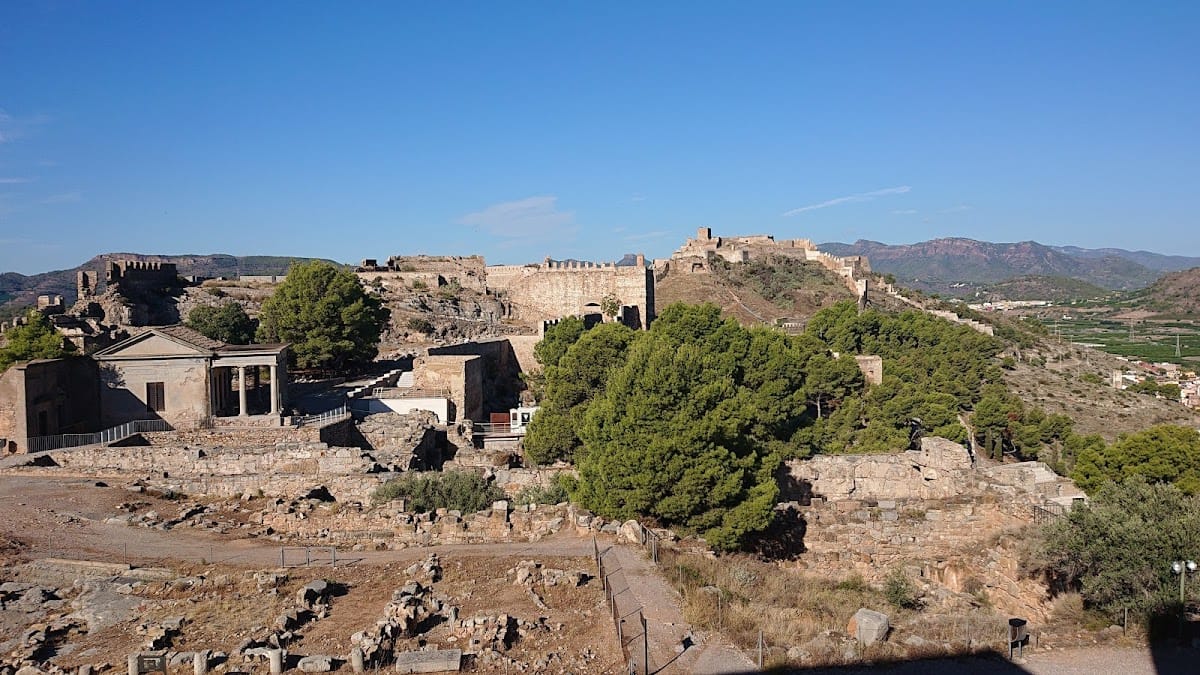
The Plaza de Armas is entered through an Islamic arch and contains the forum area, where Iberian and Roman remains are concentrated. The Roman forum was the principal public square of the town. Its original Late Republican form was later largely demolished to make way for a replacement forum under Augustus, financed by the local aristocrat Gnaeus Baebius Geminus.
The Imperial forum was arranged around a plaza measuring approximately 60 by 36.5 metres. A basilica, a Roman civic building, stood along its western side and measured 60 by 20 metres. On the eastern side, a row of tabernae, or shops opening onto the forum, provided commercial units around the public space.
Forum Platform and Retaining Walls
Construction of the Imperial forum required the hilltop to be levelled and replaced with an artificial platform. Retaining walls supported the platform, with buttresses strengthening the northern side. Ten separate layers of fill were deposited after construction of the wall. They contained fragments from 147 Attic black-figure ceramics, a type of Greek pottery decorated with dark figures and incised details, dating to the late 5th or early 4th century BC.
Traces of adobe appeared in two layers. Their origin may relate to nearby buildings or to repairs to the walls. Small stones were placed between the large blocks of the retaining wall to stabilize the construction.
Cistern, Temple, and Forum Buildings
A well-preserved cistern lies south of the Roman forum. It was probably built during the rebuilding of the city after the Second Punic War and was incorporated into the Imperial forum during the 1st century AD.
The base of a Roman temple, or capitolium, survives on the north side of the forum. A capitolium was a temple dedicated to the Capitoline triad, and this building measured approximately 14 by 12 metres. A complex structure occupied the northeastern side of the forum. Its identification remains uncertain because its two large parallel chambers could have served either as a curia, an official council or court building, or as a temple of Augustus.
Roman Theatre
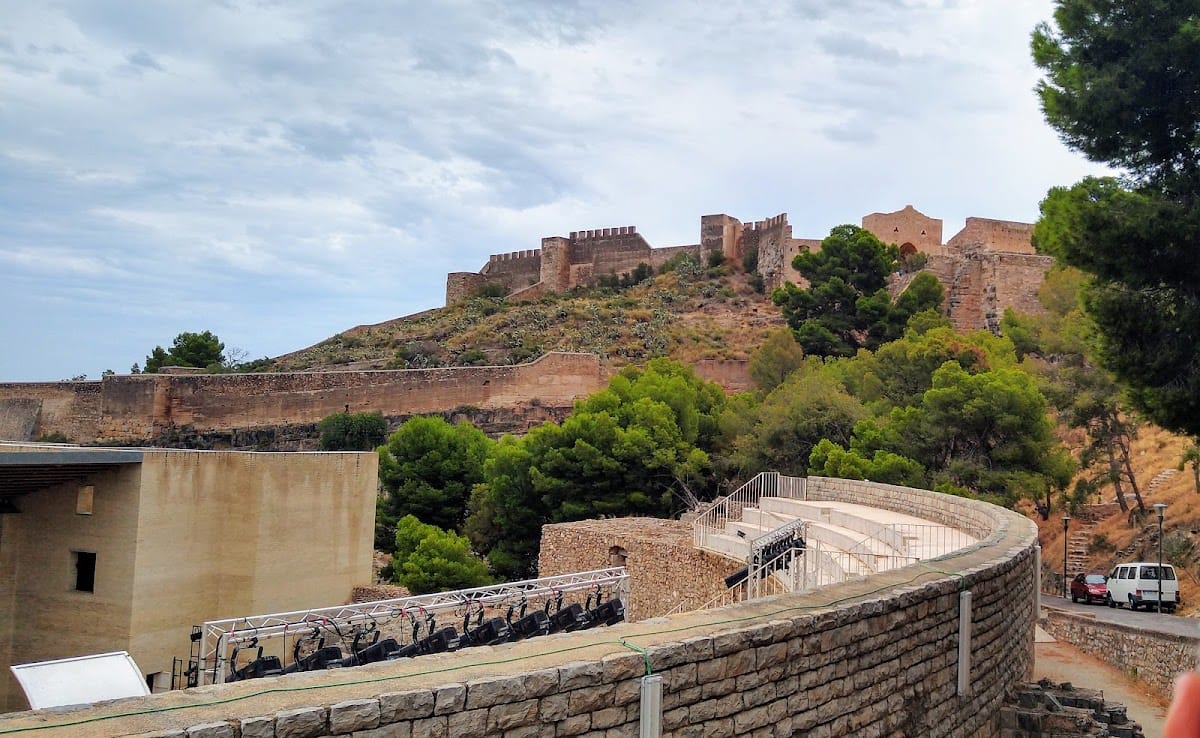
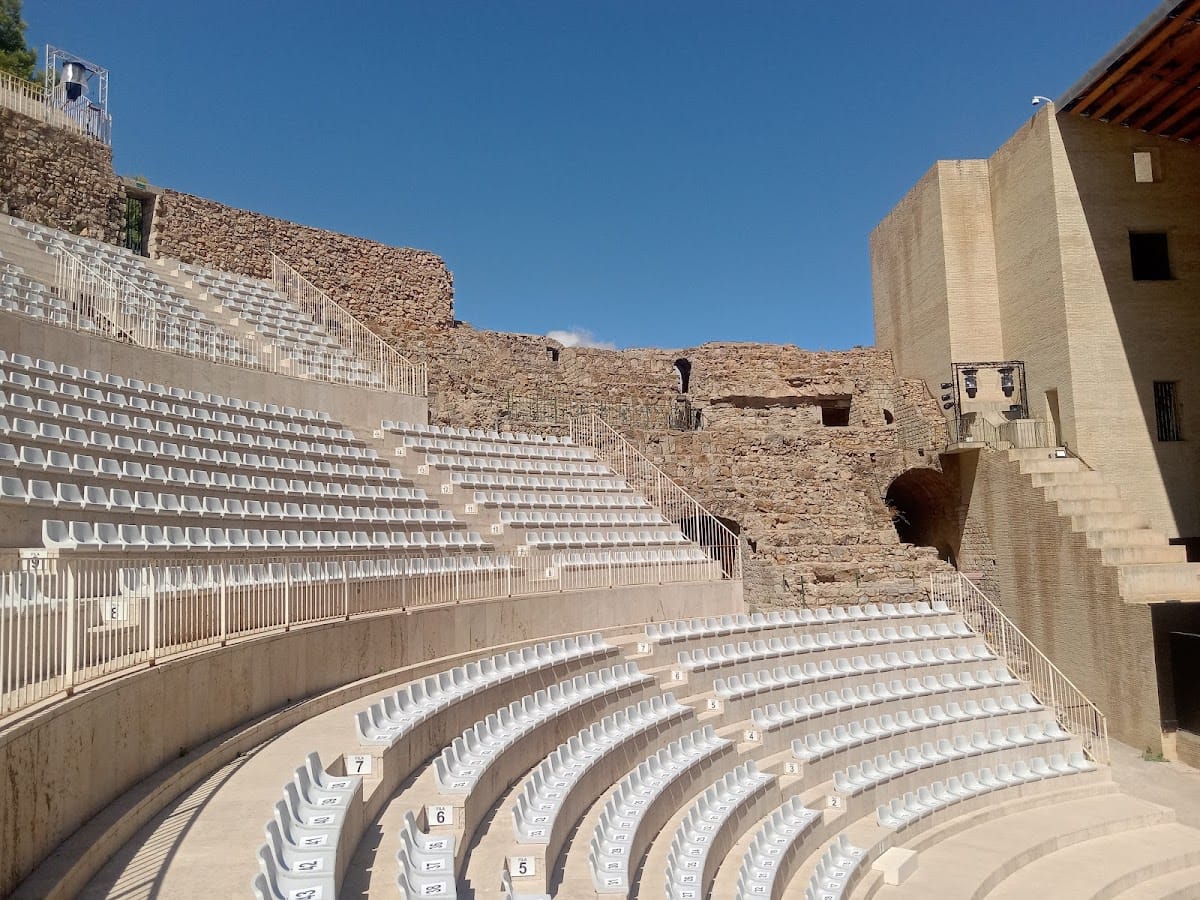
Remains of a Roman theatre lie down the hillside to the northwest of the forum, along the descent toward the town. Its position connects the public buildings of the hilltop with the lower settlement.
Islamic, Medieval, and Military Structures
Plaza del Refectorio
The Plaza del Refectorio is the smallest plaza and occupies the centre of the castle. It lies on an elevation that also supports the Reina Gobernadora battery, a fortified position designed to mount artillery. The plaza takes its name from vaulted arcades used as refectories, or communal dining rooms.
The refectory building forms the eastern side of the space. The curtain wall bounds it to the south, a ruined double wall and a Roman tower define the west, and a fortified wall closes the north. A corridor between the plaza and the battery links the Plaza de Armas with the Plaza de San Fernando.
Layered Northern Fortifications
Near a medieval entrance on the steep northern side, the 1992 work exposed a Roman-period tower. A medieval tower rises above it, while a Napoleonic-period wall reinforces the medieval structure. This vertical sequence preserves three stages of the castle’s defensive development in a single area.
Inscriptions
The Epigraphic Antiquarium lies within the castle walls and displays part of a major collection of inscriptions. Epigraphy is the study and interpretation of texts carved or painted on durable materials. The inscriptions preserved in the antiquarium record aspects of Sagunto’s society in different periods.
Nearby sites