Saddell Castle: A MacDonald Stronghold on Kintyre
Site at a Glance
- Popularity
- Medium
- Country
- United Kingdom
- Primary era
- Early Modern
- Eras represented
- Early Modern, Modern
- Civilizations
- British, Kingdom of Scotland
- Site type
- Military
- Remains
- Castle
On this page7 sections
History
Saddell Castle is a fortified residence at Saddell Bay on the east coast of Kintyre, in Scotland, United Kingdom. Bishop David Hamilton built the present castle between 1508 and 1512 on land belonging to the abandoned Saddell Abbey. The site’s history also reflects its earlier role in MacDonald power and its later destruction, rebuilding, and restoration.
Early MacDonald stronghold
A castle stood at Saddell in the 12th-century era of Somerled, a Norse-Gaelic ruler associated with the western Scottish isles. The site later served the MacDonalds as a stronghold for several centuries, and a number of their lords lived there. In the 13th century, Alasdair Mor MacDonald, younger brother of Angus Mor MacDonald, was associated with the castle. Angus held the title Lord of the Isles, given to a ruler whose authority was based in the Hebrides and parts of western Scotland.
In the early 14th century, Angus Og MacDonald sheltered Robert the Bruce at Saddell during the First War of Scottish Independence, the conflict between Scotland and England in the late 13th and early 14th centuries. Bruce, a leading figure in the struggle and later king of Scots, was then taken onward to Dunaverty Castle.
The bishop’s castle and 16th-century conflict
Hamilton built the present castle on lands he had taken from the abandoned abbey, reusing stone from both the monastery and the earlier castle. In 1556, Bishop James Hamilton transferred Saddell to James Hamilton, 2nd Earl of Arran, to settle debts and taxes. The earl later exchanged it with James MacDonald, chief of the MacDonalds of Dunnyveg, for MacDonald’s lands on the Isle of Arran.
In October 1558, English forces led by Thomas Radclyffe, 3rd Earl of Sussex and Lord Deputy of Ireland, captured and burned the castle. The attack, ordered by Queen Mary I of England, was retaliation for James MacDonald’s actions in Ireland against the English Crown. MacDonald landholders later rebuilt and enlarged the castle.
Transfer, decline, and restoration
In 1607, James VI transferred the Clan Donald lands in Kintyre, including Saddell, to Archibald Campbell, 7th Earl of Argyll. Later, Archibald Campbell, 1st Marquess of Argyll, granted the ruined castle to William Ralston, who renovated it between 1650 and 1652.
The castle fell into disrepair after Saddell House was built around 1774. Ancillary buildings were added around 1800, but the castle was abandoned again during the 19th century. It was restored in 1890, and the Landmark Trust later acquired and restored it. Saddell Castle received Category A listing in Scotland in 1971, a designation for buildings of national or international architectural or historic importance.
Remains
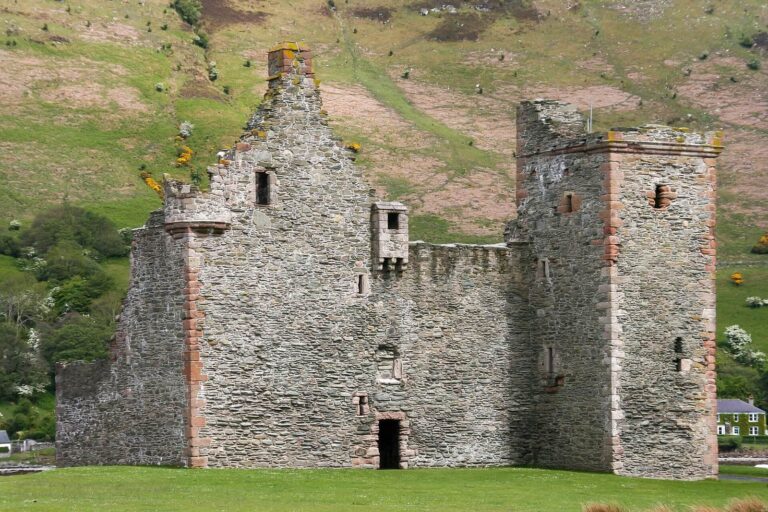
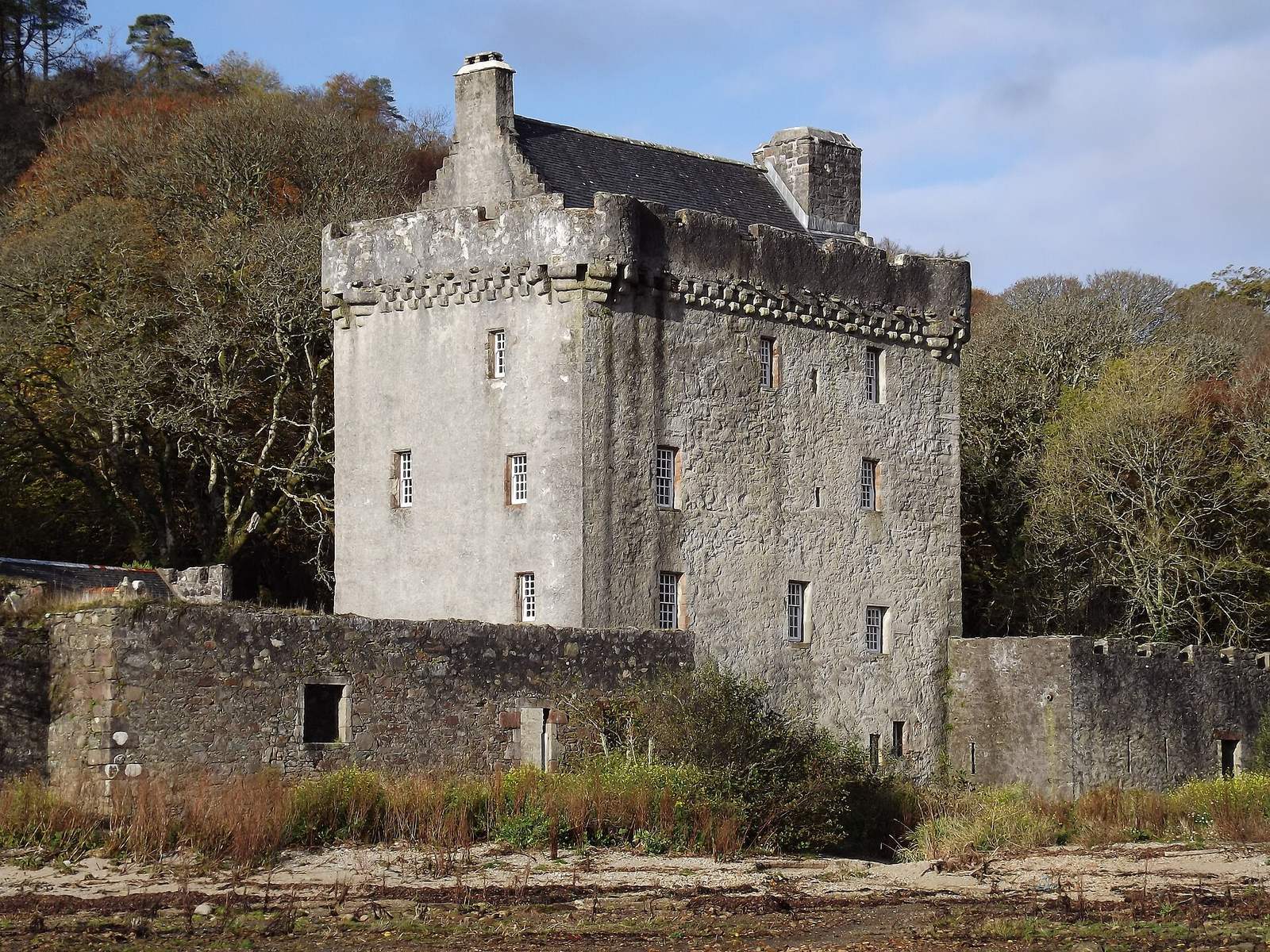
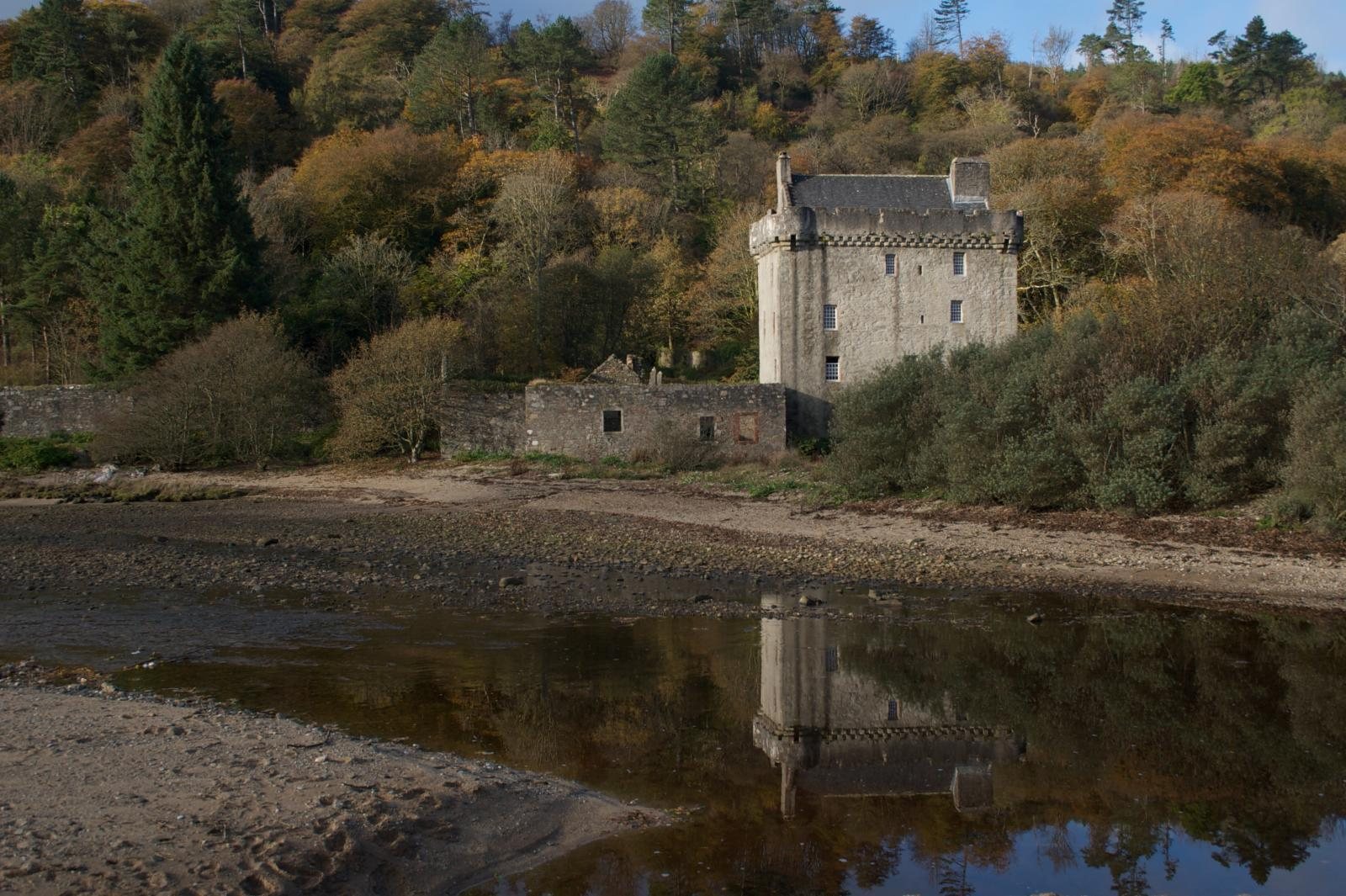
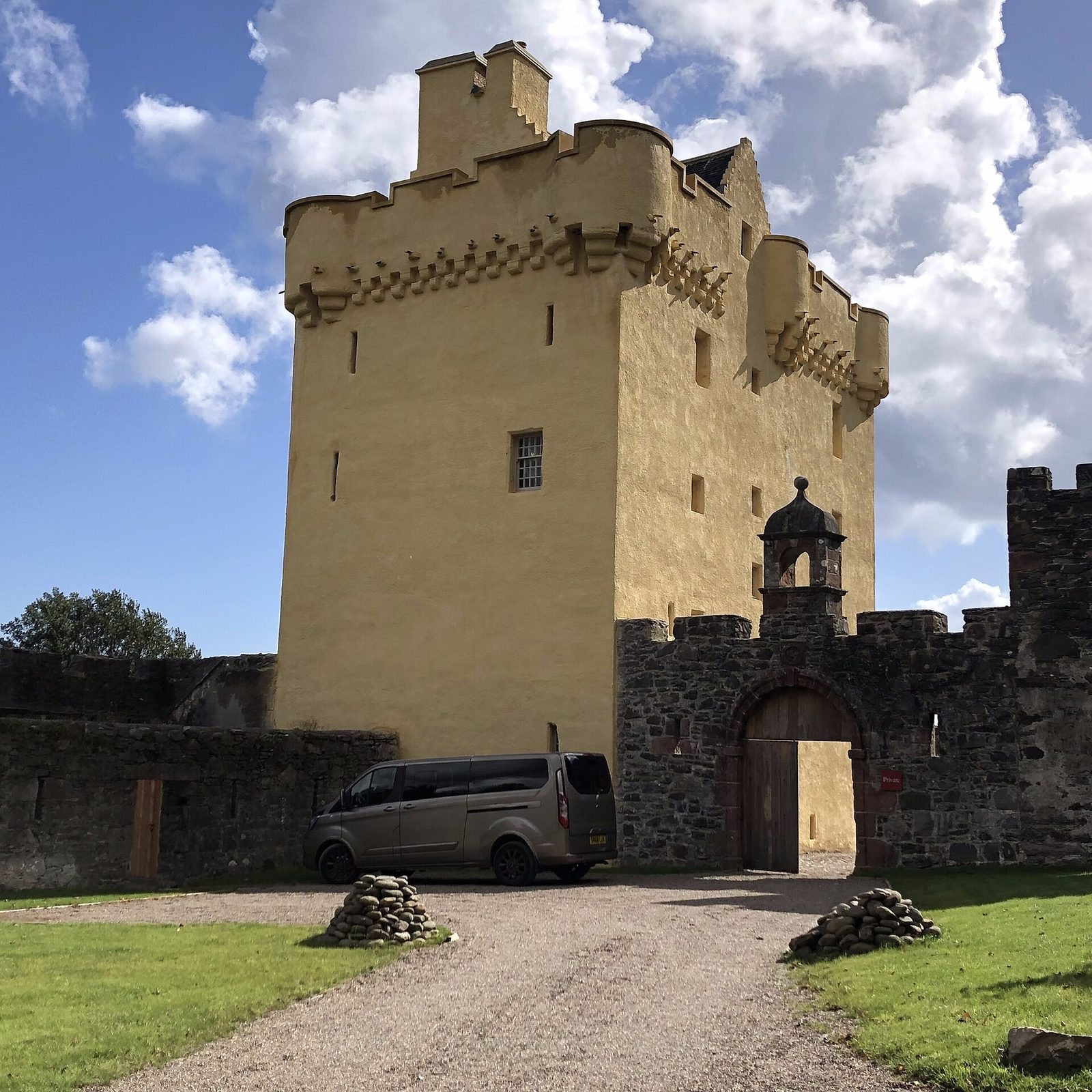
The surviving complex is arranged around a four-storey stone tower house, with ancillary buildings around it. The castle stands on the shore of Kilbrannan Sound at Saddell Bay.
Tower house
The tower house has a crenellated parapet, with alternating raised sections and gaps along its top, and chimneys. Its stone construction forms the central surviving structure of the castle.
Entrance passage
The entrance is on the west side of the tower. Its lintel bears the carved date 1508. A trapdoor in the main entrance passage could drop unwanted visitors into a dungeon with no exit.