Ruppertstein Castle: A Medieval Hill Castle in Germany


Site at a Glance
- Rating
- 4.5
- Popularity
- Low
- Country
- Germany
- Primary era
- Medieval
- External website
- Open
- Eras represented
- Medieval
- Civilizations
- Holy Roman Empire
- Site type
- Military
- Remains
- Castle
On this page7 sections
History
Iron Age Origins
Ruppertstein Castle is a medieval hill-castle ruin in Germany, near Ruppertsweiler in the cadastral territory of Lemberg. Archaeological finds indicate that a settlement, possibly fortified, occupied the area during the Hallstatt and La Tène periods, successive Iron Age cultural periods in central Europe, from about 800 BC to around the time of Christ. The later castle therefore stood in an area with an earlier history of settlement.
Medieval Foundation
In 1198, Henry I, Count of Zweibrücken, acquired the Hummelberg. The purchase document called the mountain Ruprehtisberc, a name linked to the later castle and its setting. Ruppertstein was probably built soon afterward, in the early thirteenth century, although its construction is also generally dated to around 1200 or to the thirteenth century. The medieval site was associated with counts, but little is known about its subsequent history.
Destruction and Later Use
Ruppertstein Castle may have been destroyed in 1525 during the Peasants’ War, a series of uprisings in the German-speaking lands against aspects of feudal and ecclesiastical authority. It may instead have already been abandoned and left to decay by that time. Around 1900, a stone stairway was added to the southwest side of the castle rock, allowing access to the upper platform as a viewing point. The Pirmasens-Land municipal authorities renovated the stairway in 2007.
Remains
Rock and Castle Layout
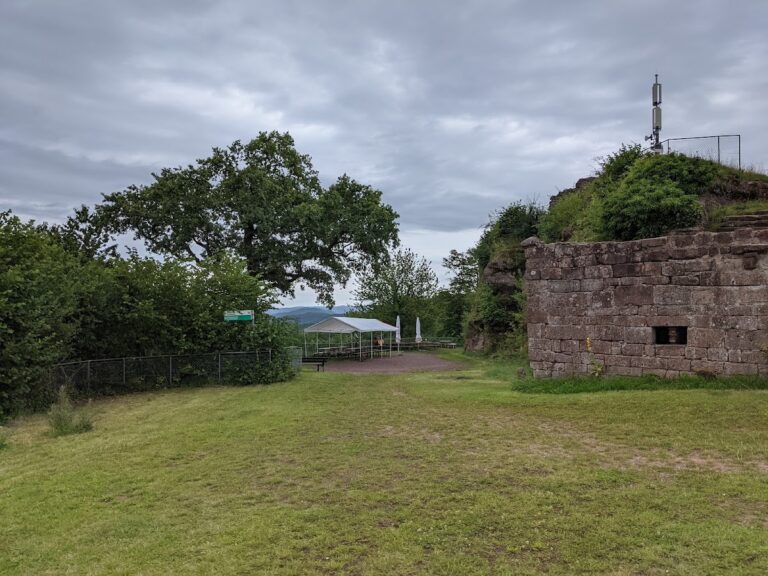
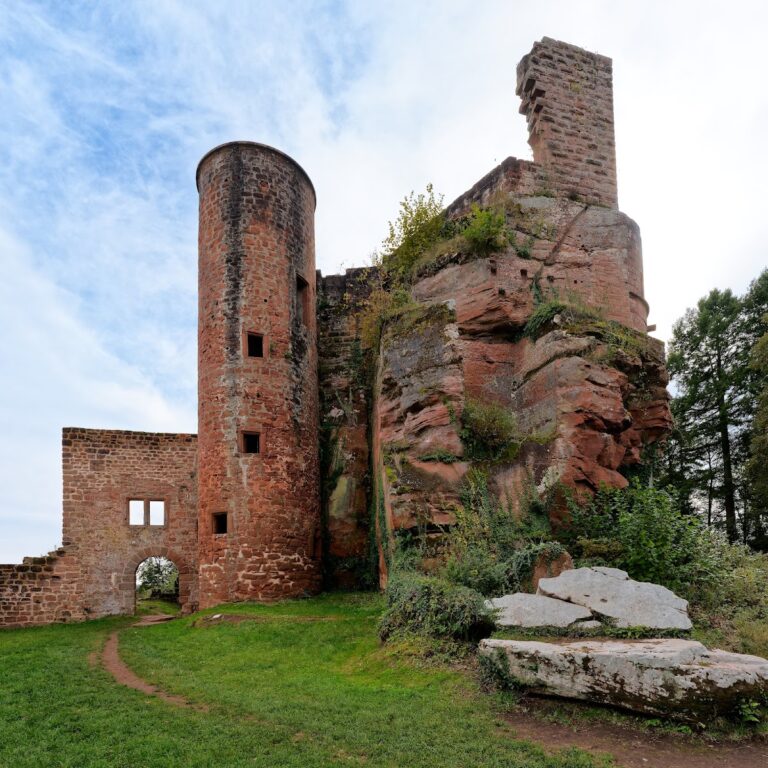
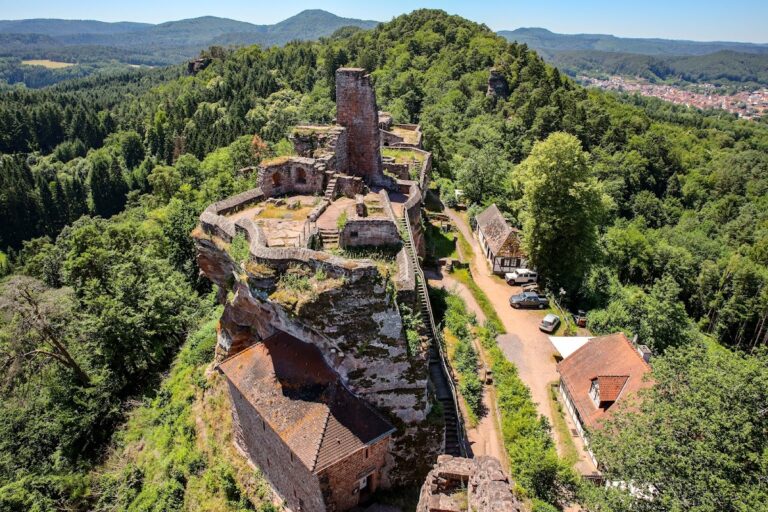
The castle occupied the foot and upper platform of Ruppertsfelsen, a Buntsandstein rock. Buntsandstein is a reddish sandstone geological unit found widely in central Europe and often used as local building stone. The rock rises more than 10 metres above the northeastern spur of the 474.7-metre-high Hummelberg. The remains stand at 452 metres above sea level, while the Rodalb valley between Ruppertsweiler and the Hummelberg lies at roughly 280 metres.
Four smaller rocks stand close to the main rock. Three form a northeast-to-southwest row along the northwestern edge of the summit area, while the second-largest rock lies to the southwest. Together, these features may have defined a castle courtyard extending from northeast to southwest, with the very steep mountain slope forming its southeastern boundary. The complex definitely included a lower castle at the foot of the main rock and an upper castle on its platform.
Surviving Structures and Access
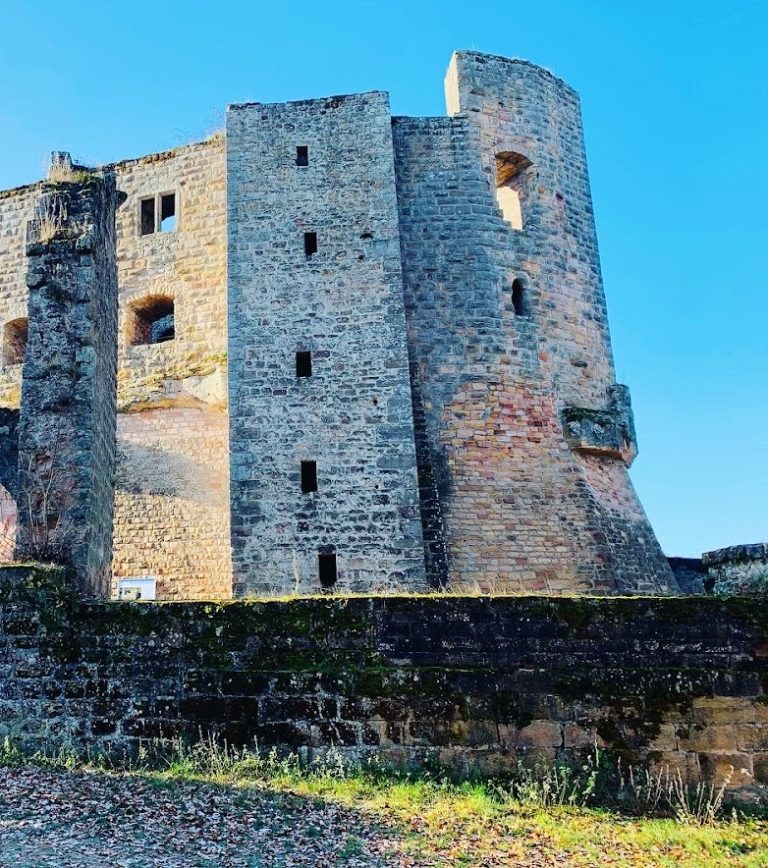
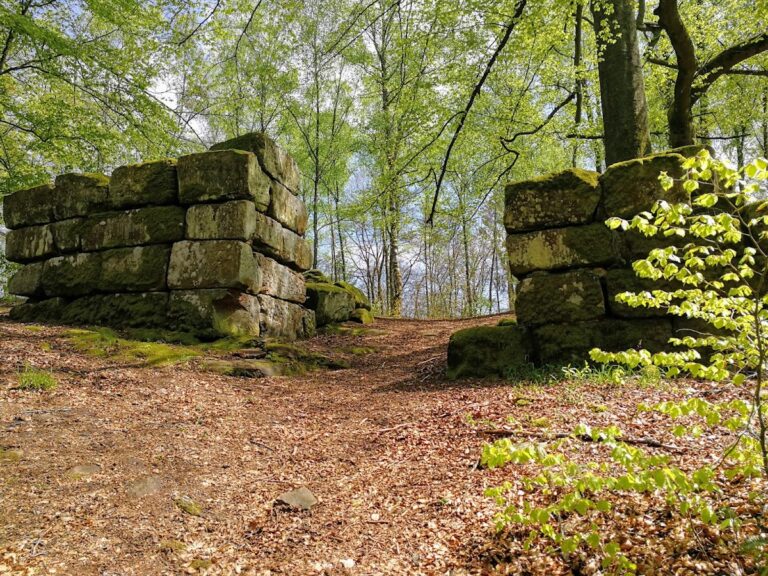
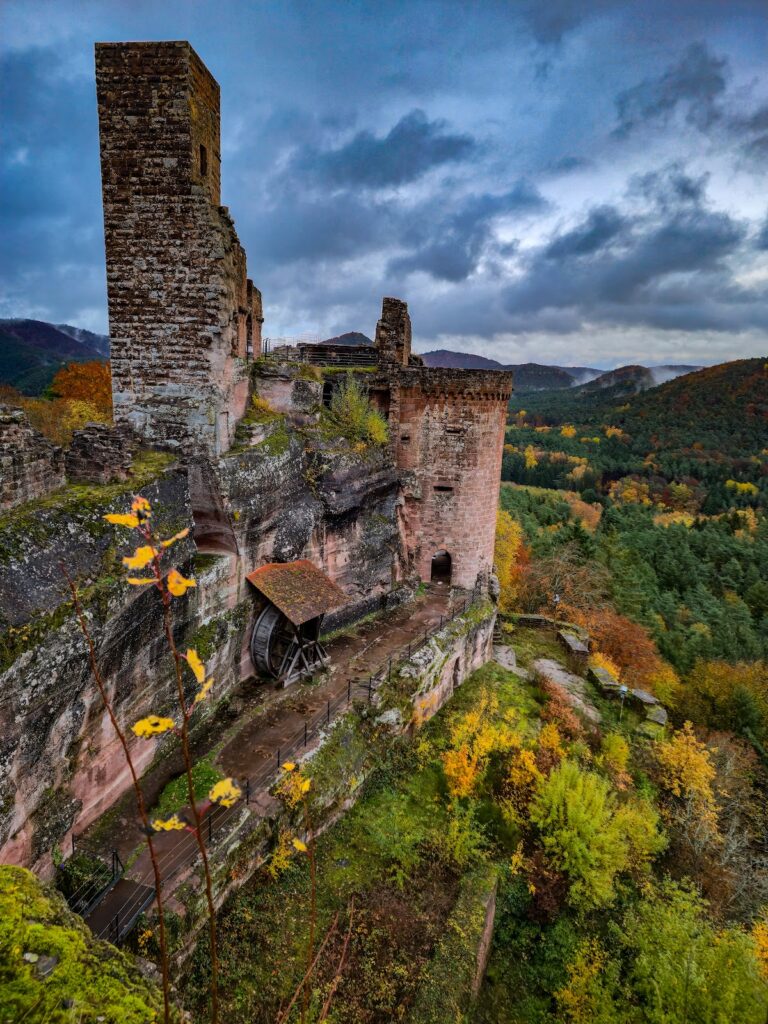
Several wall remains survive on the rock, providing limited evidence for the castle’s original appearance and dimensions. The former link between the lower and upper castles probably consisted of a wooden stairway. The later stone stairway, attached to the southwest side of the rock, leads to the upper platform and reflects the site’s adaptation as a viewing point around 1900.
Nearby sites