Altenberg Castle: A Ruined Hill Castle in Switzerland

Site at a Glance
- Rating
- 4.6
- Popularity
- Very Low
- Country
- Switzerland
- Primary era
- Medieval
- External website
- Open
- Eras represented
- Medieval
- Civilizations
- Holy Roman Empire
- Site type
- Military
- Remains
- Castle
On this page9 sections
History
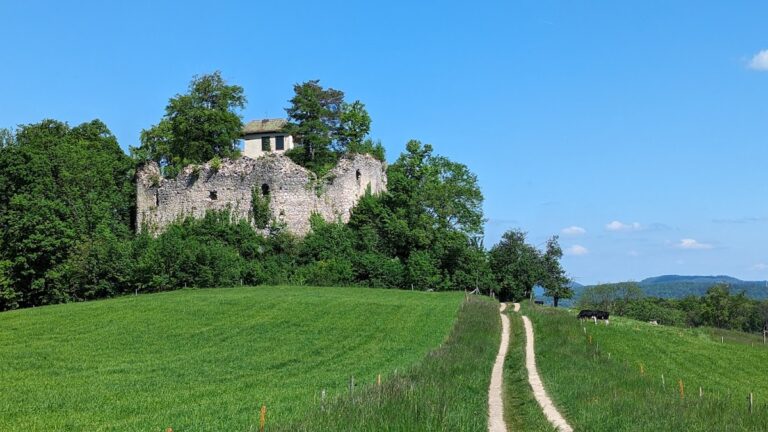
Altenberg Castle is a ruined hill castle in Füllinsdorf, Switzerland, built for a member of the high nobility shortly after AD 1000. Its eleventh-century construction occupied a frontier between the Kingdom of Germany and the Kingdom of Burgundy, also called the Kingdom of Arles, a medieval realm centred on the Rhône and Alpine regions. The castle probably extended aristocratic power across this borderland and controlled Füllinsdorf, Frenkendorf, and the abandoned settlement of Munzach.
Foundation on a Medieval Frontier
The castle’s position gave it a role in regional political competition. The frontier between Germany and Burgundy made the surrounding area politically important, and Altenberg may have administered nearby villages and lands on behalf of a powerful noble family. Property belonging to Schönthal Monastery in Füllinsdorf is recorded in 1226, although its earlier history is unknown. It may have originated in an aristocratic donation connected with the landholding interests represented by Altenberg.
Fire, Rebuilding, and Abandonment
A fire around AD 1050 destroyed part of the complex, after which the castle was rebuilt. It was probably abandoned shortly before AD 1100, and sections of the site were demolished. This change may have followed political upheavals in the region after the deaths of Rudolf of Rheinfelden in 1080 and his son Berthold of Rheinfelden in 1090. Rudolf was a duke and rival king of Germany, while Berthold was a regional nobleman.
The Schauenburg Connection
During the later Middle Ages, the castle’s lands belonged to the Lords of Schauenburg, a noble family associated with the Füllinsdorf region. Altenberg may have been their original ancestral seat. By the twelfth century, the family had moved to Neu-Schauenburg Castle, and many wooden buildings and fittings were stripped from Altenberg, probably for transfer to the newer residence.
Ruins and Archaeological Investigation
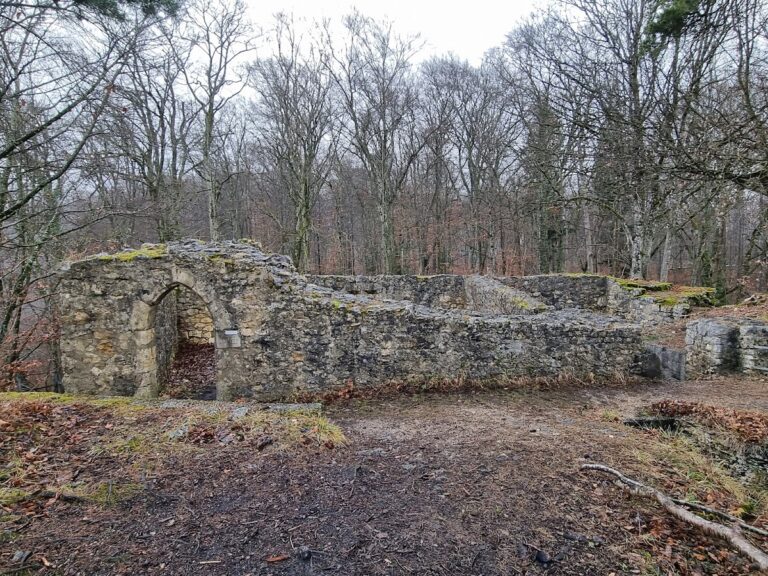
In the seventeenth and eighteenth centuries, the visible remains were also called Filisberg. By the twentieth century, vegetation and soil covered most of the site, leaving only a few traces of walling visible. Excavations carried out from 1982 to 1987 established the character and extent of the castle. The masonry was conserved after the investigations, preserving Altenberg as a visible ruin.
Remains
Altenberg occupied the Büechlihau ridge, a steep wooded hill at approximately 528 to 530 metres above sea level. The castle formed an elongated complex arranged along the slope. Its defences used the ridge’s natural shape together with ditches and enclosing walls, while the main buildings occupied the central and lower parts of the fortified area.
Approaches and Enclosing Walls
A pronounced neck ditch, cut across the narrow approach to a ridge, protected the complex to the northwest. A section ditch and outer rampart defended the southeastern side. A curtain wall, meaning a defensive wall enclosing or linking parts of a castle, extended about 35 metres northwest from the central building. A double garderobe, or castle latrine, was built into this wall. Farther down the slope, a second enclosing wall surrounded a larger forecourt.
Main Building and Domestic Area
The centre of Altenberg contained a substantial tower house, a fortified building that combined residential and defensive functions. It measured approximately 8 to 9 metres by 15 metres, and its walls were about 1.6 metres thick. The northern end of the complex held a residential tract with a kitchen, while a gatehouse stood at the southern corner. Together, these structures formed the principal occupied and defended areas of the slope castle.
Excavated Material and Conservation
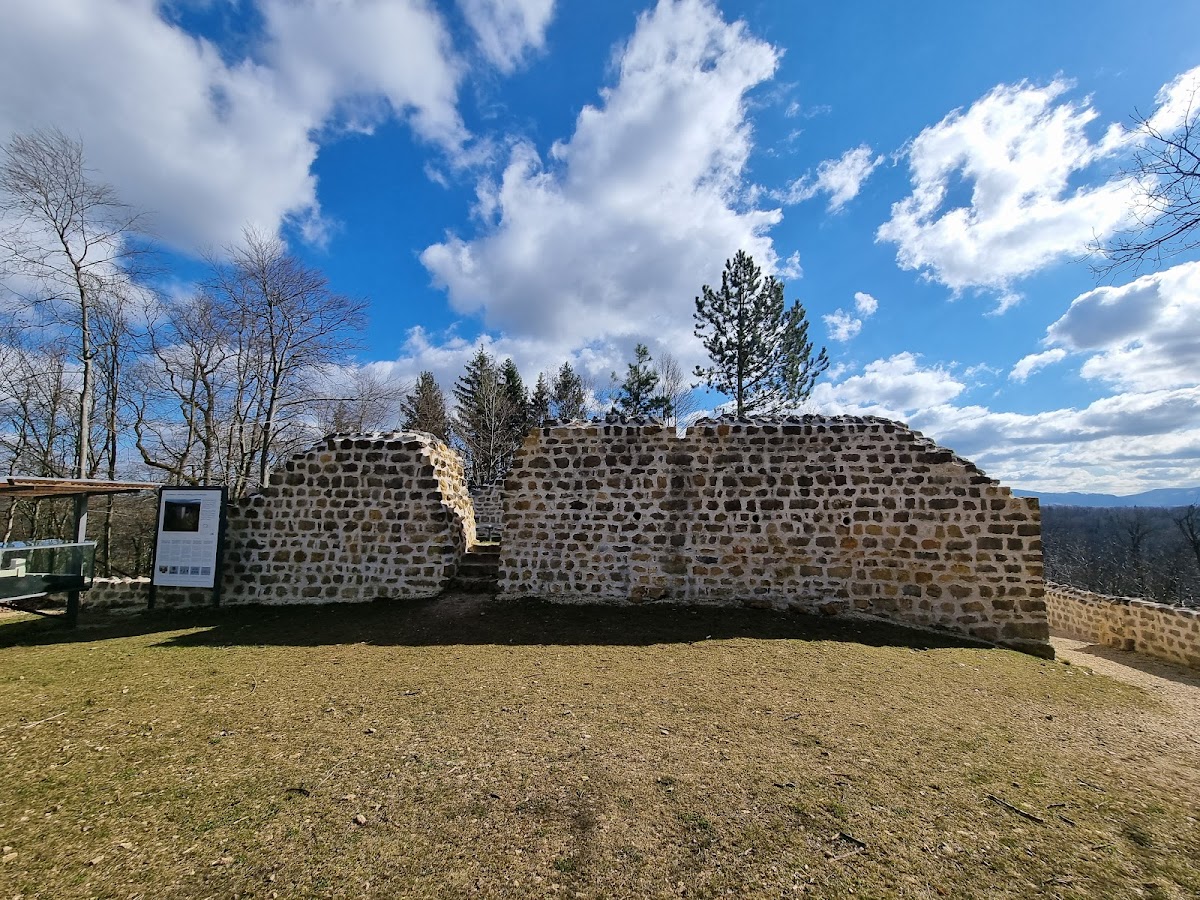
An excavation in 1982 identified the massive central tower. The entire site was excavated and repaired in 1986 and 1987. The recovered material dates from the eleventh century and includes more than 250 objects, among them a piece of gold and silver jewellery. Animal bones were also found, including herring bones, an unusually rare archaeological discovery in landlocked Switzerland. The surviving masonry is conserved, while the site remains a ruin.