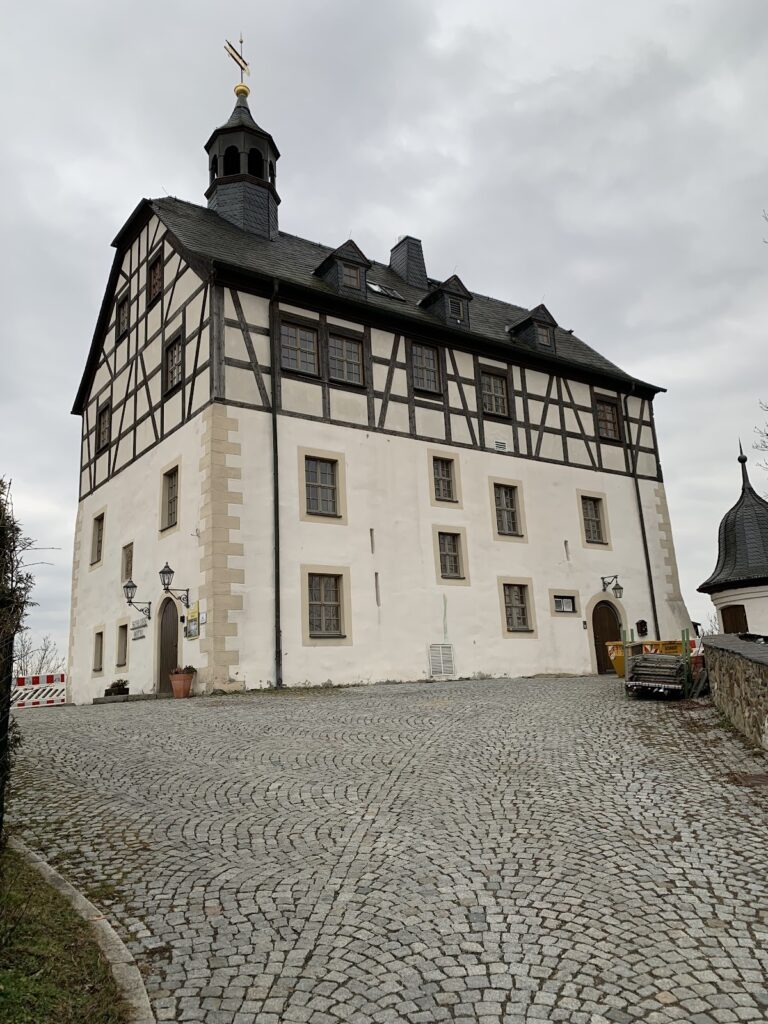
Ruine Stein: A Medieval Spur Castle in Saxony


Site at a Glance
- Rating
- 4.7
- Popularity
- Very Low
- Country
- Germany
- Primary era
- Medieval
- Eras represented
- Medieval
- Civilizations
- Holy Roman Empire
- Site type
- Military
- Remains
- Castle
On this page8 sections
History
Ruine Stein is the surviving ruin of a medieval spur castle in Germany, near Oelsnitz in Saxony. Built in the thirteenth century by the Vögte von Plauen, a ministerial family serving as territorial officials and military administrators, it formed part of the rulers’ castle network and helped secure their authority in the Vogtland.
Medieval Origins and Territorial Control
The castle was first recorded in 1327 as munitio lapis. A further reference from 1329 names Heinrich von Machwitz as “Heinricus de Machwicz dictus de lapide,” linking him with Stein. Like nearby Planschwitz Castle, the site belonged to a group of fortifications used to support territorial rule.
Stein later declined in importance as a border fortification. When the southern Vogtland passed to the Wettins in 1358, the dynasty that controlled the margraviate and later the electorate of Saxony, the castle acquired renewed value. It was expanded again at the beginning of the fifteenth century, but by the end of that century it had definitively lost its military importance.
Later Use and Destruction
In 1519, Duke Johann of Saxony enfeoffed the brothers von Zedtwitz with the castle. Stein was destroyed during the Thirty Years’ War, the European conflict of 1618–1648 that brought widespread devastation to German territories. The complex remained inhabited until the eighteenth century, and its economic yard continued to operate as a Vorwerk, an agricultural estate connected with a castle or larger landed holding.
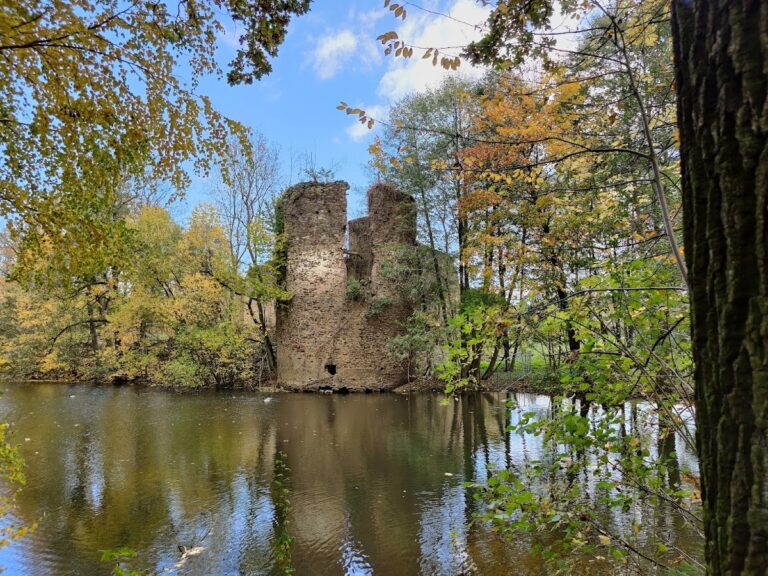
Ruine Stein has been legally protected as an archaeological monument since 15 October 1959. Part of the complex is now inundated by the Pirk Reservoir, affecting how much of the medieval site can be seen.
Remains
The castle occupied a rocky spur above the White Elster, approximately 500 metres north of Planschwitz. Its position used the natural slope of the projecting ridge for defense, while the surviving core and surrounding structures reveal a compact fortified complex at the edge of the present-day Pirk Reservoir.
Core Castle and Defenses
Rock-cut Ditch and Round Tower
The core castle measured 26 by 22.5 metres. A ditch cut into the rock, 6.5 metres wide, protected it. South of this ditch are the remains of a round tower with an external diameter of 4.2 metres and walls 0.5 metres thick. An outer wall stood in front of the ditch and incorporated bastions suitable for firearms, reflecting a later defensive phase.
Residential Building and Enclosing Wall
Within the quadrangular core stood a two-room palas, the principal residential or ceremonial building of a medieval castle. It had a partial basement. An enclosing wall extended along three sides of the core, defining the castle’s inner defensive area.
Survival and Finds
The Pirk Reservoir partly inundates the ruin, so only part of the castle remains visible. Finds from the site area date from the fourteenth to the seventeenth century, covering the period of its medieval use, later occupation, and operation as an economic estate.
Nearby sites