Royal Palace of Visegrád: A Medieval Hungarian Royal Residence


Site at a Glance
- Rating
- 4.8
- Popularity
- Medium
- Country
- Hungary
- Primary era
- Medieval
- External website
- Open
- Eras represented
- Medieval
- Civilizations
- Hungarian
- Site type
- Domestic
- Remains
- Palace
On this page12 sections
History
The Royal Palace of Visegrád in Hungary is a former royal residence founded in 1323 by King Charles I Robert of Hungary at Visegrád, beside the Danube. It later developed through Gothic and Renaissance phases under King Louis I, King Sigismund, and King Matthias Corvinus. The palace became a setting for royal government, diplomacy, and court life, and its history is closely linked with the political importance of Visegrád in medieval Hungary.
Foundation and Fourteenth-Century Expansion
Charles I Robert established the palace after consolidating royal authority in the early fourteenth century. The residence was first mentioned in the Képes Chronicle. In 1330, the nobleman Felicián Záh attempted to assassinate the royal family at the palace, giving the site a place in the political history of the period.
The palace was remodeled during the last quarter of the fourteenth century. Some of this work took place under Louis I, while further expansion occurred under Sigismund. Sigismund enlarged the royal court chapel and added connections that gave the complex a more regular rectangular arrangement. He also linked its northern side with a garden and its southern side with a Franciscan monastery founded in 1424 on the site of an older royal chapel.
Royal Residence and Diplomatic Centre
Sigismund moved his seat from Visegrád to Buda between 1405 and 1408, but the palace continued to serve as a country residence where he spent time. Visegrád also hosted the Congress of Visegrád in 1335. The meeting was followed by the Peace of Visegrád, signed in the same year. The later Central European intergovernmental organization called the Visegrád Group takes its name from this event.
Matthias Corvinus and the Renaissance Court
Between 1476 and 1484, King Matthias Corvinus renovated the palace in the Late Gothic style and introduced additional Renaissance elements. Matthias was a major Renaissance patron, and his work at Visegrád brought Italian Renaissance forms to the palace at an early date north of the Alps.
Ottoman Conquest and Modern Recovery
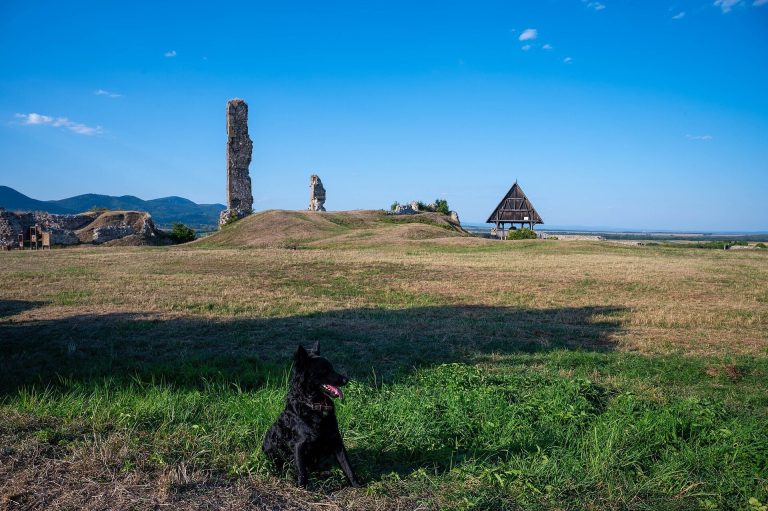
The palace was abandoned after the Ottoman conquest of Hungary in 1544. The Ottoman expansion into Hungary during the sixteenth century changed the political and military landscape, and the palace subsequently became a ruin. It had formed part of a defensive line of castles that was destroyed during the period of Ottoman domination. The ruins were later demolished in the eighteenth century.
Archaeological excavations began in 1934 and have continued in part since then. Historical restoration and reconstruction have re-created much of the royal palace and its gardens. The King Matthias Museum, a branch of the Hungarian National Museum, occupies the palace and gardens and presents their history.
Remains
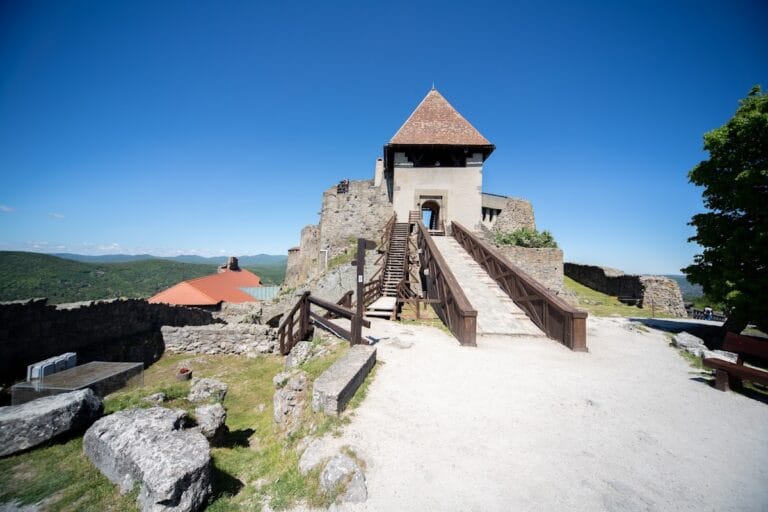
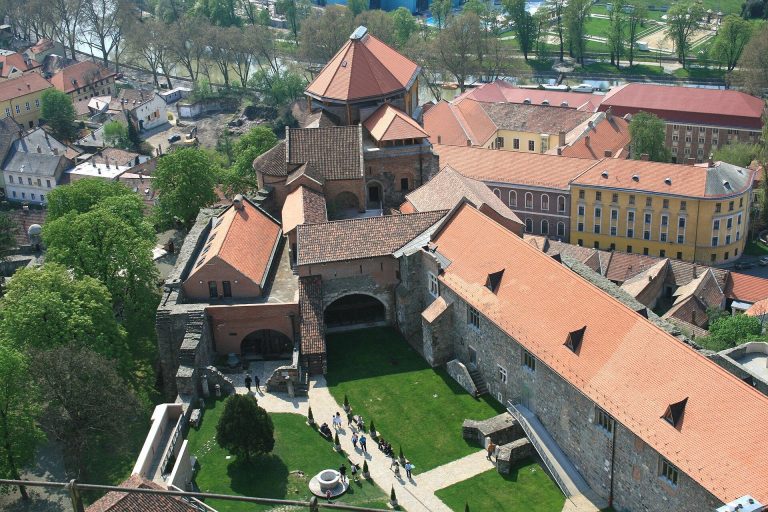
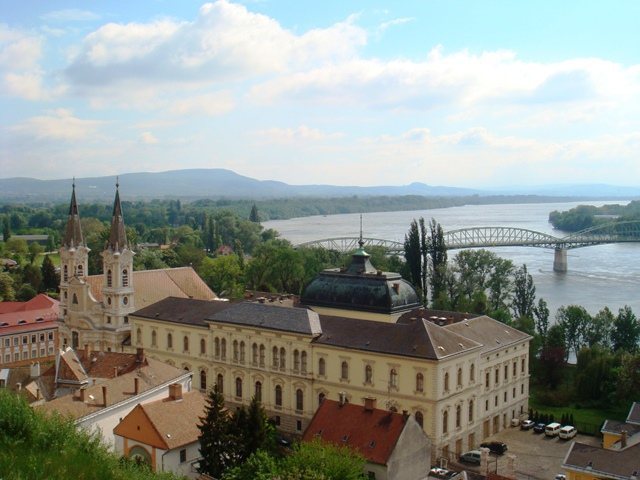
The Royal Palace of Visegrád survives as a partially reconstructed castle ruin with Gothic and Renaissance elements. The complex follows a regular square plan measuring 123 by 123 metres. It stands beside the Danube where the river meets the Pilis Mountains in the Danube Bend, near the beginning of the Szentendre branch of the river. The site historically lay where the Hungarian counties of Pest-Pilis-Solt-Kiskun and Hont met.
Palace Buildings and Court Features
Royal Court Chapel
The royal court chapel formed part of the palace’s religious and ceremonial architecture. Sigismund enlarged it during the palace’s fourteenth-century transformation. The reconstructed complex includes the chapel, its altars, and an organ gallery, allowing these features to be understood within the arrangement of the royal residence.
Courtyard and Fountains
A loggia with an ornate courtyard is among the surviving and reconstructed court features. Renaissance additions include the Hercules Fountain, positioned in one of the palace courtyards, and the Fountain of the Muses. Together, these elements reflect the decorative program associated with Matthias Corvinus’s renovation of the residence.
Gardens and Reconstructed Interiors
Palace Gardens
The reconstructed gardens include the Pergola Garden, a Flower Garden, and a stair complex. The Pergola Garden occupies an upper level west of the palace, above a wine cellar, and overlooks a lower castle garden and orchard. A herb and flower garden fills the first floor of the complex and was laid out during the period of King Louis I.
Museum Interiors
Parts of the interior have been reconstructed for museum display. These include a bedroom associated with Sigismund, a hall from the period of Matthias Corvinus, and a kitchen. The King Matthias Museum uses these reconstructed spaces, together with the palace and gardens, to present the development of the royal residence and its courtly setting.