Margitligeti Castle: A Sanatorium and Social-Care Complex in Hungary
Site at a Glance
- Rating
- 4.6
- Popularity
- Very Low
- Country
- Hungary
- Primary era
- Modern
- External website
- Open
- Eras represented
- Modern
- Civilizations
- Austria-Hungary, Habsburg
- Site type
- Domestic
- Remains
- Castle
On this page6 sections
History
Margitligeti Castle is a historic building complex in Csobánka, Hungary, created within a late nineteenth-century sanatorium and later adapted for social care and education. Physician Martin Sándor built the sanatorium near Csobánka in 1897–1898 and named the surrounding area Margitliget after his deceased wife, Margit.
From sanatorium to war orphanage
After Martin Sándor died, the property stood ownerless and was looted. In 1909, Wettenstein József, identified as the inventor of a serum against tuberculosis, purchased it and converted it into a pulmonary sanatorium, an institution specializing in long-term treatment for diseases of the lungs.
During the First World War, the castle passed into the ownership of the Social Mission Society, a Catholic women’s religious and charitable organization. Under the leadership of its founding superior, Farkas Edith, the society organized a nationwide collection for war orphans. Margitliget was renamed the Mission Settlement, and the Ottokár War Orphanage formally opened there on 10 October 1918.
The orphanage operated alongside a girls’ school that provided economic education and other institutions. The society educated residents according to their age and abilities until they reached 18, while continuing to keep in contact with them after they left.
State ownership and later social use
The property was nationalized in 1946. From 1950 to 2007, it housed a special-education institution, while the Catholic nuns associated with the orphanage were expelled in 1950.
After Hungary’s political transition from communist state socialism to a multiparty system around 1989–1990, the Social Mission Society reclaimed the building complex. Ownership returned to the society in 1999. Reconstruction was completed in 2007, when the complex was named the Prohászka Ottokár House and became a transitional home for disadvantaged young people operated by the Saint Francis Foundation of Deva, founded by Father Csaba Böjte. The name commemorates Prohászka Ottokár, a Roman Catholic bishop who spent considerable time in Csobánka. Margitligeti Castle is treated as a historical monument in Hungary.
Remains
Castle building
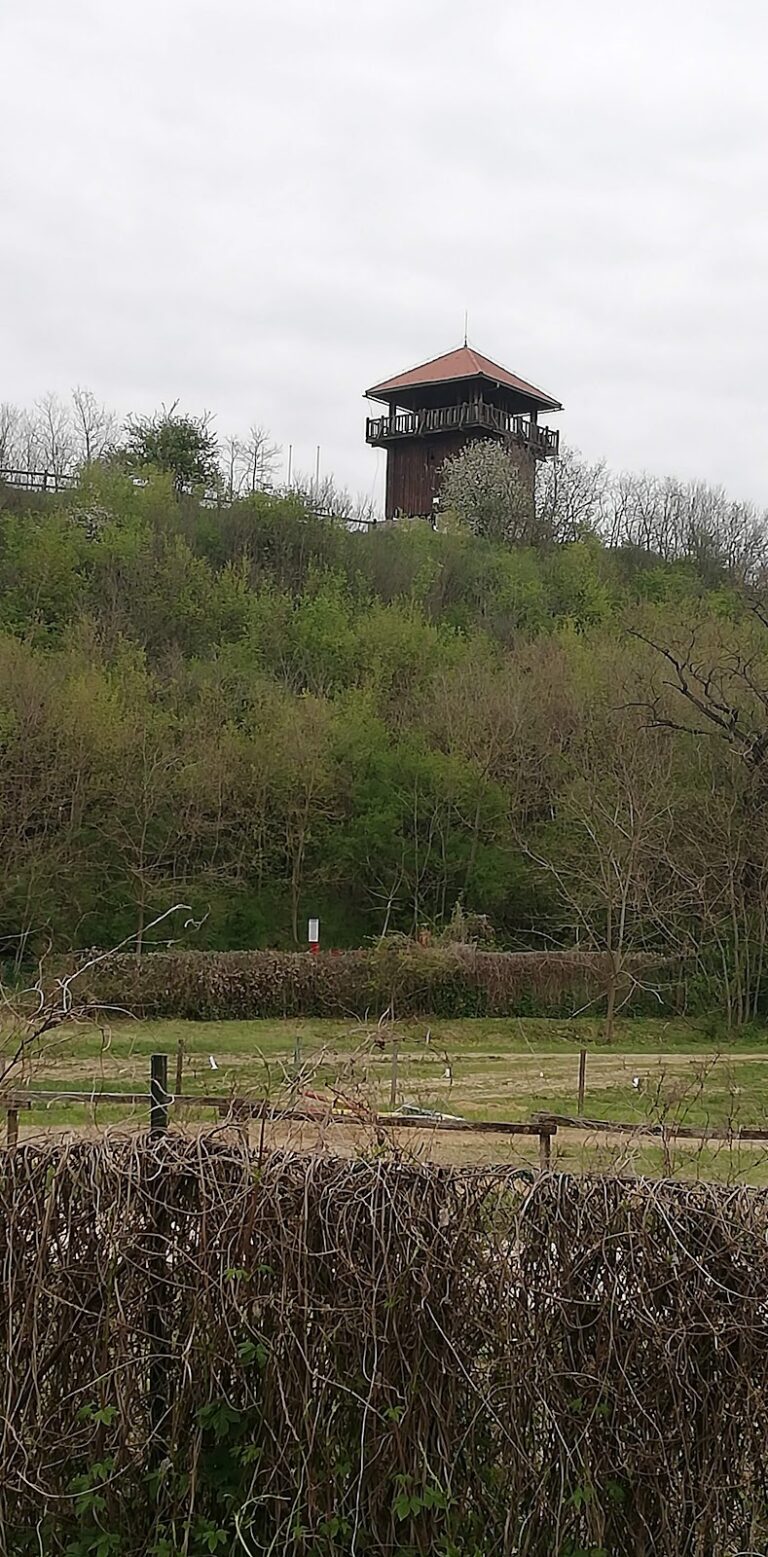
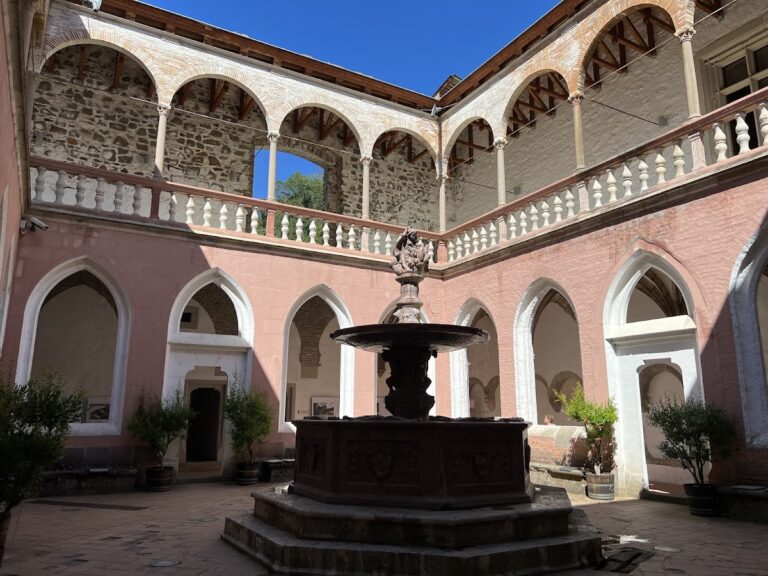
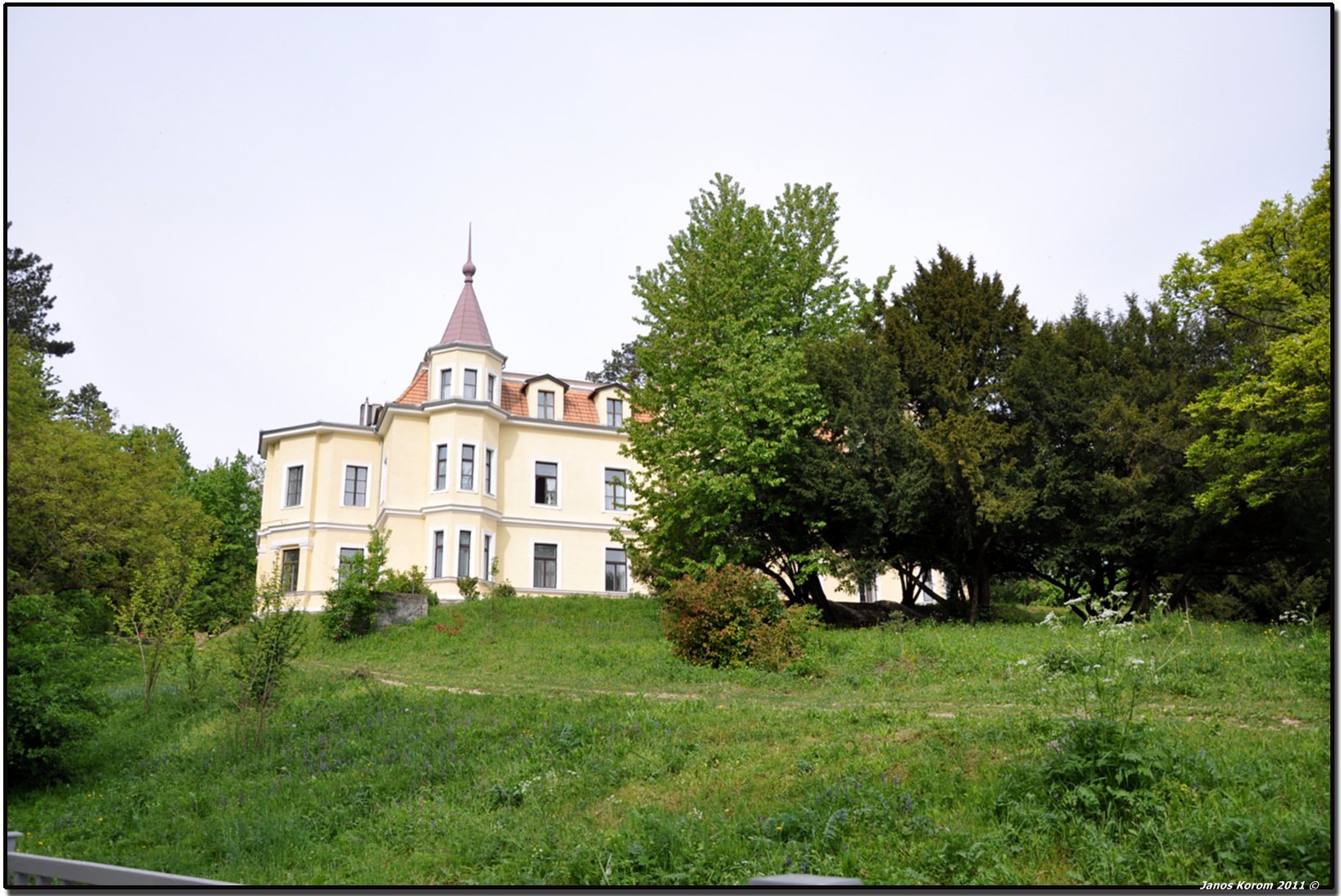
Margitligeti Castle stands in the northern part of Csobánka, in a forest clearing in a valley near the Oszoly rock formations. It is a detached, single-storey building with mansard roofs, whose lower roof slopes are steeper than the upper ones. The symmetrical facade rises above several steps leading to a central entrance.
A projecting bastion-tower occupies the middle of the facade, while towers project from both corners. The two lateral sections contain large polygonal bastions, projecting fortified structures, and lack mansard roofs above the main storey. These elements give the building a distinctive fortified appearance within its wooded setting.
Garden and surrounding complex
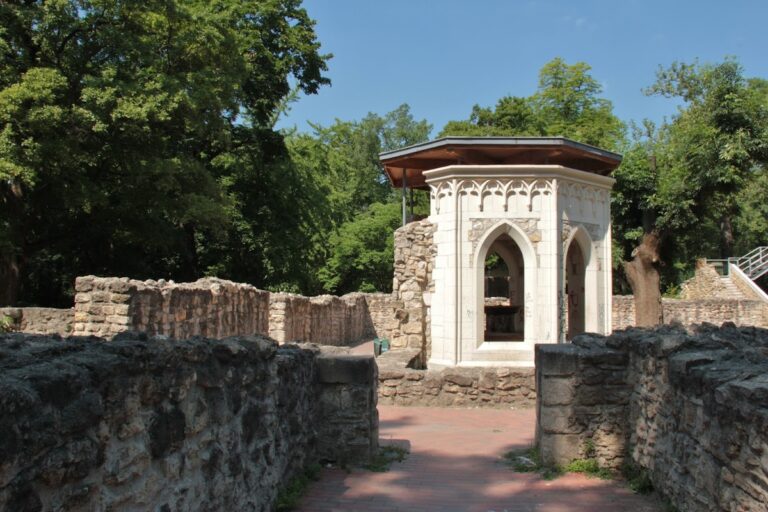
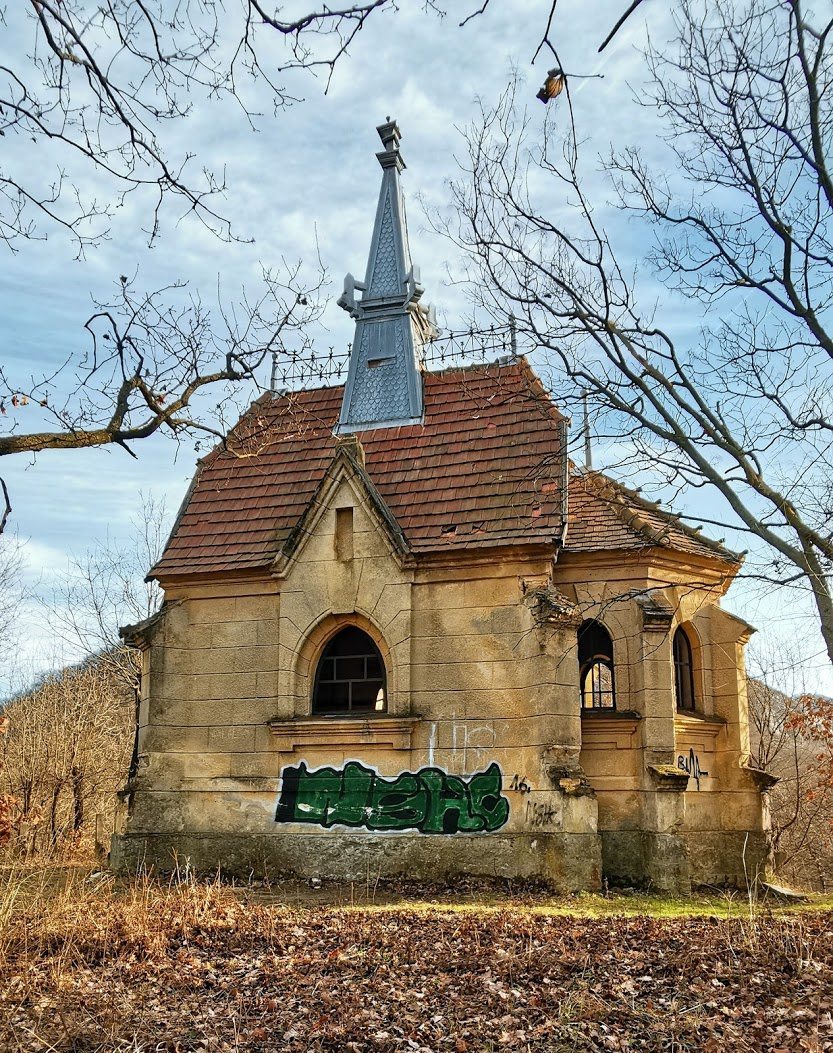
The castle garden contains the Szent Hubertus Chapel, built at the same time as the castle. Szent Hubertus refers to Saint Hubert, a Christian saint traditionally associated with hunting and regarded as a patron of hunters. The garden also contains rare plants, including a large maple and yellowish sedge.
A settlement known as the Szent Hubertus holiday colony had already been developed beside Margitliget in the early twentieth century. A social-care home named after Alajos Kraxner stands next to the castle.